Noise
ISSUE NO. 06: DEVA CASSEL
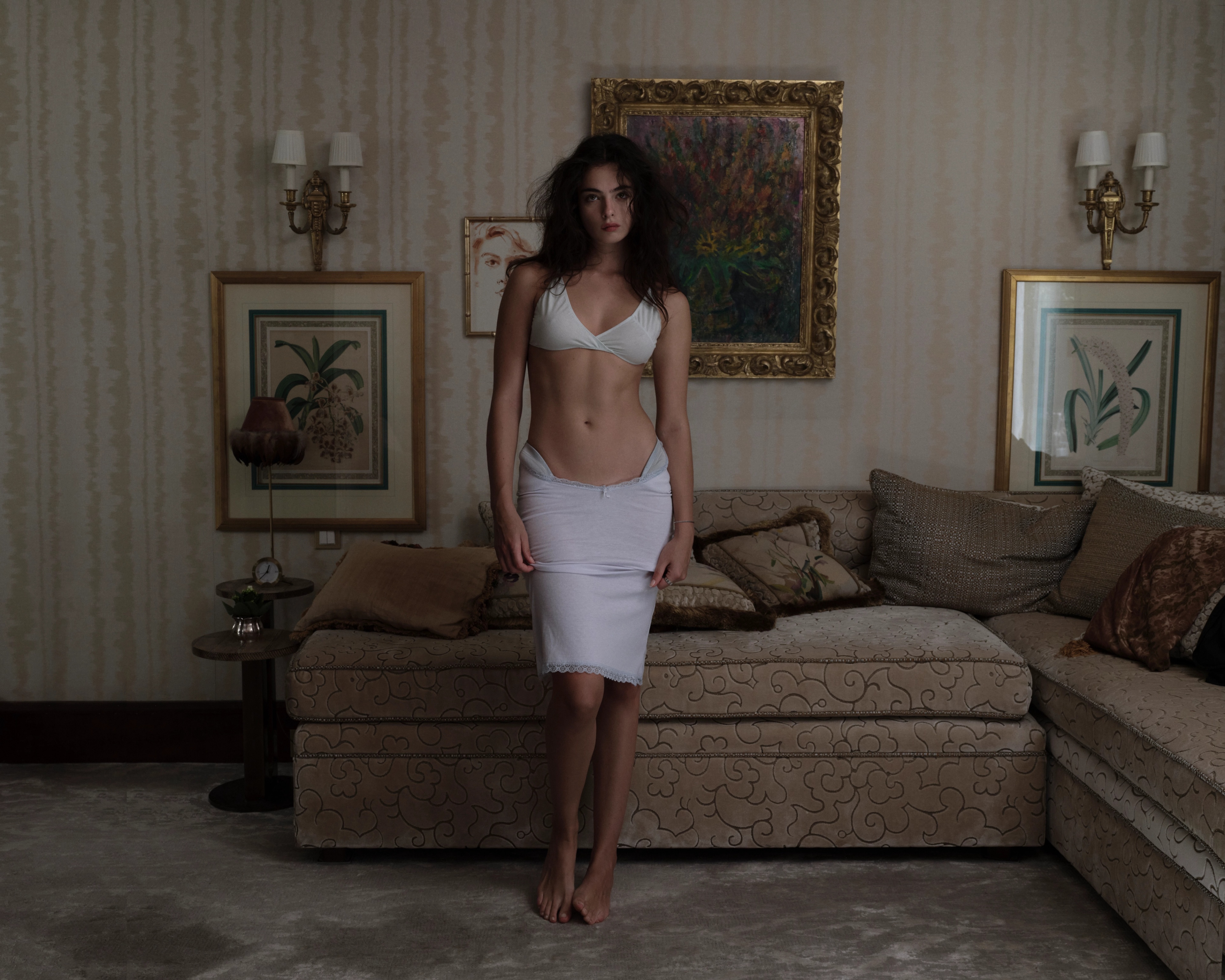
Bra and skirt by SIMONE CARLE. Bracelet and ring by CARTIER.
UNCONSCIOUS ABANDON
Words: 2424
Estimated reading time: 13M
ACTRESS DEVA CASSEL AND DIRECTOR LAURA LUCHETTI ON ADAPTING A BELOVED ITALIAN NOVELLA TOGETHER.
By Elisa Carassai
It began with a photograph. While developing her adaptation of Cesare Pavese’s 1949 novel, La Bella Estate, Roman director Laura Luchetti came across a small image of Deva Cassel dressed entirely in white. She looked, Laura recalls, like a Pre-Raphaelite painting. She went straight to her producers: “She’s Amelia, isn’t she?”
The daughter of Vincent Cassel and Monica Bellucci, Deva spent her adolescence between Paris and the world of fashion – cinema had never figured into the plan. But Laura had seen in that photograph, something Deva herself had not yet imagined. Perhaps it is this – being chosen before she had chosen herself – coupled with Deva’s desire to inhabit a character fully – to become, as she puts it, a “living instrument” – that has transformed what began as a director’s vision and a first-time actress’s leap of faith into something rarer: a genuine creative partnership. The two reunited for Netflix’s The Leopard, their collaboration deepening through mutual trust and a shared willingness to step into the unknown.
For Laura, that threshold – that suspended moment before the leap, when everything is still possible, and innocence has not yet been lost – has long been a place of fascination. It is a preoccupation that runs like a thread through her body of work: from her debut feature to La Bella Estate, which premiered at the Venice Film Festival in 2023 and established her as a distinct voice in contemporary Italian cinema. Where others might sentimentalize youth, Laura observes it with clarity and tenderness, kneeling, as she herself describes it, to eye level, careful never to cast a shadow.
ELISA CARASSAI: To introduce your conversation, I’d like to start at the beginning of your collaboration. Laura, what did you see in Deva when you cast her in La Bella Estate, and Deva, what did you understand about Laura from the very first days on set?
LAURA LUCHETTI: The story of La Bella Estate is a long one. But then, waiting is part of a director’s craft. The project began around 2018–19, after my previous film. While I was writing, I stumbled across a tiny photograph of Deva, dressed entirely in white; she looked like a Pre-Raphaelite painting. It was from an advertising campaign, I think perhaps for Dolce & Gabbana, and I went straight to the producers and said, “She’s Amelia, isn’t she?” I was looking for a timeless beauty, but one that also carried a certain melancholy, because the character must always project serenity and radiance on the surface, while concealing an entirely different inner world. The producers came back to me: Laura, she’s too young. She’s a minor. But film timelines are long. And in the meantime, Deva was about to turn 18. So I went back to the producers and said, “Look – she turns 18 soon. I asked you about her three years ago. Let’s try again.” She had watched my previous film, read the screenplay, and said yes. That was a tremendous act of trust, because she could have debuted with anyone. I had a very specific image in mind: a classical beauty. Someone like Ava Gardner: a magnificent woman, extraordinarily intelligent, with a whole universe within her.
When we finally met in Paris, Deva – who had never acted before – did phone screen tests, and they were just beautiful. And then she was extraordinarily brave: she had just finished her maturità [final high school exams], and within a week she’d done a fashion show in Sicily, and then arrived and threw herself into an intensive workshop alongside actors who, though young themselves, were all older than her. Some had done theatre, some television; for a few it was their first film, but they came from drama schools, from the stage. And she simply dove in. She was extraordinarily prepared. I always say she was like a walking encyclopedia of the film. She had her script covered in notes and annotations, and in all of that I saw the focused intelligence of someone twice her age.
DEVA CASSEL: I get emotional, and the words don’t come easily, because it was a genuine big bang in my world. Before reading the screenplay Laura sent me, I watched the film she had made just before to understand her language, her approach, her world – her colors, in a sense. And the film was, I find, truly magnificent, like a long poem. When I then read the screenplay for La Bella Estate, it felt
like a natural continuation of that same truth.
Then, Laura showed me what a set could be. I want to use a big word here, a perfect set. As we rehearsed and talked, I would glance over at Laura, almost seeking confirmation, because she had immediately become a figure I wanted to make proud. She was the first person to give me the opportunity to express myself in this world that I had refused for so long. And since the choice had been mutual – we had chosen each other – I wanted her to be proud of me, and through her pride, to become proud of myself.
EC: Laura became a mentor to you?
DC: A mentor, exactly. And gradually, before shooting even began, we all built something together – a real family, with a genuine and love that meant we arrived on set already knowing each other well. That set the tone for the two months that followed.
LL: What you’re describing is rare! I don’t know if I’ll ever have a cast so close-knit, who were on set even on their days off. It’s the beauty of working with young, intelligent people; they don’t look down at the drop before they jump. The older you get, the more you start to see the edge, even when it isn’t there. We had a small set. A low-budget art house film. Things went wrong constantly. Something was missing, something broke, someone had to improvise. But the love that had formed created something like a tractor, moving slowly and full of problems, but with a party happening on top. You don’t look at the problems; you look at the party. I love sets full of love. I can’t bear a set that becomes a battlefield. That family spirit helped us move fast; it carried us.
They [Deva and Yile Vianello, her co-star] decided on their own to live together, to build that chemistry. I hadn’t asked them to. It felt like their own creative investment in the film. Which is why I loved Deva’s proposals so much. She came with ideas; we would talk about them. Even in her very first film, she was never an actress who waited to be told what to do. She arrived with an extensive research book – visual, metaphorical, layered. She brought so much. I valued that enormously.
EC: I wanted to come back to something you said, Laura. The image of jumping off the cliff. I’ve noticed it’s a phrase you return to often, and I wanted to ask whether it’s precisely that spirit – that courage, that instant when everything remains open, the interior fire that has to find its way out – which keeps drawing you back to adolescence
LL: When you’re standing at the top of that cliff, you have two allies. And you lose them, gradually, as you make your way down. Recklessness and the future. Time stretching out ahead of you. That moment of unconscious abandon before the leap, which slowly becomes a loss of innocence, is precisely what gives you the strength to jump in the first place. That fraction of a second that we have all passed through and which feels so vivid to me, because I’m now three-quarters of the way down. I keep looking up and thinking: I will never feel that again. And yet it brought me to where I am. It’s a moment I love to fix in place, in stories, in films. I’d rather raise questions than provide answers. Even in my previous film, I let the characters move toward their own futures, leaving the audience to imagine what comes next. They walk away, and the real film begins the moment you can no longer see them. And that particular moment is very powerful in La Bella Estate, because every character is at a point in life where absolutely anything could happen.
EC: Deva, I wanted to come back to something we touched on earlier – the character of Amelia, who is such a complex figure. I found it interesting that you then chose to work on Angelica, in Netflix’s adaption of Giuseppe Tomasi di Lampedusa’s classic Italian novel, The Leopard (Il Gattopardo) who is equally complex in her own way. How do you choose your roles? Is there something specific you look for in a character, or in a director, before you say yes?
DC: For me, choosing a role comes down to whether I can visualize the character. When I read the screenplay, I need to be able to hear their voice inside me, even if it doesn’t yet feel like my own. Amelia and Angelica are both complex women whose futures have been shaped for them in some sense. They’re trying their best to live at a pace that feels like home to them. It’s as though they’ve had to detach themselves from the girl they once were, from personal values that conflict with the values of their families. Saying it now, I realize that perhaps the first roles I chose were of people very different from me on the surface, but with a complexity very similar to my own in terms of how they position themselves in the world. As for choosing directors – it matters enormously to me, not only because of their creative vision, but because of who they are as people. When you find people who know how to draw things out of you, but who also have the heart to take care of you in the process, that’s a rare and beautiful combination.
EC: Laura, you once referenced Umberto Eco, saying that every adaptation is a trap. How do you navigate the tension between fidelity to a source and the freedom to create something entirely your own, and how did that tension play out again when you reunited with Deva on The Leopard?
LL: With La Bella Estate, when I was offered the book I said I wouldn’t do it. Pavese is enormously difficult to adapt. He’s a voice, a stream of consciousness, of pure genius. Nothing happens on the surface. The only person who had ever made a film from a Pavese novel was Michelangelo Antonioni [with Le Amiche] who won Venice in 1956. And I thought: who am I to follow in those footsteps? But I read the book again and again. I’m in love with Pavese. And I always say: when you’re in love, you do foolish things. You have to respect the writer’s voice and somehow become a companion to it. Try to enter the chorus without singing louder than they do. He is a master; I am only a speaker. He is the voice; I am only the vessel through which it might be heard.
With that respect in place, I drew on other aspects of Pavese’s work, his feelings for nature, for landscape, for the idea that the village is salvation and the city will corrupt you. I began to split the two poles: Amelia becomes the city – alluring, seductive, and ultimately so fragile in its own rules. Ginia is the countryside – pure and intact. Respect, love, and above all humility. I think that’s the only honest way to approach an adaptation.
The Leopard was a different kind of challenge entirely. I came to it with real humility, knowing I would have a defined territory within a much larger production. Within my episode – which functioned as a small film in itself – I had the freedom to work as I would on an independent art film, letting actors improvise a bit. And Deva gave me the most beautiful gift. She played a scene in which, by the end, the entire crew had fallen completely silent.
EC: Both of you work in an industry that is changing rapidly: streaming, new audiences, new formats. Does that excite you or concern you?
DC: I think there’s no single right response. Looking at the tools being offered right now, both within the industry and more broadly, I think people should see them as an opportunity to work across different media and forms. That said, when there are so many ways to share a message simultaneously, it can become overwhelming. Which is the best route, which is the most effective?
LL: It’s a genuine challenge, engaging with multiple media at once. AI is a tool, and we should be the ones using it, not the other way around.
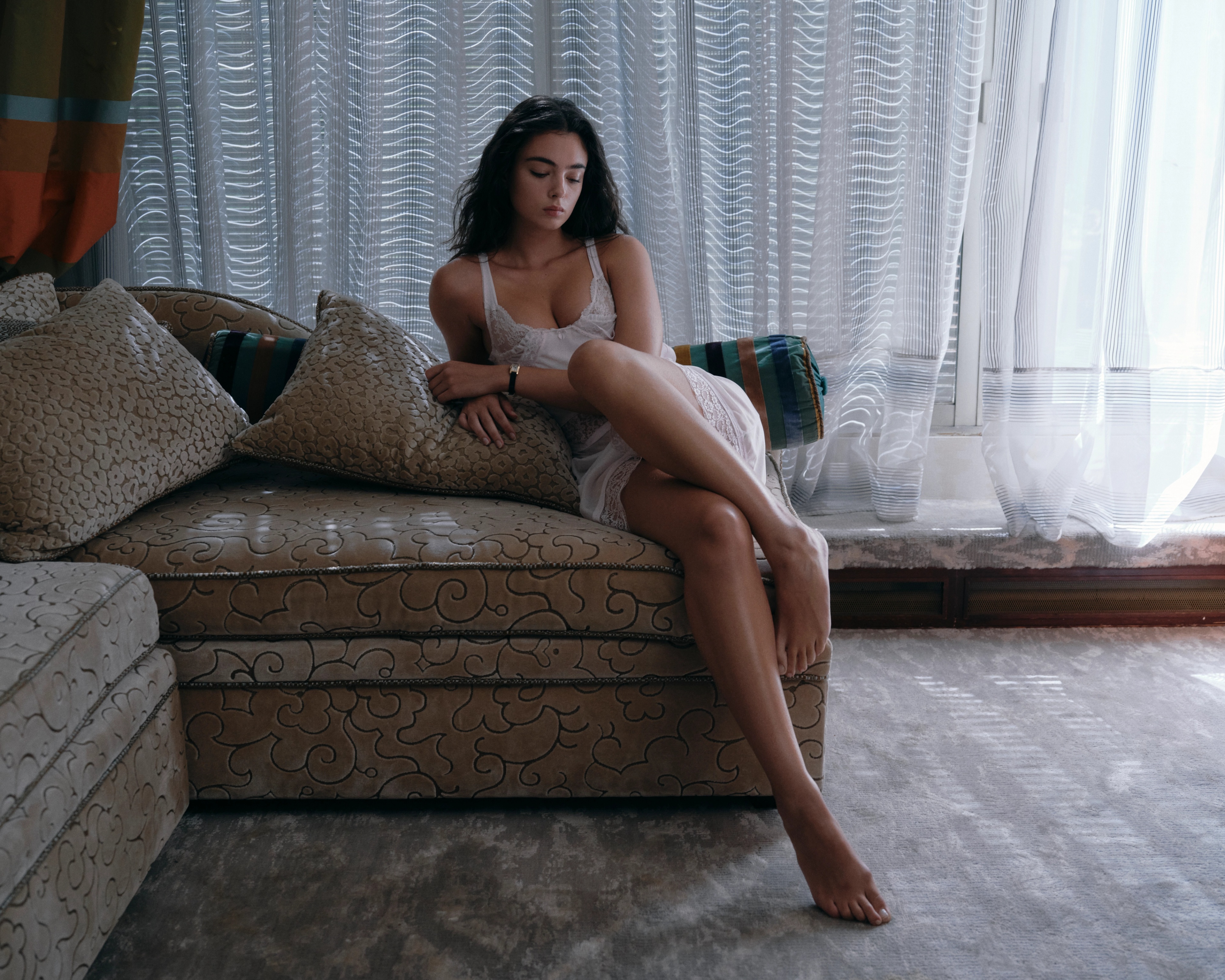
Dress by SIMONE CARLE. Watch by CARTIER.
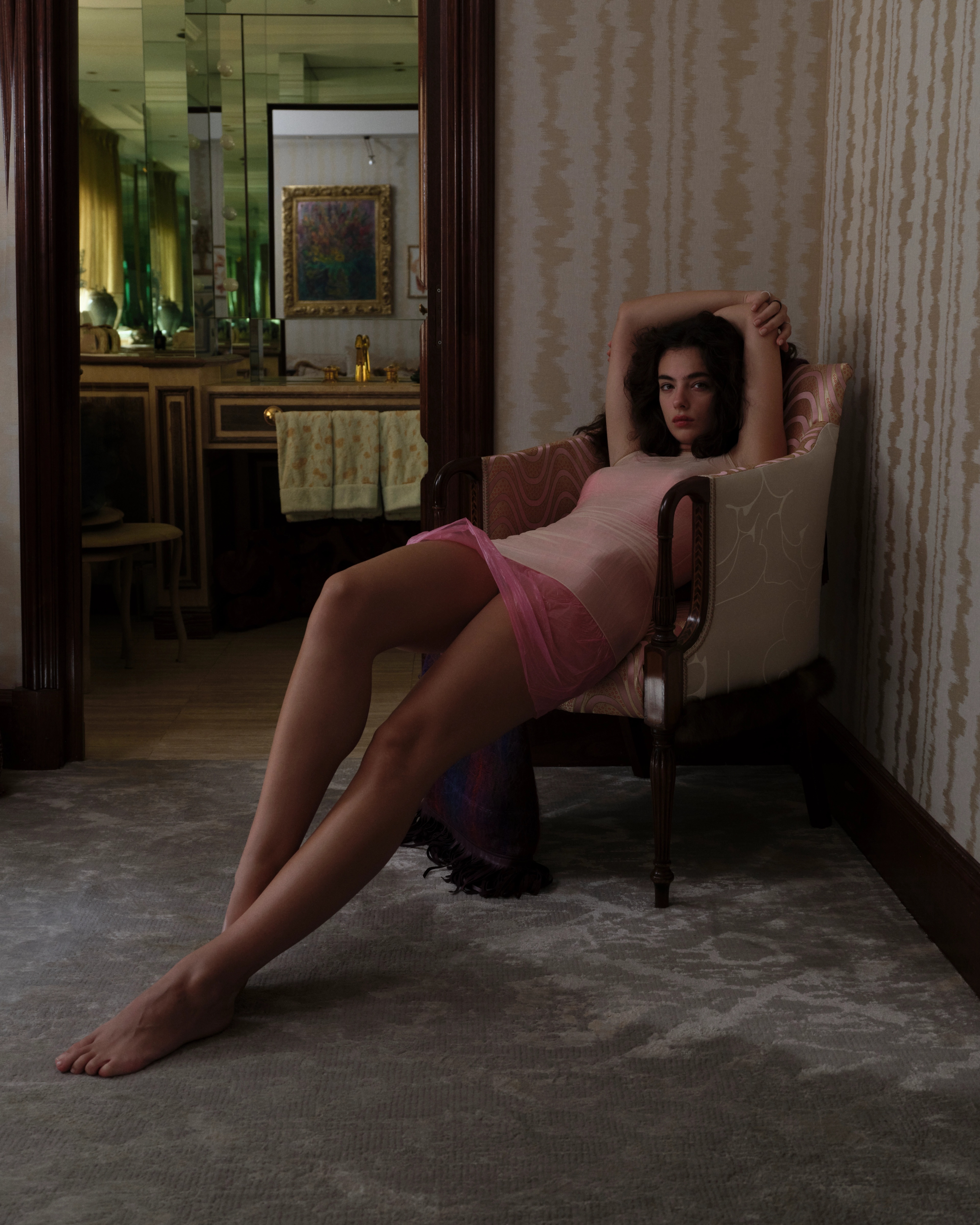
Dress by SIMONE CARLE. Rings by CARTIER.
"WE ARRIVED ON SET ALREADY KNOWING EACH OTHER WELL."
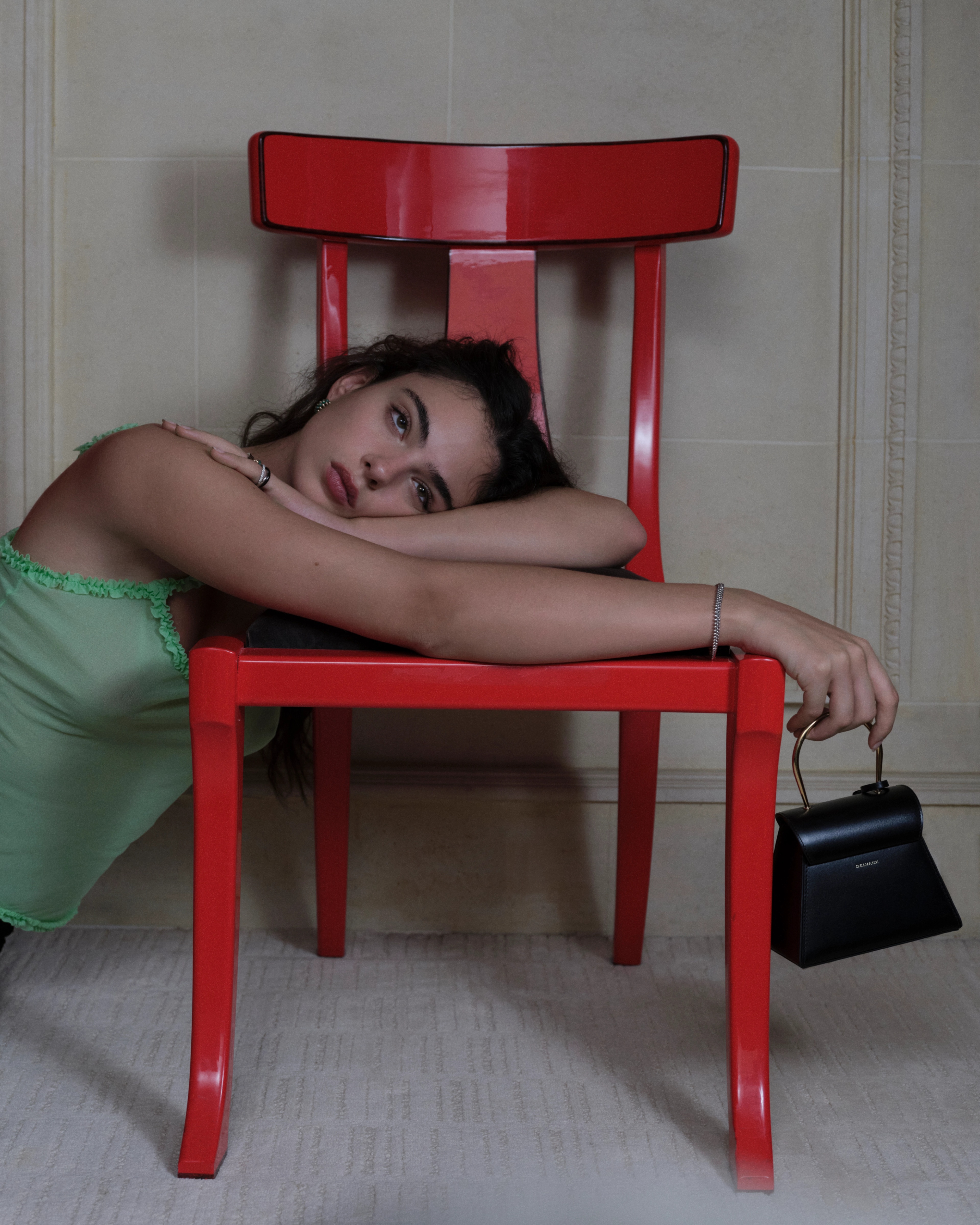
Vintage top from Rokit. Skirt by TORLOWEI. Earrings, rings and bracelet by CARTIER. Bag by DELVAUX.
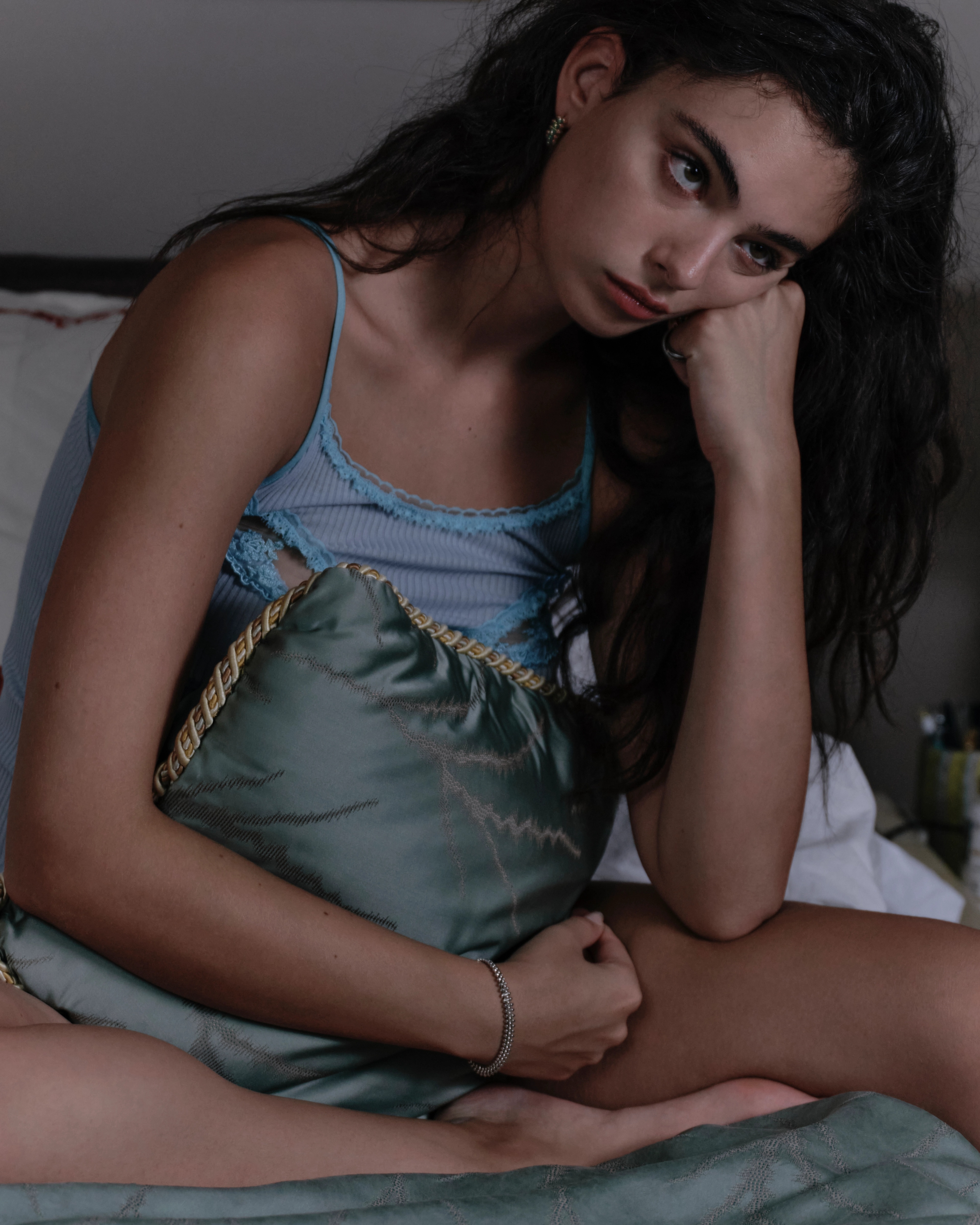
Top by CHLOÉ. Earrings, rings and bracelet by CARTIER.
EIC + FASHION
SARAH RICHARDSON
PHOTOGRAPHER
FIONA TORRE
TALENT
DEVA CASSEL
HAIR
JOE BURWIN AT BRYANT ARTISTS
MAKE-UP
KARIN WESTERLUND AT STREETERS
TALENT DIRECTOR
TOM MACKLIN
PHOTO ASSISTANT
MATTHIEU BOUTIGNON
DIGITAL TECHNICIAN
MYLLA PRZESPOLEWSKI
PRODUCTION
29STUDIO
Beyond Noise 2026
EIC + FASHION
SARAH RICHARDSON
PHOTOGRAPHER
FIONA TORRE
TALENT
DEVA CASSEL
HAIR
JOE BURWIN AT BRYANT ARTISTS
MAKE-UP
KARIN WESTERLUND AT STREETERS
TALENT DIRECTOR
TOM MACKLIN
PHOTO ASSISTANT
MATTHIEU BOUTIGNON
DIGITAL TECHNICIAN
MYLLA PRZESPOLEWSKI
PRODUCTION
29STUDIO
Beyond Noise 2026