Noise
ISSUE NO. 06: JESSICA LANGE
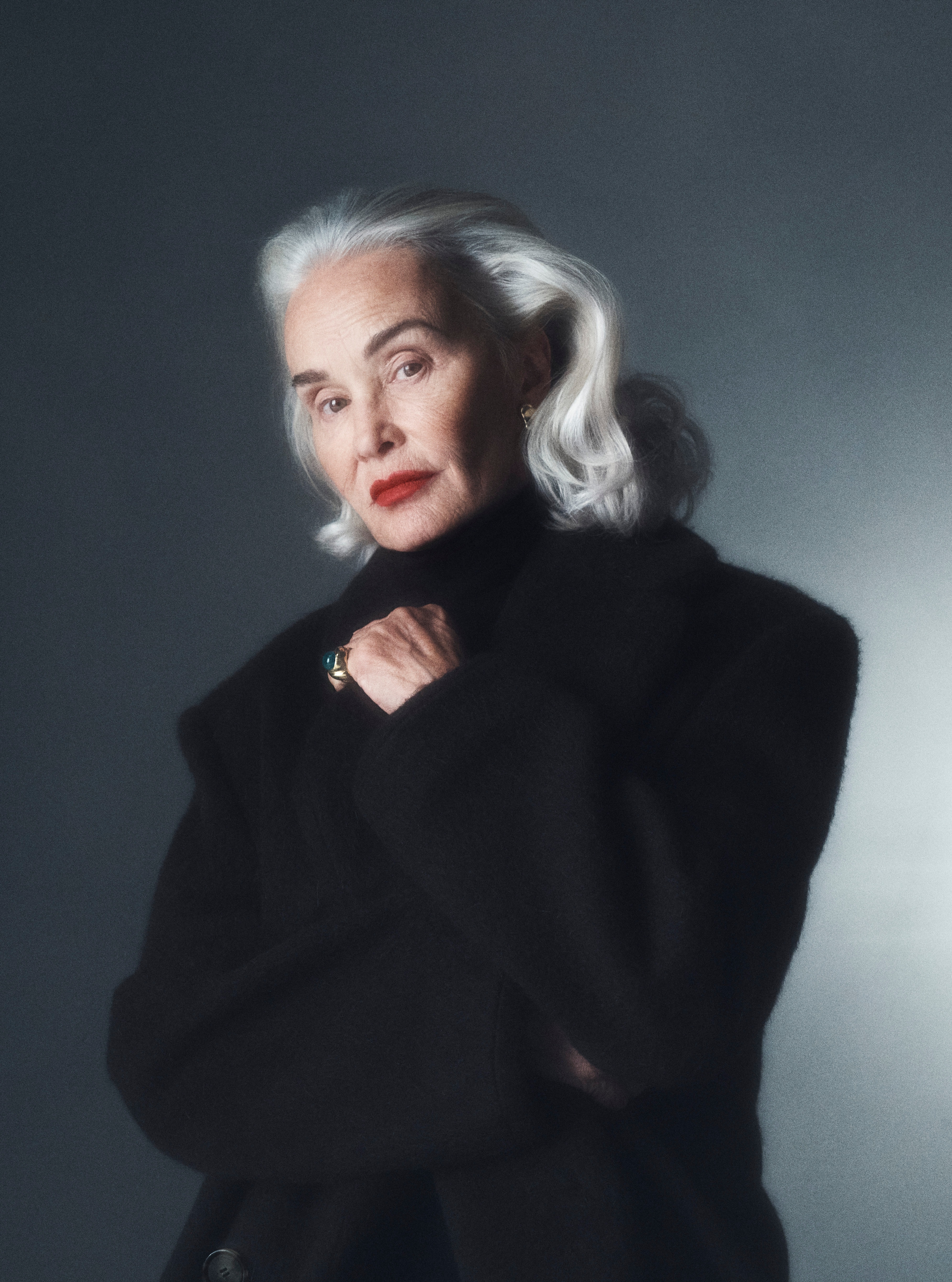
Jessica wears coat by FERRAGAMO and earrings by TIFFANY & CO.
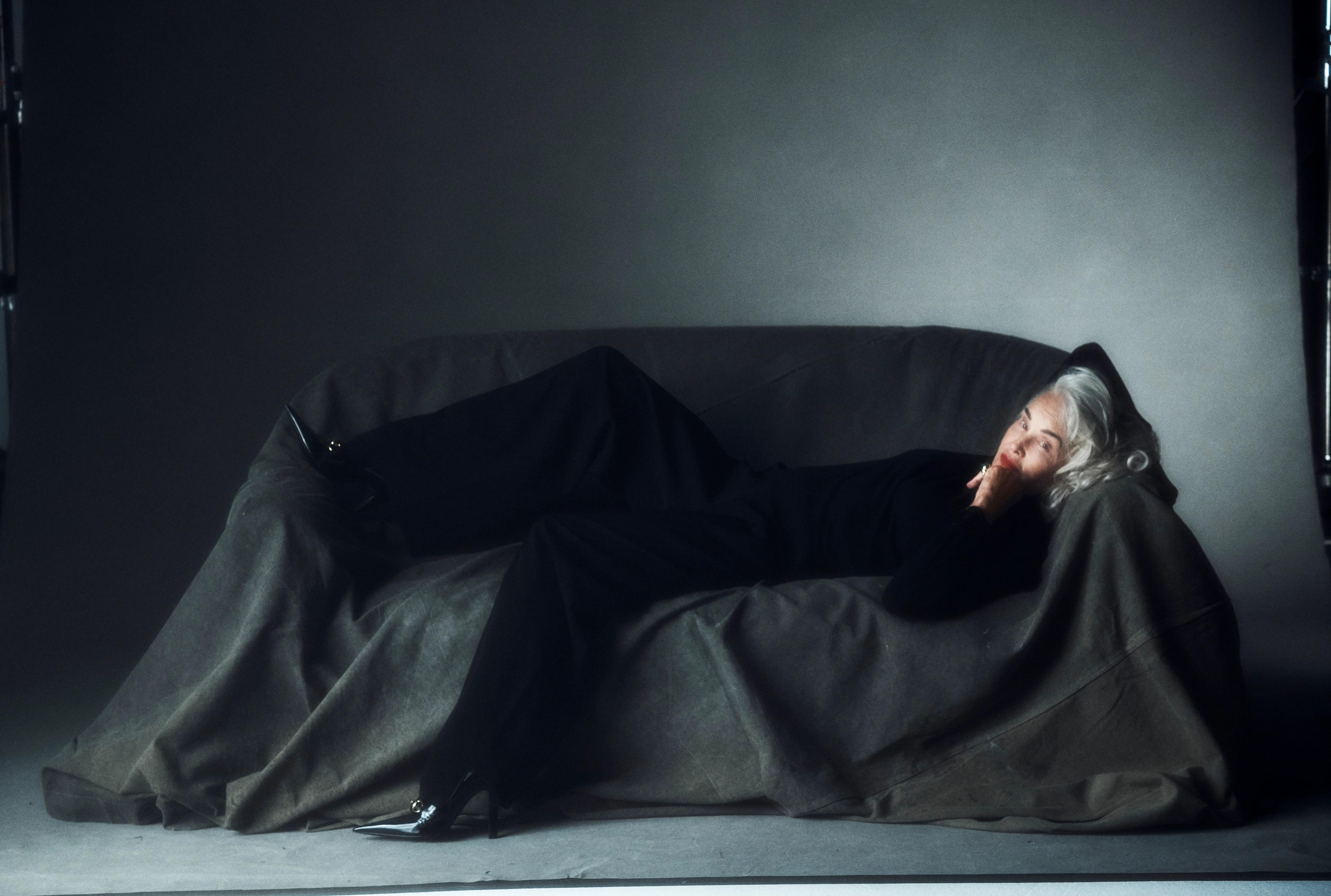
Top and trousers by CELINE. Ring by BELPERRON. Vintage cuff by TIFFANY & CO. from MAHNAZ COLLECTION. Shoes by GUCCI.
IN YOUR BONES
Words: 3477
Estimated reading time: 19M
Cinema icon Jessica Lange is joined by actor, collaborator, and friend Lily Rabe to discuss a changing Hollywood.
By Jocelyn Silver
Jessica Lange’s first magazine cover came in 1976. In the photo, she is clenched in the enormous animatronic fist of King Kong, mouth open to scream. It was her first movie, after years of living an artist’s life in Europe, and the critics were unkind. Little did they know. Jessica has a speaking voice that recalls the early days of MGM, and a poise that those of us who didn’t move to Paris in the early ‘70s to study under a master of mime could not begin to comprehend.
She is drawn to characters she politely refers to as “on the edge,” drawing acclaim for her portrayals of women who have lost a few of their marbles, or had them forcibly removed: Frances Farmer, Blanche DuBois, Amanda Wingfield, Edith Bouvier Beale, the woman whose legs were chainsawed off on American Horror Story. She has played Mary Tyrone, the morphine-dependent matriarch in Eugene O’Neill’s autobiographical play Long Day’s Journey into Night, three times now, twice onstage, and now in a filmed adaptation. She says she can’t play the part for the rest of her life, but that if the opportunity arose, she’d probably take it.
Lily Rabe, a regular co-star and collaborator, came to see Jessica at her home in New York City, where the two easily spoke at length about their shared craft, the ghosts that roles leave behind, motherhood, and a changing film industry.
LILY RABE: I’ve seen you play this part twice now. And you’ve played it three times.
JESSICA LANGE: I did. First in London many years ago, and then in New York ten years ago. And then we finally got around to being able to film it, but it’s been a long, long, long road to get this film out finally.
JL: I remember that performance so viscerally. It was before I knew you personally, but it stayed with me in such a deep way. And then getting to see this film and getting to see you play this part again was so special. It’s like sand sculptures that blow away when we do theater, but now I can go back and watch you play Mary Tyrone as many times as I want.
I swear to God, there is no greater part that you will ever encounter than this character of Mary Tyrone. And I think, because Eugene O’Neill was writing from such a place of love and forgiveness and this deep well of sorrow and pain and basically truth, there’s not a false moment in this play. So make sure you play it if you ever get the opportunity, because even in comparing it to some great roles that I was able to do, nothing compares to Mary Tyrone.
LR: Nothing compares to your performance as Mary Tyrone. I did The Winter’s Tale this summer.
JL: And I’m so sorry, I can’t believe I missed it. I was out in my cabin in the woods.
LR: Well, part of the problem with those Shakespeare in the Park runs is they’re so fast. But with those plays and with O’Neill and with Shakespeare and with Ibsen, the grieving period when it’s over is so intense. And it seems for me to get more and more so, to the point where you just think the only solution is to play the part again. And I can only imagine after the first time you played [Mary Tyrone] that it just felt like there is no bottom, there is no end, there is no feeling, you just want to keep going.
JL: Jonathan Kent, who directed the stage version of it in New York on Broadway – we had talked about it from the beginning, the idea that we should film this, which is always kind of your instinct just so that you’ve got some record of it other than a little video stored at Lincoln Center, in the library there. So we had talked about it, nothing came of it. Especially in the film industry, and I use that word ‘industry’ now because it all feels very corporate to me, and it feels like big business. It’s not the film world that I started out in, that’s for damn sure. But getting a film like this made is really, really hard. And then about maybe four or five years after we finished the run of the play, Jonathan called and said, “We’ve got the money.” I mean, out of the blue, it was like this miracle. So we cast, we all got on a plane, went to Ireland. They had built this beautiful set that doubled for the coast of Connecticut. We did two weeks of rehearsal and we were rehearsing like a play.
LR: Had Ed [Harris] ever done it?
JL: No, Ed hadn’t done it. I worked with different actors on both stage productions, so we were getting used to each other, of course, but we had a great cast, Colin Morgan and Ben Foster and of course Ed, and there’s no one better than Ed anywhere. And we rehearsed it like a play and then we had our first day of shooting. We went out to this magnificent set. We shot that first day. Everybody was feeling good. We came back the next day and the producer arrived on set and said, “We’re shutting down. The money has fallen out and we are not going to continue.” And that was it. Unbelievable indeed. But the great thing was that we all stayed, even though there was zero prospect of getting money to get this thing up and going, somehow we all just determined, “Well, yeah, we’re not leaving. We’re going to stay here.” And three weeks later, it came back. By, like, a miracle.
LR: When I did [Ibsen’s] Ghosts, I thought, ‘God, this is a part I’d love to play again in 10 years, 20 years.’ What was that like, coming back to this part? Were there things that felt just completely new to you because of the life that you had lived in those 10 years, and then things that felt so familiar?
JL: During that interim period between when the play came down and when we shot the film, there were huge life changes for me, which of course, as we know, add to everything that you’re carrying around. Your grief, your sorrow, the mourning period. Everything is there under the surface. But also, and you probably have found this, I would guess, with these roles that kind of are life changing for you, that they stay with you and you don’t even realize it until you’re in a rehearsal hall and suddenly it’s like it’s been stored there in the marrow of your bones or something.
LR: Sometimes when you’re finished with a part, you’re really ready to say goodbye. I’m done. Thank you. But with these women – I’ve never done O’Neill – but with Shakespeare and with Ibsen, you just think, ‘I hope I’m lucky enough to have you stay with me. Please don’t leave me. Please stay with me.’ And I feel like in a way I’ve grown up by them. They’ve taught me kind of who to be and who I am.
JL: I hate to use the word, but I think it’s true: they haunt you. They don’t just stay with you, but they haunt you, and they’re there. I felt that when I did Frances Farmer, I felt her presence with me long afterward. I felt that when I did Blanche DuBois, which I also ended up doing on three different occasions. I mean, she was just a haunting presence in my life for a while. And then with Mary Tyrone, of course. But it has to do so much with the writing as we know. Some things you do and it’s like, you just have to work so fucking hard to make anything make sense or work. But when you’ve got this amazing piece of literature, this writing that just keeps feeding you.
LR: It does sound kind of otherworldly and it is hard to articulate, but I do always feel when you get to play these great, great parts that you’re just being plugged into some ancient thing, some part of history. And it does feel like a kind of haunting, but a beautiful one, and very often one that I don’t want to go away.
JL: Yes, you hold onto them.
LR: You want them at the foot of your bed and you want them in your bones. [I wanted to ask about] your approach to how you choose something. I mean, of course it has shifted over the years, but how might you describe it for yourself in comparison to perhaps the perception from the outside, what that might be about the choices you’ve made or why you’ve made them? What is the truth? My mother [actress Jill Clayburgh] would talk about this too, where she would read something about why she had made a choice she had made about her career. And she would go, “This is hilarious. That’s so far from the fucking truth of why I made this choice or why I didn’t do something or why I have been working or haven’t been working or whatever it is.” Can you speak to that?
JL: Well, certainly for me, and I actually did this not too long ago. I went through my, what do you call it?
LR: IMDb?
JL: Yeah. And counted how many films I had made. I’ve only made about 33 films in something like 50 years.
LR: That’s not only! That’s a lot of films. But I know what you’re saying.
JL: Because you read about some actor and he’s done 80 movies, you know what I mean? So I did 33 films in 50 years. But of course, during that same time, I was doing a lot of theater, long runs. I was doing some television already, early on, before so-called film actors were doing TV, because I had the opportunity to do interesting things with that. But my choices. This is tricky because so many times, I turned down things that ultimately, when I look back, I wish I had done. But I had family concerns. My children were little. I didn’t want to take them out of school. I was with a man who didn’t like me to work, so that became a difficulty, of course. And then you turn down things or your judgment gets kind of skewed. You see something and you think, ‘Jeez, I’ve got to work. I haven’t worked in two years.’ And you end up deciding to do something for the wrong reason, because you want to work, or because you want to work with so-and-so, but the script really isn’t that good. And then you convince yourself, you talk to yourself, “Well, I know the part’s not there, but I can make something of it.”
Now, in later years, I wouldn’t give that advice to anybody. It has to be on the page, because those are your guardrails. I can’t say that I made the best decisions. Most of the time I chose by reading the first couple pages. If I had an emotional reaction to something on the page, then I would think, “Okay, I want to do this.” But I have found over time that maybe that’s not the best marker either. I don’t know. I mean, how do you decide? You’re now raising two young children? Three young children!
LR: And a stepdaughter, but she’s grown now. So there’s four kids and three little ones. Thinking about you and every conversation we would have, it’s all part of it. It isn’t a separate conversation about being a mother and being an actress. It’s all one thing with you, and certainly for me. I never know how to make choices. I also always want to do plays. Rarely is that a decision that any business manager is happy with. But I don’t even know how to think about it as a businesswoman.
JL: No, I never did. I never made any money in this business. Minimum amount. They’d say, ‘Oh, you know what? We can’t really pay you anything.’ And I’d say it’s okay, that’s all right. And sometimes I look at these films that I turned down and I think, ‘That one was great. Jesus, what was I thinking?’ But you know what? My kids were little. We were out on the farm in Virginia. It was like, I don’t want to go away. I want to be here.
LR: Even if it goes on to be whatever it is. My mother was very much the same. She turned down so many things and many of them were big movies. She didn’t regret it because it was time with her family. And that’s just who you are.
JL: I mean, nothing in my life has ever been more important than being a mother. It’s so clear to me. I have zero regrets about that. Absolutely not.
LR: Are there people in your life, whether it’s actors or directors or writers or creators where you feel like the relationship has a shorthand, something that you would always go back to?
JL: It’s still what we talked about. You can’t just do it because you love working with this person or being directed by this person. I have learned that as I’ve gone along. There has to be something there for you to play because you can’t just make it up. And I did convince myself sometimes, “Oh, I can make something of this or I can make something of that.” But no, it doesn’t work. But as far as other actors, I mean, we did those little things in American Horror Story, and that is a genre onto its own. But when we worked together on Lillian Hall, it was great because we never had to talk about anything. It was like another entity was created between us. I love working with actors like you because there’s no friction, there’s no tension, and it has this kind of natural, organic velocity to it that makes acting worthwhile.
LR: I loved doing that with you so much. I loved everything we did on Horror Story too. What’s so wonderful about doing that show too is that it’s always these new characters, but you can have this familiarity. That was such a profound experience that is hard to put into words.
JL: I mean, the fun thing about doing American Horror Story, of course, was it was like a repertory theater. We were just like actors for hire. “Okay, now you’re going to play a witch. Now you’re going to play a crazy nun. Now you run a freak show.” That was my favorite part about it.
LR: Well, this is sort of an upsetting topic, but you alluded to it earlier, when you said that the industry has become such an industry. How do we – and I mean the two of us and collectively – how do we stay hopeful? I can’t even imagine because it’s changed so much for me during the time that I’ve been working, you were really there when it was actually great.
JL: No, I think about that. I think about when I started, in 1976. So I was at that ascent of just great filmmaking, great stories, great writing, great directing. When I think of the directors that I worked with in the beginning, like Bob Rafelson, Bob Fosse, Sidney Pollock, Karel Reisz, Tony Richardson, Costa-Gavras, just on and on. These amazing directors and great stories, beautifully written, characters that just kept unfolding in front of you. And I also worked with great cinematographers, like Sven Nykvist. We were shooting actual film, which of course makes it all the more great. But the director would be standing right next to the camera watching you, sometimes just three or four feet away. He’s there and you feel his presence. It’s almost like a synergy, an exchange of energy. You can feel his energy coming into you and your energy moving him. It was just thrilling. Now, of course, it’s video village or digital. When I use the word alchemy, that’s what film felt like to me at the time. It was magical. I feel lucky that that’s how I started. And I played those great parts, Frances Farmer, Patsy Cline. What we’re doing now is such a thin approximation of what filmmaking used to be. And I hate to sound that way because it’s an old fogey complaining, but I don’t know. It doesn’t have the same kind of thrill for me that it did. But that could also be because I’ve been doing it for 50 years, and maybe for young people coming up it’s different. I have a nephew who was auditioning and trying to get into acting, but he would have to make self-tapes and send them into the void. You don’t actually interact with another human being. You’re just standing alone in your bedroom with a sheet behind you and your iPhone camera playing a scene by yourself. What the fuck?
LR: I mean, just hearing you talk about it causes this ache. And I do think there are such exciting films still being made and such brilliant filmmakers, but I do feel that there is such a lack of intimacy.
JL: And I don’t know this for a fact, but people have told me this, that people are getting cast now because of how many followers they have on social media? Holy shit. Holy shit! That is just insane. I’m not saying they’re not making good films anymore. But it feels to me just like almost everything in this country, it’s been corporatized, which is unfortunate because it is an art form. It’s not just business.
LR: It sure isn’t. Well, okay. So Mary Tyrone, you said that in the making of this film, you did feel in some way that perhaps this was—
JL: The last time.
LR: Is there someone else, whether you’ve done it once or twice, that you want to [play again]?
JL: I’m too old for everything.
LR: No, you’re not.
JL: Yes, I am. I mean, come on. I was saying this to [director Michael Cristofer] the other day actually, because years ago we did some readings of Tennessee Williams. Oh, this was maybe 20 years ago or something like that. I think it was the anniversary of his birthday, and there was a celebration and we did readings at the 92nd Street Y. I read from The Night of the Iguana – now there’s a part you should play! Hannah. We read that great scene where she talks about “nothing human disgusts me.” And Michael was reading with me. The other day he said, “Well, what could you still play?” Basically. I thought, “Well, I mean, I always wanted to play Hannah from Night of the Iguana.” I always thought that was a great part, but I can’t be traveling around with my grandfather. I mean, my grandfather would be 120.
LR: Oh, I don’t know about that.
JL: I often get a question, “What would you like to do?” And to tell you the honest truth, I can’t think of anything.
LR: Well, I want to think of something. But I have a real agenda. Because there’s got to be a part for me.
JL: Yes, because we have to work together again.

Shirt and jacket by SAINT LAURENT BY ANTHONY VACCARELLO.
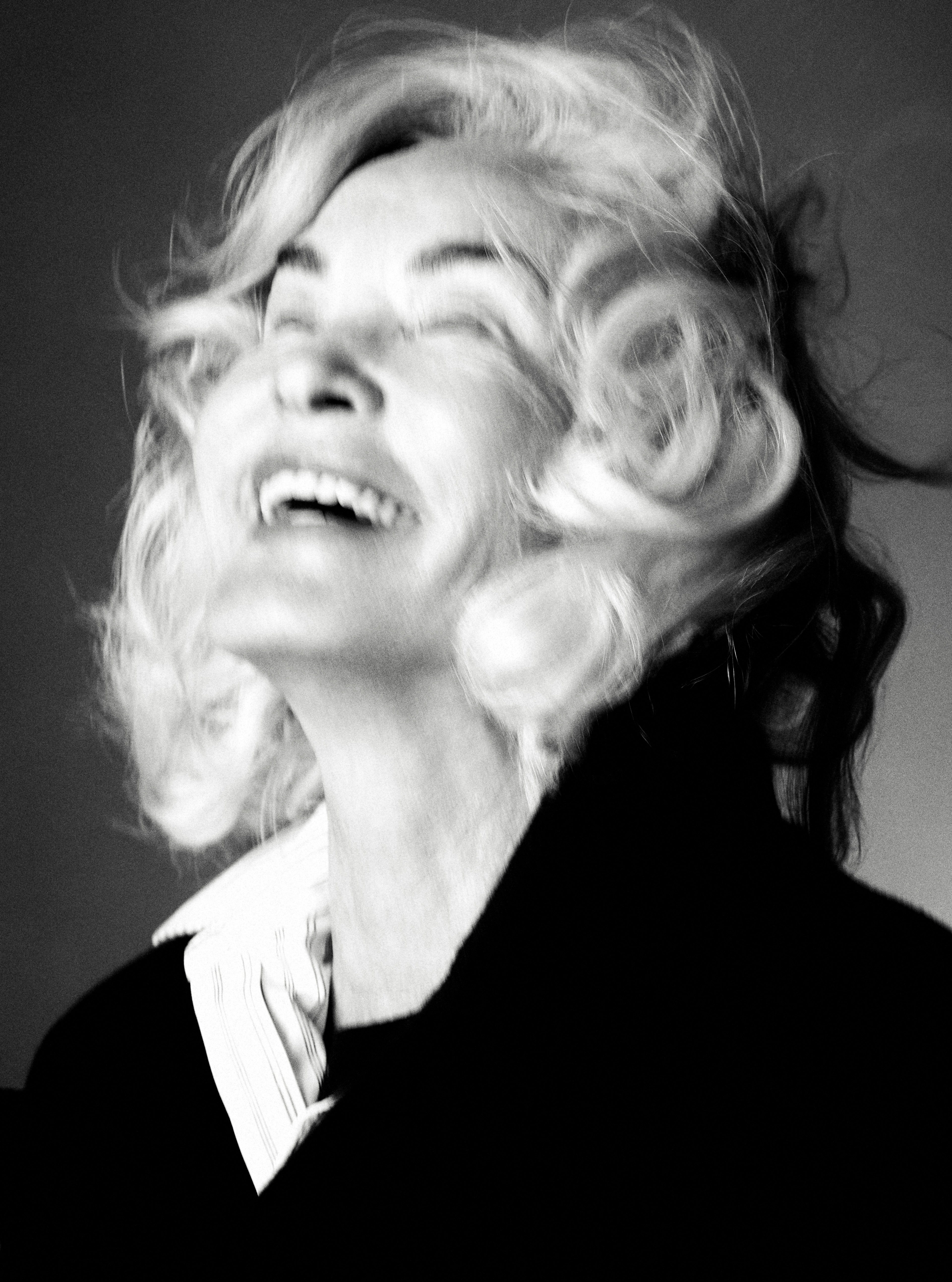
Shirt and jacket by SAINT LAURENT BY ANTHONY VACCARELLO.
"PEOPLE HAVE TOLD ME THAT PEOPLE ARE GETTING CAST BECAUSE OF HOW MANY FOLLOWERS THEY HAVE? HOLY SHIT!"
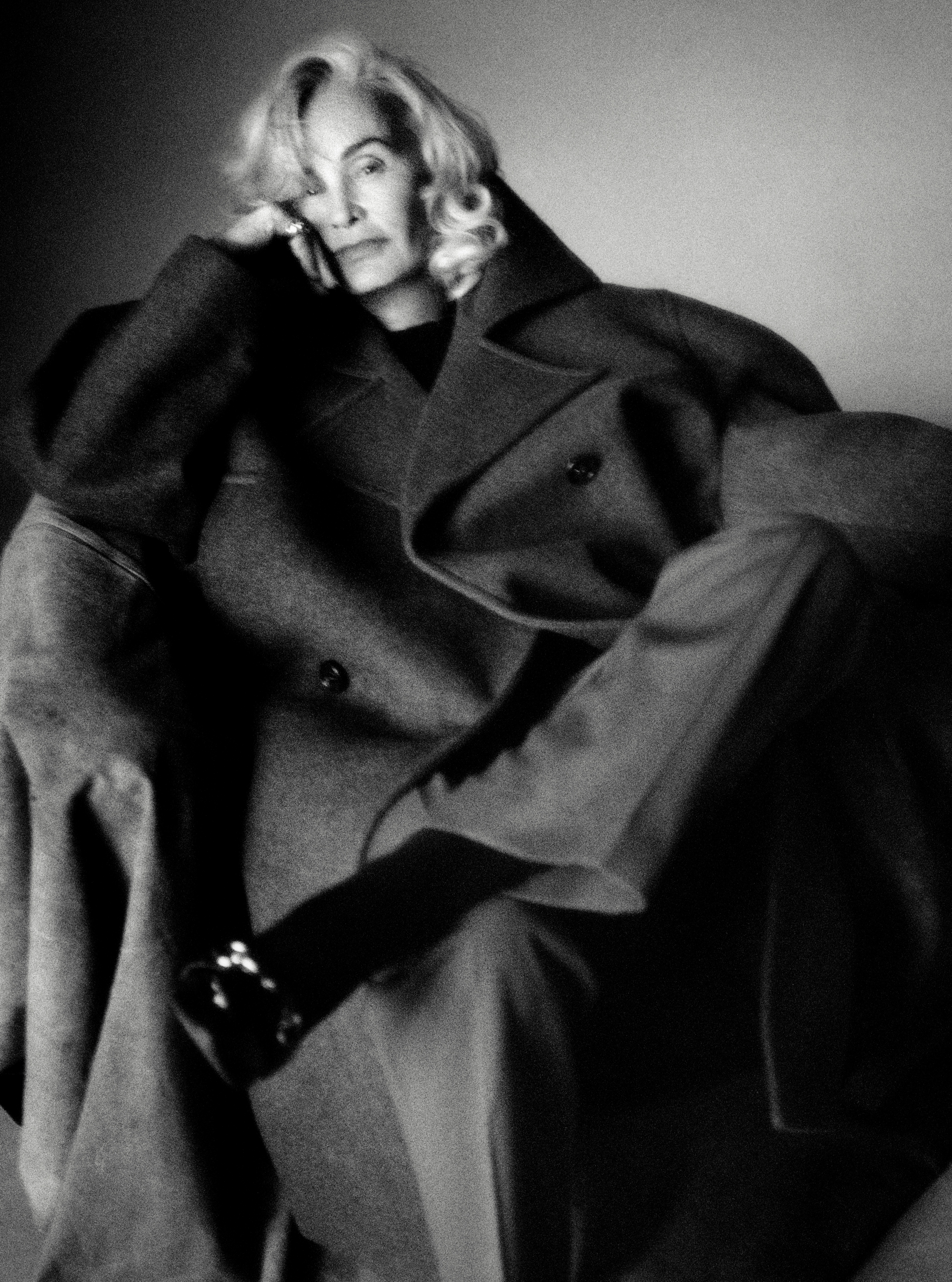
Jumper by LORO PIANA. Coat by BALENCIAGA. Trousers stylist's own. Ring by BELPERRON. Socks by COMME SI. Shoes by GUCCI.

Top by LORO PIANA. Vintage earring by MAHNAZ COLLECTION.
EIC + CREATIVE DIRECTOR
SARAH RICHARDSON
PHOTOGRAPHER
NED ROGERS AT ART AND COMMERCE
TALENT
JESSICA LANGE
FASHION DIRECTOR-AT-LARGE
PAUL SINCLAIRE AT INTREPID LONDON
FASHION
ELISSA SANTISI AT A CREATIVE PARTNER
HAIR
ESTHER LANGHAM AT ART AND COMMERCE
MAKE-UP
MARK CARRAQUIILLO AT INTREPID LONDON
MANICURE
MEGUMI YAMAMOTO AT SUSAN PRICE
SET DESIGN
MARY HOWARD AT MHS ARTISTS
SET DECORATOR
LAURA PARIOT AT MHS ARTISTS
TALENT DIRECTOR
TOM MACKLIN
PHOTO DIRECTOR
COURTNEY KISSANE
PHOTO ASSISTANTS
ALEX HOPKINS, CARLOS VIGIL, ALEX JOHNSTONE
STYLIST ASSISTANTS
COCO KNUDSON DONOHUE, ORNELA QORRI
TAILOR
MARIANNA IVANOVA
HAIR ASSISTANT
CLAIRE BEATON
MAKE-UP ASSISTANT
CAROL HARTRIDGE
SET DESIGN ASSISTANTS
JESÚS CHARRIS, LAILA IBRAHIM, SETH DANLEY
PRODUCTION
ART AND COMMERCE
Beyond Noise 2026
EIC + CREATIVE DIRECTOR
SARAH RICHARDSON
PHOTOGRAPHER
NED ROGERS AT ART AND COMMERCE
TALENT
JESSICA LANGE
FASHION DIRECTOR-AT-LARGE
PAUL SINCLAIRE AT INTREPID LONDON
FASHION
ELISSA SANTISI AT A CREATIVE PARTNER
HAIR
ESTHER LANGHAM AT ART AND COMMERCE
MAKE-UP
MARK CARRAQUIILLO AT INTREPID LONDON
MANICURE
MEGUMI YAMAMOTO AT SUSAN PRICE
SET DESIGN
MARY HOWARD AT MHS ARTISTS
SET DECORATOR
LAURA PARIOT AT MHS ARTISTS
TALENT DIRECTOR
TOM MACKLIN
PHOTO DIRECTOR
COURTNEY KISSANE
PHOTO ASSISTANTS
ALEX HOPKINS, CARLOS VIGIL, ALEX JOHNSTONE
STYLIST ASSISTANTS
COCO KNUDSON DONOHUE, ORNELA QORRI
TAILOR
MARIANNA IVANOVA
HAIR ASSISTANT
CLAIRE BEATON
MAKE-UP ASSISTANT
CAROL HARTRIDGE
SET DESIGN ASSISTANTS
JESÚS CHARRIS, LAILA IBRAHIM, SETH DANLEY
PRODUCTION
ART AND COMMERCE
Beyond Noise 2026