Noise
ISSUE NO. 06: VICKY KRIEPS
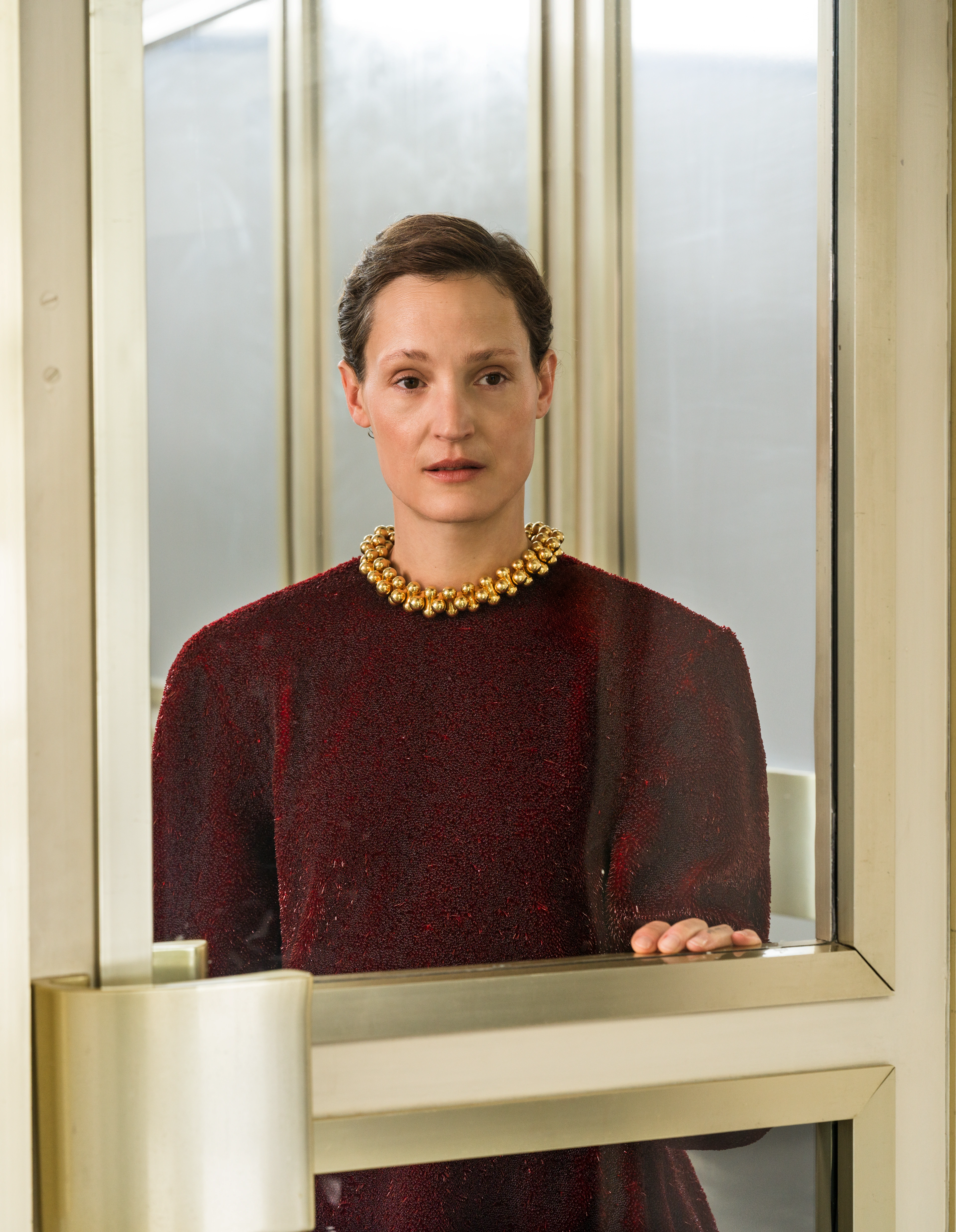
Vicky wears top and necklace by Bottega Veneta.
DANCERS IN THE DARK
Words: 3123
Estimated reading time: 17M
Vicky Krieps sits down with Charlotte Rampling in Paris to discuss the enduring power of acting.
By Caitlin Hall
The word formidable has often been used to describe the performances of both Charlotte Rampling and Vicky Krieps. Yet for all their perceived severity, their portrayals are often marked by a profound tenderness and understanding.
A Luxembourgian born in 1983, Krieps rose to international prominence with her serenely self-possessed performance opposite Daniel Day-Lewis in Paul Thomas Anderson’s Phantom Thread. Since then, she has continued to build upon a catalogue of resonant performances, alongside a radical candour in her public appearances. She seems to have a shrewd instinct for what works, shifting between small budget films and Hollywood blockbusters. In 2023 she played the poet Ingeborg Bachmann in Margarethe von Trotta’s romantic biopic, Ingeborg Bachmann – Journey Into the Desert, the same year that she featured in the action film The Three Musketeers: Milady.
Charlotte, born in London in 1946, emerged as one of European cinema’s most compelling figures in the ‘60s, in part for her particular vulpine elegance and commanding screen presence. Her performance in Liliana Cavani’s The Night Porter (1974), in which she played a concentration camp survivor who becomes involved in a sadomasochistic relationship with her former captor, remains a defining role in her career. Like Vicky, Charlotte’s trajectory also owes much to the deliberateness of her career choices, spanning collaborations with filmmakers including Luchino Visconti, François Ozon and Woody Allen.
The pair first met while filming Jim Jarmusch’s latest, Father Mother Sister Brother. Here, they catch up in Rampling’s Paris apartment, shortly after Krieps wrapped filming Emma Doucet.
CAITLIN HALL: How familiar were you with one another’s body of work prior to starring together in Jarmusch’s movie?
CHARLOTTE RAMPLING: I didn’t know much about you Vicky, except that I’d seen you in that wonderful film, Phantom Thread, which I know you’d had trouble with. But it was that film which launched you into the big film world. When we met to do Jim’s film, it was like meeting a sort of soul sister. We can transcend generations.
VICKY KRIEPS: Yes, I would consider you a soul sister, not a soul mother.
CR: I think so too. I was your mother in this lovely film we did with Jim, which is such a beauty.
VK: It never felt like there was a generational gap. We were colleagues and we were working together, and you happened to have the mother role, and I happened to have the daughter role.
CR: As you go through life, some people you meet are just timeless, whatever generation they are, because you connect on a level where you feel that you have somehow lived with them before, and that you’ve had other adventures in other times.
CH: How has this year been since that film was released?
VK: I’m here in Paris to prepare another film. Le Sens de la Vie (Emma Doucet). That’s finished now, and it was wonderful. I felt like when I was doing the film, my soul was allowed to float. It was very peaceful. It was so nice to make a film where I’m not being harmed. It’s a love story, and I think we don’t do enough of them anymore. And it’s a love story with a happy ending, which I’ve never done. I knew that doing a film with a happy ending would help me. Working on something positive, I needed that.
CR: I think you really did. When you told me the subject, when we were having lunch with Lazaros [Gounaridis, Krieps’s husband], I thought, ‘Ah, this is really beautiful for her.’ That was because we have very parallel journeys, I feel. In terms of our intentions – what filming actually means. Not because we want to be film stars, because that’s really nothing to do with it. It’s about the purpose we have, how our inner lives are affected by it, and how we hold it when it gets too deeply difficult, because we need that difficulty to challenge us. I say we, because I’m sharing the journey along with you. That’s how it was for me. I needed to have really challenging subjects so I could take risks, and to see where those actually take you when you’re a young woman. With Jim [Jarmusch], for me, it was like a beautiful dance. It was an extraordinary feeling to do that film because I’d been really wondering what direction I wanted to go in – in terms of the challenges at this stage in my life.
So here we are, you actually have a happy ending. I was always more into the challenge of difficult endings. Where are you now? What are you thinking now?
VK: Now I feel like I’ve healed something. I think we share that too, some quality that makes us want to go to where it’s uncomfortable or challenging. There’s something in us that wants to go deeper in life. Almost, ‘What is this experience?’
CR: You have to dare to explore it. You don’t know why but you have to do it, because that’s when the healing comes. But if you don’t have the healing, then you get too damaged. What you’re saying is great, that’s the trick. That you felt healed by it. That means you can move on and do even more difficult things, it’s part of the inner journey.
CH: You’ve both taken on often intense and sometimes quite dark roles, but it sounds like you appreciate the opportunity for lighter and smaller parts?
CR: It brings out so much of another kind of potential. People think I’m going to be very serious, but what we have in common is a great joie de vivre. I’ve got a good sense of humor, but quite often it’s very damaged, because I’ve had things happen – old traumas come back – and you know, we have to get through life. I’ve taken lots of smaller roles, where I don’t have to carry the film. It was wonderful to be able to explore other ways of being by not taking on the whole load of the film. As I said, I’m not out to make a career out of my acting. I’m out to have an experience and give people different experiences through my work.
My beginning was The Night Porter. It was very dark at that time. It didn’t become what it became until afterwards, but I carried that in me as far as the world was concerned. But then it wasn’t even shown widely at first. What is interesting, is that as you go through, you dare, because you’re in tune with yourself – you Vicky – your needs, what you feel that you need to let go of, which is a lot of the pain that we have. We keep going back into the pain through the roles because that is necessary, until suddenly you think, ‘I’m feeling better. Here’s a script that has a happy ending. I’d like to do that.’ This is when you realize you’re moving on. Yes, you can still do the old roles if you want to, the tortured people, but you can also add other people in there.
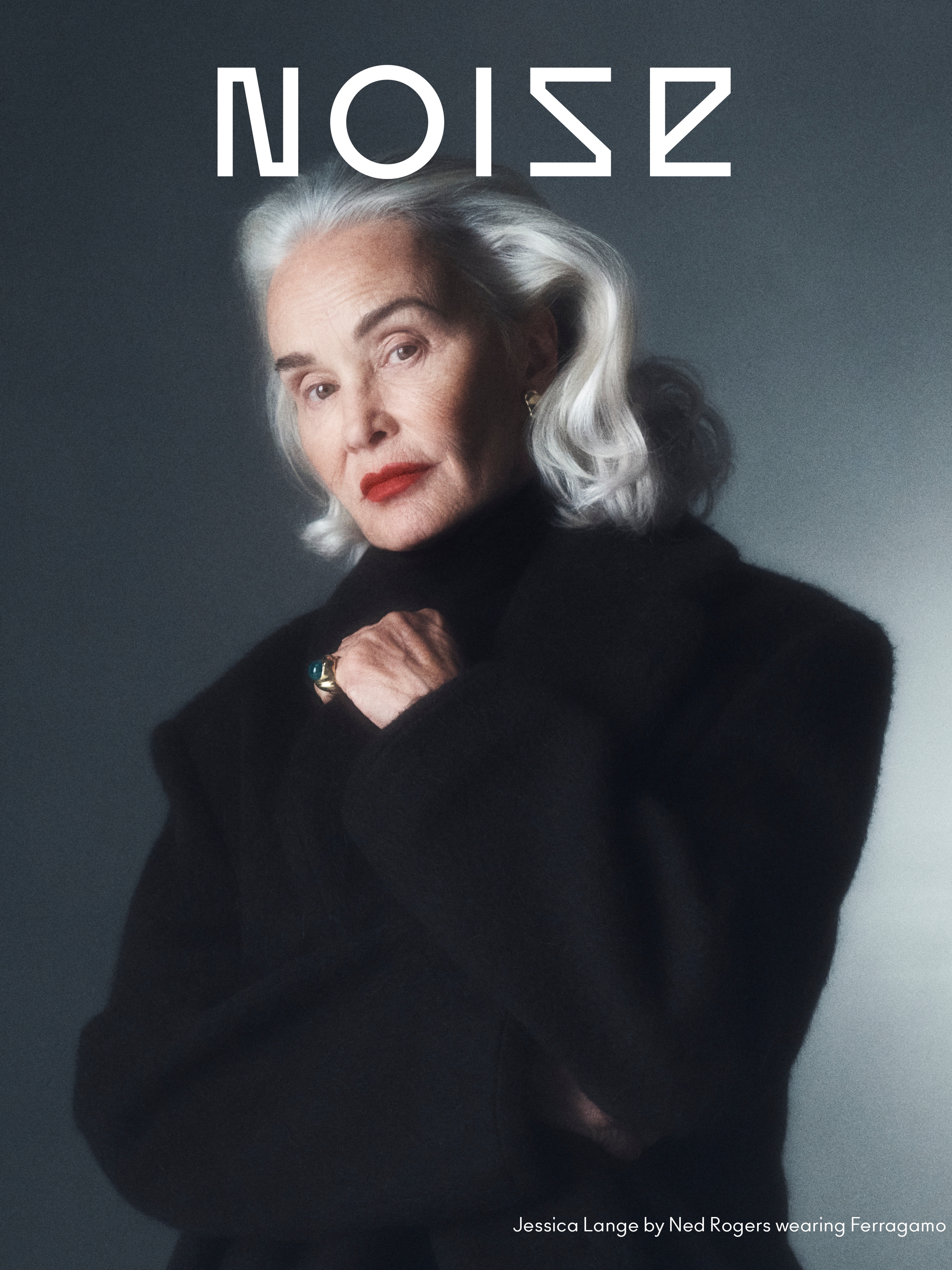
VK: It’s like that. It makes me think of the pictures you showed me that you did for Beyond Noise.
CR: I just went wild. We had fun with the photographer. ‘It can just be anything,’ he said. ‘Just be what you want.’
VK: I love that because that isn’t what people would expect from you. As you say, they might think of you seriously.
CR: Oh yes, the Grand Dame, because I can be quite fierce. Sometimes when I look at the films, I think, ‘Wow, is that really me?’ I see why people are a bit impressed by me because I have this very stern and dominating side, which is so not me. But it’s all part of the creativity that lives within us, and we mix it up. Like with painting, it’s all different colors.
VK: Sometimes I think we paint with an invisible brush, a lot of what we are painting and creating is invisible, and sometimes also silent. It’s really in these in-between silences.
CR: Because it’s in-between stages, as you’re evolving with the character. If you’re that kind of performer.
VK: The word always struck me. Per-form. Are we giving a form to life?
CR: We are in a sense.
VK: So we are a little bit like shamans or guys dancing around the fire. Therefore I think we have to feel the pain as well, if we are honest. And I’m not a fan of hurting myself.
CR: No, it’s things that have happened that cause suffering. We can only evolve through suffering. Everyone suffers. But a lot of us are in denial. We try to avoid really feeling emotional about things. People blank emotions out with food, drink, drugs, or whatever: ‘No, no, no, no, no. We must carry on.’ My education was, ‘You don’t have emotions.’ In England it was like that – stiff upper lip. That’s why I came to France, to let that out. This [acting] has permitted me. It’s allowed us to explore that, and actually turn it into a transformative art form, so that we give it to others to have a look at and see what they think. They feel along with us.
VK: We are kind of this vessel.
CR: That’s a good word.
VK: We can feel the pain sometimes, but mostly it just moves through. I was in a bookstore recently, and I stumbled across a book that’s a conversation between Arnaud Desplechin and Catherine Deneuve from 2008. It was so funny because she says the same thing. ‘I always thought I am sort of a blank page.’ I feel that no one ever understood that. Why would they have to understand? People would say, ‘Oh, she’s so slow,’ or, ‘She’s reserved.’ But in a way the slowness is also an act of rebellion.
CH: What do you think might drive a woman to become a performer?
VK: These days I often think about Marilyn Monroe. I mean, I thought of her even when I was 15, and I didn’t want to be an actress. It always puzzled me – I had this gut feeling that something went wrong. You know, this explanation they gave us – she was an actress, and this happens to actresses – they drink, and they take pills, then they die. Like Romy Schneider. I always thought, ‘I don’t know. I think these women wouldn’t die today.’
CR: It was the system.
VK: They were stuck in a time where you were not allowed to just feel.
CR: The ‘60s changed that, and the Nouvelle Vague in France changed that. The various themes of Nouvelle Vague cinema, which explored a different way out of the system, and a more psychological way, because we were coming into more psychological times. Before we did not talk about our feelings. Feelings were not something that concerned other people, although they are the main things that concern us because a lot of the time we’re absolutely miserable. We don’t know what we’re doing. We feel so lonely and so lost, and we’re just individuals feeling that. In fact, there are so many of us feeling like that. But you were an idol. You were the star. You were the precious queens of Hollywood. You had to keep going. She kept going, but she couldn’t keep going very long. She died in her early thirties, because you just can’t keep up with that.
VK: Something has evolved, because I couldn’t have existed in the ‘50s. A woman like me, doing what I do. I think they forced actresses before us, and maybe still in your time, to care whether they were loved or not. I say ‘I don’t care if you like me or not.’ I think before my time, they would have not invited me to the table.
CR: No, you wouldn’t be here.
VK: So, knowing that I’m here – I can’t even believe I’m here – and I’m part of this game that I feel so not a part of at all, but I am, it shows me that things have changed.
CR: Absolutely right. And it’s good that you’re saying this. I came in at the beginning of that, because I started at the end of the ‘50s. It was the beginning of a lot of huge changes because we were just getting over World War II. The ‘50s carried on in cinema in America, all the rather fake entertainment of the lovely girls. Nobody was actually getting into the guts of feelings and exposing them on screen, that only began in the ‘60s. Although there were some wonderful films in Italian because Italy had a real hold on that.
VK: You also allowed yourself to jump from doing English films into doing French films.
CR: Yeah, just jump, you know. But I didn’t do the Hollywood trip because Hollywood terrified me. In the ‘70s I went out there just to see what it was like, and I said, ‘Well, I’m just going to die if I stay here.’
VK: I had the same feeling. I remember telling Daniel [Day-Lewis], ‘There’s a poison here. I can feel there’s some kind of poison inside of this.’
CH: How do you navigate the particular forms of freedom and constraint that come with being an actress today?
VK: I always wanted to also have a life.
CR: Exactly. I said, ‘I have to have a life, and do this.’ You had children early, and I had children early. It just happened, but that saved me.
VK: Yes, and that made you unique. I’m at a much earlier stage, but I sometimes feel similar in the way that I have managed to, not be formless, but to not go into any one form. When I think of you, and all the pictures I have in my mind of you in costumes or fashion. For instance your relationship with Yves Saint Laurent, like I have with Bottega. You can tell there is an openness and interest for fashion, but it’s always you. You wear the clothes and it looks beautiful, but it’s not made to look beautiful. It’s made to look strong. And I think that is something that we both maybe managed to achieve by avoiding the Hollywood train – no one could give us a form.
CH: How did these relationships with brands emerge and what do they mean to you?
CR: Tell me, did you choose Bottega? Did you have a lot of offers with big fashion houses? Because that’s quite a recent thing – stars joining huge fashion houses and having a great time.
VK: It is wonderful. But as you can imagine, for many years in the beginning of my career, I refused.
CR: I would have done that.
VK: There were a few years where I was quite close with Chanel. After Phantom Thread, I had initially said I would not go to any fashion show and I would not do anything fashion related because to me it seemed illogical. Then Karl Lagerfeld broke the spell with a personal letter. I saw that these designers are actually artists. Then I had more experience with going to the Oscars and the machine and I thought, ‘Ah, it’s too commercial. I don’t want to be part of this.’ But I have kids, and I want to do art films, and they don’t pay anymore. Now if you appear in an independent film, you can barely live from it. People don’t know that.
CR: It’s very important to say that.
VK: So me, the breadwinner with two kids, gave in and said, ‘Well, with this I can continue making my art films.’ Then came Louise Trotter. You would love her. She’s like us. She’s this creature who’s very, very good at what she does. Like you said, when you see yourself in a film, and you think, ‘Oh, now I know why people are scared of me’. She has that. She’s this force of nature who knows exactly what to do. But at the same time, she’s like a fairy and very open and honest. Now I have this relationship with her where she will make things for me.
CR: A unique thing.
VK: I always leave it to her vision. She asks my opinion, but I like to follow other people’s visions. Yes, it’s commercial, but this is commerce financing art in a respectful way. I actually feel respected. I’m very, very happy there, and I’ve made peace with fashion, I think.
CR: I’m really happy to hear that. When we get a little bit more aware of the world around us and see that we have to survive – it’s very, very difficult for everybody. Independent filming is always what I wanted to do, but it’s about the reality of the world, not the representation of the world. It’s about who we actually are, whether people care to admit it or not. So we have to survive that, and we have to also support this way of filming. I think it’s a beautiful way to do it.
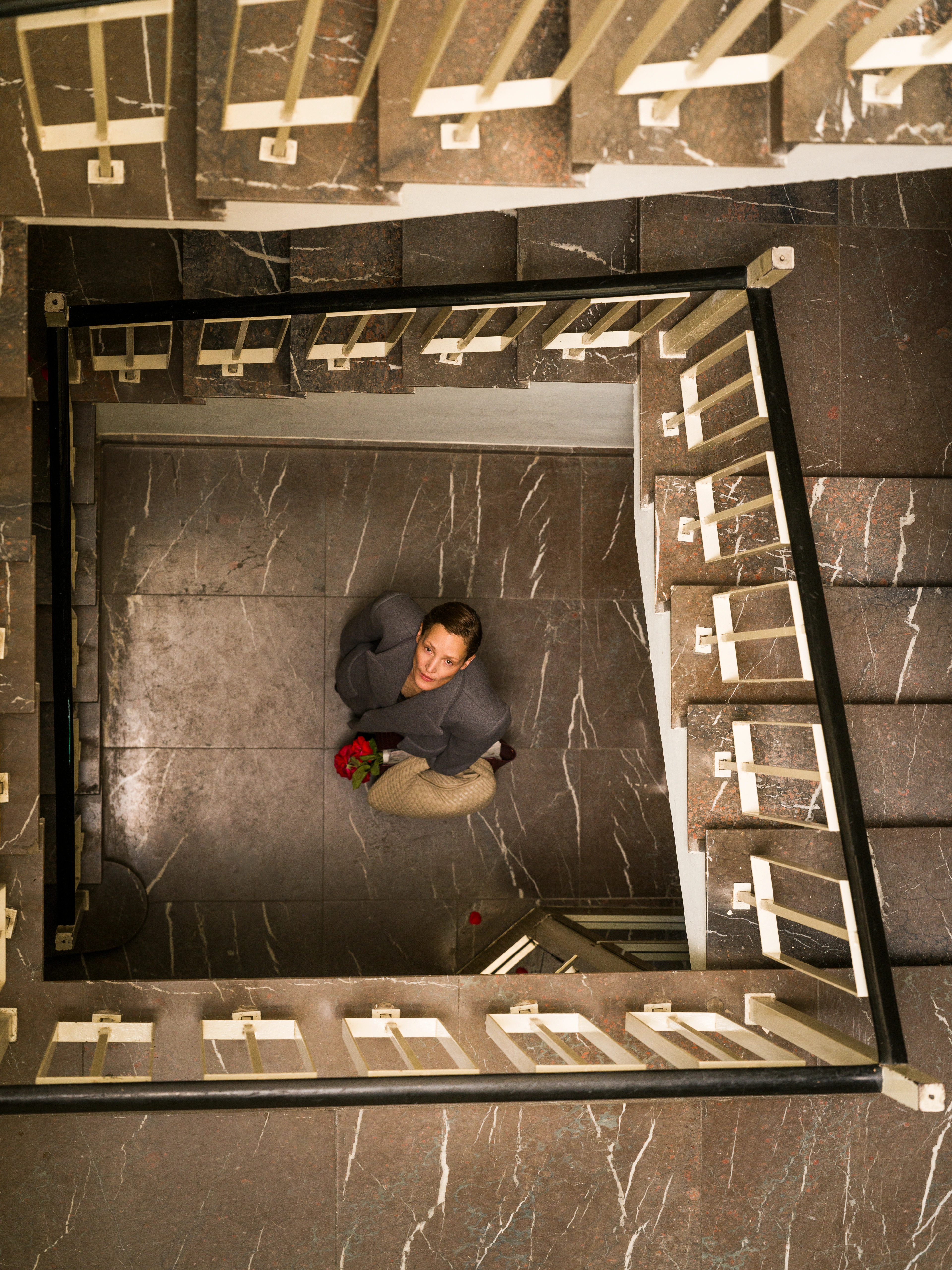
Jacket, trousers, bags and shoes by BOTTEGA VENETA.
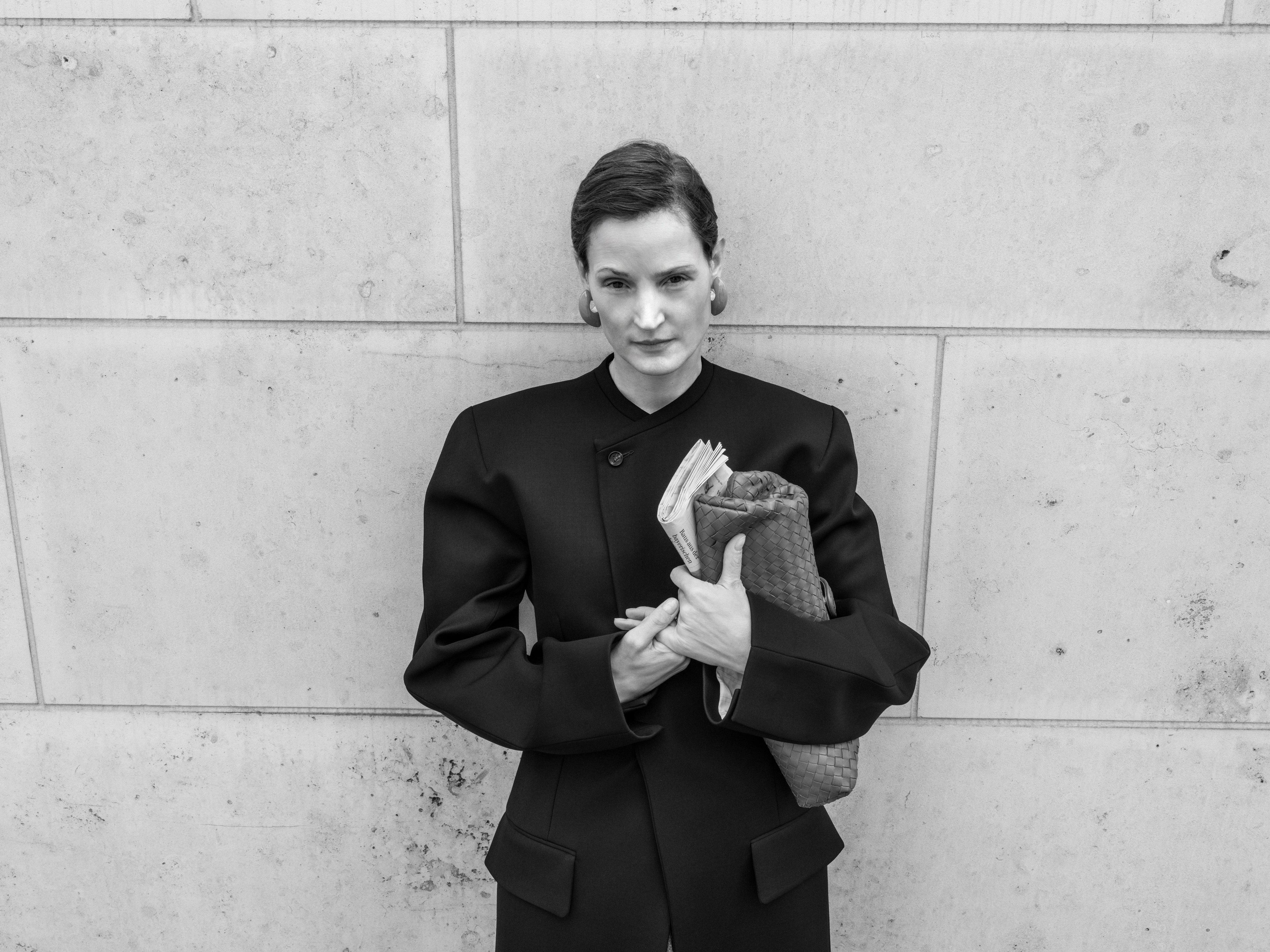
Coat, earrings and bag by BOTTEGA VENETA.
"THERE'S SOMETHING IN US THAT WANTS US TO GO DEEPER."
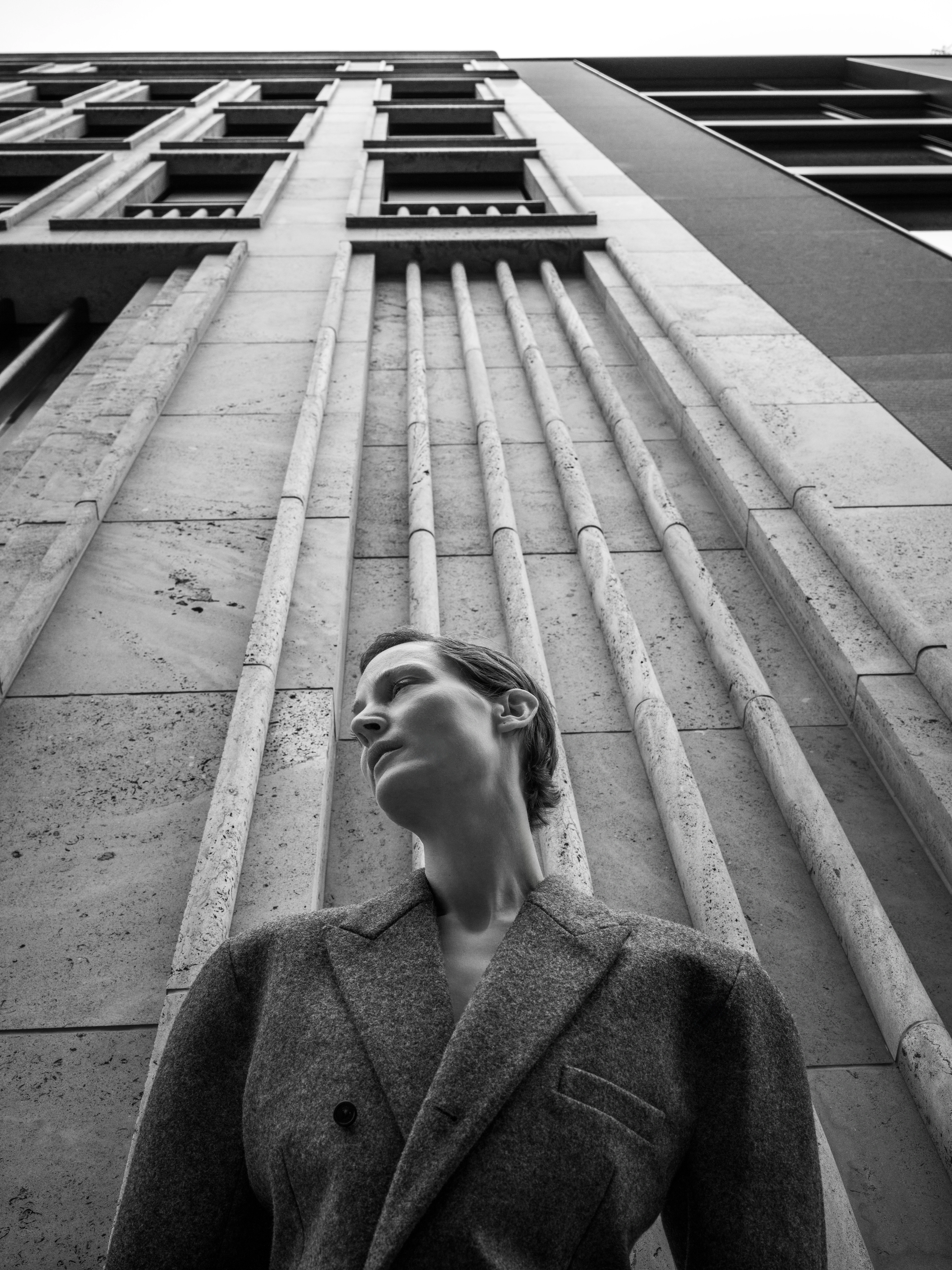
Jacket by BOTTEGA VENETA.
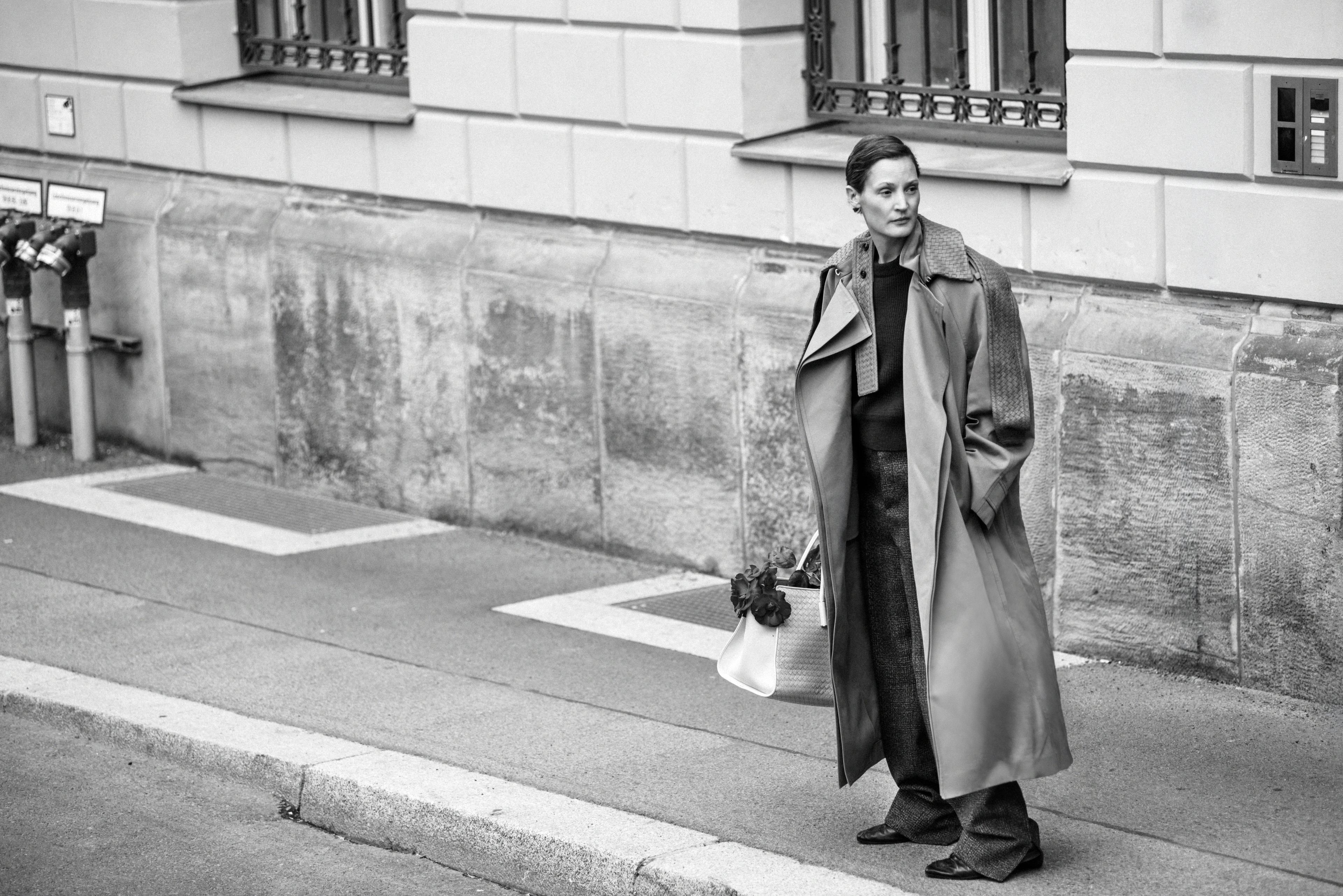
Jumper, trousers, coat, bag and shoes by BOTTEGA VENETA.
CREATIVE DIRECTOR + EIC
SARAH RICHARDSON
PHOTOGRAPHER
BILL GEORGOUSSIS
FASHION DIRECTOR
ALICE LEFONS
HAIR + MAKE-UP
Tobias Sagner
MANICURE
Camilla Inge Volbert
PHOTO ASSISTANT
Melanie Glück
STYLIST ASSISTANT
Stella Raschke
PRODUCTION
Sibel Huz
Beyond Noise 2026
CREATIVE DIRECTOR + EIC
SARAH RICHARDSON
PHOTOGRAPHER
BILL GEORGOUSSIS
FASHION DIRECTOR
ALICE LEFONS
HAIR + MAKE-UP
Tobias Sagner
MANICURE
Camilla Inge Volbert
PHOTO ASSISTANT
Melanie Glück
STYLIST ASSISTANT
Stella Raschke
PRODUCTION
Sibel Huz
Beyond Noise 2026