Noise
RAINBOW DREAMS
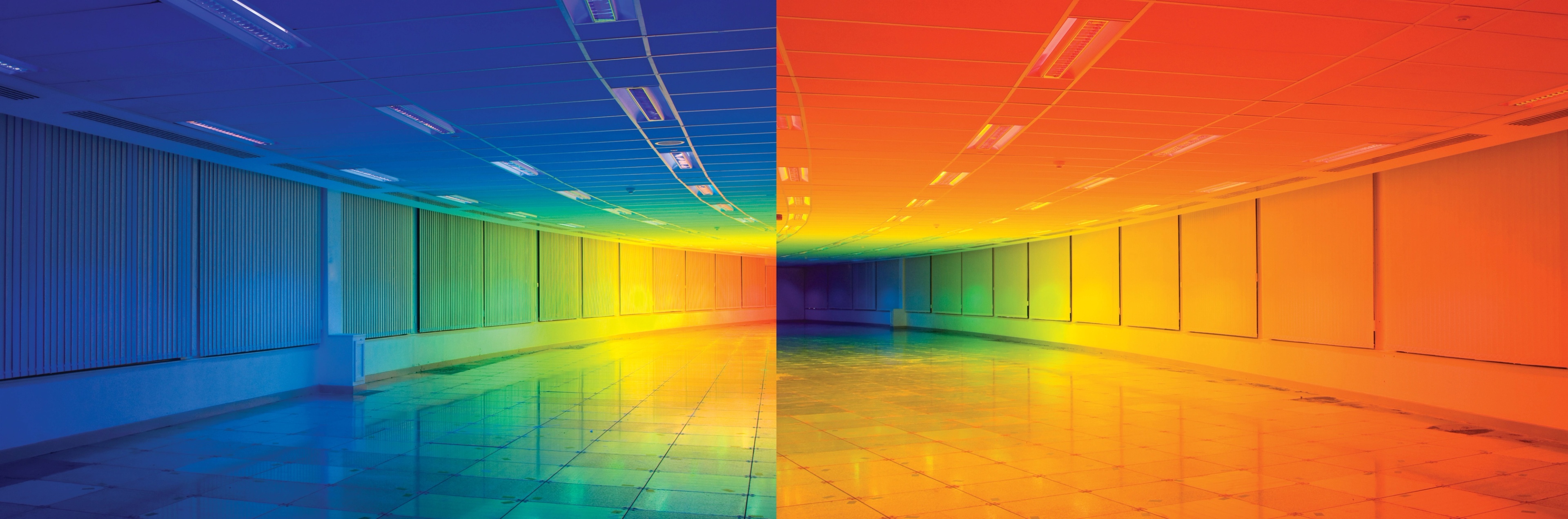
Liz West, 'Our Color,' 2016. Image credit: © Liz West. Courtesy the artist. Commissioned by Bristol Biennial.
RAINBOW DREAMS
Words: 1617
Estimated reading time: 9M
OLGA REI AND VALENTINE UHOVSKI’S NEW ART BOOK LOOKS BEYOND THE RAINBOW, EXPLORING THE TRUE POWER OF THE CHROMATIC SPECTRUM.
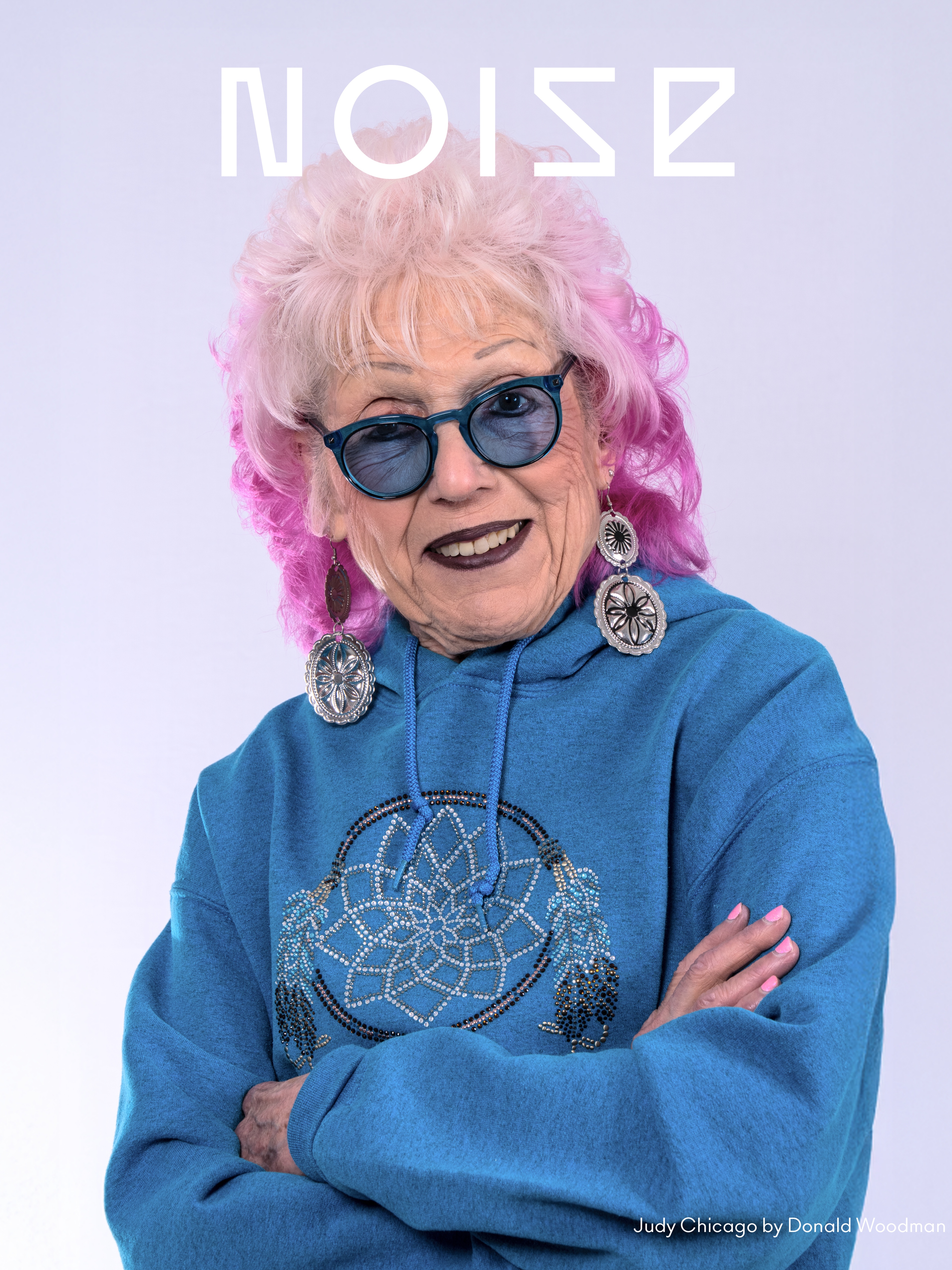
Rainbow Dreams: Color and Light in Contemporary Art, a new book edited by Olga Rei and Valentine Uhovski, brings together over 200 works by contemporary artists around the world, united by a guiding theme: color. Published by Phaidon and featuring the likes of Judy Chicago, Olafur Eliasson, Sterling Ruby, Yayoi Kusama, and Takashi Murakami, the volume explores the infinite possibility of the spectrum through documentation of monumental sculptures, LED light installations, immersive spaces, and more.
Here, Olga Rei and Valentine Uhovski join one of the book’s featured artists, Liz West, to discuss seeking joy in a polarized world, Rainbow Dreams’s curation, and the true power of color.
BEYOND NOISE: How did the Rainbow Dreams come about?
OLGA REI: Officially, probably four years ago. But everything started with a project we were planning to build with a friend, The Rainbow Museum, in Iceland. That was supposed to launch right before COVID, but unfortunately it never happened. During COVID, we started a project called Rainbow Contemporary, essentially partnering with different artists on different charity causes.
VALENTINE UHOVSKI: We just wanted to bring something very hopeful and joyous into the universe, and that eventually became the proposal for the book. Liz was really one of the first artists we reached out to for this collection. There are, I think, 108 artists from around the world, and she was always a beacon of inspiration for us.
BN: Why do you think you’re so drawn to color—and not just any color, but the concept of color itself?
LIZ WEST: For me, it isn’t an aesthetic decision—it’s my life. I think when you are interested in something so deeply and passionately, it runs through every cell of your being. I am the daughter of two artists, and that played a really pivotal role in my understanding of the world. My mom had a studio at home, and my dad had a studio in the garden. He worked with sculptural materials and she worked with cleaner materials, like paint. I would draw in her studio. I learned color theory before I could read, and that was because of my mum’s teaching. She made sure that I would only ever paint with blue, yellow, and red, and I learned to mix colors myself. My use of color in the world, in my installations, in my home, in every direction of life, is completely intuitive and instinctive.
VU: I read, Liz, that you started organizing some of your belongings in a spectrum of colors as a young child.
LW: Yes, I have something called hyperphantasia. That sounds magical, doesn’t it? And it is, but it can be exhausting, too. Hyperphantasia is when you have a very vivid and active imagination. So I can see, build, and walk through installations or environments in my mind’s eye. I don’t even have to close my eyes. I can just feel everything, smell the smells—every sense is activated. With my work, it’s a matter of translating those ideas to all the parties that need to be involved, which sometimes means many people: engineers, fabricators, curators, commissioners.
Part of my hyperphantasia is that I always feel more settled when everything is in a system. Everything I was given went into the color order—even my wardrobe was in color order. It was just a natural way for me to play.
OR: Like you, I have a crazy imagination. I feel color. I don’t know how to explain it, but color goes through me. The way that the book was curated was to essentially take you on a journey of feeling through color. We were trying to figure out, “What order are we going to use to categorize the artists? Is it going to be alphabetical?” Then we realized, “No, it’s going to take you on a journey from light to dark.” It’s a color wave, almost.
VU: Both of us grew up in New York, but we were born in the former USSR. I don’t think people understand, even in the 1980s, how black and white everything was, how gray. I think unconsciously we were drawn to color, both coming to the USA and seeing neon for the first time—seeing incredible, vivid colors.
LW: That’s really interesting. I grew up in the mid 1980s in a small mining town in South Yorkshire called Barnsley, which was really depleted of culture at that time. Then I moved up to Glasgow, a wet, grey, industrial city, to go to the art school. I think, probably, all the work we do—whether that’s curating projects and books or making art—has to do with this want to inject color into the world.
OR: It’s probably fascinating for you to see how people walk through the spaces and environments you create, and to observe how they react. Have there been any unexpected reactions?
Liz West: I’ve seen all kinds of reactions. Some people find the installations far too sensory and will just walk straight back, whereas some people will completely immerse themselves in it. I think that’s what I’m doing as an artist. I’m giving people the gift of the work. I have to take ownership of it, but also it belongs, collectively, to us all.
Everyone comes to my work with their own memories of color. One really fascinating instance was when I first debuted my piece Your Colour Perception. It was a spectral chromatic lighting piece that ran through a 10,000-square-foot indoor space. I’ve recently remade that in a car park, and the older version of the work is photographed in the Rainbow Dreams book. My friend Rachel came to see it; she walked through the spectrum from one end to the other, and then gravitated back to the orange. She was there for a long, long time. I approached her and said, “Rachel, are you okay?” She said, “Yes. I’ve just had the most out-of-body experience. This exact orange has taken me right back to my granny’s flat in the 1970s, and for a minute, I could smell the burnt toast, and I could hear exactly what was playing on her radio.” Color has that power for people.
BN: You compiled so many different artists under the connecting theme of color. What are the distinctions in the ways they use color as a medium?
VU: Everyone uses color in different ways. Some of the works are political, some are therapeutic—and for us, it was very important to showcase works that show different perspectives from completely different artists. It was important to open up our eyes and go beyond the cliché of a rainbow, to see what that might look like. When we started the book, the world changed so fast in a very crazy, chaotic way. As we got closer and closer to the publication date, we felt like the world needed hope and happiness more than ever.
In her interview for Rainbow Dreams, Judy Chicago emphasized that choosing light is very important, because there’s so much negativity and darkness today. When you create light, you create your own energy. It’s very important for artists, and also for people who love art, not to forget that.
BN: Liz, whose work in the book resonated with you—or perhaps made you rethink the way you use color?
LW: I am a research addict, and I’m obsessed with my mediums of color and light, so I do know a lot of the artists who are in the book. It was the painters, actually, who I was most delighted and surprised by—painters that I didn’t know of. I really struggle with painting as a medium. A lot of the artists featured aren’t figurative painters; it’s how they use color to be geometric or expressive that really interests me.
BN: Did you learn anything that you might apply to your own practice?
LW: I found it really inspiring. I got complete imposter syndrome when I received it. I have a bit of a problem with rainbows. My work has never used the word “rainbow,” and that is absolutely on purpose—because I find its overuse in our society [to be] disingenuous. Associating myself with the word “rainbow” makes me feel like the work isn’t rigorous conceptually, formally, or aesthetically, because it’s just “happy rainbows.” What this publication does is it takes all those ideas, and puts them in the context of each other in a neat and concise way.
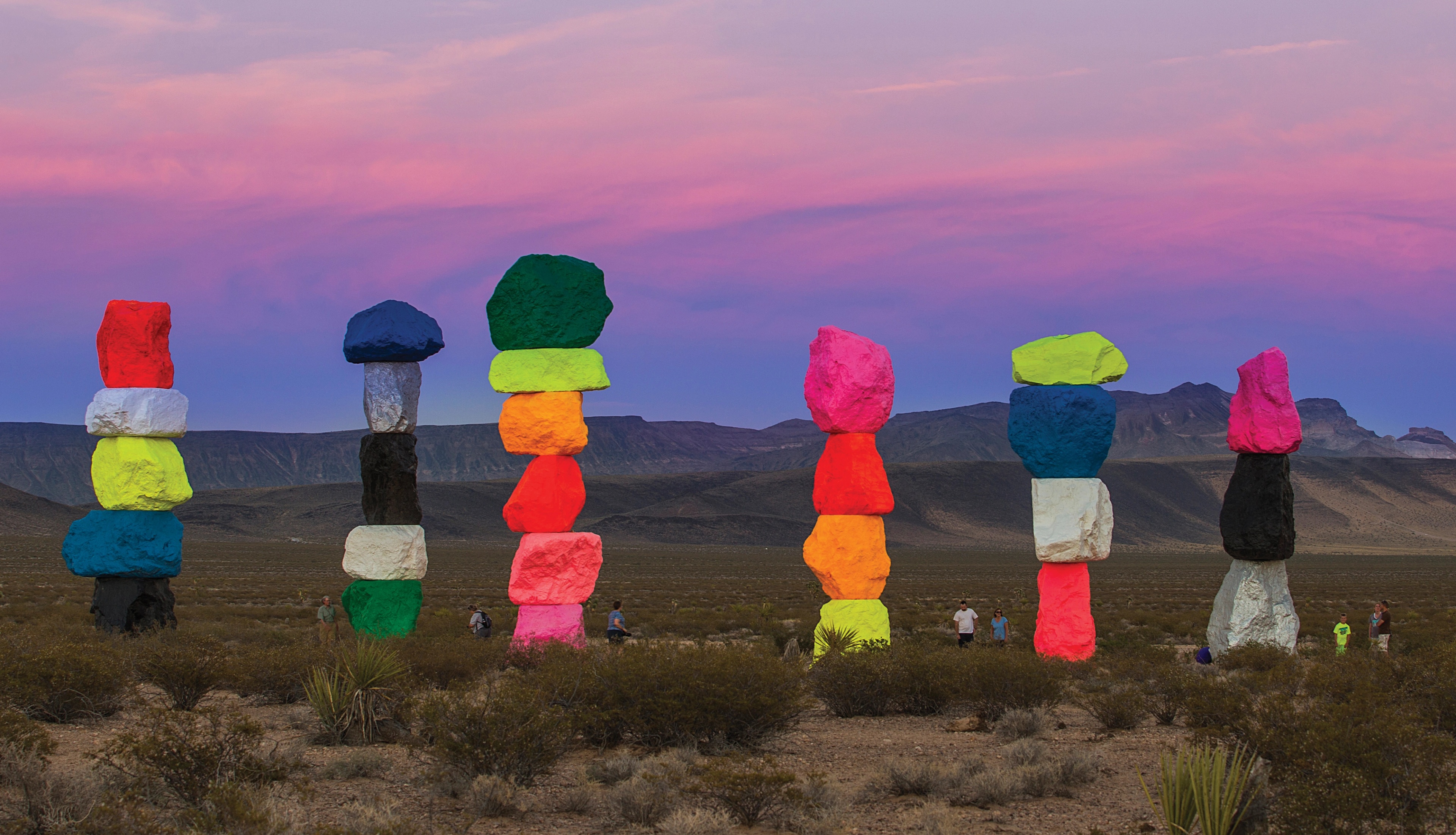
Ugo Rondinone, Installation view: 'seven magic mountains,' 2016. Image credit: artwork © the artist / Photo: Gianfranco Gorgoni.
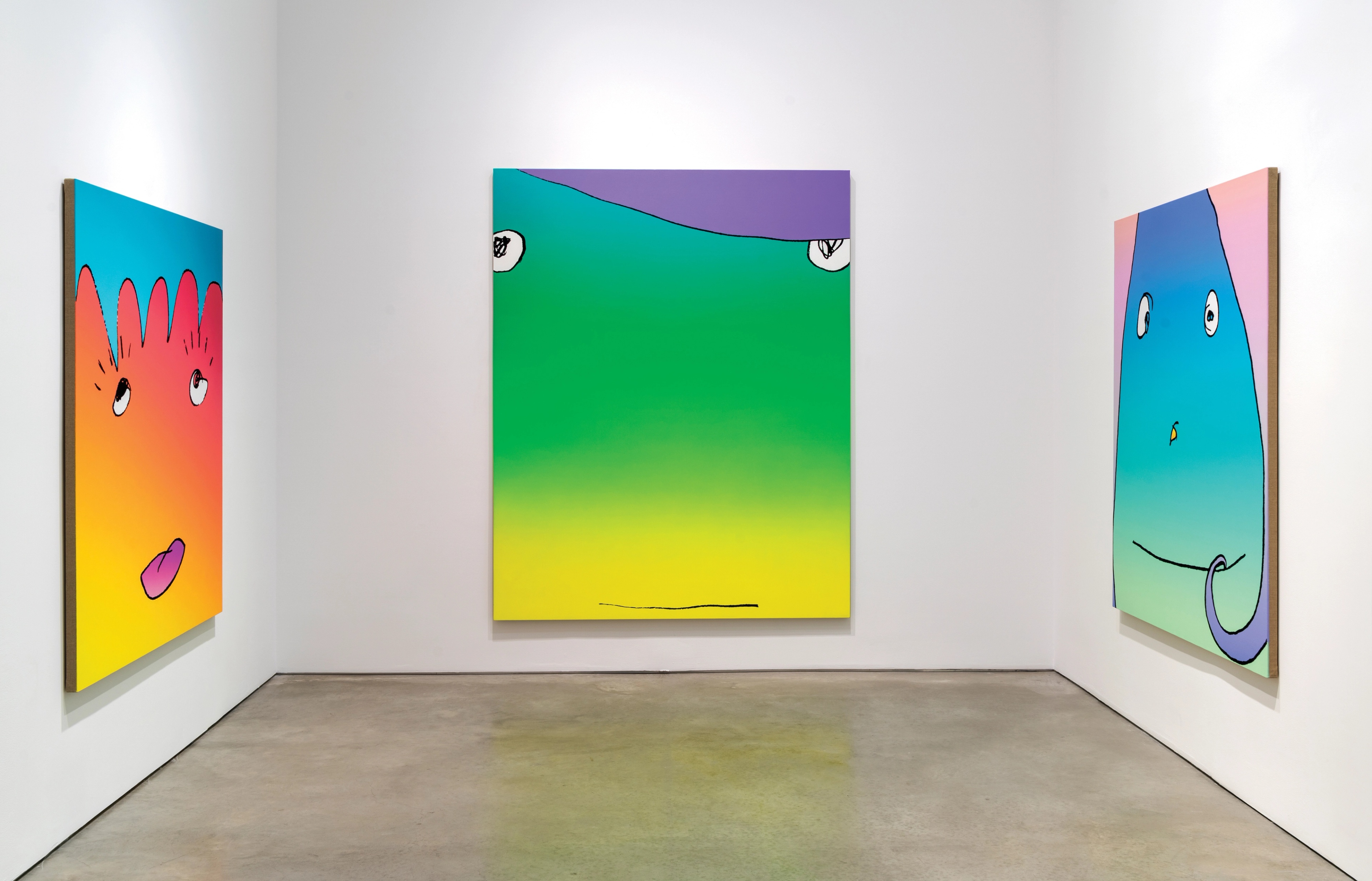
Rob Pruitt, Installation view: 'New Faces,' 2022. Image credit: artwork © the artist / Courtesy Rob Pruitt and 303 Gallery. Photo: Justin Craun.
"ALL THE WORK HAS TO DO WITH THIS WANT TO INJECT COLOR INTO THE WORLD."
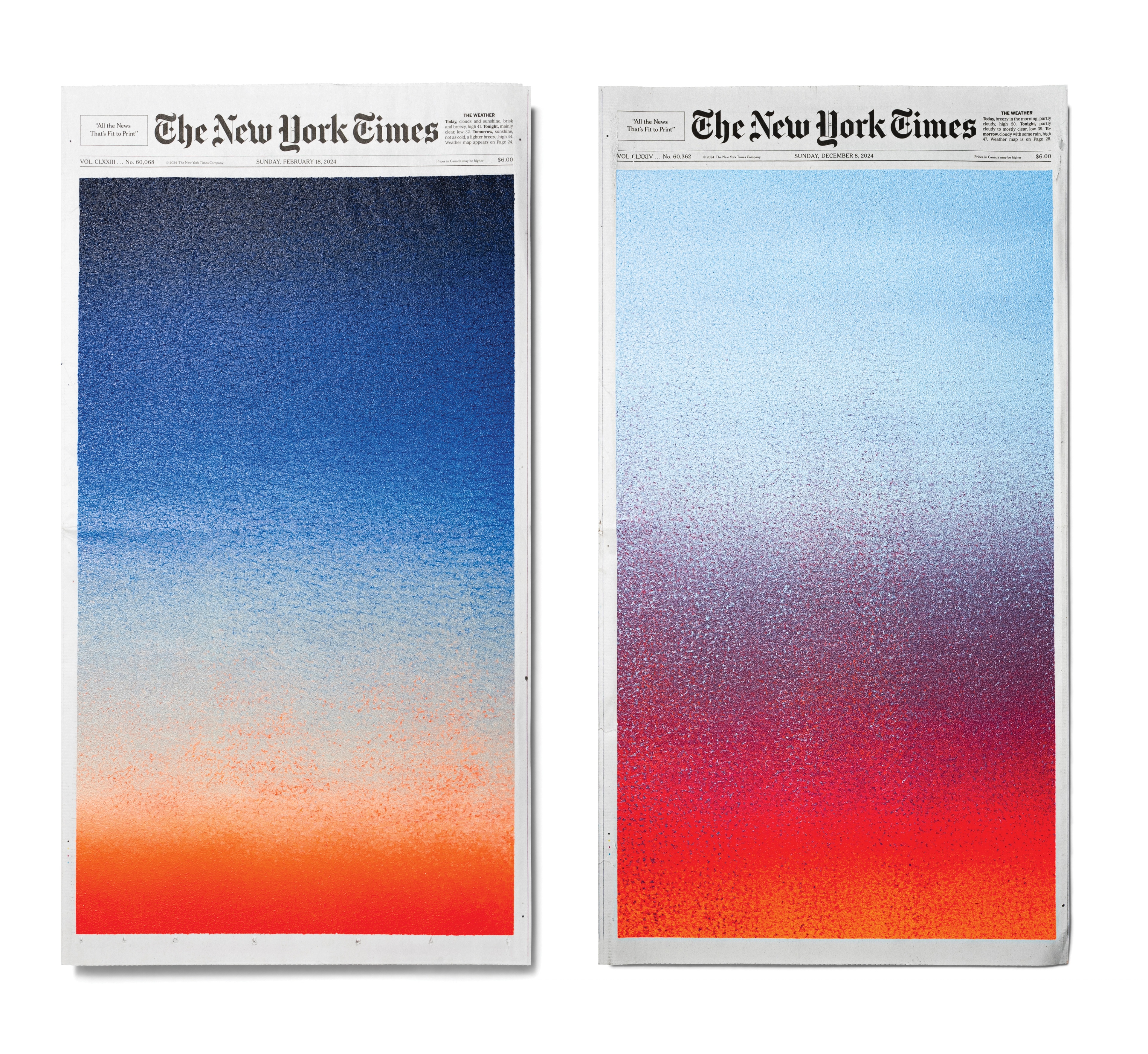
Sho Shibuya, 'Sunrise from a small window,' May 2020–ongoing. Image credit: © shoshibuya.
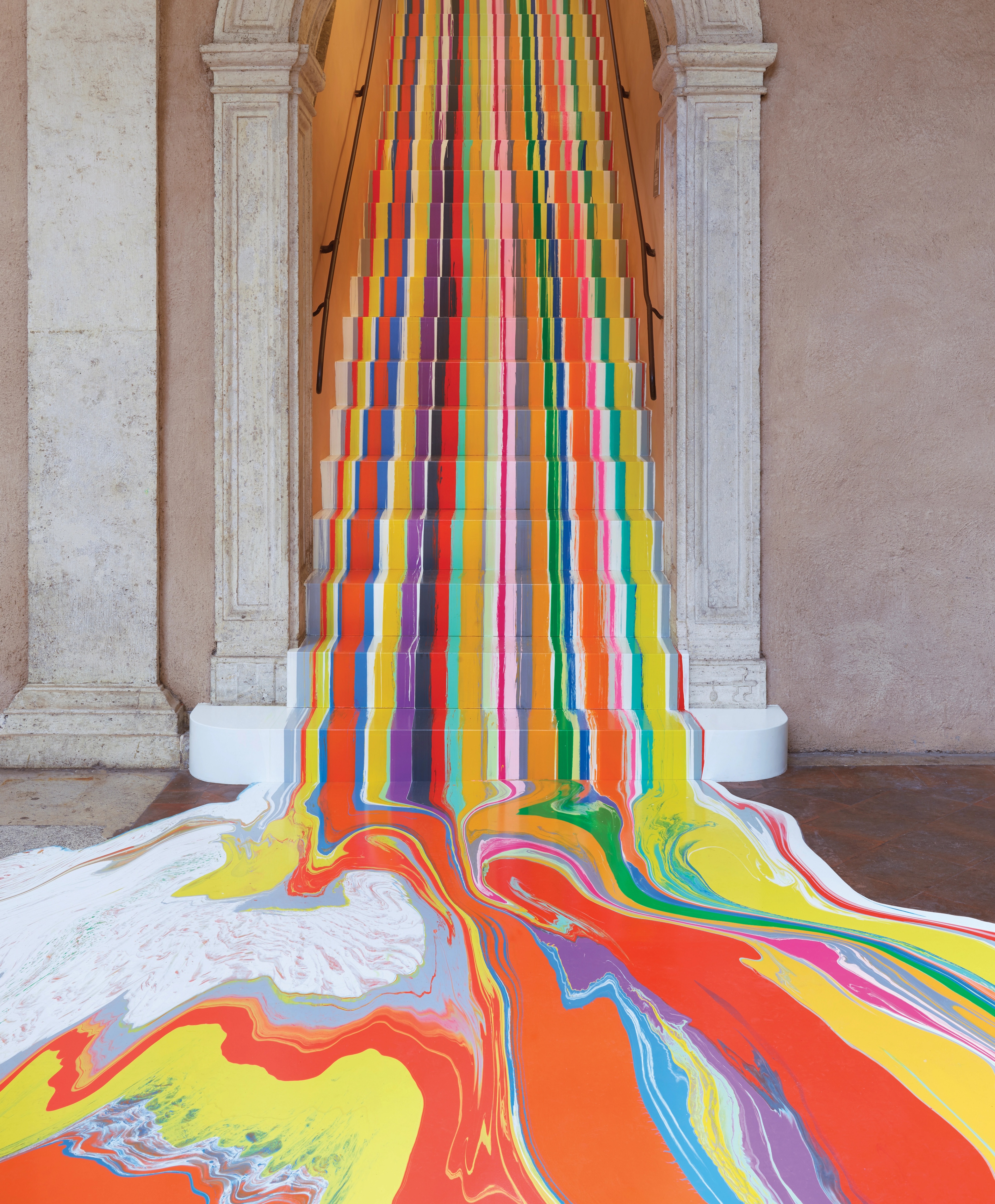
Ian Davenport, 'Poured Staircase,' 2021. Image credit: artwork © the artist / Photo: Prudence Cuming Associates.
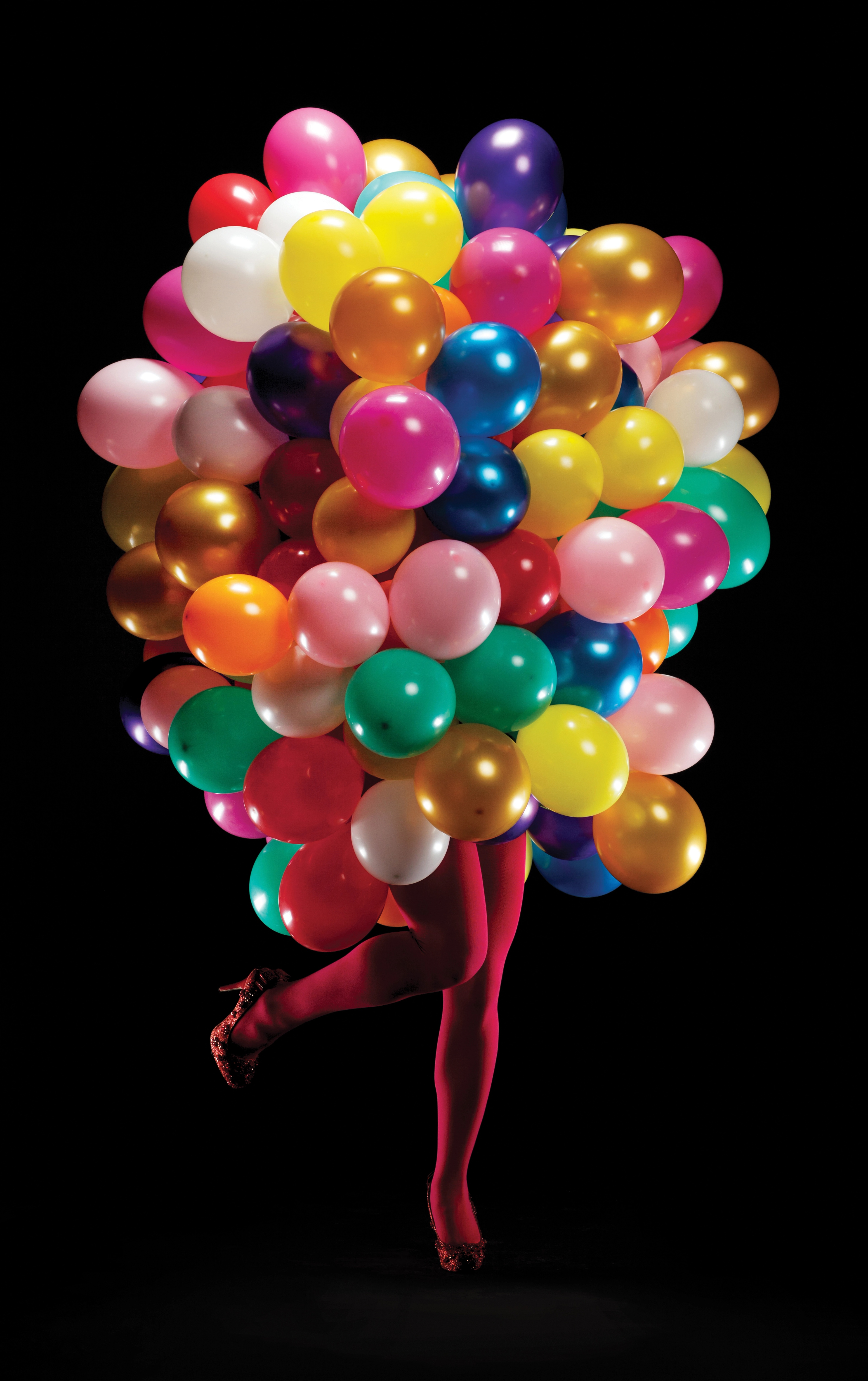
Athi-Patra Ruga, 'The Future White Woman of Azania 1,' 2012. Image credit: artwork © the artist / Courtesy Athi-Patra Ruga and WHATIFTHEWORLD. Photo: Hayden Phipps.
IMAGES COURTESY
MONACELLI PRESS
Beyond Noise 2026
IMAGES COURTESY
MONACELLI PRESS
Beyond Noise 2026