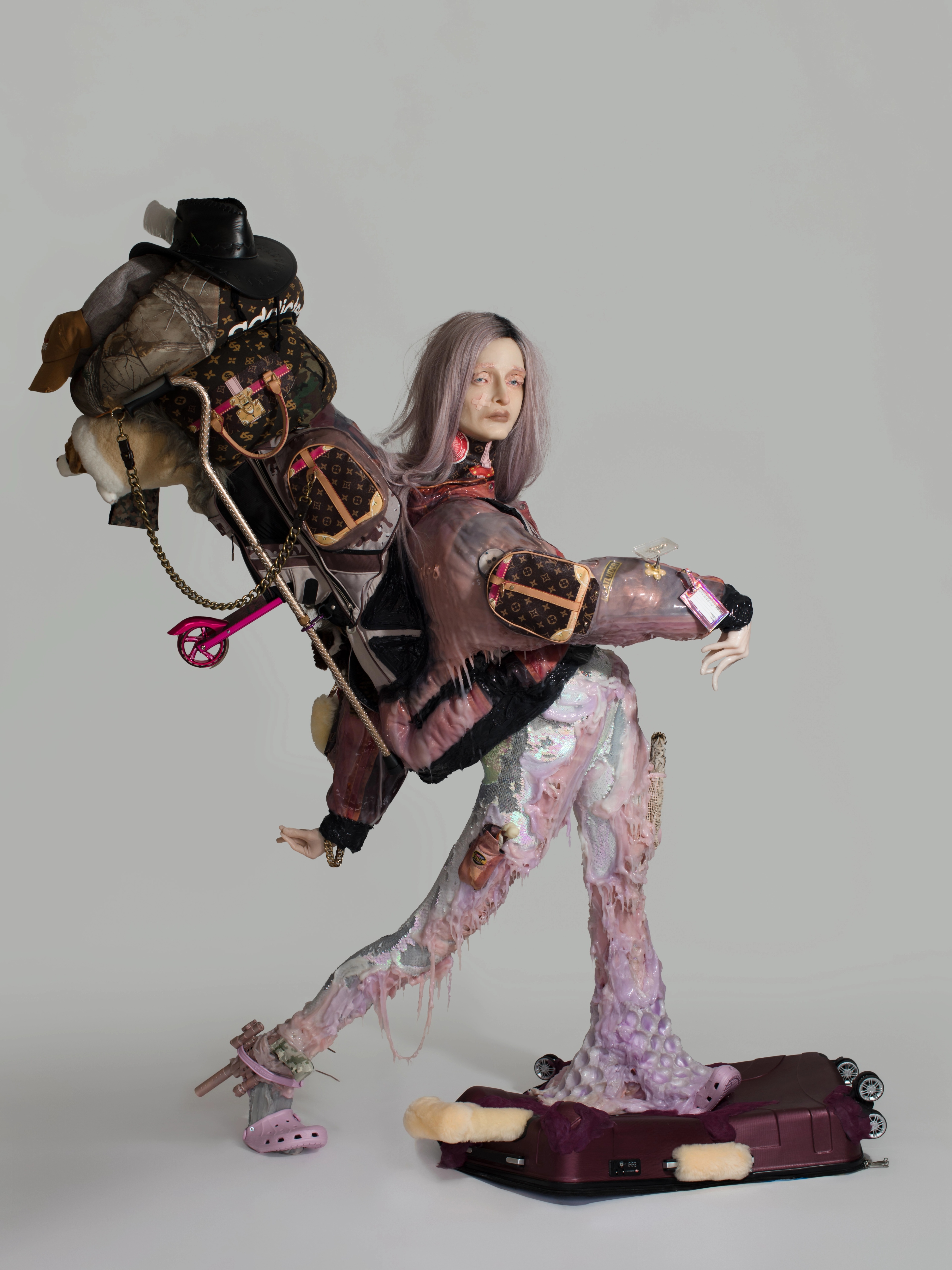
Noise
MATERIAL DESIRE
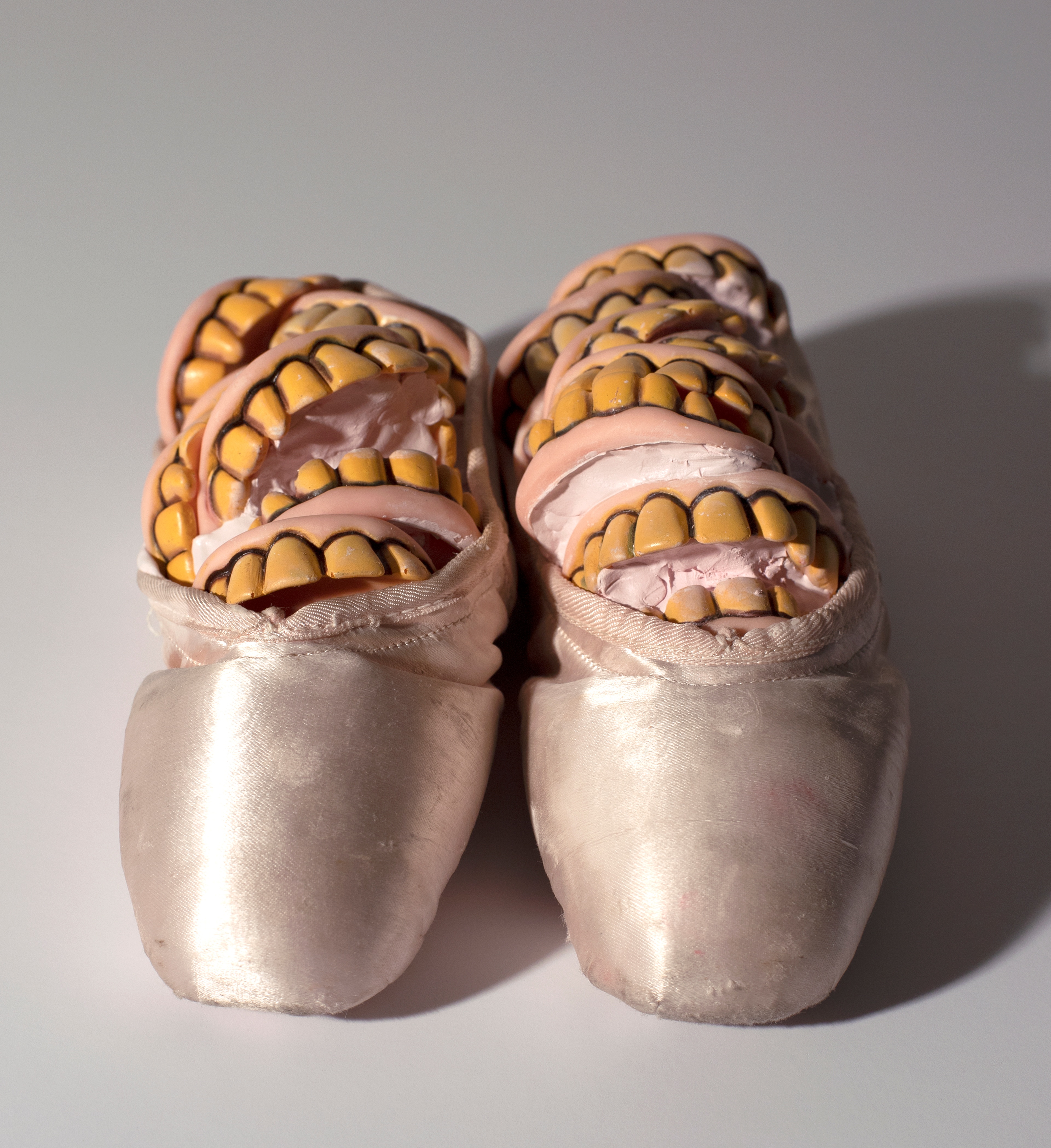
Rona Pondick, 'Ballerina with Teeth,' 1991. Courtesy Nunu Fine Art Taipei · New York, and Sonnabend, New York.
MATERIAL DESIRE
Words: 2371
Estimated reading time: 13M
RONA PONDICK AND CURATOR LEIGH ARNOLD DISCUSS MATERIAL DESIRE, A NEW SHOW AT NUNU FINE ART BRIDGING THE FRAGMENTED, PHYSICAL OEUVRES OF HANS BELLMER, BRUCE NAUMAN, AND THE ARTIST HERSELF.
By Megan Liu
When Rona Pondick turned 70, she had a change of mindset: “I started thinking deeply about what I wanted to do moving forward, how many days, how many years I have left, how many sculptures I’m going to be able to make.” Rather than pursuing another solo commercial show, the artist decided to focus on work that felt urgent to her. “If my job is anything, it’s to act like a mirror, [engaging], psychologically and emotionally with what it’s like to be alive at this time.”
That reckoning led to Bellmer Nauman Pondick: Material Desire, on view at Nunu Fine Art through May 30. Conceived over several years, the exhibition places Pondick’s sculptures in direct dialogue with works by Hans Bellmer and Bruce Nauman—two artists who destabilized the body to expose themes of desire, violence, endurance, and control. More than a homage, the show is a confrontation with three artists, across generations, committed to “[getting] under people’s fingernails,” as Rona puts it. “We don’t make excuses, we don’t apologize, we don’t window dress. We just put it out there.”
Hans Bellmer (1902-1975) constructed disarticulated dolls from plaster, wigs, and found materials, photographing them in uncanny, often eroticized positions. His images fracture the female body into fetish and fantasy, capturing beauty alongside violence. Bruce Nauman, born in 1941, turned his own body into a vessel of endurance and psychological exposure through his video and performance work. For Rona, encountering his oeuvre in the early ’70s was transformative. She describes the experience as visceral, like a punch to the stomach. That reaction became a kind of mandate in her own practice. In desolate times, she hopes to provoke: “I want my viewer to feel my work in their bodies.”
Hans and Bruce have long served as touchstones and muses for Rona’s practice. Like the former, Rona deconstructs. Like the latter, she insists on its physical immediacy. Her sculptures—teeth embedded in fleshy pink pointe shoes, legs sprouting from polished heels, heads encased in resin, are at once seductive and estranging. Glossy surfaces invite touch, while dismembered forms unnerve. Here, attraction and discomfort are inseparable.
The parallels between the rise of fascism that underpinned Hans’s and Bruce’s work, and today’s political conditions, bring new relevance to the show’s material. Susan Sontag writes in Against Interpretation: “Real art has the capacity to make us nervous.” That nervousness is precisely the point, especially right now. For Beyond Noise, Rona joins curator and friend Leigh Arnold of Nasher Sculpture Center in conversation. The two unpack the stakes of Material Desire.
LEIGH ARNOLD: I was struck by the variety of media and mediums that are represented in Material Desire—much of [Hans] Bellmer is in the realm of photography, [Bruce] Nauman, of video; and you’re represented through sculpture. What was your curatorial motive to focus on a particular medium for each artist?
RONA PONDICK: When I turned 70, I turned to Antonio Homem of Sonnabend Gallery, who I’ve worked with for almost 27 years. I said to him, ‘You’re probably going to tell me I’m committing professional suicide here, but I don’t want to do commercial shows anymore. I’d like to spend the rest of my life working on the ideas and scholarship that I’m interested in.’ That’s how it started. When Nunu [Hung] approached me, I had a number of ideas for shows that were percolating. I said to her right away, ‘You can’t do this alone. We need collaborators, because this is going to be a museum-level project.’ That’s when we decided Sonnabend should come on board. Bellmer was a bit more complicated at first. There aren’t that many works even available now.
LA: As a curator, I’m like, obviously there aren’t so many Bellmer sculptures, and borrowing them for a gallery show would be really tricky and costly. Nauman’s work is kind of the same.
RP: I was so obsessed with Bellmer’s photographs in the ’90s. I couldn’t stop looking at them. Now, when I think about those photographs and [when they] were made—in the ’30s [in Nazi Germany], between World War I and World War II—and then look at our own political situation in this country, it’s a no-brainer. I just have to focus on them. It made perfect sense to me. And why I’m so attracted to both Bellmer and Nauman: I think what we all share is we get under people’s fingernails. We make edgy, psychologically demanding work. We don’t make excuses, we don’t apologize, we don’t window dress. We just put it out there.
When I’m talking to someone who’s not as knowledgeable about art, I say, ‘Well, think about Bellmer [and his relationship with] Marquis de Sade as a literary figure. Think about Nauman and [Samuel] Beckett, and myself and Kafka.’ Those references help explain the three of us, and why we make sense together. I’ve followed Nauman’s work since I was in my 20s. I don’t think there’s a show in New York I’ve ever missed. He’s a perpetual experimenter, conceptually, materially, and psychologically. He’s always investigating and exploring. He’s willing to throw himself off a mountain. I remember standing in Castelli Gallery, watching certain videos, and I felt like I [was being] punched in the stomach. The experience was just so visceral. That’s exactly what I want from my own work. I kept saying to Antonio, ‘I gotta get access to those videos from the ’70s.’ He said, ‘Those are going to be hard, because I think Bruce really wants them just for museum settings.’ Antonio suggested reaching out to Nauman’s studio, which we did, and he signed off on it right away, which was great. And so I thought, ‘Ooh, what other videos do I remember that are just exquisitely uncomfortable?’
LA: [Laughs].
RP: I think about Bellmer, his work is hot in temperature. You feel the edginess of it in a very sexual way. There’s a video in the show, Bouncing Balls, where Nauman is playing with his genitals for a long time. There’s nothing sensuous or seductive about it. Now that’s interesting to me. Why? How Nauman uses time, and how does that compare to Bellmer? How are sex and forbidden subject matter, in my own work, at play?
LA: The way you are planning to install the show, there is this kind of rhythm—the visual shock of Bellmer’s photographs, which have a little bit of mediation between you and the photograph, due to time and glazing over the image. Then you walk through the space, and you’re confronted by your sculpture and Nauman’s [work].
RP: It’s my sculpture, first alone, then Bellmer’s photographs, then my sculptures with Nauman’s holograms. Then you walk downstairs to a more private space with the two Nauman videos.
LA: It’s like, from a Bellmer position, as a viewer, you’re still separate from the action, the activity, the viscerality. Then you walk into your sculpture, where you become part of the installation. You’re complicit in it. You’re sharing space with these objects—some of them are contorting your body. And then you walk further on, and you are suddenly kind of inundated with moving images. It’s going to be quite effective, I will say.
RP: I hope so. Something I think happens is that we’re all focused on fragments, not showing the whole body. Part of the reason I’ve been so engaged with the body fragment since the ’80s, is that when you look at a part, the [brain immediately wants you] to go, ‘What’s the rest and where’s the rest?’
LA: It wants to complete it. It’s just thought theory, right?
RP: It engages the viewer in a very, very active way. Something I’ve learned a long time ago is that, as obsessive as most artists are, you can’t control the viewer. There’s an active conversation going on with the person receiving what you’ve put out in the world; how they were raised, culturally, economically, emotionally, how they were educated—all of that factors into how they receive the work. However much I think about the show, I’m sure I’m going to be surprised.
LA: What was the selection of your own work for the show like?
RP: Some of these pieces have never been shown before, from the ’90s—Baby Legs (1990), Pink Balls and Brown Pump (1991), and Pink Baby (1990). Ballerina With Teeth (1991) was embedded within another sculpture that I was working on with my conservator. Sometimes I start something and move in a completely different direction. We had to figure out how to divide what was there without destroying what was inside, or [what was] outside.
LA: Staying with Ballerina With Teeth for a moment: I don’t know if you were ever a dancer, I wasn’t even a serious one. But it is so accurate to that experience. There’s the sexualization of the ballerina, the conflation of ballerinas and sex workers, which was very prominent—but then there is the actual physical experience of slipping your feet into toe shoes, with barely any protection. How much pain you experience: When you look at a dancer’s feet, they are ravaged by this art. They will be able to do that over and over and over again without ever displaying the pain that they’re going through. So I see this image of the teeth, and I just imagine those teeth gnashing at the feet that are meant to be in there. You have a way of capturing, and that’s me bringing my own experience to it. Somebody else will have a different relationship to this work, but I just find that so fascinating.
Your work also has a lot of baby bottles, nipples, children’s shoes, to the point where you kind of assume, ‘Rona is a mom. She understands that experience.’ It speaks to your level of empathy and your level of psychology that you’re able to bring forth all sorts of emotion in every viewer.
RP: Thank you—what you’re describing is what I fantasize, honestly. Being able to think about how [viewers] relate to what I’m putting forth, in different ways, both Bellmer and Nauman embody. But we do it very differently, and that was a reason [why I started focusing on] different mediums. I was hoping it would highlight what you’re describing.
LA: Let’s talk about fashion in your work, because similarly, you and Bellmer use shoes—you’re tapping into how we can tell, from a person’s or a doll’s shoes, what the rest of the figure is going to be. Shoes and fashion are a way to apply gender and age to a work of art. Bellmer is really showing us that when we look at these photographs of the doll, he’s put in positions that some might perceive as sexualizing. Adding a little children’s shoe forces you to reconsider. It becomes almost a horrific image. You are doing something similar with your shoes.
RP: I’m a child of minimalists; when I was very young, figuration was forbidden. It was such a taboo, and I slowly marched towards figuration by using objects that were a stand-in for the person.
LA: This is what Nauman does with chairs, right?
RP: Absolutely. I remember I was collecting shoes, and I put a pair of adult male white shoes in the middle of my studio. And I thought, Florida, 85 years old, maybe a little sleazy [laughs].
LA: I think you spoke earlier about how Bellmer is ‘hot.’ I have always thought of Nauman as very cold, to the point that some of the work can feel clinical, like an effort to try to take an everyday action and make it into art. The first maybe 30 seconds of Bouncing Balls feels a little bit clinical, but as you watch it, it’s not sexual—it’s unease.
RP: It’s grating.
LA: Yes. Where do you fall, in temperature? I think you’re pretty hot, Rona.
RP: I am pretty hot. I’m in temperature closer to Bellmer, but I love truly how crazy Nauman is. I mean, he literally is capable of doing anything in his work. And I love that.
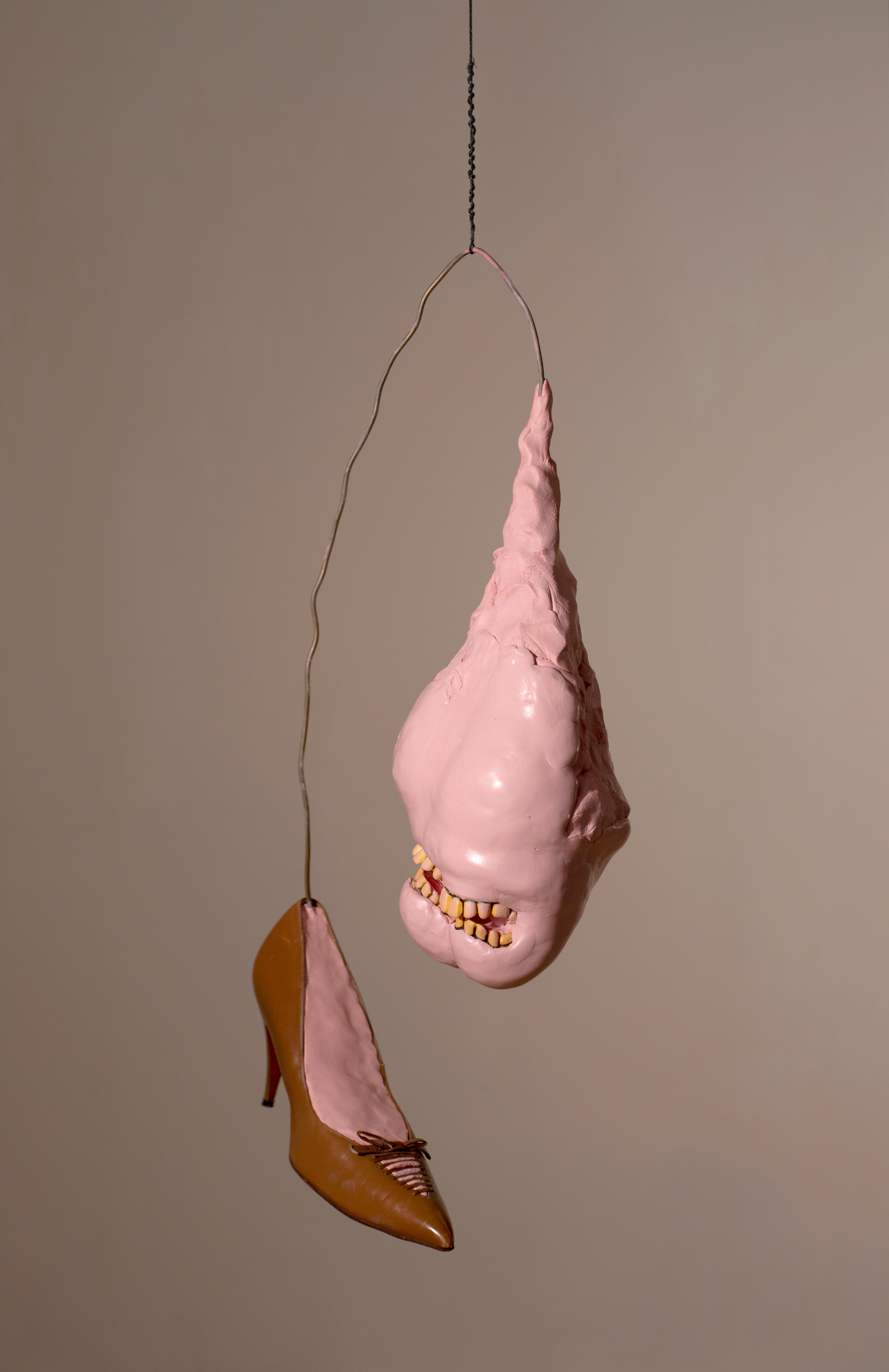
Rona Pondick, 'Pink Balls and Brown Pump,' 1991. Courtesy Nunu Fine Art Taipei · New York, and Sonnabend, New York.
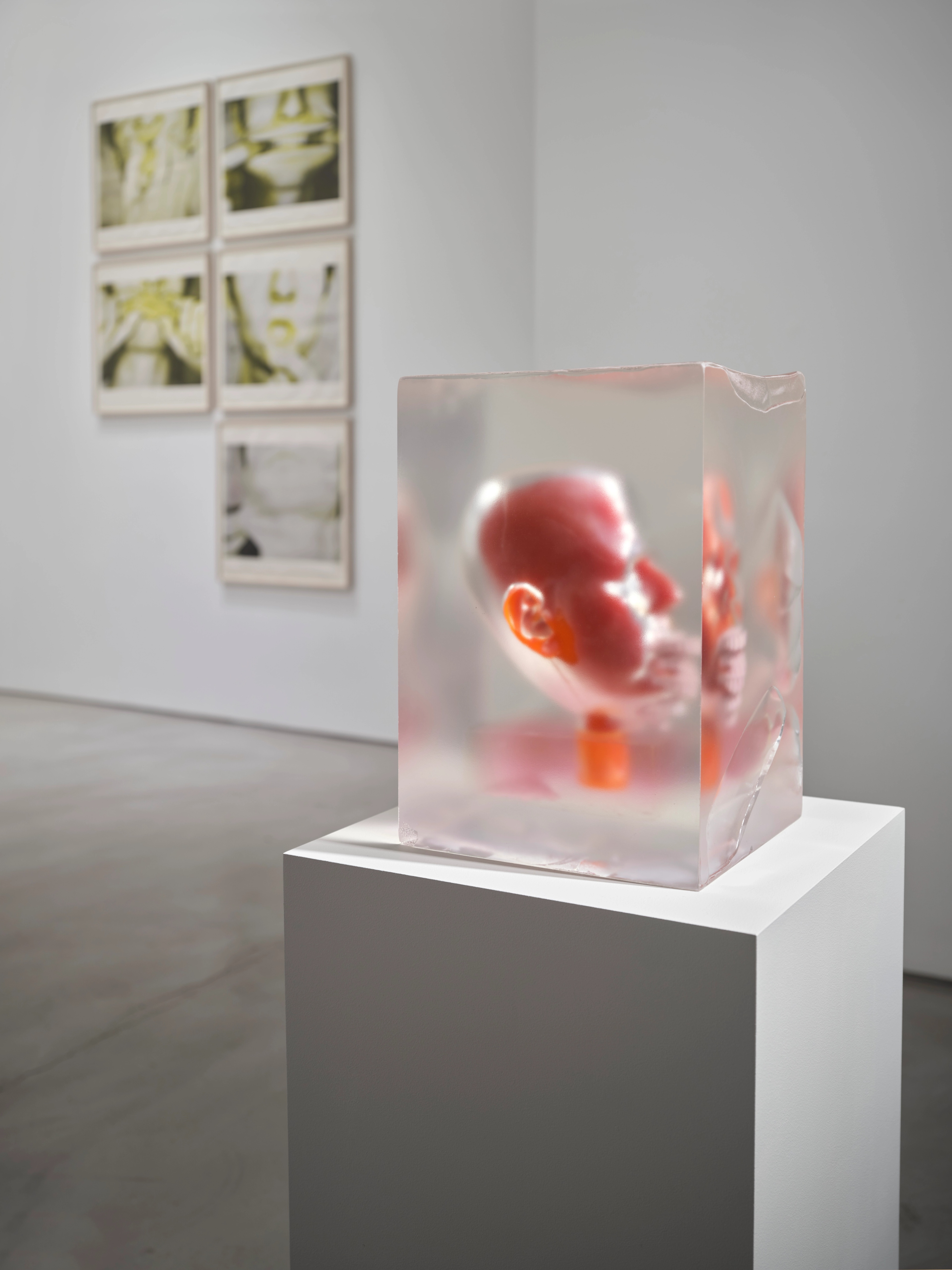
Rona Pondick, ‘Encased Orange with Pink Teeth,’ 2019-23, courtesy Nunu Fine Art,Taipei | New York; Bruce Nauman, ‘Studies for Holograms,’ 1970, Private Collection, Photo: Martin Seck
“We don’t make excuses, we don’t apologize, we don’t window dress. We just put it out there.”
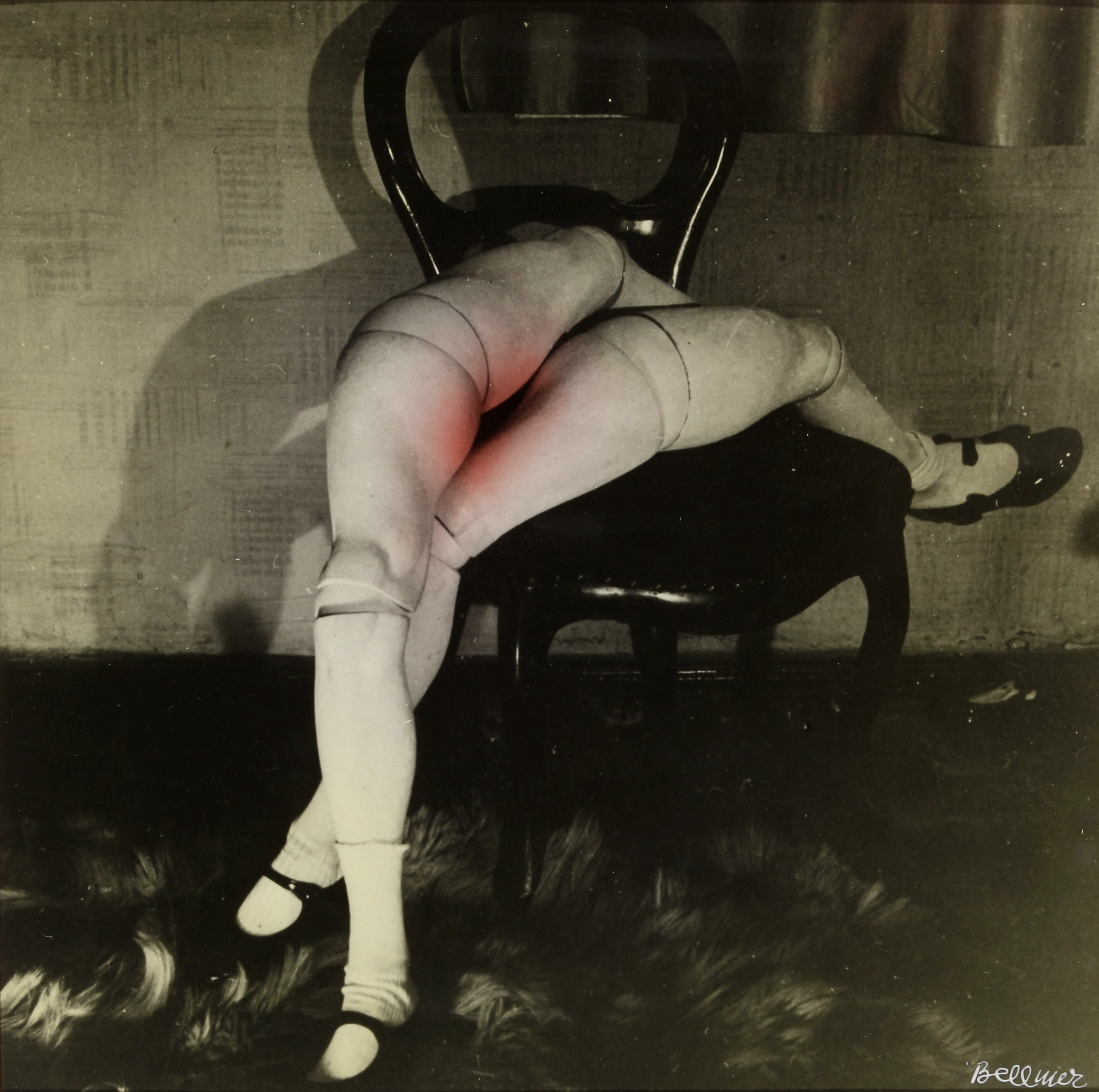
Hans Bellmer, 'La Poupée, or La Bouche,' 1936 (printed 1949 or earlier). Ubu Gallery, New York.
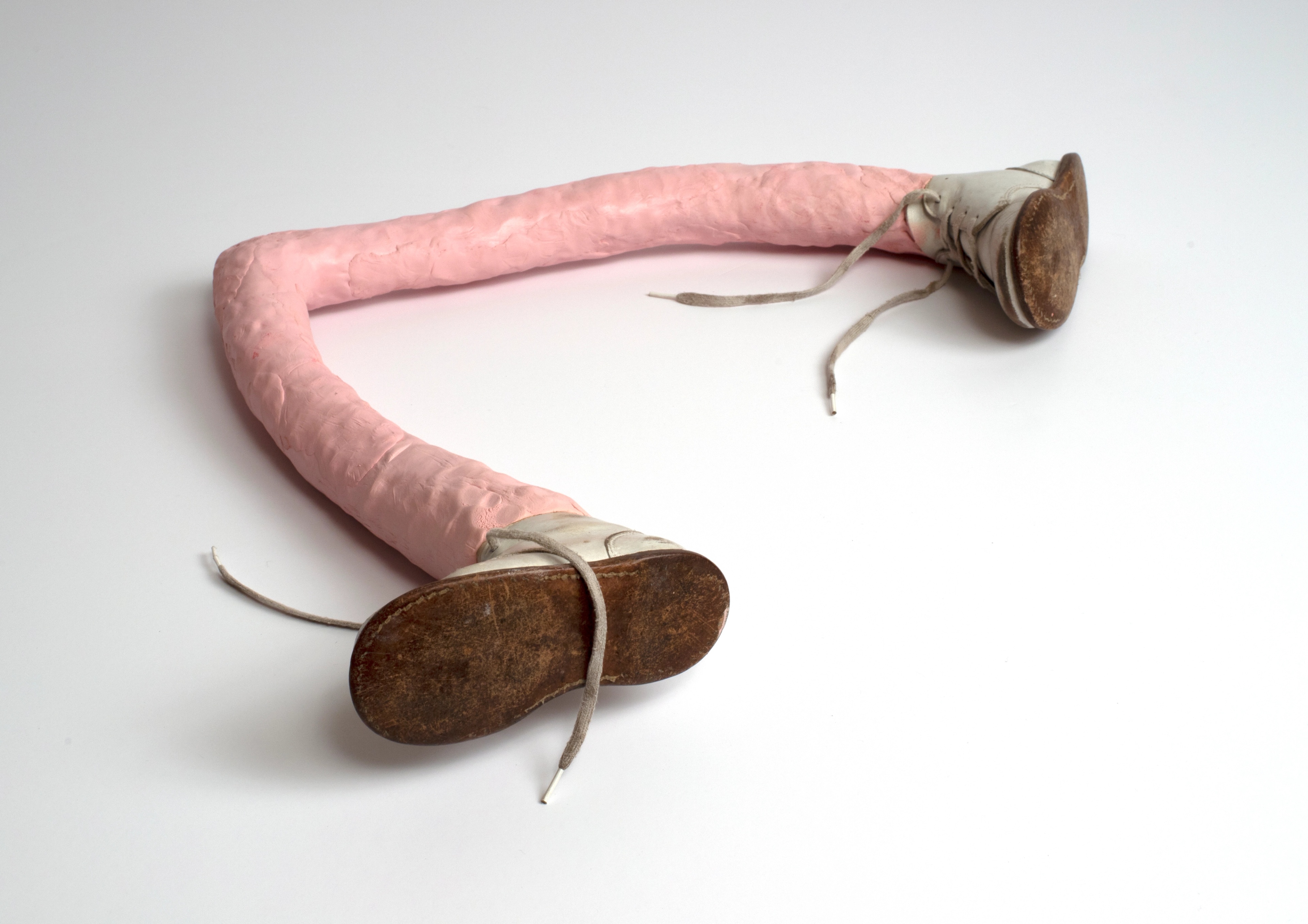
Rona Pondick, 'Pink Baby,' 1990. Courtesy Nunu Fine Art Taipei · New York, and Sonnabend, New York.
“I want my viewer to feel my work in their bodies.”
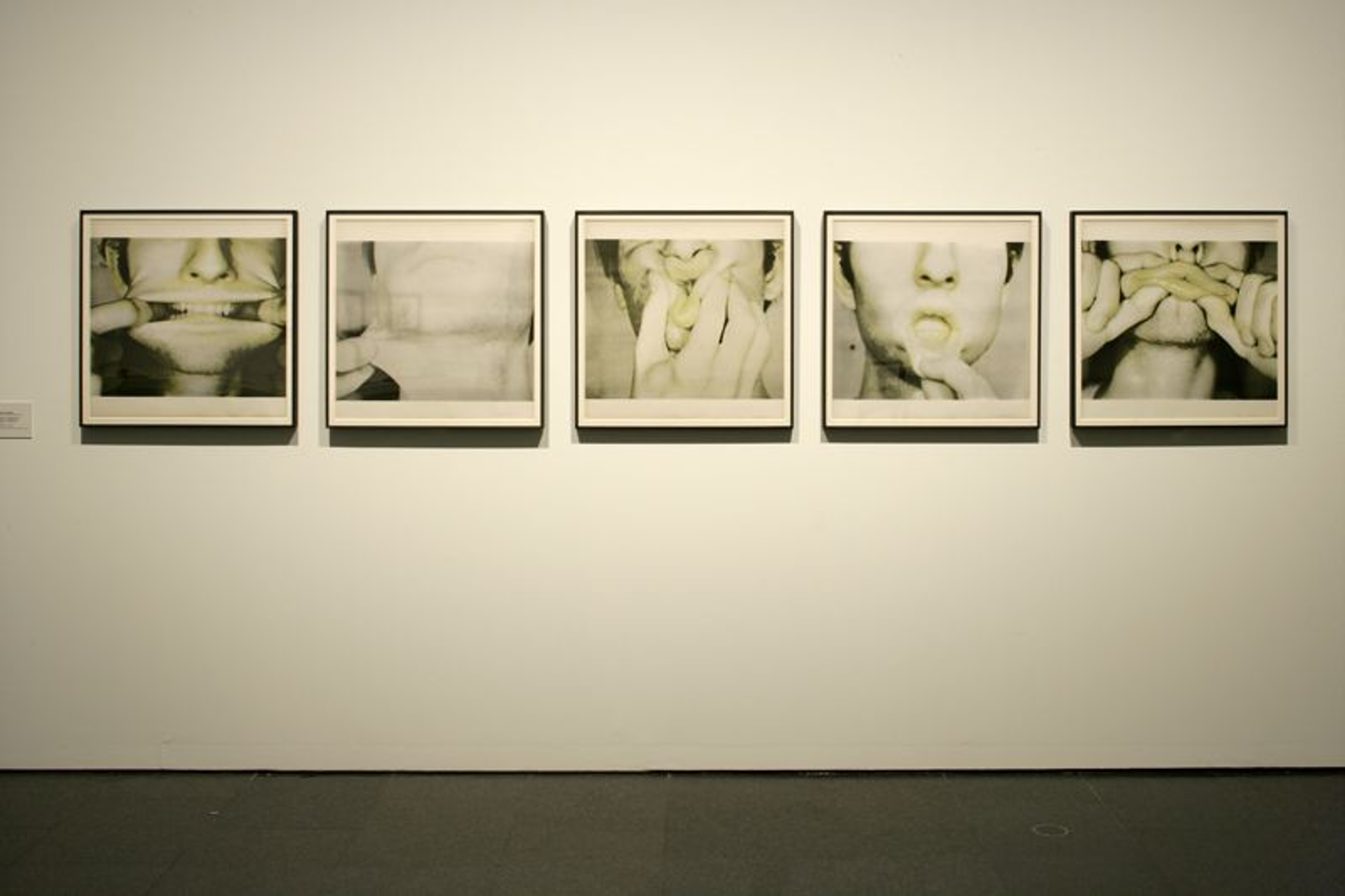
Bruce Nauman, 'Studies for Holograms,' 1970. Courtesy private collection.
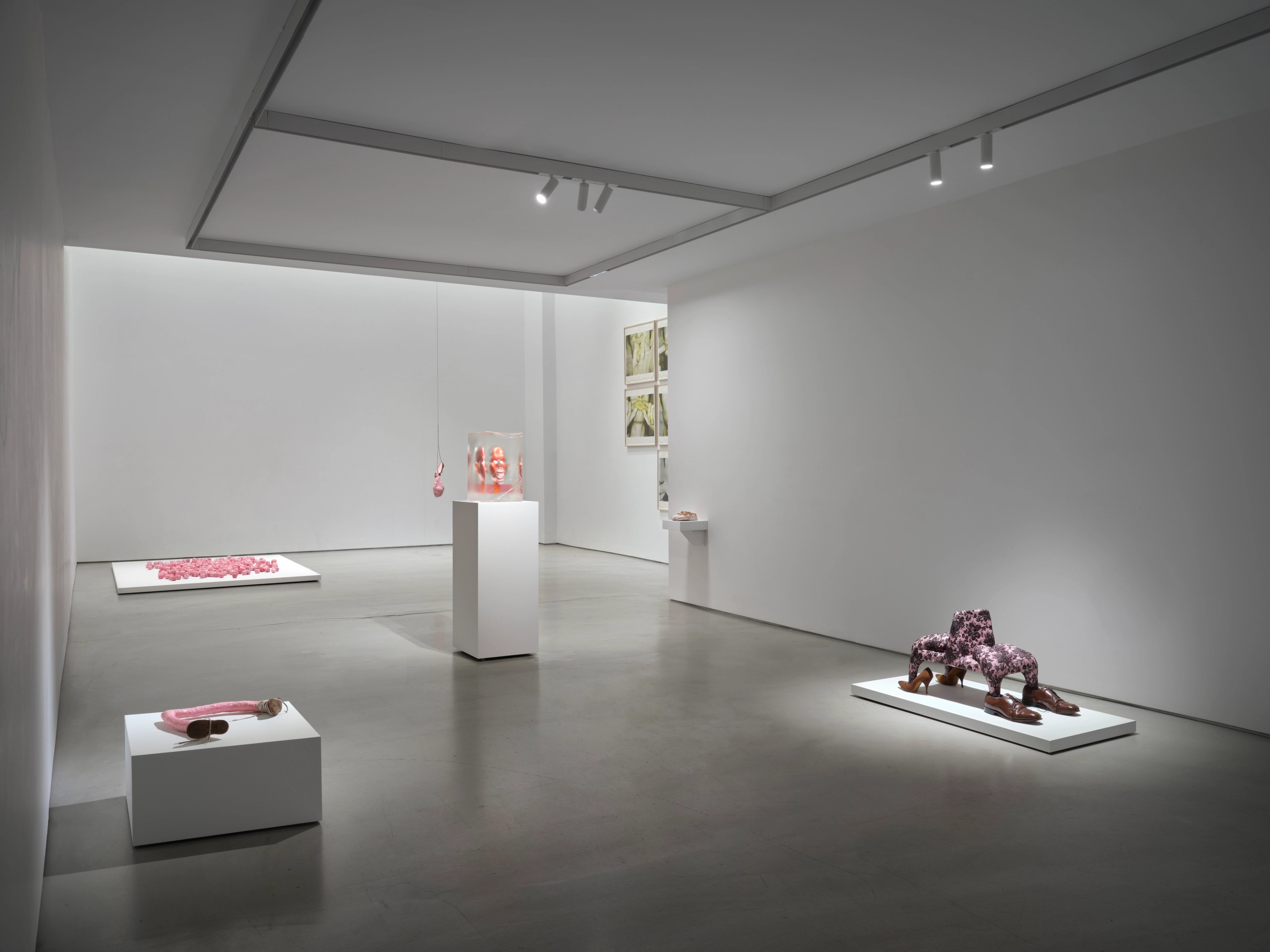
Bellmer Nauman Pondick: Material Desire, Installation photo courtesy Nunu Fine Art, New York and Sonnabend, New York, Photo: Martin Seck
INTERVIEW
LEIGH ARNOLD
SPECIAL THANKS
Ubu Gallery, Electronic Arts Intermix, Nunu Fine Art, Sonnabend
Beyond Noise 2026
INTERVIEW
LEIGH ARNOLD
SPECIAL THANKS
Ubu Gallery, Electronic Arts Intermix, Nunu Fine Art, Sonnabend
Beyond Noise 2026