Noise
ISSUE NO. 05: JUDY CHICAGO
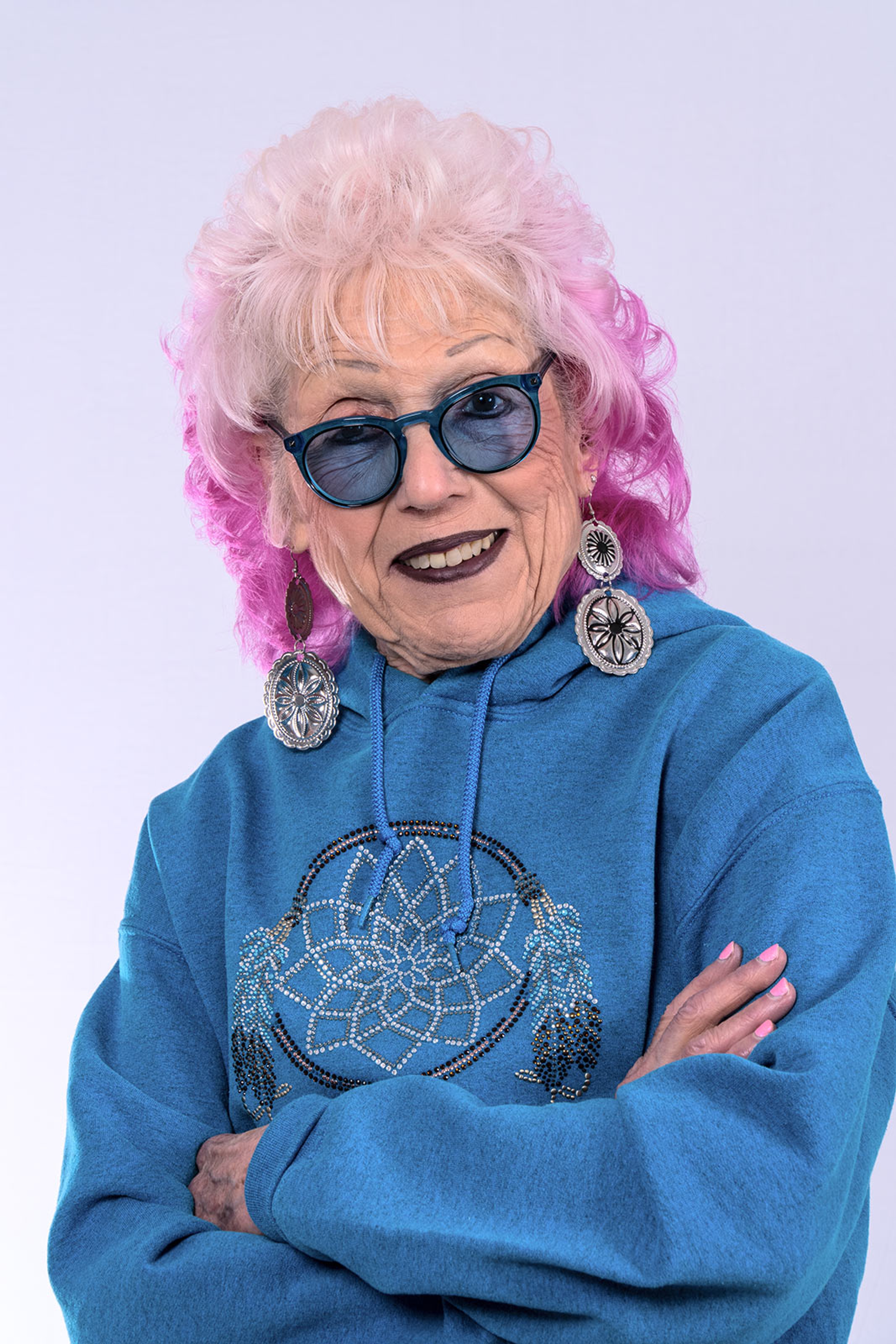
JUDY CHICAGO BY DONALD WOODMAN
THE SACRED FEMININE
Words: 4199
Estimated reading time: 23M
Judy Chicago is an artist whose ideas evolve over long arcs of time, resurfacing and transforming across projects that often take years–sometimes decades–to fully unfold
By Magnus Edensvard
To those who may not yet know the name, Judy Chicago has played a central role in reshaping the language of contemporary art, insisting that the histories, experiences, and symbolic power of women be made visible within a cultural landscape that long ignored them.
Born in 1939, Judy came to prominence in the late 1960s as one of the defining figures in the emergence of feminist art in the United States. She is perhaps best known for The Dinner Party (1974–79), now permanently installed at the Brooklyn Museum in New York–a monumental, collaborative work spanning ceramics, embroidery, sculpture, and research, addressing the historical absence of women from dominant narratives. Yet this landmark project represents only one moment within a career that has continually expanded in scope, ambition, and medium.
Early in her career, Judy produced paintings directly onto car hoods using sprayed automotive lacquer in Los Angeles–works that grew out of the city’s industrial and car-culture milieu. Since then, Judy’s practice has evolved into increasingly ambitious collaborations and environments. These range from major bodies of work such as The Birth Project (1980–85) and The Holocaust Project: From Darkness into Light (1985–93) to more recent explorations of mortality, ecology, and the fragility of our shared planet. Recurring universal motifs–among them goddesses and lilies–continue to migrate across projects and media. These themes have surfaced across a number of recent collaborations and exhibitions, including work developed with the House of Dior in Paris and in The Materiality of Judy Chicago at Alberta Pane in Venice, presented in conjunction with the Venice Biennale.
When Beyond Noise met Judy earlier this spring for an extended conversation, our discussion moved freely across decades of her life and work–from formative early experiences shaped by her father’s political activism in Chicago, to graduating from UCLA in the mid-’60s, and onward to the collaborative ethos and conceptual frameworks that continue to define her practice today. The conversation also touches on her longstanding creative partnership with photographer Donald Woodman who has collaborated with Judy on several major projects and photographed her especially for this feature. What emerges is the portrait of an artist whose ideas evolve over long arcs of time, resurfacing and transforming across projects that often take years–sometimes decades–to fully unfold.
MAGNUS EDENSVARD: I would love to start by hearing more about the references and thinking behind the Dior project, and how that came to take shape through your collaboration with the house.
JUDY CHICAGO: The Female Divine, which was what the Dior project was called, included a sculpture based on something I designed in the ’70s. I had been doing a lot of research in the ’60s that led to my installation piece, The Dinner Party, and I had discovered that all early societies worshipped goddesses. Around that time, I designed a 60-foot inflatable goddess figure, which never got realized because my early career was really difficult in terms of a lack of support. Like I always say, my career is a miracle. Instead of supporting me, the art world tried to kill me.
Anyway, when I was invited to collaborate with Maria Grazia Chiuri, the first female creative director of Dior, they flew us to Paris, to discuss what I might do. I’m from the generation of feminists who assumed that fashion was inherently oppressive to women, and a lot of it is. But when we were at Dior, I began to wonder if fashion could be a vehicle for empowerment instead of oppression. Normally Dior’s couture shows are held in their headquarters, but the building was undergoing renovations, so they were going to do it behind the Musée Rodin. I asked if I could design the structure and they said, “Make a proposal.” This is the first time in my life that something got realized bigger than I imagined, because my original concept was only 60 feet, and the Goddess that we built was 250 feet. It was enormous. My idea was that the couture show would be held inside the body of the Goddess filled with light.
In 2002 I participated in a project in China called The Long March: A Walking Visual Display. I decided to invite Chinese women artists to think with me around the theme, ‘What if women ruled the world?’ I made a series of very simple banners that asked questions around that major theme and like many of my projects, it kept on evolving. So, for the Dior project, I took those questions, modified them slightly, and made large scale banners. I thought the banners would be very simple with just the questions embroidered on them, but when Maria Grazia visited she brought pictures of The Dinner Party, and said she wanted to include images. Dior’s work pace is unbelievable; this was all done in five months.Dior also supports a school for needlework in Mumbai, where women are taught needlework skills so that they can make money and become independent, and the banners were created in Mumbai by these women.
Recently, I’ve also been involved with an organization called DMINTI. We decided to do a project taking those same questions and images from the banners and weaving them together into an analog/digital quilt as an evolving project. DMINTI has since taken it around the world along with a recording booth where people, men and women, from all over the world can answer questions I have been thinking about, ‘What would the world be like if women were empowered to help make the decisions about how the world was run?’
I’m not interested in matriarchy. I’m interested in equality, but a necessary step towards equality is for women’s voices to be heard and embraced.
ME: Of the answers that came back to you through DMINTI’s booth, which have been most memorable?
JC: What’s been interesting has been the questions that have been the most popular. Apparently the two most answered questions were: ‘Would the Earth be Protected?’ and ‘Would There Be Violence?’ I was surprised, because there were questions like, ‘Would Men and Women Be Equal?’ and ‘Would There Be Equal Parenting?’ The responses really show what people are most concerned about now.
ME: When you describe revisiting forms from the ‘70s and ideas from your 2002 project in China, it feels less like a linear development of your practice and more like ideas resurfacing and evolving across time. Do you feel your projects continue beyond their first moment–sometimes even beyond your own control?
JC: My projects take on a life of their own. My relationship with them is almost like I’m running after them saying, “Wait! Wait for me!” Even back to The Dinner Party, today there are dinner parties all over the world, people still organize them. It’s also the way my career is, and I probably work so differently from other artists. I start with an idea, I don’t make work for shows, and I’ve never thought about the market. I was joking with my husband photographer Donald Woodman recently: We spent eight years on a project about the Holocaust, and in all that time neither of us ever said to the other, “Do you think anybody will buy this work?” It never crossed our minds. My work is fueled by ideas and a vision, and I’m in service to that vision. I go wherever it takes me, and I never know where it’s going to lead.
ME: It strikes me that your way of working is driven by deep dedication and an openness toward others. Do you see your practice as rooted in generosity?
JC: One of the things Donald has said to me consistently over our 40-year marriage is, “You’re too generous!” But I don’t know if you can be too generous, especially at this moment in history when greed dominates our planet. Generosity creates the opportunity for growth, change, and discovery.
ME: It sometimes feels that today kindness between people is reduced to something transactional–I’ll be kind to you so that you’ll be kind to me. Yet historically, and across many religious traditions, giving is understood differently: as something instinctive, almost a reflex, offered without expecting anything in return. Do you see it that way?
JC: I totally agree with that, and that idea is very deeply rooted in traditional Jewish values. I come from 23 generations of rabbis, up until my father who broke away and became a Marxist and a labor organizer. I saw a model for generosity when I was a little girl. My father used to have political meetings in our house. People always say that my collaborative methods are rooted in the ‘70s consciousness-raising sessions that were happening in America and around the Western world, but they’re not. They actually come out of what I watched my father do when I was little. He would convene these discussions where everybody, male and female, would participate, he even expected me as a little girl to participate. What that taught me was that every voice was important, and I think that that has been a guiding principle in my career and in my life. It also goes back to the original values of Judaism, which unfortunately are not being implemented under Netanyahu, which is: ‘We were slaves in Egypt and we became free. Now it’s our obligation to work for the freedom of everyone on the planet.’ That’s the core of who I am and what my work is about.
ME: That makes me think of the ritual dimension within the Jewish tradition. I see something of that spirit in your work as well: a coming together of people where the space itself becomes activated through encounter. Would you agree?
JC: Yes. It has also been one of my goals, even before The Dinner Party, to try to figure out how to make the feminine sacred in a world that despises the feminine, covers it, mutilates it, destroys it, and erases it.
ME: As a young girl, you were encouraged to speak and be present; that must have given you a deep internal sense of belonging, even of agency. Then you step into art school and the broader American world as a young woman and encounter exclusion, prejudice, and limitation. Did that stark contrast spark your instinct to push back?
JC: My father died when I was 13. My mother and I didn’t get along when I was a teenager, and I only realized recently that part of that was because my father died. I was very absorbed in the grief of that, because he had been my primary parent. As a result, some of the social conditioning that affects girls in their teens just passed me by, and it wasn’t until I got into college that I really began to encounter this. When I got into graduate school at UCLA, my male professors hated my work, hated my colors, hated my imagery, and I realized then, because of my father’s political consciousness, that what I was facing was what came to be called sexism. That term didn’t even exist in the ’50s and ’60s, but it helped explain why I had to be so isolated for most of my career. I had a vision about what art could be, and what I wanted to do was contrary to the prevailing values. So, the only way I could pursue my own vision was by being very isolated.
I’m very lucky that I found Donald when I was in my mid-forties. He was as isolated and alienated from the prevailing values of being a man as I was from those of being a woman. He started out in architecture and went to work in a drafting studio all day, until he thought, “You’ve got to be kidding me! No, I’d rather live in a teepee.’ Which is what he did for seven years. He lived in a small town outside of Santa Fe called Galisteo where he worked as Agnes Martin’s assistant. He was in the anti-war movement too. I never thought I’d meet a man like that.
ME: Did you ever go to visit Donald in this teepee?
JC: Yes, once, when we first got together. It was summer, he had taken out the lining and decided to make a fire. I nearly choked to death. So that was my one and only time.
ME: Your path has become a remarkable example for other artists, especially women. At the time, though, it seems it was less a model than a struggle. In what must have felt like a world of resistance and alienation, how did you sustain yourself? How did you keep moving forward?
JC: I’ll tell you a story. Recently, Donald and I paid a visit to his long-term therapist, which we do from time to time, and he said something to me that blew me away. He’s known me for a long time, and we were talking about me having my own vision, my generosity, how I’ve lived my life. He said, “But Judy, the strangest thing about you is that you thought you were usual.” I did, for the longest time. I thought everybody was like that.
I have always had a burning desire to make art, no matter how hard it was, and it’s been hard at times. It’s very unusual, particularly for women who were raised to be frightened of taking risks, for a woman to have taken as many risks as I’ve taken. I lived most of my life not caring about money. I didn’t want children; they would have gotten in the way. I saw what happened to a lot of women artists, who were just divided as soon as they had a kid. When they were with the kid, they felt guilty about not being in the studio, and when they were in the studio, they felt guilty about not being with the kid. That’s not good for creativity. I never owned any property. I never wanted to, until Donald insisted we get a place of our own. I had my first mortgage when I was 60, and then I had to think, ‘Oh my God, how are we going to pay the mortgage?’ I didn’t want to think about that, but I had to. What can I tell you though, for me, it was all worth it. I’ve been very fortunate that I’ve been able to achieve my goals.
ME: Your work is often framed as confrontational–as deliberately breaking rules or challenging hierarchies. Listening to you, though, I hear something different: a sustained search for new artistic and cultural possibilities. How has it felt to have your work described primarily in terms of controversy?
JC: Because controversy has plagued my career, people believe that was my intention, but it’s never been my intention. My intention was, and still is, to challenge the values that I think are skewed, and to explore the absences in our culture and discover alternative ways of being and doing. When I use craft, for instance, people say, “Oh, she challenged the patriarchal distinction between art and craft!” But I would use bubblegum if that was what I needed to express what I wanted to say.
I’m about to have a conversation with Catherine J. Morris, Senior Curator at the Elizabeth A. Sackler Center for Feminist Art at the Brooklyn Museum, where The Dinner Party is housed, about a needlework piece in the collection of the Rose Art Museum at Brandeis, as they’ve organized a major fiber exhibition. Now that needlework, textile art, and fiber art have become acceptable in the art world, and even men do them, one of the things I’m going to talk to her about is the poor quality of too much of it. One of the things that the art world has not done, when they’ve accepted this ‘fringe’ technique, is to start applying the standards of quality that they have for, say, painting.
ME: There seems to be a generational tension here as well, between those who fought to legitimize the medium and those who enter it now under the banner of trend. On that note, what are you working on currently?
JC: Another series of Car Hoods, which I first began in the ’60s. This new series also reflects that arc in my career. After graduate school I went to autobody school in LA–me and 250 men, all there to learn how to spray cars. At the time I was getting a lot of shit for my imagery and color. I had started three Car Hoods then, but I put them aside. I eventually finished them, though, and now they’re all in collections and nobody wants to part with them or loan them. The one I completed while I was in autobody school is now in the collection of the Moderna Museet in Stockholm.
My teacher at autobody school was a show car painter, and he taught me the most valuable lesson. He told me, “Judy, there’s no such thing as perfection. There’s only the illusion of perfection, and I’m going to teach you how to achieve it.” One of the reasons I was able to create art that has this incredible visual realization was because of what I learned from him, how to create the illusion of perfection.
Anyway, [the art dealer and curator] Jeffrey Deitch, with whom I work, wrote to me about a show on car culture at the National Gallery of Australia. He said he was trying to borrow one of my Car Hoods but nobody would loan one. So I went back into my archives and discovered some early images I had never developed when I was young, largely because I didn’t have the support to realize them at the time. Looking at them again, I realized they had visual potential I hadn’t been able to pursue then. Some of those early images seemed perfect for Car Hoods, so I decided to make a few more–the last ones I’ll do.
When I was in autobody school I learned about all these incredible surfaces and metallic paints, but given the resistance I was encountering in my career then, I never would have dared to incorporate them into my imagery. Now that I know there was never anything wrong with those images, I’m going to use all of it – metallics, glitter, everything. Isn’t that another good story of coming full circle?
ME: It is indeed! It seems that one of your greatest sources of inspiration now is your own earlier work–going back into the archives, rediscovering ideas that couldn’t be realized at the time, and bringing them forward into the present. In a way, your past, present, and future work are all meeting here, right?
JC: Yes! They are coming together. I figured out that they had potential, visual potential, beyond what I understood at the time. In some cases, it’s almost not something I grasped but something I discovered. It’s like when I got interested in lilies. The reason I got interested in lilies was because of the piece I did at LUMA, Arles. When my New Museum, New York, show was reconstituted at LUMA, [the president of LUMA foundation] Maja Hoffmann wanted me to do a Smoke Sculpture in the garden. Have you ever been there?
ME: Yes I have, it’s incredible.
JC: Then you know how beautiful that garden is. It’s flanked by that phallic Frank Gehry tower. Frank was my first landlord in LA; I knew him when he was just this crazy architect putting chain links around his house. So I decided I wanted to turn the garden into an impressionist landscape. This is also circular, because when I was growing up and studying at the Art Institute of Chicago I used to go upstairs after my classes into the Impressionist galleries.
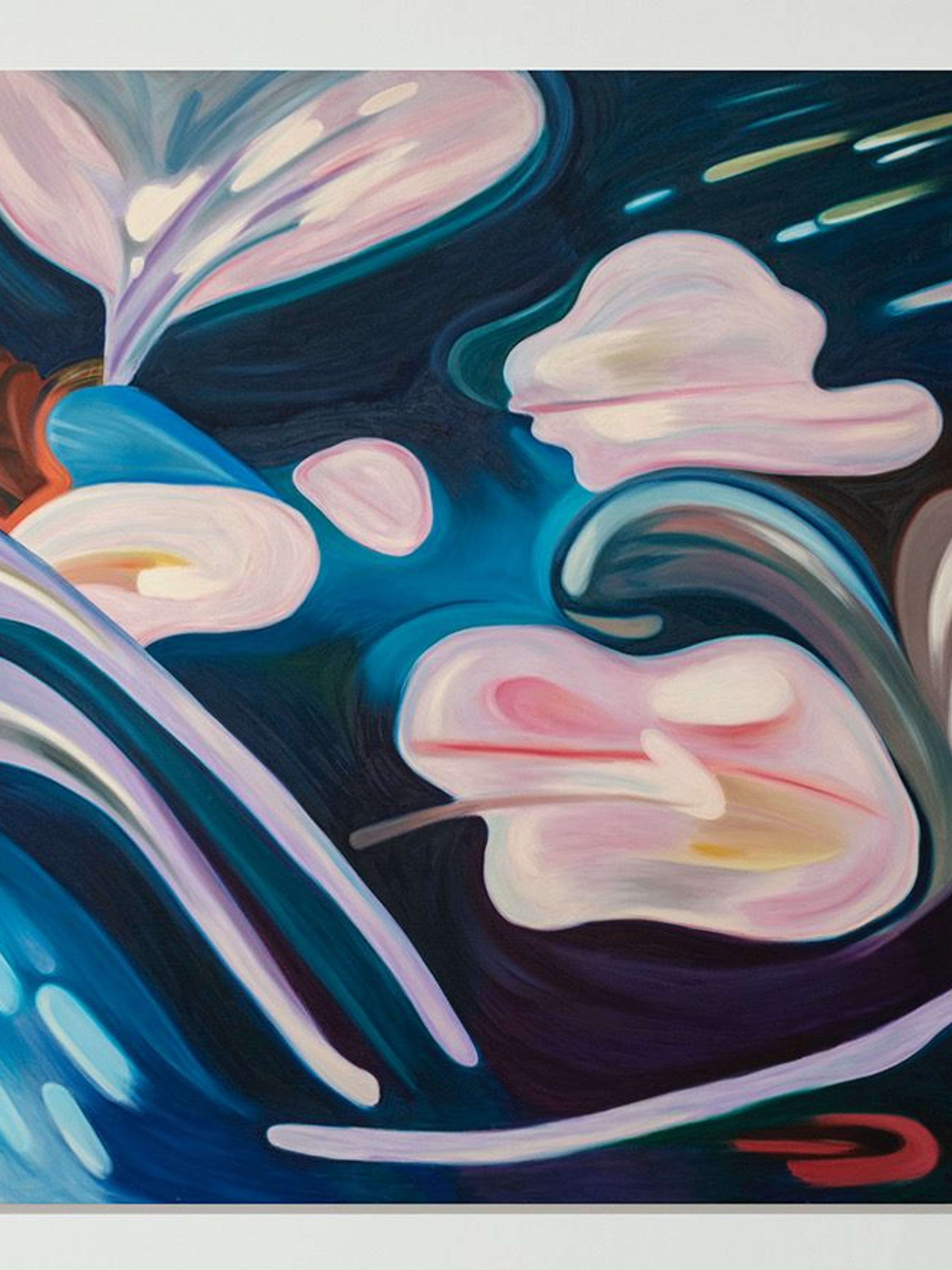
I thought it would be interesting, in the South of France, to turn the garden into an impressionist painting. I wanted to fill the garden with colored smoke, and the finale would come out of the pond. I designed a series of lilies, in homage to Monet, to float in the pond and hold the fireworks. In the process, I would make the view of Gehry’s tower disappear, which I also really enjoyed. I didn’t realize this also happened to be the 150th anniversary of Impressionism in 2024, and all of France was celebrating impressionism, so that was a nice little present. Anyway, when I saw the lilies I thought, ‘Whoa, those have some more potential as forms.’ I didn’t realize then that there was a historic association between lilies and goddesses; that was something I discovered as I developed my ideas. I’m not like some other artists I could name, who go back and produce versions of things they did when they were younger that sold. That’s not my trip at all. There must be something compelling in my earlier ideas which were big enough to have potential but that I couldn’t realize for a variety of reasons.
ME: Your ability to hold an idea across decades, and then years later return to it and bring it fully into being, feels like a powerful testament to your conviction. With that in mind, what would you say to artists at the beginning of their careers today?
JC: One thing I would say, given the fact that the art world has changed so much since I was young, is that it’s very treacherous for young artists now. You see it when they get picked up by a gallery that will just want the artist to do the same thing repeatedly. I would slit my throat rather than do that. I have tried to leave a record of what I’ve done through my books, and how I’ve done it, in the hopes that this will be valuable for others who face the same kind of obstacles. So, the only thing I have to say is, look to history, as I learned from history. Read about all these women before us and how they overcame their obstacles, and think, if she could do it, then I can do it. But most of all, find your own voice.
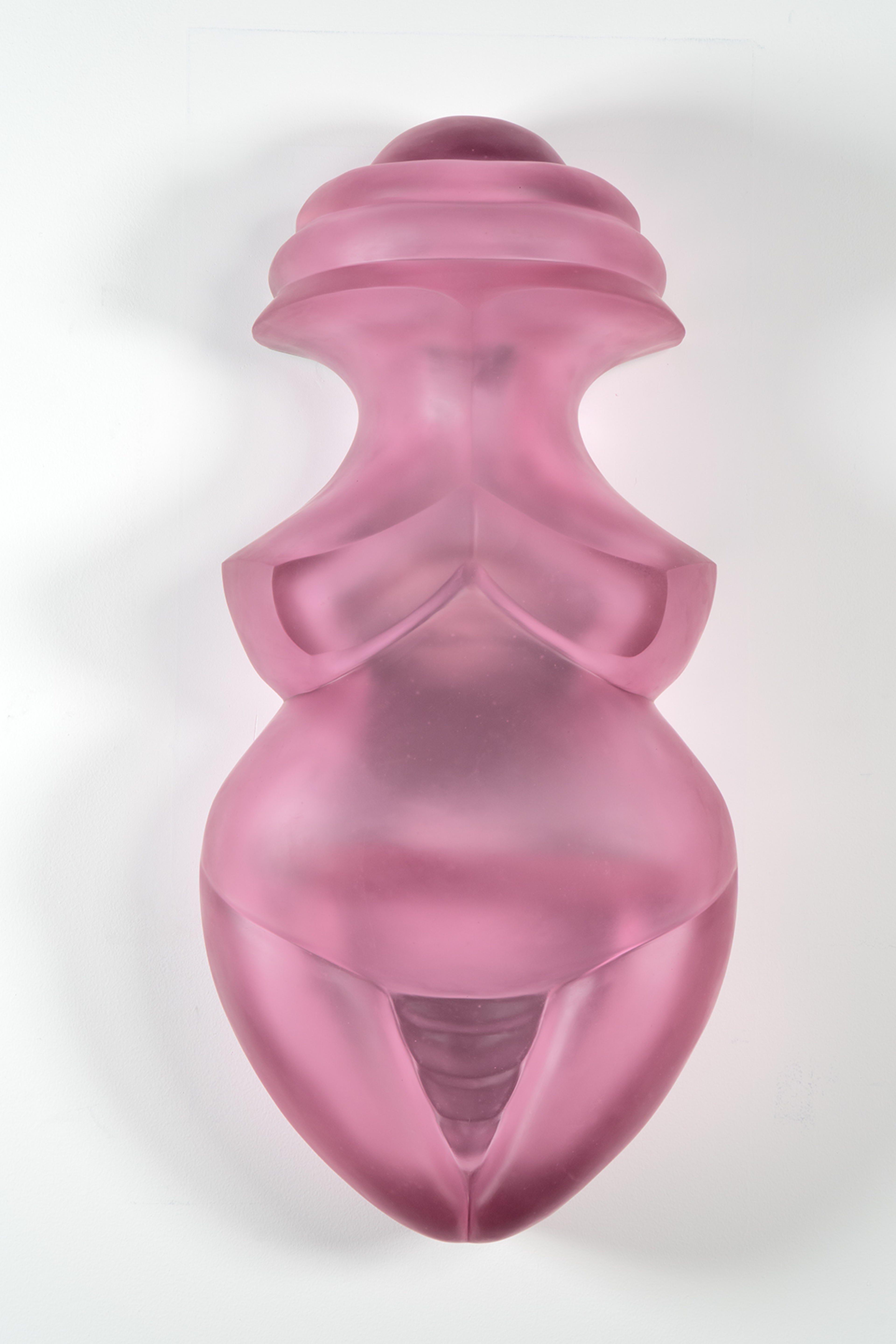
Glass Goddess (pink), 2025 © Chicago Woodman LLC, Judy Chicago/Artists Rights Society (ARS), New York Photo © Chicago Woodman LLC, Donald Woodman/Artists Rights Society (ARS), New York
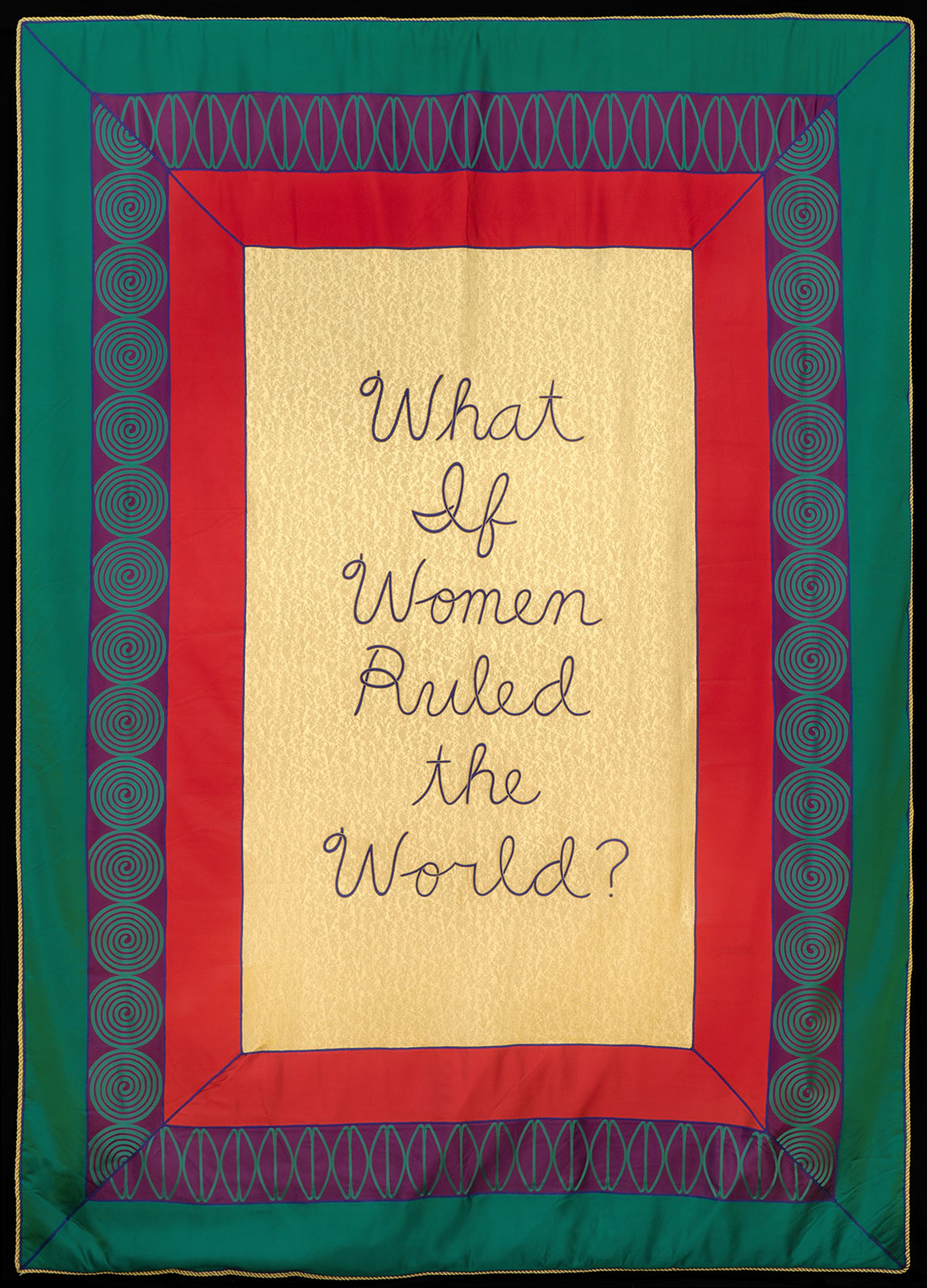
What if Women Ruled the World banner from The Female Divine, 2020 © Chicago Woodman LLC, Judy Chicago/Artists Rights Society (ARS), New York Photo © Chicago Woodman LLC, Donald Woodman/Artists Rights Society (ARS), New York
"I START WITH AN IDEA, I DON'T MAKE ART FOR SHOWS, AND I NEVER THINK ABOUT THE MARKET."
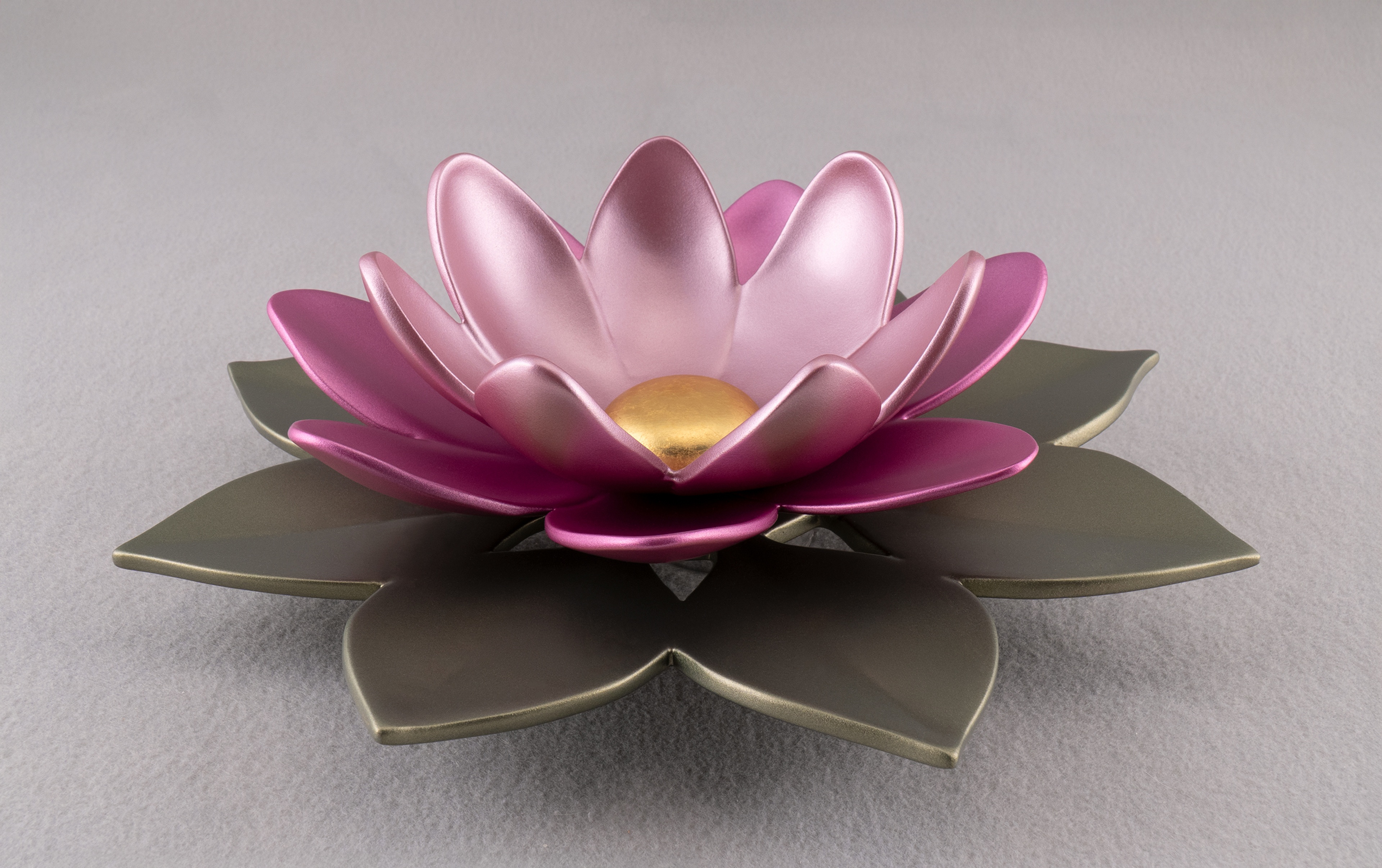
Lily (Aluminum), 2026 © Chicago Woodman LLC, Judy Chicago/Artists Rights Society (ARS), New York. Photo © Chicago Woodman LLC, Donald Woodman/Artists Rights Society (ARS), New York
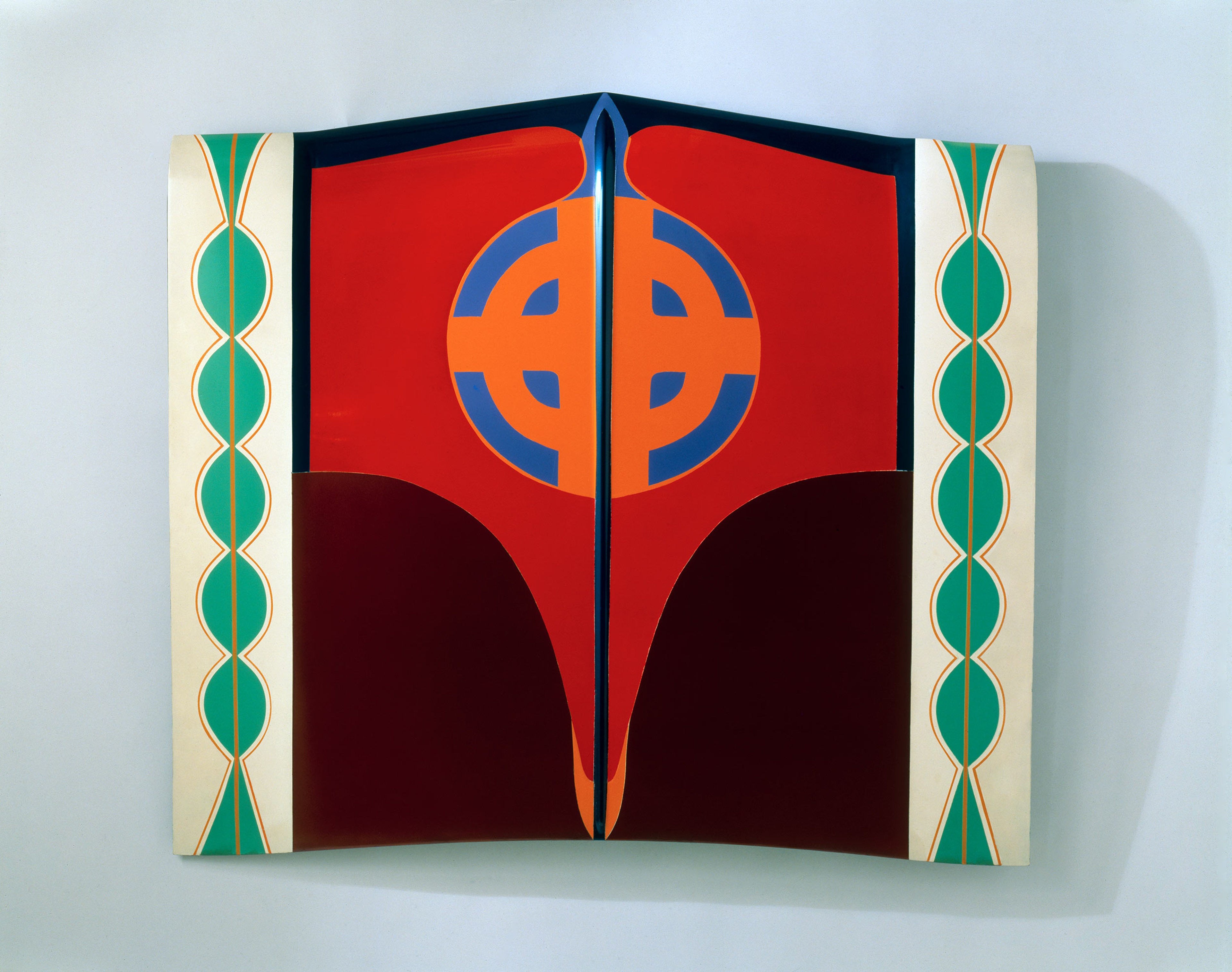
Car Hood, 1964. Collection of Moderna Museet, Stockholm © Chicago Woodman LLC, Judy Chicago/Artists Rights Society (ARS), New York Photo © Chicago Woodman LLC, Donald Woodman/Artists Rights Society (ARS), New York
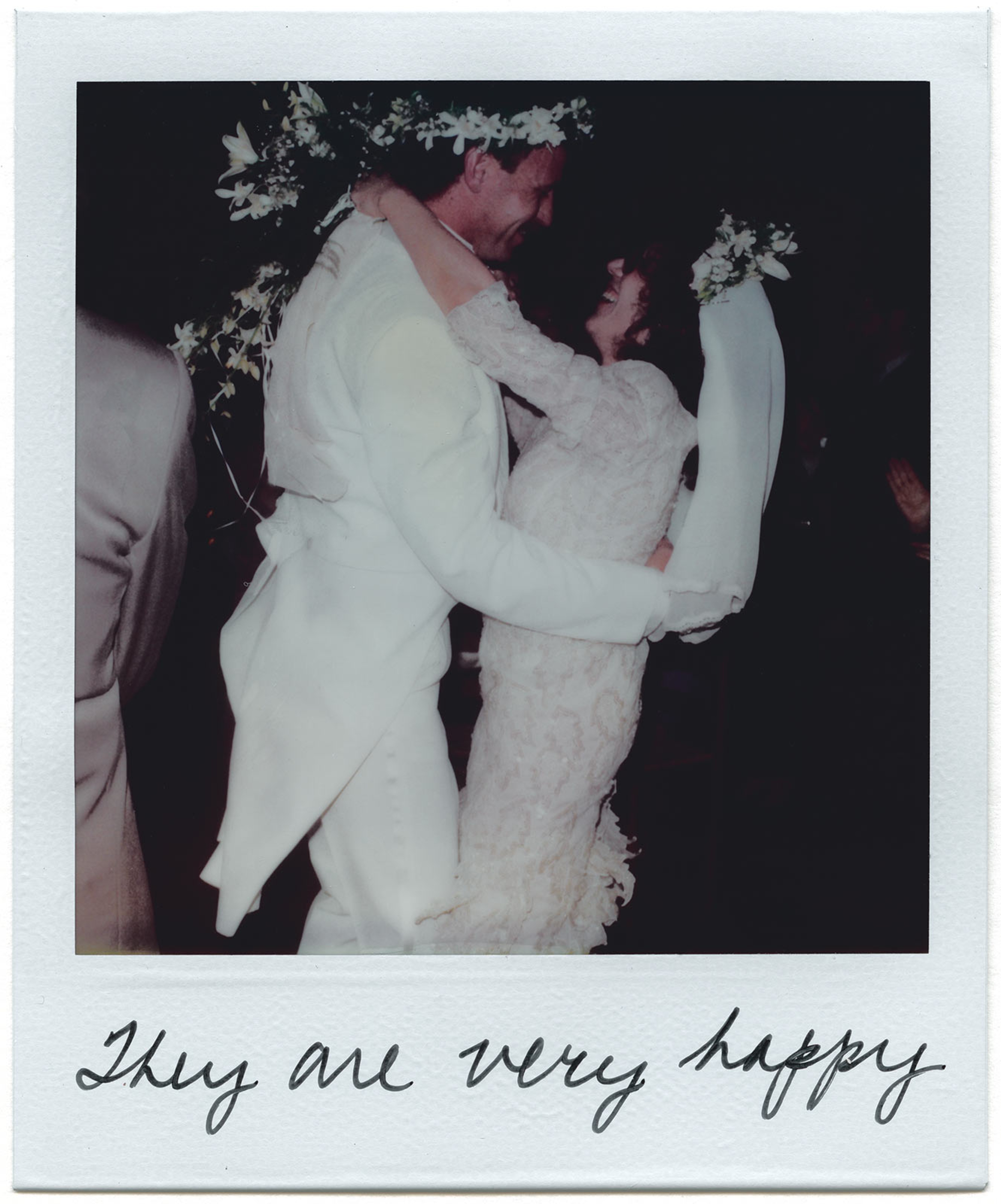
Judy and Donald at their wedding on New Year’s Eve, 1985, Galisteo, NM. Photo © Chicago Woodman LLC, Donald Woodman/Artists Rights Society (ARS), New York
CREATIVE DIRECTOR + EIC
SARAH RICHARDSON
ARTS EDITOR-AT-LARGE + TEXT
MAGNUS EDENSVARD
ARTWORK BY
JUDY CHICAGO
PHOTOGRAPHY
© Chicago Woodman LLC, Judy Chicago/Artists Rights Society (ARS), New York
Beyond Noise 2026
CREATIVE DIRECTOR + EIC
SARAH RICHARDSON
ARTS EDITOR-AT-LARGE + TEXT
MAGNUS EDENSVARD
ARTWORK BY
JUDY CHICAGO
PHOTOGRAPHY
© Chicago Woodman LLC, Judy Chicago/Artists Rights Society (ARS), New York
Beyond Noise 2026