Noise
ISSUE NO. 05: MILLY ALCOCK
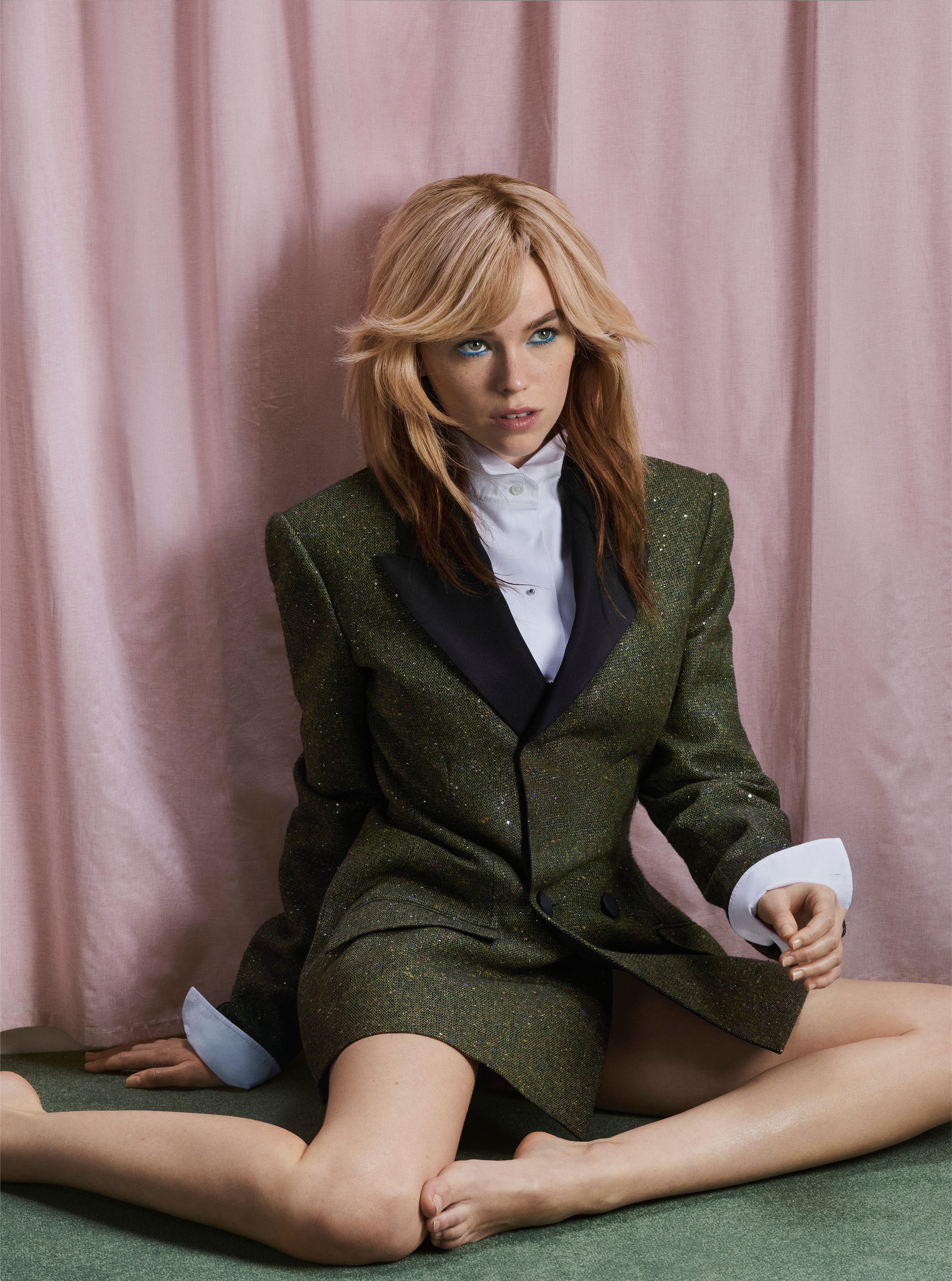
MILLY WEARS SHIRT AND JACKET BY DIOR.
COMPLEX FEMALE CHARACTERS
Words: 2315
Estimated reading time: 13M
A conversation on how to create a credible female superhero for our times, with the star of Supergirl, Milly Alcock, and its writer, Ana Nogueira
By Caitlin Hall
At just 25 years old, Milly Alcock has already established herself as an actress of remarkable caliber. With the ability to wield a fierce combination of vulnerability and intensity, it makes sense that she was chosen to portray Princess Rhaenyra Targaryen in HBO’s House of the Dragon. The power of her performance is made all the more striking by her youthful appearance; she is somehow simultaneously pixie-ish and wise. She got her first big break performing alongside the comedian and writer, Tim Minchin, in the 2019 television series, Upright. Milly, like Minchin, is a native Australian, having grown up in the suburbs of Sydney. This upbringing may sound like a far cry from the DC Universe, yet screenwriter Ana Nogueira’s adaptation of Tom King’s 2021–22 comic book miniseries Supergirl turns out to be more down-to-earth than one might expect.
This big budget superhero film may be surprising to those unfamiliar with the evolving landscape of the superhero genre, with its kaleidoscopic combinations of cultural references—also reflected in the changing nature of celebrity and what we expect from our film heroines. This Supergirl, Kara Zor-El, happens to be a bonafide party-girl. In a state of intense grief after the complete decimation of her homeland and people, she is beyond caring what anyone thinks of her; her only wish is revenge. It’s a story which, for its central theme of reckoning with great loss, has some unmistakable parallels with the current global landscape.
A superhero film centered around a rebellious female protagonist, the film was directed by Craig Gillespie, and for Ana, writing Supergirl proved a specific challenge: adapting the existing material while also creating a credible female superhero for our times. Her trepidation over how an actress might embody her vision for Kara disappeared when Milly entered the frame though.
CAITLIN HALL: How familiar were you both with the DC Universe before you became involved in the project?
MILLY ALCOCK: Zero to none.
ANA NOGUEIRA: Zero to none for Miss Milly.
MA: We all know what DC and that universe is, but I wasn't an invested fan, at the time.
AN: Because you feel it’s now changed?
MA: Yes, I think so. Well, now I'm a part of it, and I'm going to be a part of it for a while. I really believe in all the filmmakers who are involved in creating the DCU. And I want to do the best job that I can do and be as true to the text as I can, but also find a way to be myself within it.
AN: Yes, I think that’s the key. I was not a comics person growing up at all, but I love action movies, and superhero movies fit into that in a way. I mean, I loved Tim Burton’s Batman so much when I was little. I feel like you were maybe just born when those movies came out, but I was old enough to make memories while watching them. I love good movies, and I love action movies, and I love genre movies, because I think that they can be simultaneously so entertaining and fun and rewatchable, and then also, important and have value. But I was not a comic book girl growing up. So I had to really educate myself on all of the rules.
CH: Speaking of genre films, what are your thoughts on Supergirl’s hybrid genre of ‘Space Western’?
MA: I think that we're at a point with storytelling—because there's such an influx and such a huge market in terms of what is available for people to go and see—that I don't think we're bound by rules of genre anymore. There are no straight comedies, or straight dramas, or straight rom-coms anymore. We live in this beautiful era when stories can be told in such a way that is interesting, new, and exciting by crossing those borders. I think that our film sits in that world.
AN: I think so, I hope so. [The 2024 Amazon series] Fallout is a great example, and [the 2014 film] Guardians of the Galaxy has that same vibe. And, more of a throwback, [the 1997 film] The Fifth Element. With its punky space thing, that was something of an inspiration. It's also got space opera vibes, like Star Wars, where you can go all over the place and things feel big but simultaneously familiar, or that’s my hope.
MA: It’s like [the 1982 film] Blade Runner.
AN: As Milly said, you have so many ingredients now that you can use, and you can smush them together. The author of the original comic, Tom King, has always said it was based on [the 1969 film] True Grit. So it's like True Grit in space, but it's not just in space, it's also Supergirl. So you're putting a lot of things into the stew.
CH: Supergirl is a very character-driven story. What was it like working together to bring the character to life?
MA: I feel like we both played our part. I'm speaking for myself here, but I feel like in any job that I do, the characters exist in different ecosystems, depending on what department you're in. So, in the writer's room, you think it's this person. Then in the actor's own work—because it is like writing, it is so isolating—it’s another person. Then you get to set and you think, “Okay, this person is now a hybrid of these two people.” Then you get the director involved. It’s an ever-evolving journey until the film is released. Then there's the audience's response, and that can completely change the way that a character is interpreted or taken in. It’s kind of never-ending.
AN: I think that we all played our part. But it starts even before that, because it starts with this comic. It starts with Tom King saying, “Here's Supergirl.” Then my role is: how do I take this and put it on something that can be shootable? That can work on screen? That you can hand over to an actor? Handing over to an actor is normally really, really scary, because you think, ‘Do you see what I see?’ But with Milly, that was not the case. I've said this before, but I do wonder what we would have done if we hadn't found Milly. What she brings to it, just from the baseline, is what I had hoped for. It’s actually really rare in an actor, that sort of total authenticity. It's very, very hard to be authentic as an actor, because your job is to morph. When you find people who can just be themselves as a character, you think, ‘Oh my God, don't leave me!’
MA: Oh, thank you, that's really sweet.
AN: For Milly to also have craft on top of that, so that she brings something to the role but then she is also able to repeat that day after day on set—which isn't just somebody showing up with a good personality, that's somebody who can actually act—made my part of the job come to life. I had all these ideas, and my concern was, ‘Is this going to be translated by a person?’ She's not a puppet, right? you can't control her. Then that just happened so naturally. It’s lucky, because it can go the other way too.
MA: You have a little china bowl, and you're thinking, ‘Please don't break it, please don't break it. This is hand-painted! A labor of love.’
CH: Kara is a character who is dealing with loss. How does this theme of loss shape the character and the narrative of the film?
MA: I think that the way loss is explored throughout the character of Supergirl specifically is such a beautiful element, and it's so intrinsic to the story. I'm so glad it's in there because although she's not a real human, there's an innate humanity in loss, grieving, and mourning. I think that it allows her to exist on this plane that we can all understand and relate to. For me, I can relate to someone instantly by what I know they've lost or the way that they've dealt with loss.
AN: Her loss is so huge. Yet, as you’ve said, so grounding. It does make you relate to her more, even though the loss is of this other planet.
MA: Right, it doesn’t exist on our plane.
AN: Hopefully the core of planet earth is not going to explode. Fingers crossed we don’t go the way of Krypton. But, I agree with you. It makes you relate to her more, and from a writing stance it was a way in.
CH: What considerations did you have when making a superhero film that’s centered around a female lead character?
MA: I don’t know. I just play it.
AN: Milly’s got no choice. This is who she is.
MA: This is who I am, this is what I do. I hope that the goal, specifically with this film, is to have a young, deeply flawed female role model for young girls. There is a stereotype, especially with women in these worlds of sci-fi and action, there is this element of perfectionism, that that's what makes them good. The beauty of Kara is that she's so bad, and that's what makes her good.
AN: I always think when you’re writing female characters, that they’re going to be received very differently. I actually think that in some ways, I made no consideration of the fact that she’s a woman. I just wrote who I thought she was as a character. There was no feeling of trying to make people like her. I didn’t think about the likeability factor, I don’t think any of us did. She makes sense. She never does anything ‘wrong’ in the movie. She kind of always makes the right choice, even if she does it in a roundabout way. The hope is that we can think, ‘Oh yeah, she’s a woman, she’s a person.’ I’m not writing her as if she was a man. I’m not trying to strip her of her gender.
CH: Is Kara an antihero?
MA: I don’t know the exact definition of an antihero. She’s not like Clark Kent. I think she understands that there can be exceptions to rules, and to be good is to sometimes not be perfect. So I don’t know if it’s an antihero story.
AN: Yeah, I don’t know if she’s really an antihero. When I think of antiheroes, I think of characters like, I’m going to go ahead and say it, I don’t actually know the definition of an antihero… Maybe we should call Craig and ask him, “Can you define an antihero?” I missed that day in school. I don't know, maybe I'm an anti-hero. Plot twist.
MA: It’s all a setup for your movie, which is about the writing of Supergirl.
AN: It’ll be so boring.
CH: How have your prior experiences prepared you to work on a film of this scale?
MA: They haven’t. You just do it. That’s the only way I can describe it. I’ve done big franchise stuff but it's nothing in comparison to this. I remember, in pre-production, just spiraling. Spiraling. All the time. Every day. Until mid-way through the shoot, I thought, ‘Okay, I can do this.’
AN: Wait, I’m so curious. What was the spiraling about? Because I feel like, if I were you, I would be losing it. Was it the stunts?
MA: It honestly wasn’t even on a practical level. It was more, how have I got myself in this situation where I’m able to do a superhero film? This happened after I shot House of the Dragon. I kept having these really vivid images of me walking down the street, tripping, and all my teeth were gone. Or walking down the street, pow, dead. I think it’s because I believe there has to be an equilibrium in the world; if something good has happened to me, something bad is going to happen. I think I’ve gotten over that anxiety, but while we were in pre-production, I kept having dreams in which I was standing, I looked up and there was a tsunami wave. I couldn’t move. So that was my body’s way of telling me that it was very scared.
AN: I’ve never had the ‘walking into a pole—dead’ dreams. I get the wave dreams. That is the feeling of overwhelm, right?
MA: There’s water, there’s motion. You can’t predict it. But it’s also tranquil and peaceful. I’m sure you could study dreams and find a book about that.
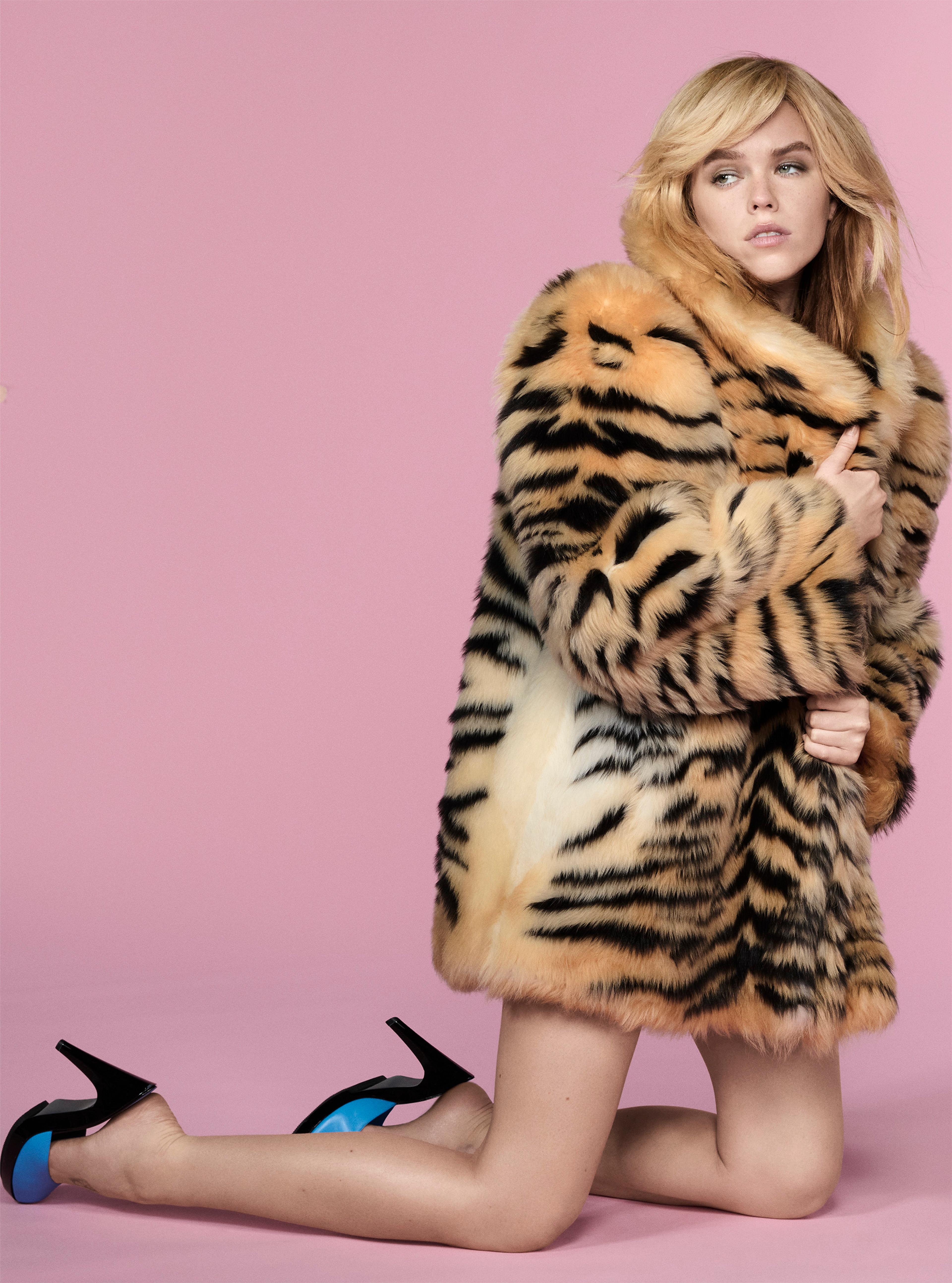
Milly wears jacket by GUCCI. Shoes by LE MONDE BÉRYL X KIM SION.
“I think that we're at a point with storytelling—because there's such an influx and such a huge market in terms of what is available for people to go and see—that I don't think we're bound by rules of genre anymore.”
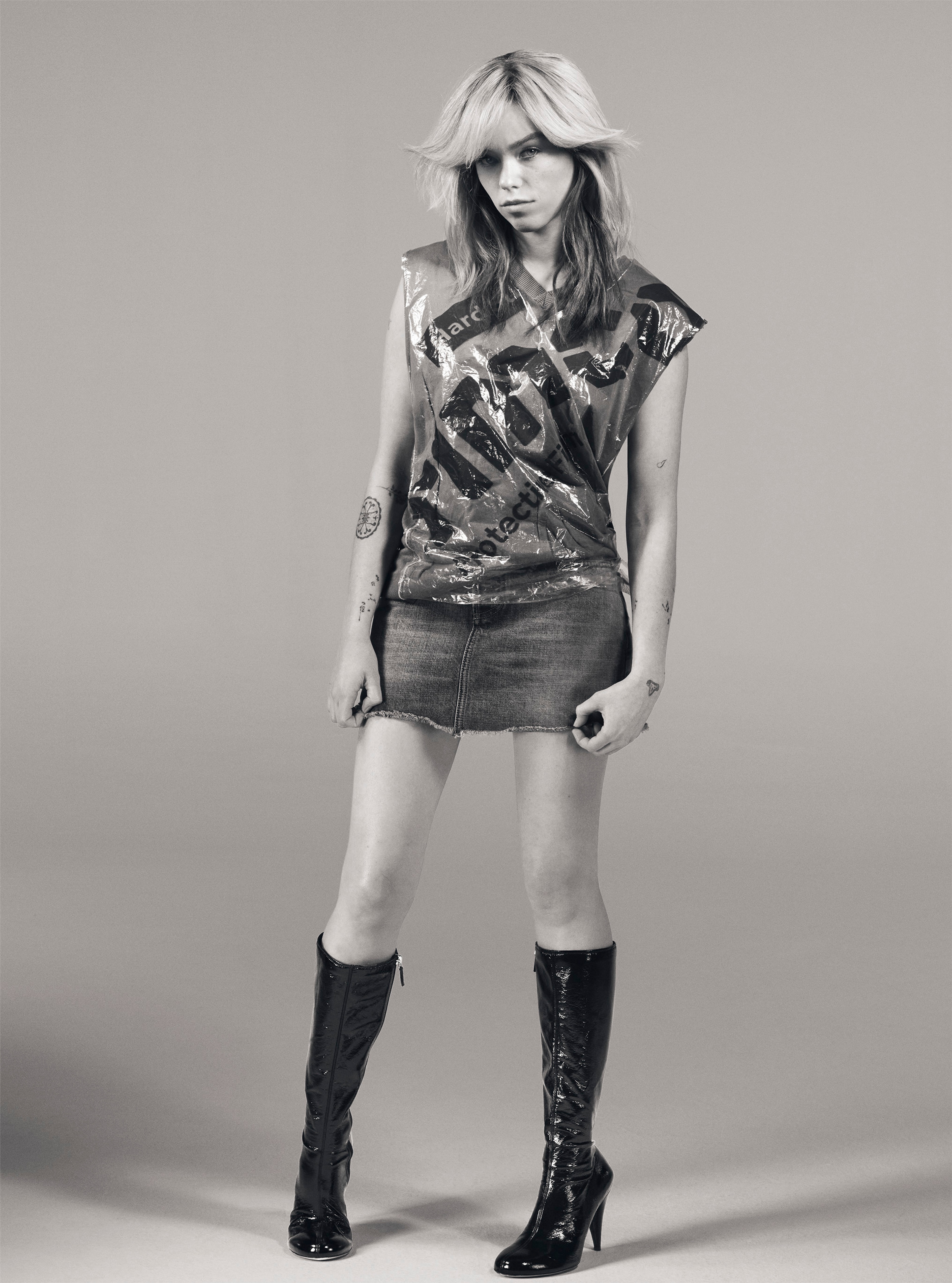
Top by MAYHEW. Skirt by DIOR. Boots by LE MONDE BÉRYL X KIM SION.
“The goal, specifically with this film, is to have a young, deeply flawed female role model for young girls.”
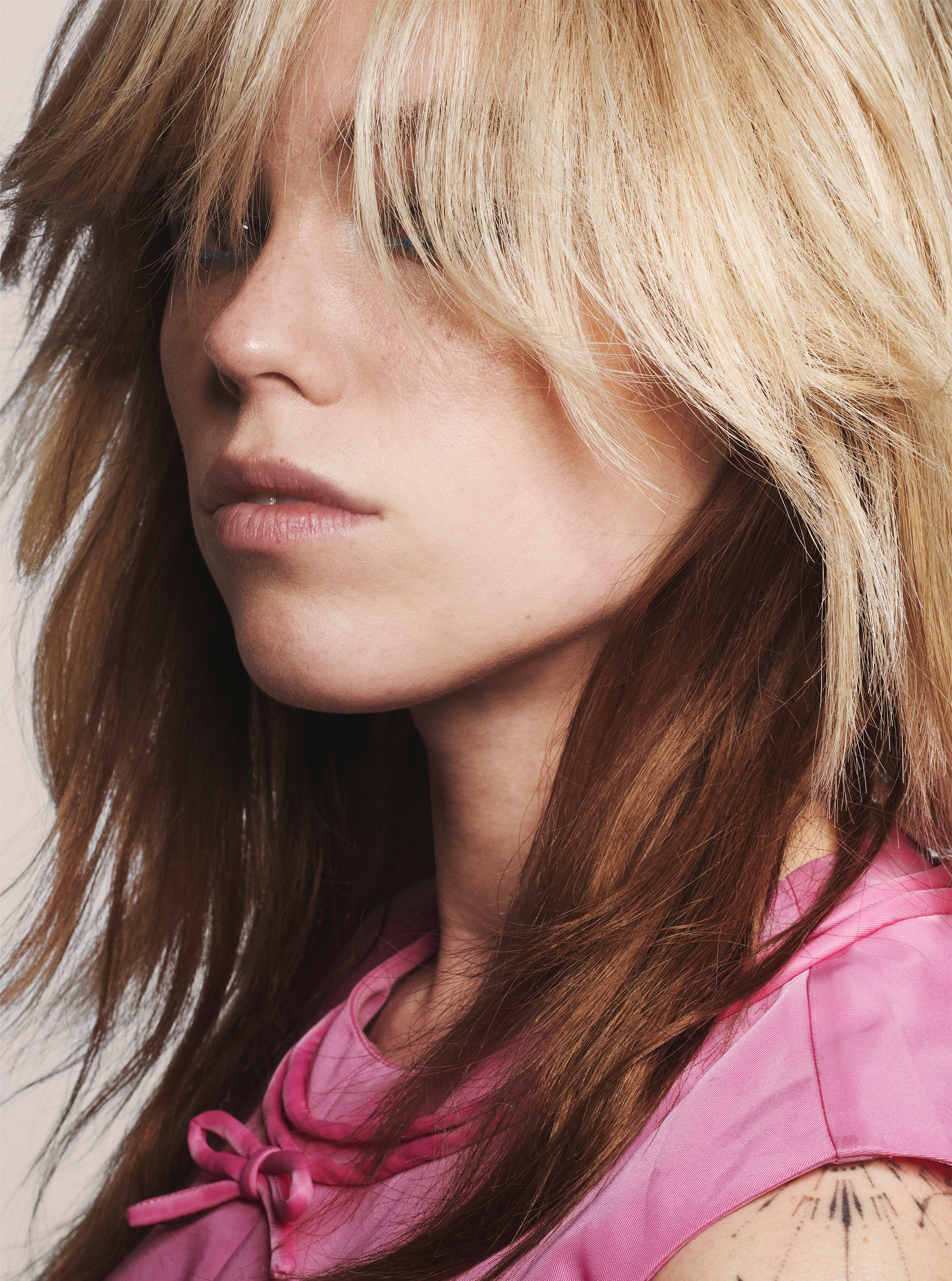
Dress by MM6 MAISON MARGIELA.
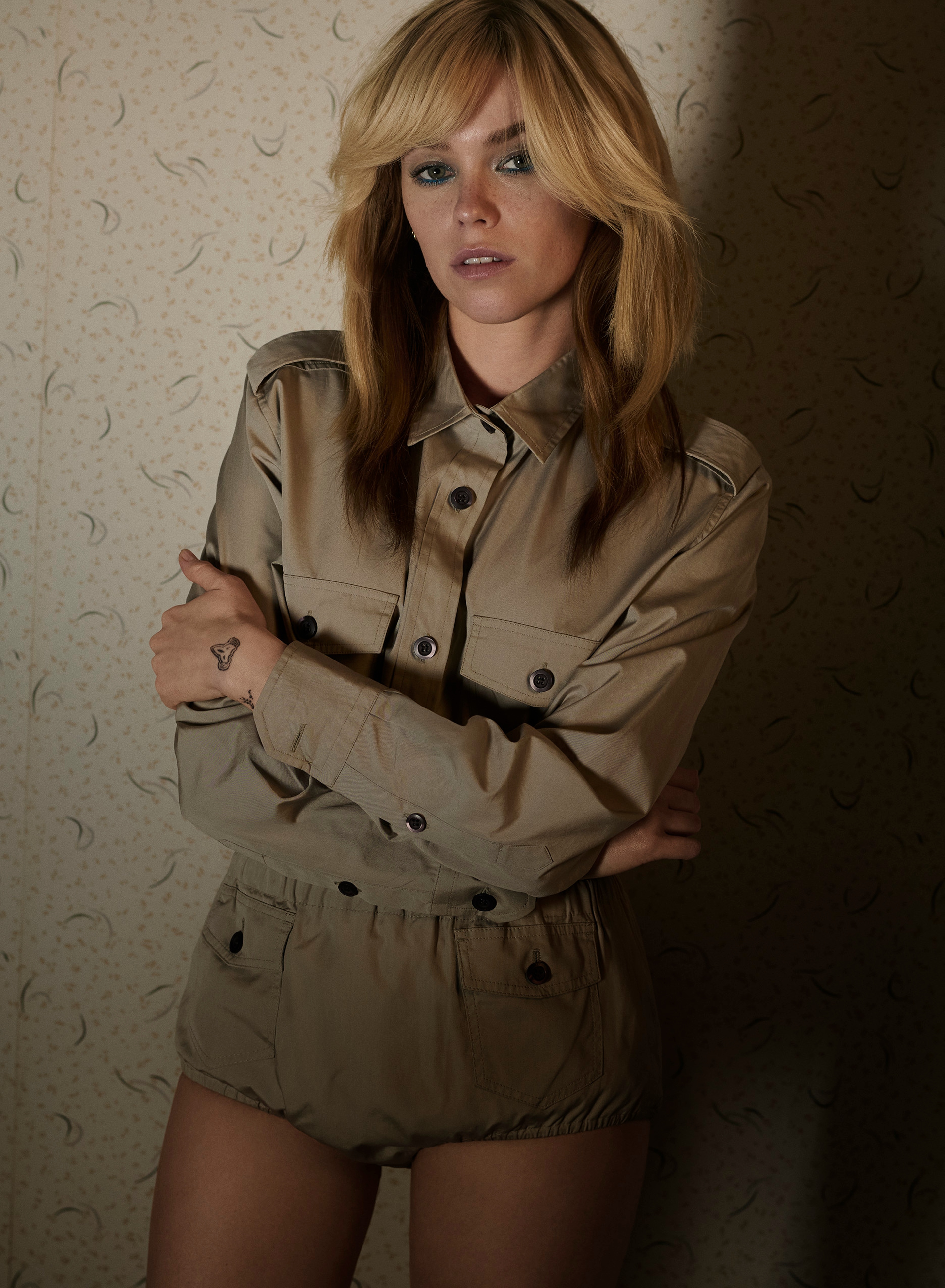
Shirt and shorts by PRADA. Boots from MAD WORLD FANCY DRESS HIRE.
EIC + CREATIVE DIRECTION
SARAH RICHARDSON
PHOTOGRAPHER
CRAIG MCDEAN
TALENT
MILLY ALCOCK AT VIEWPOINT
Talent Director
Tom Macklin
HAIR
SYD HAYES AT ART + COMMERCE
Make-up
Thom Walker at Art + Commerce
Set Design
Tilly Power
Manicure
Pebbles
Photo AssistantS
Shri Prasham Parameshwaran, Felix Turnbull-Walter, Tomo Inenaga
Digital Technician
Nina Close
Tailor
Holly Pitt-Knowles
Production
Holmes Production
Post Production
Gloss Studio
Beyond Noise 2026
EIC + CREATIVE DIRECTION
SARAH RICHARDSON
PHOTOGRAPHER
CRAIG MCDEAN
TALENT
MILLY ALCOCK AT VIEWPOINT
Talent Director
Tom Macklin
HAIR
SYD HAYES AT ART + COMMERCE
Make-up
Thom Walker at Art + Commerce
Set Design
Tilly Power
Manicure
Pebbles
Photo AssistantS
Shri Prasham Parameshwaran, Felix Turnbull-Walter, Tomo Inenaga
Digital Technician
Nina Close
Tailor
Holly Pitt-Knowles
Production
Holmes Production
Post Production
Gloss Studio
Beyond Noise 2026