Noise
ISSUE NO. 05: SHARON STONE

SHARON wears jacket by FEAR OF GOD. Sunglasses by SAINT LAURENT BY ANTHONY VACCARELLO. Earrings and bracelets by TIFFANY & CO.

NEW MODALITIES
Words: 2256
Estimated reading time: 13M
Now establishing herself as a visual artist, Sharon Stone joins the comedian and author Tiffany Haddish to discuss artistic practice, grief, and a friendship that began over high tea.
By Isabelle Truman
Sharon Stone began painting during the pandemic and soon became, by her own account, a woman possessed. Days bled into night as she created meditative, abstract landscapes in her bedroom, selling furniture to make space for canvases. Her practice has since evolved into exhibitions, critical recognition, and acceptance within a notoriously insular art world. But more significantly, into a form of personal autonomy. At the start of our call, Sharon turns her screen to show me the painting she spent the day “going wild” on: a colorful landscape inspired by her time in Tahiti. Loose brushstrokes dissolve any clear horizon, as though the scene exists somewhere between remembered place and emotional state. She has hung it above her fireplace.
Sharon’s public image was forged in an era when women's power in Hollywood was most legible as spectacle. For more than three decades, she has existed as both actress and apparition—fixed in cultural memory in terms of the ice-cool provocation of Basic Instinct, yet persistently resistant to easy definition in real life. A survivor of catastrophic illness and relentless scrutiny, she has re-emerged in recent years as something more self-authored: writer, activist, artist, and one of the industry’s most candid and unvarnished voices.
It is this instinct for authorship that makes her an unexpectedly natural counterpart to Tiffany Haddish. Where Sharon’s power was historically coded as mystique, Tiffany’s has been forged through radical transparency. Together, they represent parallel studies in women's self-definition within an industry that has long profited from fixing women in place.
ISABELLE TRUMAN: What were your first impressions of each other?
SHARON STONE: We first met when I invited Tiffany to tea.
TIFFANY HADDISH: She invited me to high tea. First of all, Sharon, I've been watching you for so, so long, right? And I have this image in my head of this goddess from the ’80s who wears white t-shirts and white blouses, no bra, just glides in with sex energy oozing everywhere. Everybody's sexy because they’re in her presence. Oh, and guess what? She don't take no shit! That was my vision of you. Then, she summons me. She sends a message to my hotel front desk, I call her room, and she tells me to come up. Something you don’t know, Sharon, is that I had this very handsome young man in my room at that moment, and I left him sitting on the couch, butt naked. I said, “I’ve got to go, Sharon’s calling.” Then we had tea, and I just thought, ‘She’s down to earth. She’s been through things. She’s real.’ It really made me realize it's okay to be yourself. I think what you have taught me the most is, don't let them change you, be who you are.
SS: It’s only because you are who you are that people are into you to begin with. And then they start telling you everything that’s wrong with you. It’s like, you know what? If all of that was wrong with me, you wouldn’t have picked me to start with.
TH: Right, right. 'What am I doing here?'
IT: Sharon, why was it that you wanted to meet Tiffany?
SS: Because I thought she was fantastic. I thought she was hilarious, and gorgeous, and cool, and I thought she had all the cool guys chasing her, and she was saying, “I don't know, maybe not.” I liked her attitude of, ‘I have a plan for myself, and my self is my front-running plan’. I liked that people tried to derail her plan continuously, as they do when you're a woman who has a decision. Because if you have a decision, you're difficult. If you're not just fluid and 'whatever you say,' then you’re difficult. I liked that she chose a life for herself. I found that very interesting.
IT: You're also very funny and quick-witted. Do you think humor has been something that's helped you navigate celebrity and your career?
SS: Well, that was my thing. I started in comedy. I was with Harvey Lembeck, which is where Robin Williams and John Ritter and all these incredible comics came out of. That was the comic group when I started. Nancy Meyer was married to this guy, Chuck Shire, at the time, and working with them [starring in the duo’s comedy-drama Irreconcilable Differences] was how I got started in studio films. But then people took one look at my hooters and it was all over. Suddenly, you're no longer funny. If they think for one second that they can think about you naked, they can't think about anything else. And it became really difficult. I would go on stage and tell jokes, and people would just stare at me because they really just couldn't believe that I also could talk in real life.
TH: Sharon, hold on—because one of my goals in life is to become a swimsuit model before 50. Are you telling me, if I post a picture of me in a two-piece with my biscuits out, it's a wrap? They're not going to hear the jokes no more?
SS: No. Eliza Schlesinger is my friend, and she wears really quite body-contouring, body-revealing clothes when she does her stand-up, and she looks amazing. She dresses to show her body when she does her work. And she works as an actress, but she keeps her clothes on. I think when you cross the line, it's very hard. I did a comedy with Albert Brooks. It was really funny, and it's still just hard. It's hard for people to come back from their own embarrassment at how much they've sexualized you and how much they've objectified you. I think it's hard for them to get past that in their own reality. But now that I’m a thousand I think it could be okay.
TH: First of all, you don’t look a day over... I’m going to say 50. I've been doing research, and I found this program that's supposed to help you reverse in age by 10 years if you listen to this subliminal music. I don't know. I feel like it might be working.
SS: I’ve got to say, you look 11. I think maybe you might’ve been listening too much. They’re not going to let you into the comedy club tonight. They’re going to card you.
TH: Come get me, Mr. Officer. Arrest me.
IT: Tiffany, seeing how Sharon's committed to painting and built a life around this practice—has that changed the way you think about exploring more private or unexpected forms of creativity?
TH: Definitely. Seeing her painting is inspiring. It opened my eyes to so many modalities. I don't have to just be a comedic actress or a stand-up comedian. I could try all kinds of things. So I've been recording music. I paint as well, but I love to sew and make clothes. Sometimes I make jewelry. I don't think I will ever wear it in public, because it might be a little rinky-dink, but I have fun exploring and getting rid of emotions that don't serve me. Art usually helps me do that.
SS: I think it’s incredibly therapeutic. My friend came over the other day, had lunch, stayed while I painted, left, flew back to New York, then quit her job and put her house on the market. She said, “If you can change what you were doing and make these big decisions and not wait around for everybody else, why am I not pursuing things I really want to do?” I think that we're at this time when the world is so unpredictable; we might as well do what makes us happy.
TH: I try to always do what makes me feel good, right?
SS: Follow your bliss, as Joseph Campbell would say.
IT: What has painting given you that acting perhaps didn't? How has it changed how you think about creativity and success?
SS: Well, there's a number of things. One, I can depend on it, and I don't have to wait for someone else to give me permission to do it. Two, I can continue to grow and experiment and be disciplined at my pace, which I really like. I like not having to be beholden to someone else. I've always written, and it was really hard because women just couldn't get published. I had short stories published all the time, but when I wanted to get a book of short stories published—nope, there was no way. I had to write a memoir. So I wrote a memoir, and now I've been working on this novel, which I hope I get published. But it is very hard. So I need to be an artist. I need to. I want to do stand-up. I have some thoughts, and, Tiffany, maybe you'll be the person who will work with me on it. I have this idea. I want to do an act around my mother's death, because her dying was hilarious. It was so unbelievably awful, and went on for so long that it was so funny. It's a stand-up.
TH: I can help you craft it.
SS: I would like that. Because everybody has these ideas about how when their parent dies. No matter how good or bad it is, you're going to eventually get to that point where you're by the bed, and they tell you how proud they are of you, how much they've really been proud of all your accomplishments, and you forgive them, and they forgive you. Well, that’s not what happened with my mother at all.
TH: It's never what it looks like in the movies. How about the grief? Did you think grief was funny, too?
SS: I was so relieved when she finally died that I didn’t have any grief for a little bit. I was just so glad it was finally over. My sister was saying goodbye to her: “Bye, cookie. Okay, I'm going to go now. I love you cookie, alright? Good night, honey.” And I'm just standing there, doing what I always do—being the one who takes care of everything, standing next to the bed, quietly observing. My mother turns to me and says, “And you, you talk too much. You make me want to commit suicide.” She was both hilarious and hideous all at the same time. It was just so unbelievable. And I think we have to go through this. We have to go through the horrors of our own life and our own childhood and face how hideous it really was. That is really where the funny comes from. If you can't laugh about the hard stuff, you'll never heal from it. That's where the healing is. I think that’s also the wavelength that Tiffany and I connected on. I saw in her that sort of sister energy like, 'She's seen some shit.'
TH: I’ve seen a lot of shit. My mama's crazy, too, girl. She’s out here doing a lot.
SS: And you’re deciding to be happy, you’re deciding to be successful. You're deciding to do well. You're deciding that no matter what anybody says or does. Because when you've been through all of these things, there is a certain part of you that's magnetic to it, and it keeps bouncing back. And you have to be able to become the compassionate, empathetic person who responds and doesn't react to it. You have to be able to be bigger than the thing itself. You have to beat it. Those of us who have gone through this stuff, we are the empaths who will guide you to your survival. Because we know the path, we know the road—and so people will keep testing us. I'm walking the path, and when you are ready, you will see that the one thing about me is consistency.
TH: I like to say I'm leaving footprints everywhere I go, so you best follow me, right? I'm going where I want to go. I'm doing all the things I want to do. I'm going to do it, and I’m going to enjoy it, too.
SS: I've paid my dues and dimes. I'm done, and now it's time for me to be happy and successful. Thank you.
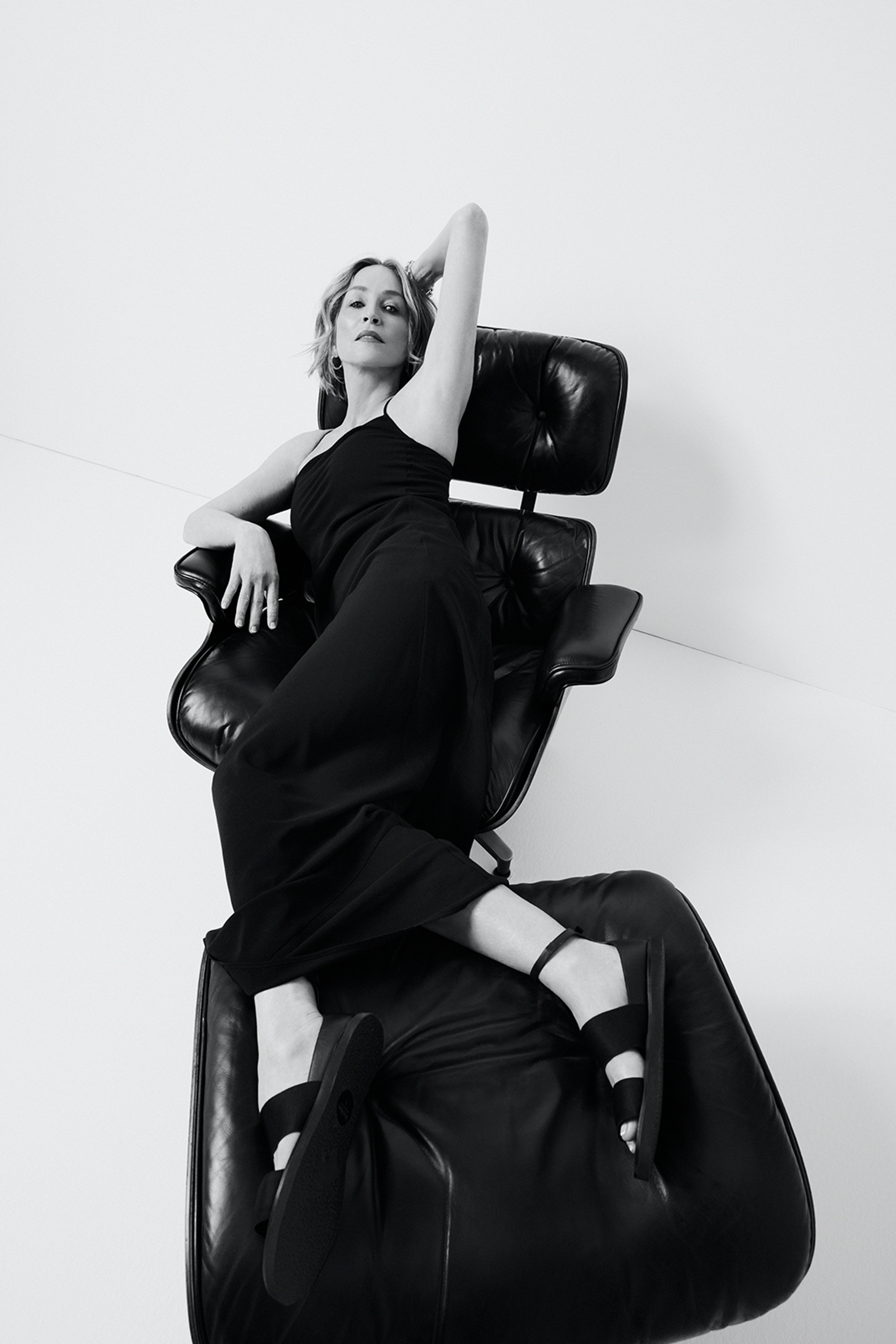
Dress by FEAR OF GOD. Shoes by Max Mara. Earrings and bracelets by TIFFANY & CO.
“It's hard for people to come back from their own embarrassment at how much they've sexualized you and how much they've objectified you.”
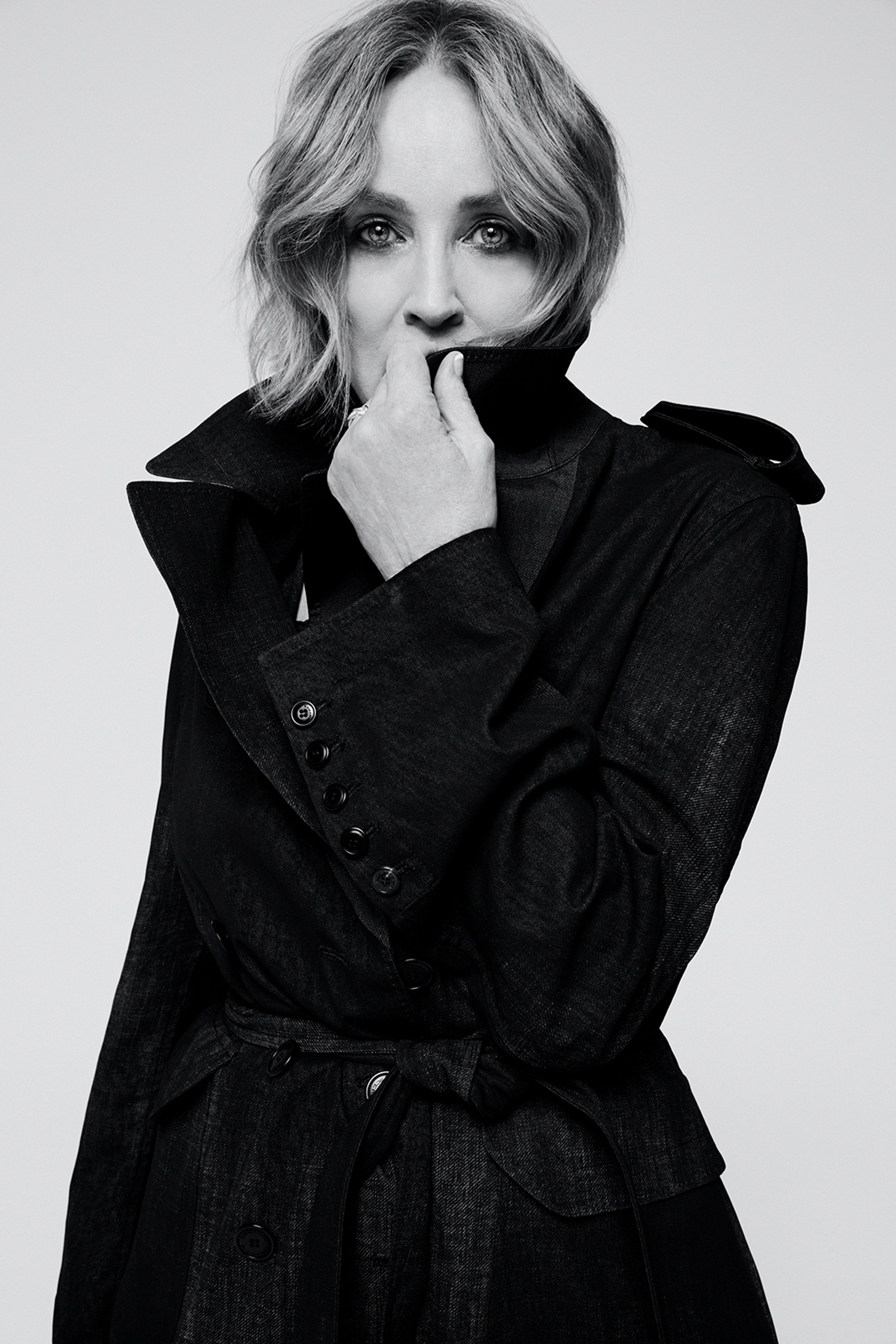
Coat by ERMANO SCERVINO.

artist SHARON STONE.
“I like not having to be beholden to someone else to be an artist.”
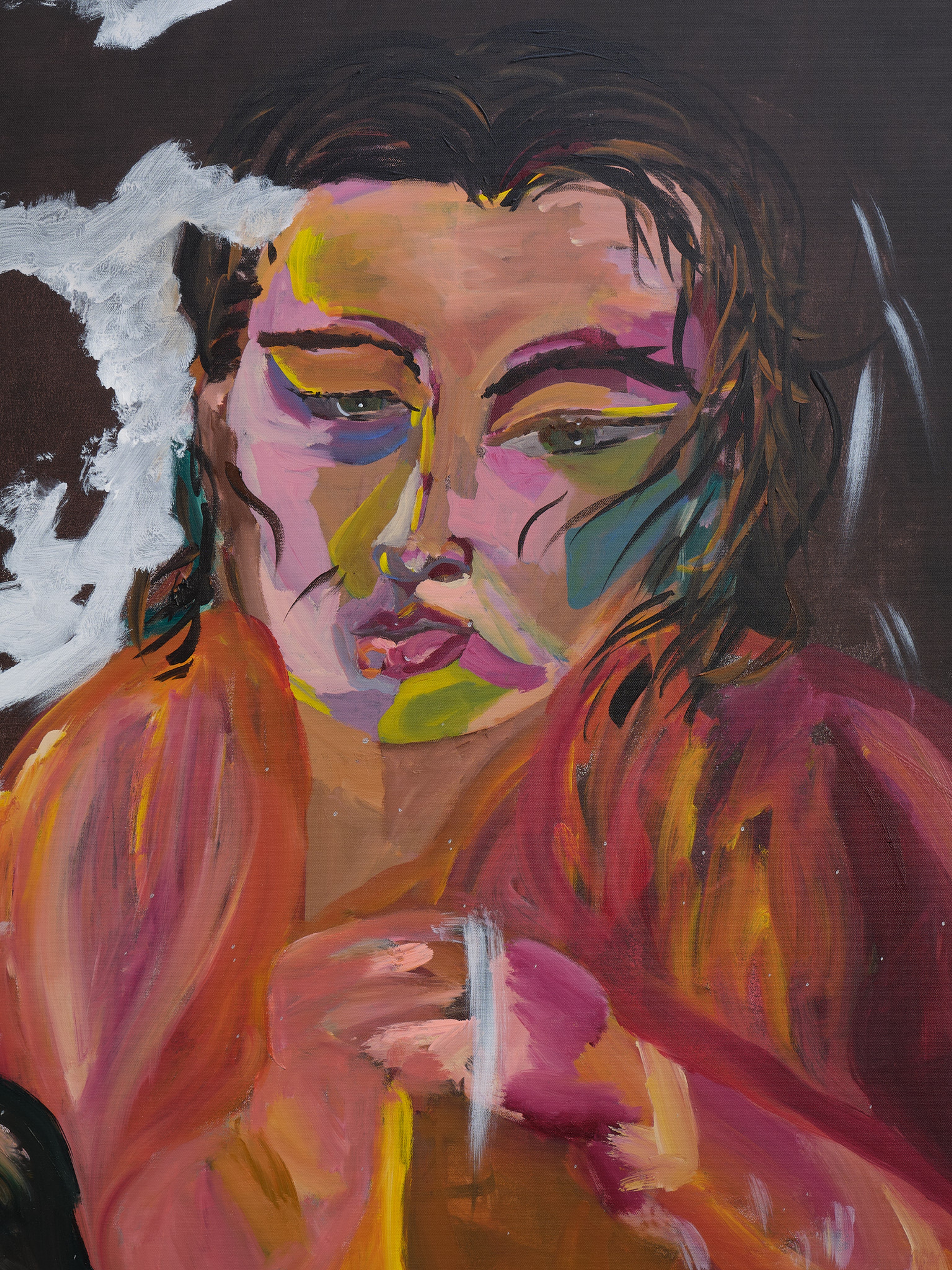
ARTIST SHARON STONE.
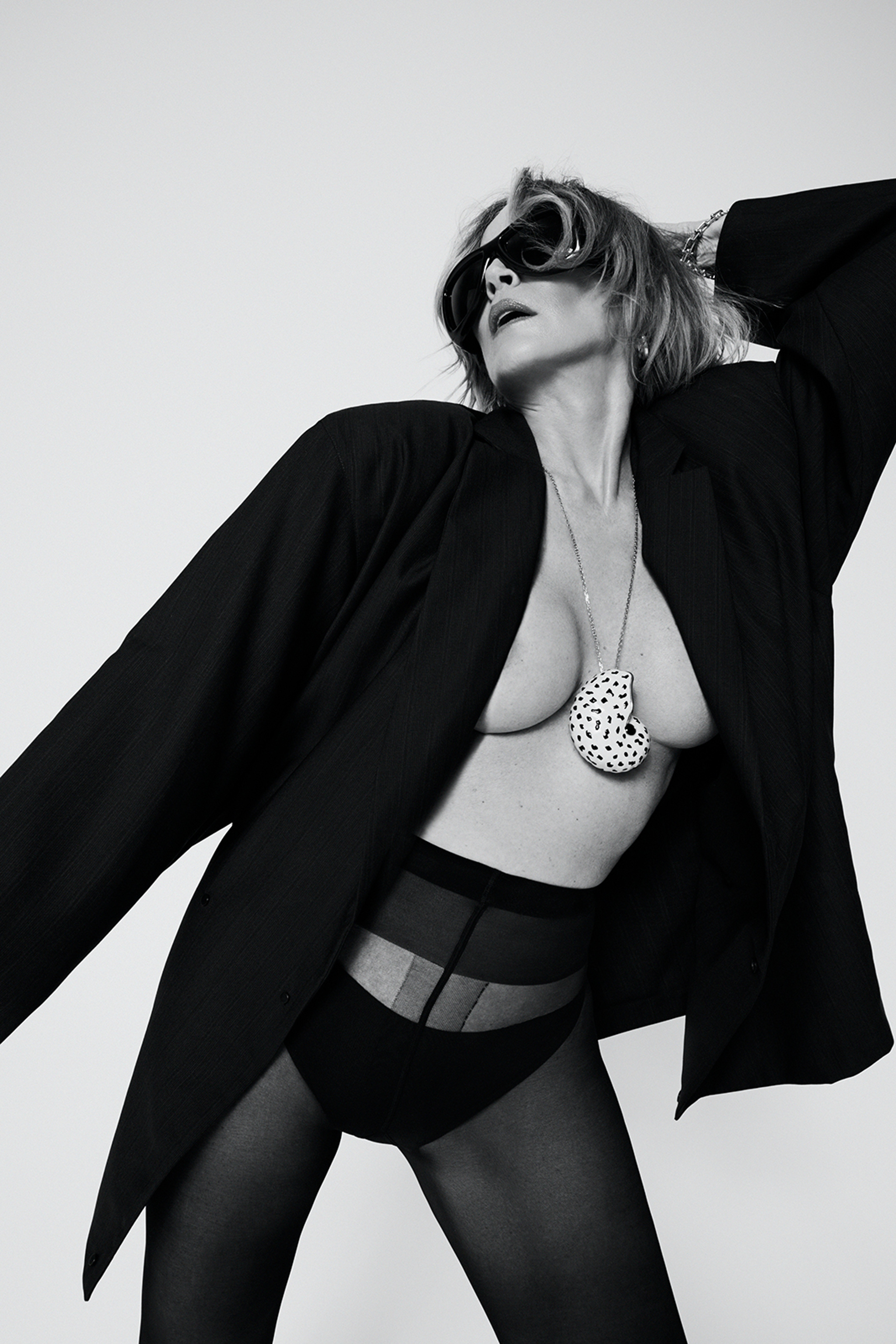
Jacket by FEAR OF GOD. Tights by WOLFORD. Sunglasses by SAINT LAURENT BY ANTHONY VACCARELLO. Earrings and bracelets by TIFFANY & CO. Necklace by LORO PIANA.
EIC + FASHION
SARAH RICHARDSON
PHOTOGRAPHER
CAMERON MCCOOL
TALENT
SHARON STONE
Talent Director
Tom Macklin
Hair
Gui Schoedler
Make-up
Amy Orseman
Manicure
Amber Studer
Photo Assistant
Olivia Rosenberg
Stylist Assistants
Larry Simmons, Madeline Torres, Ivy Campbell
Production
Hyperion
Producer
Spencer Kelly
On Set Producer
Walker Blake
Special Thanks
MILK Studio
Beyond Noise 2026
EIC + FASHION
SARAH RICHARDSON
PHOTOGRAPHER
CAMERON MCCOOL
TALENT
SHARON STONE
Talent Director
Tom Macklin
Hair
Gui Schoedler
Make-up
Amy Orseman
Manicure
Amber Studer
Photo Assistant
Olivia Rosenberg
Stylist Assistants
Larry Simmons, Madeline Torres, Ivy Campbell
Production
Hyperion
Producer
Spencer Kelly
On Set Producer
Walker Blake
Special Thanks
MILK Studio
Beyond Noise 2026