Noise
ISSUE NO. 05: LAUREN HALSEY
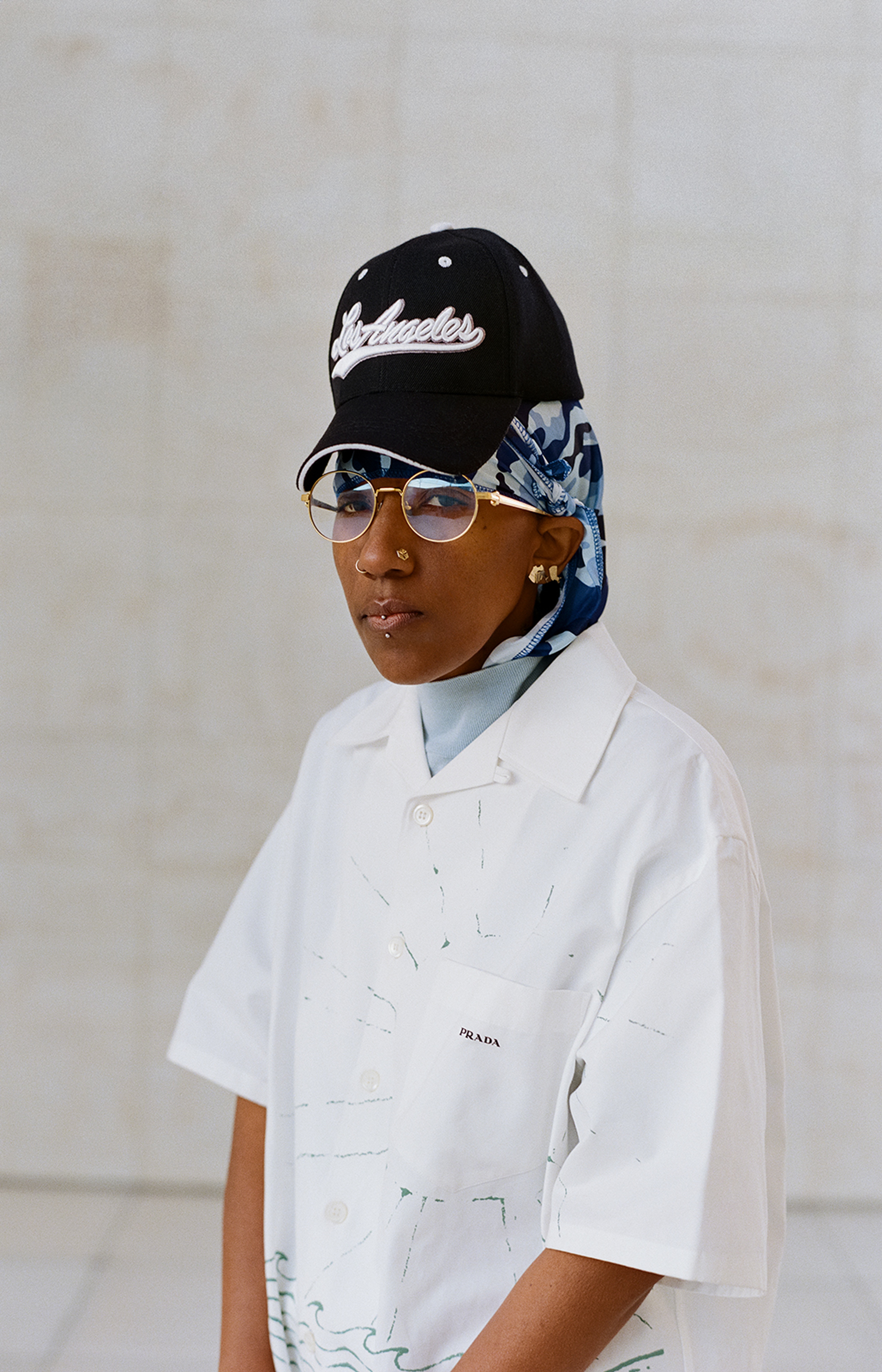
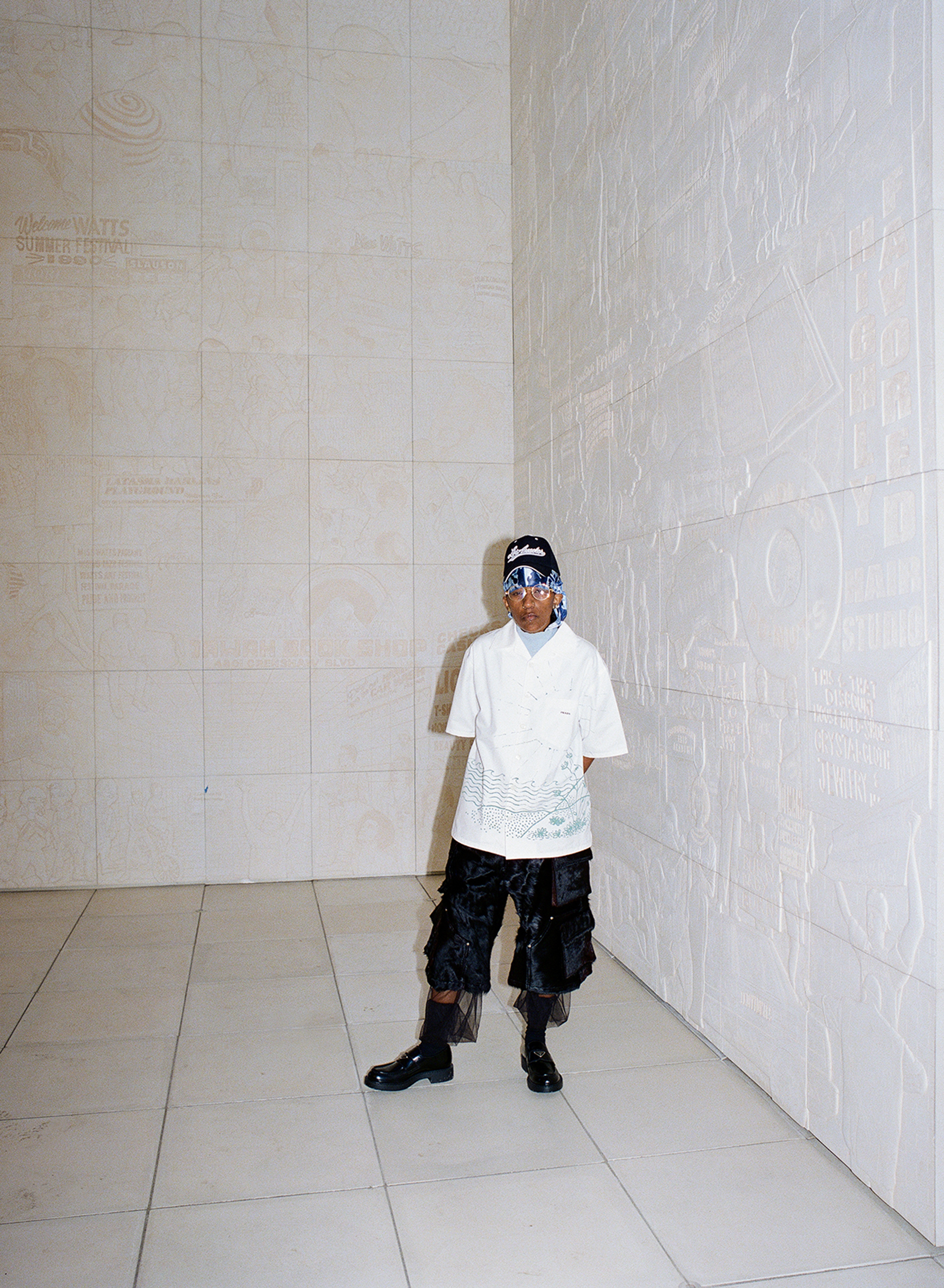
LAUREN wears top and shirt by PRADA.

BUILT FROM THE GROUND UP
Words: 3461
Estimated reading time: 19M
Artist Lauren Halsey sits down with abolitionist activist Susan Burton to discuss reclaiming South LA through care
By Magnus Edensvard
At its core, Lauren Halsey’s art practice begins with place—its histories, languages, visual codes, and the enduring structures of care that extend beyond the limits of institutional recognition.
Halsey’s work moves across multiple media and forms of expression—from sculpture, architecture, collage, and installation to community organizing and the hosting of performative programs, talks, and communal gatherings. Across these activities, she approaches the built environment not simply as a physical site, but as a living archive of Black life, memory, and possibility. This approach reflects Halsey’s ability to create exchanges across contexts and communities, with her native Los Angeles remaining the center of her social and creative enterprise. From there, her engagement with space—and the communities that inhabit it—has extended outward into institutions and cultural platforms around the world.
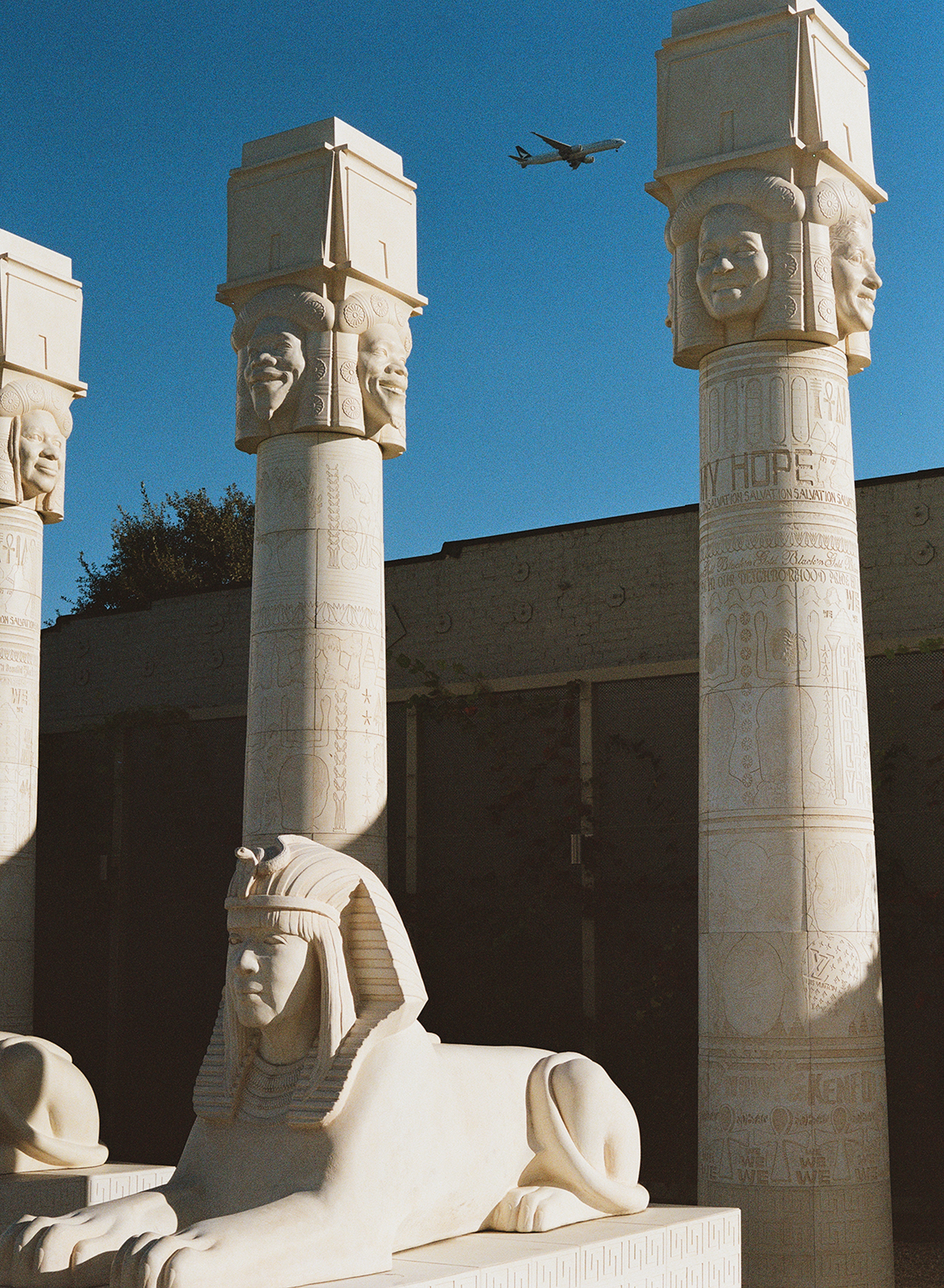
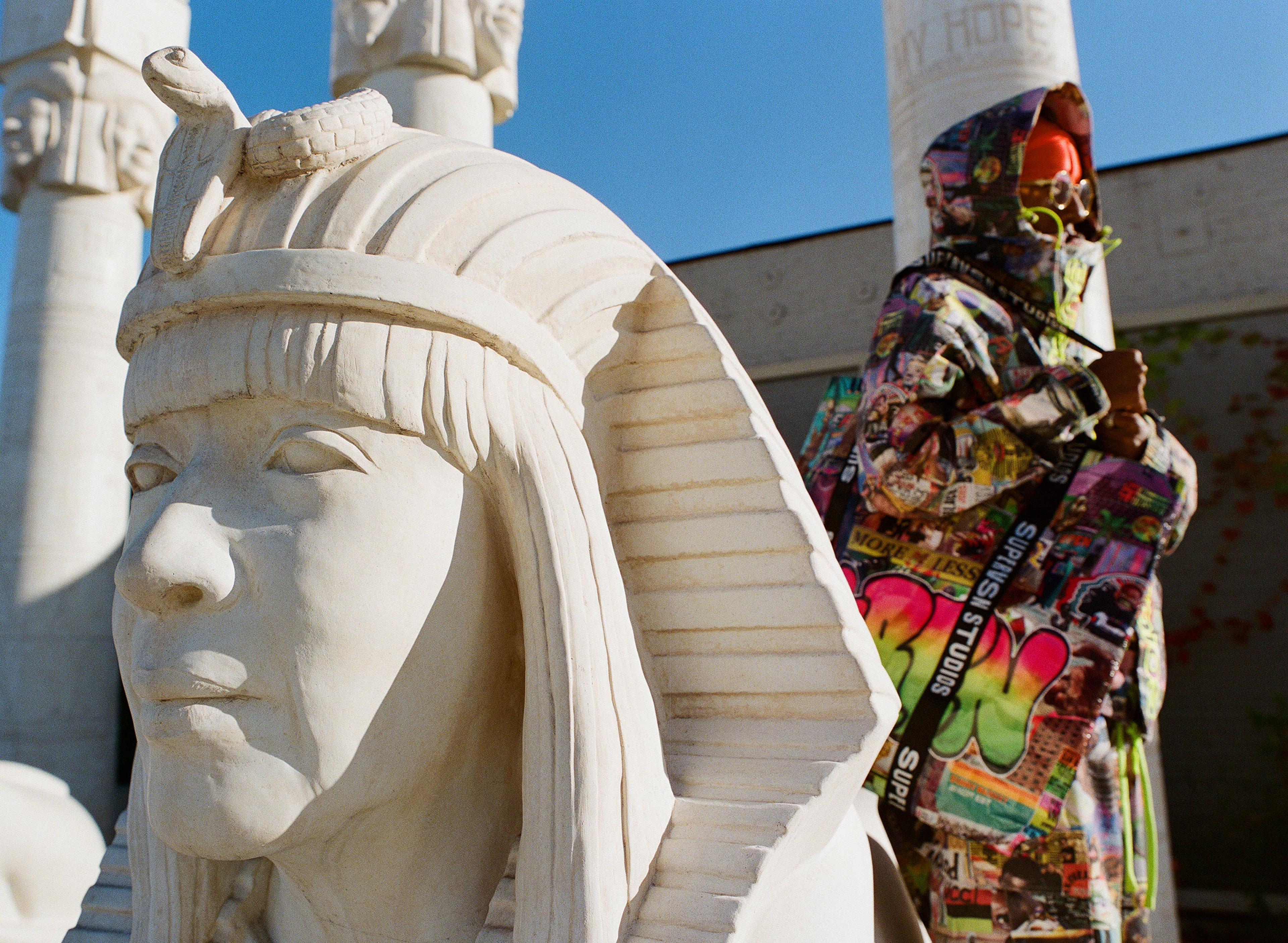
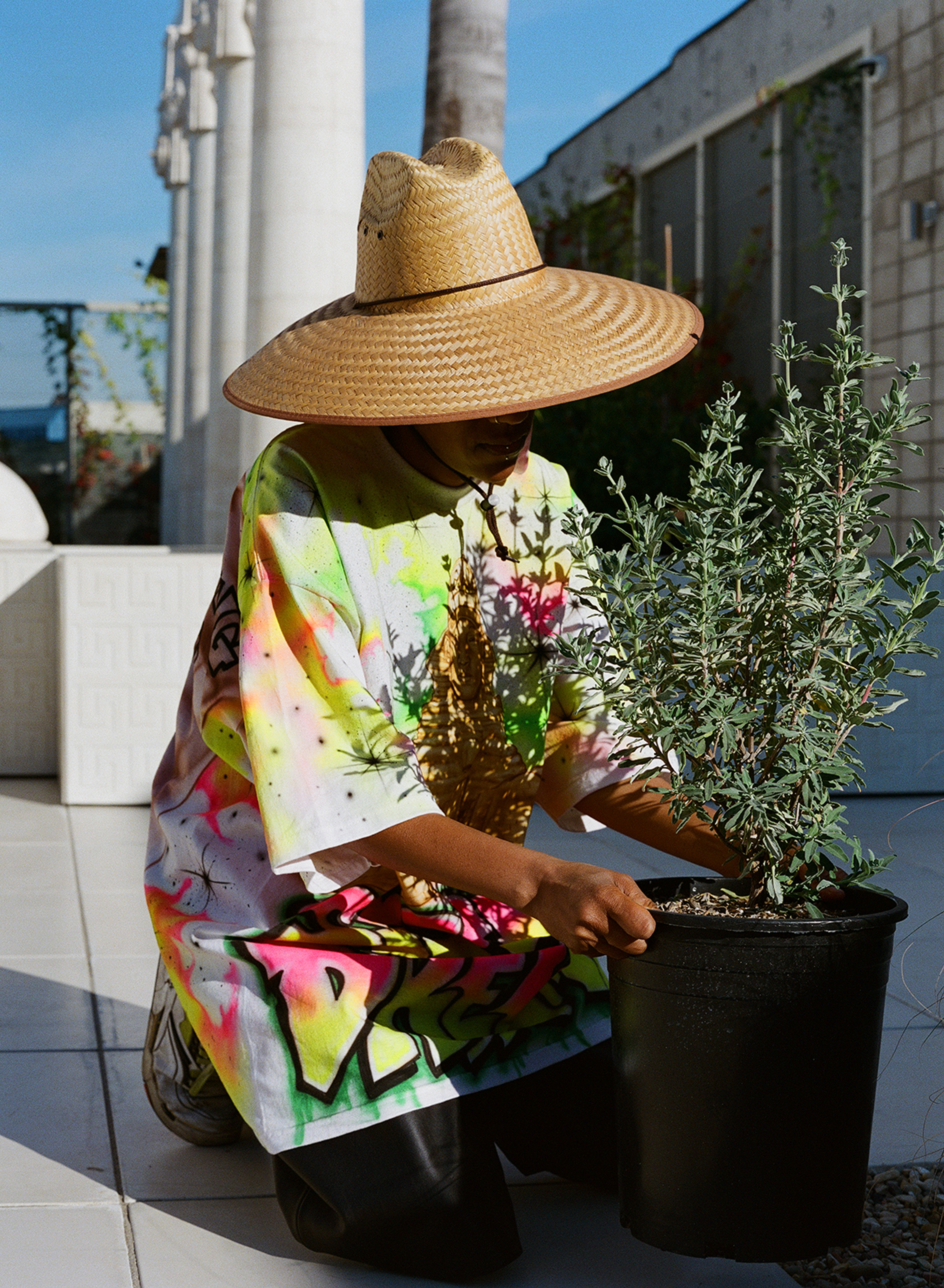
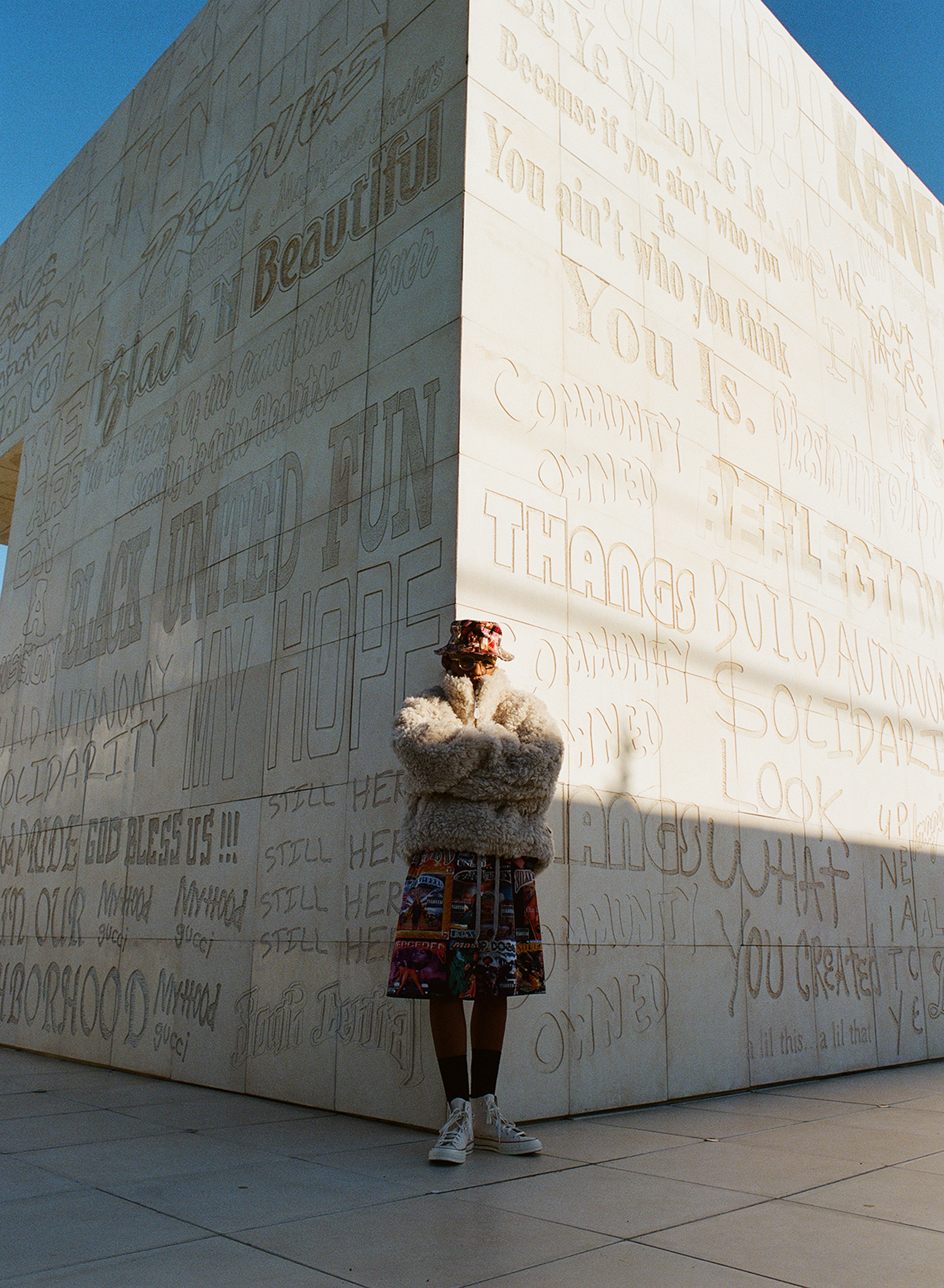
One of the most expansive expressions of this vision has recently taken form in sister dreamer, Halsey’s monumental sculpture park in South Central Los Angeles. Conceived over nearly two decades and realized as both an architectural environment and civic space, the project extends the artist’s sculptural language to the scale of urban infrastructure. Egyptian-inspired columns rise over 20 feet high, organizing a carefully designed park landscape that incorporates fountains, seating areas, and native plant beds. At its center stands a monumental cubic portal-like structure, punctuated by an open square void and serving simultaneously as gateway, landmark, and gathering point. Together with sculpted columns and sphinx figures, its carved surfaces are populated not by ancient deities but by hyperlocal presences: family members, mentors, and community leaders. Reliefs throughout the site map the neighborhood’s visual language and collective memory. The surrounding plaza unfolds as an open civic courtyard—conceived less as a monument to the past than as an invitation to the present: a place for art, education, wellness programming, and community exchange.
Developed through Halsey’s nonprofit, Summaeverythang Community Center, in collaboration with Los Angeles Nomadic Division (LAND), and curated by its co-founder Christine Y. Kim, the project came into being through the efforts of a wide network of producers and creative partners who helped bring the artist’s vision into public space.
sister dreamer reflects Halsey’s longstanding commitment to preserving the cultural histories of South Central while opening new frameworks through which residents can gather, learn, and imagine futures together. Embedded within the sculpture park’s architectural fabric and stone carvings are tributes to individuals whose work has transformed the social landscape of South Los Angeles. Among them is Susan Burton—founder of A New Way of Life, a pioneering organization supporting formerly incarcerated women as they rebuild their lives after prison.
Over several decades, Burton’s advocacy has helped establish networks of housing, legal support, family reunification, and healing for thousands of women navigating reentry after incarceration.
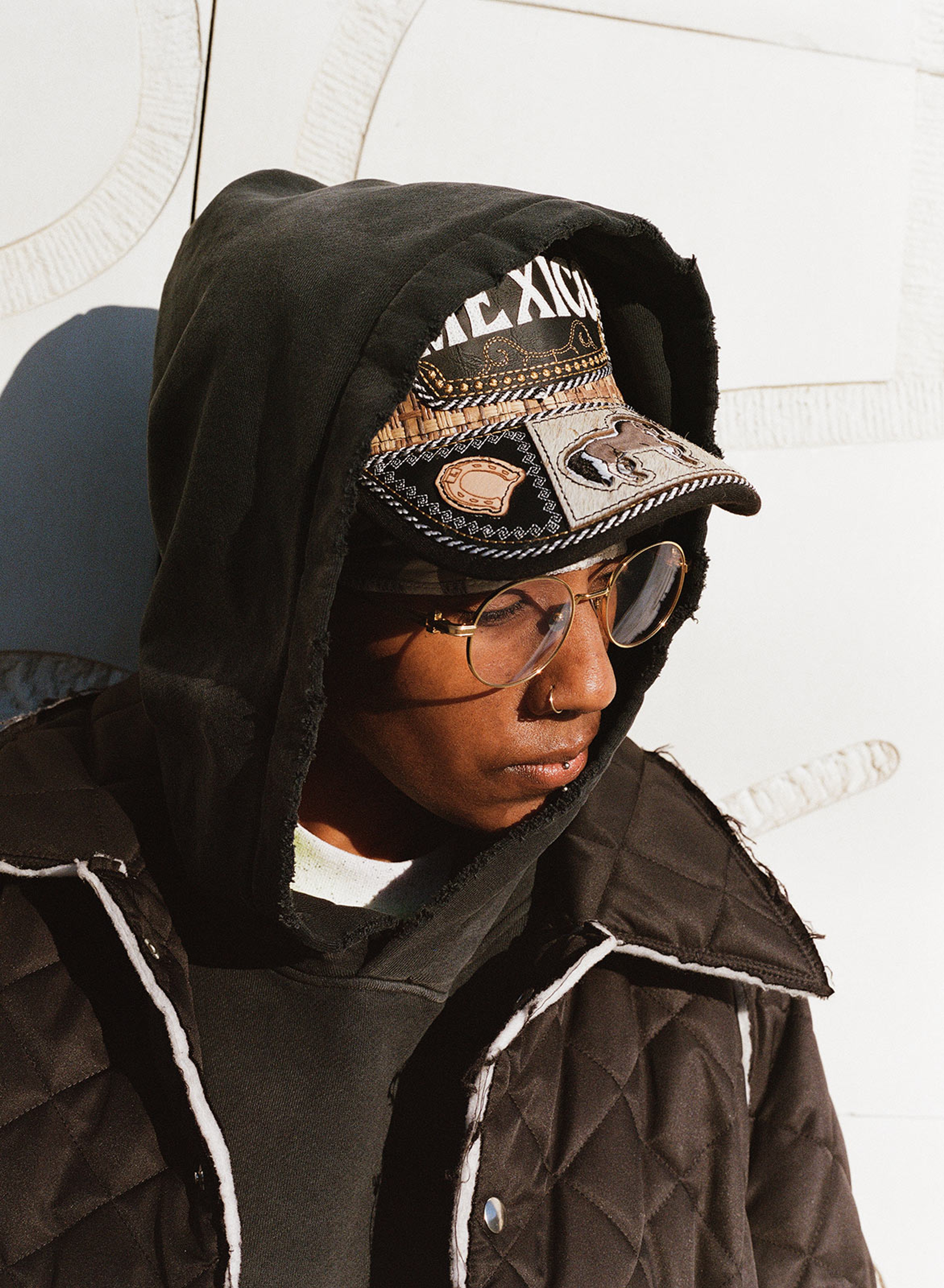
For this Beyond Noise feature, Halsey collaborated with photographer Shaniqwa Jarvis, who captured the artist within the newly realized space in the days leading up to the opening of sister dreamer. Extending the park’s role as a site for gathering, dialogue, memory, and mourning, Halsey also invited Burton to join the conversation that follows. In their exchange, the two reflect on the layered histories that shape their work—from the legacies of the Great Migration and the realities of growing up in South Central to the systemic forces that have shaped Black communities across generations. Their dialogue moves between memory, resilience, grief, and joy, revealing how structures of care are built—sometimes quietly, sometimes defiantly—through persistence, imagination, and a shared refusal to abandon hope.
Lauren Halsey: Thanks for being down to do this interview, Susan. You’re someone who is deeply invested in South Central LA, through the type of community care and the platforms, access, and programs you've been facilitating for women for decades now. It's incredible and inspiring to me, and we often talk about how, as Black women, we hold things together at a really high level. We shapeshift and we multitask, whether we have the support in place or not. You've been doing it consistently and undeniably, and I think it's really cool. You're one of my heroes, and you're so many people's heroes. You've won so many awards for the fantastic work you've been doing with A New Way of Life and the reentry project. Do you mind just sharing a little bit what it was like for you growing up?
Susan Burton: I have to start with my parents. My parents came to California as an escape from the harm of the South. They were running from lynching, Jim Crow, racism, sharecropping and picking cotton and poverty. They escaped the South, and landed in the projects of East LA, in a place called Aliso Village, where I was born. They came with what they knew and what they had been taught by the South, which was beatings and back-breaking work, and they didn’t have even an inkling of their value, their power. They came with despair, in despair, looking for hope. As I go through my life and reflect back on some of my early childhood memories and experiences, I understand that that's what they had to bring. This nation has been so cruel to Black people. But you know, I was born in the projects, and I had a lot of joy.
LH: My family is deeply from South Central. They came via the Great Migration, and they have been here since the 1920s. With that I see love, pride, and community. But I'm often asked, from folks outside of neighborhoods like mine, “What was it like growing up in South Central?” They say it like I was an extra in Boyz n the Hood. Of course, there were things, but it was full of joy too. I mean, neighborhoods are complicated. Can you speak to the joy? Because I think that's part of the record, too. The fun.
SB: My father was this really proud family man, and he wanted to be the greatest father in the world. He was a chef, and he could take a bag of beans and make it taste like filet mignon—so flavorful! Every fourth of July, every Labor Day, every holiday, we always went to the park or the beach for a barbecue. We would have these family outings and I think that was a tradition from the South. This is what the folks that were being held in the sharecropping space had; they had these holidays to celebrate and come together as family and community, and he brought that with him. Christmas was a time of great joy. I remember peeking down the stairs while my father was bringing bikes into the house for us and putting them under the tree on Christmas Eve. I remember getting a Betty Crocker kitchen, it had a light bulb in there, and it came with chocolate cake mix, and I made my father a chocolate cake to take to work with him in his lunch pail after Christmas. I got my little Betty Crocker dishes, and I would throw a party in front of the big line in the projects, and all of my friends would come and we'd have a tea party. Those were some of the little girl memories that I can remember.
LH: Amazing. I don't know how you like to frame past addiction as it relates to the '80s, and the war on Black people nationally, the criminal justice system, but all that stuff happens. You were released, from what I understand, with little to no support or infrastructure in terms of re-entering society. That's already compounded by all the -isms that make it hard for Black folks, Black women, to just even be, let alone transcend. Can you speak to the lack of support that you noticed, and how that carried over into the first house that you did? When was that?
SB: 1990.
LH: So when you get out, what's the landscape like for you and other Black and Brown women?
SB: Let me go back and set a frame for what happened through the decades. After my father and mother escaped the South and settled here, there was this attack on, and dismantling of, Black joy. My father had been a sheet metal worker initially, and then his job ended up moving to China because of cheaper labor costs there. He lost employment, and he struggled to be the proud dad. The Black community, those people that migrated, came under a different type of attack, one that was more sophisticated than they had the knowledge to deal with and understand.
Then in the '80s came an all-out attack on our communities, through the use and distribution of crack cocaine. During that time, I had been through so much suffering, and so much harm, and I was able to stay standing. Then I lost my son [an LAPD detective ran over and killed Susan’s five-year-old son Marque Hamilton in the early 1980s] and I just could not handle any more, I began to drink. I began to consume the crack that had saturated our community, and along with hundreds of thousands of women across this country, I became addicted to crack. This foreign substance that we later find out was distributed by our governments to our communities in order to fund a war in Nicaragua. They stole all of the dreams and goals of our community through this substance, and I ended up being imprisoned. I should have been able to get help after that policeman killed my son, but what I got was criminalized for using the only resource that was available to help me deal with my grief, and that was alcohol and drugs. We didn't have grief counseling, we didn't have therapy, and we didn't have wellness. There was no support for the Black community, especially the Black woman. I ended up going to prison. When I came home, was released from prison, I hoped I could make a new life. I thought I would have this rope of hope to pull myself up, but there was no rope there. People would say, get it together, pull yourself up by your bootstraps.
LH: And you're like, “I don't got the boots.”
SB: I'm barefoot. I'm barefoot and I'm walking on glass. Then Lauren, I found some support in Santa Monica, after I had served six prison terms.
LH: And that was the Clare Foundation. Can you describe what that was like? What made it wonderful for you?
SB: I found this place in Santa Monica, out by the beach in a whole different community. It was just five miles down the highway, but it was a whole different world. It was a world of abundance, care, gentleness, and love. It was a world of resources. It felt like this buffet of resources. If you want therapy, get some therapy. If you want to see a dentist, go to a dentist. If you want a job, learn how to create a resume and fax your resume. The place was kind, and I had never known kindness like that before.
LH: Were you the only Black woman there? Or was it a mix?
SB: I was the only Black woman there, and the white people that were in the program with me didn't treat me kindly—but the staff did. I remember them laughing at me and teasing me about the way I talked. But I was desperate, I was in despair, and I knew I needed help. I didn’t care how much they teased me, I was not going to mess up and get put out. I knew I needed help.
So to go back to South LA, what I came to learn is that our community is really strapped for the resources that would make them able to accommodate anything. The community is kind of overwhelmed, and they are only able to give what they know. My mother and father were only able to give what they knew, and part of that was the beatings that they had learned from the slave master, part of that was harshness, but a part of it was joy and family fun too.
LH: So you finished at the Clare Foundation, was that 1997?
SB: 1998. My sobriety date is October 4 of 1997. And I started A New Way of Life in 1998.
LH: So what gave you the confidence to do that? To say, “You know what? I'm going to buy a house in the middle of South Central and bring to fruition this vision around recovery, and spiritual, psychic, psychological, economic support and care.” What gave you the audacity to do that? Because people have ideas, but it’s another thing to pull them off.
SB: When I was at Clare I began to take in all of the support and resources, and I got to see how other people were treated in other neighborhoods versus how we were treated in South LA. There was this anger and rage that was birthed in me, I thought, ‘Why wasn't I good enough to be invested in? Why isn’t my community good enough to be invested in? Why did they lock me up and work me like a slave instead of giving me some help?’ All those people out there, they didn't go to prison for what I went to prison for. They got a chance to go to a recovery program. They got a chance to get a paper from the court that said to go to AA meetings. Why didn't a judge give me a paper? Wasn't I worth a piece of paper? So it was a part of anger and then the awareness that there is another way to address addiction. There's another way to heal. And if people in South LA had access to what I got access to in Clare, which was rooted in love and concern for your fellow man.
LH: And dignity and esteem…
SB: Yes. So if I could recreate that, then I might do some good. Then I realized I couldn't take back the years of pain and suffering that I had experienced, I couldn't bring my son back. But I could stop another woman from suffering for years by providing a safe place, by supporting her to recover. So it was almost like a payback thing: Imma take it back through my sister. Imma take it back through my sister's children. We're gonna heal. I worked and got a house, and there were two other women that I started with, but they didn't stay. One started using again, and I couldn't have that around me, and the other ended up not wanting to be a hundred percent legit, and I couldn't have that around either. I had to be on the straight and narrow, I had gotten a break, I got a chance, and I had to take care of that break. I had to protect it.
LH: Thirty years later, how many houses do you have?
SB: The impact has been incredible. A New Way of Life has 13 houses across South LA. We have more houses that we have trained other people to open in 20 states and three countries. We have a family reunification department that is staffed with attorneys to help people to get their children back. I couldn't bring KK back, but I could help other women to get their child back. I could see those babies bubbling around the house, and they look at me and I can see in their eyes their gratitude that their mother is there and they're with their mothers. We do expungements too, we have a legal department to help people clear up their criminal records. We help them get their license back if they were a nurse or a realtor or something too.
LH: You also do wellness. Can you speak about the retreat?
SB: So we do two types of wellness retreats a year. One is with our safe members. We have members all around the country that we bring together, and we bring people from Africa also. We come together and we create space for our community to heal and talk through things like: How do we take care of ourselves? How do we protect ourselves? How do we protect each other? How do we become a part of a strong community? Because healing is grounded in community. We bring in massage therapists, and we bring in yoga teachers, and we bring in meditation folks, and we we do this practice together, and we encourage and talk about practice all through the year, and once a month, we come on a call together to talk to practical things in our safe homes and to talk through how we're taking care of ourselves.
Then we have another leadership development training program that goes through different areas of women's leadership and self care is a part of leadership, and that is called Women Organizing for Justice and Opportunity. We call it WOJO. It's a six-month leadership training and we create community and space for Black and Brown women to come together and to be connected, because one of the tactics of this nation is separation, separating us from ourselves and each other. And so we want to interrupt that.
LH: And invest in community, at the highest level.
SB: Yes, we invest in people.
LH: I feel the same via art. And so if there's ever an opportunity for a collaboration with my sculpture park and A New Way of Life, please count me in—because I think art supports healing and creative expression and is a way to reshape narrative and center yourself. My very last question: What gives you hope in times like these, that feel really intense and heavy? Is there anything that gives you hope? Or do you not even think about the negativity?
SB: I don't. I refuse to be robbed of my vision for something better. It's mine. I own it, I claim it, I wear it, I walk it. Nobody, no system, no authority, is going to ever take that from me again. I am a free Black woman, and I know this. I'm going to work for freedom, I'm going to support others to know their freedom, and I'm going to just be.
LH: Same. This was great.
LAUREN wears top and shirt by PRADA.
EDITOR-IN-CHIEF + CREATIVE DIRECTOR
SARAH RICHARDSON
ARTS EDITOR-AT-LARGE
MAGNUS EDENSVARD
PHOTOGRAPHER
SHANIQWA JARVIS at De La Revolución
Fashion Editor
Monique McWilliams
Photo Assistant
Talisa Choi
Beyond Noise 2026
EDITOR-IN-CHIEF + CREATIVE DIRECTOR
SARAH RICHARDSON
ARTS EDITOR-AT-LARGE
MAGNUS EDENSVARD
PHOTOGRAPHER
SHANIQWA JARVIS at De La Revolución
Fashion Editor
Monique McWilliams
Photo Assistant
Talisa Choi
Beyond Noise 2026