Noise
ISSUE NO. 05: GIRLHOOD BY ANGELA HILL
GIRLHOOD
Words: 1905
Estimated reading time: 11M
TEEN IRISH DANCERS IN BRENTFORD, WEST LONDON CONTINUE THE LEGACY OF A CENTURY-OLD TRADITION.
By Róisín Lanigan
Showing up for my one and only Irish dance performance at age nine, my mum and I were both perplexed to discover something. Every girl, with the exception of me, had shaved legs and fake tan, socks held up with glue, and hair pinned into high, ringleted wigs. By contrast, my own outfit was not only understated but purchased secondhand. Irish dancing is an incredibly expensive sport to maintain, and even in the early 2000s, parents could expect to spend a significant amount of money on a solo performance costume. It wasn’t until adulthood that I fully appreciated how much that costume cost, even secondhand.
As an adult, now in another country, the aspects of my Irish girlhood I once took for granted took on new significance. From afar, I was able to watch the world of dance change, adapt, and modernize. The glamorous costumes became more intricate and structured, the skirts shorter and tighter rather than swirling and silk-lined, so the audience could see more of the dancer’s footwork and muscle control. Dancers could rest their hands on their hips or link them around each other rather than keeping them pressed tightly against their bodies. Wigs became higher and curlier, but hair can hang loose too, flowing with each step. Dancing has its own life and lineage – not just in families of the Irish diaspora across the world, but among people who discover it themselves, now more likely through social media platforms like TikTok than TV shows covering Riverdance.
Growing up, I wanted, deep in my bones, to be good at Irish dancing. I wanted to win medals and trophies, stand onstage at the feis – an Irish word that roughly translates to “dance festival” – and fly through my solos as if I were skipping through clouds. But when I think back to those days of my girlhood, I remember only my own physical awkwardness.
The rules of Irish dance are relatively simple at first, but I got stuck in that simplicity and never progressed to more complicated slip jigs or hornpipes. I stayed in group dances rather than performing on my own, lining up with other little girls, my feet in the starting position of 12 and two. Dance moves are broken down into numbers for beginners. There are your ‘sevens,’ where you skip across the stage while counting, and then your ‘one-two-threes,’ which involve crossing your legs behind each other as you skip. When we were done counting, we’d sit cross-legged at the side of the stage area, watching the more advanced girls take their places. The teacher didn’t even have to announce a particular dance for the girls to line up. The opening wails of the uilleann pipes called to them, and their muscle memory responded, holding them in place.
The gauche physical awkwardness dance brought out in me was almost instantaneous. I was really too old to be learning, my teacher told my mum, who had enrolled us in the classes after we expressed a passing interest. She thought it would be as good a way as any to keep us both fit and out of her hair for an afternoon. Maybe I could catch up, she said. As the oldest in the beginners class, I was, for once, the tallest. The uniform they gave me was two different sizes. The shorts, meant for a child years younger, dug into my thighs, and I felt too embarrassed to point out the mistake until a teacher eventually noticed. I didn’t mind; I loved the branding on them even if they didn’t fit. I loved how they read “School of Dance.”
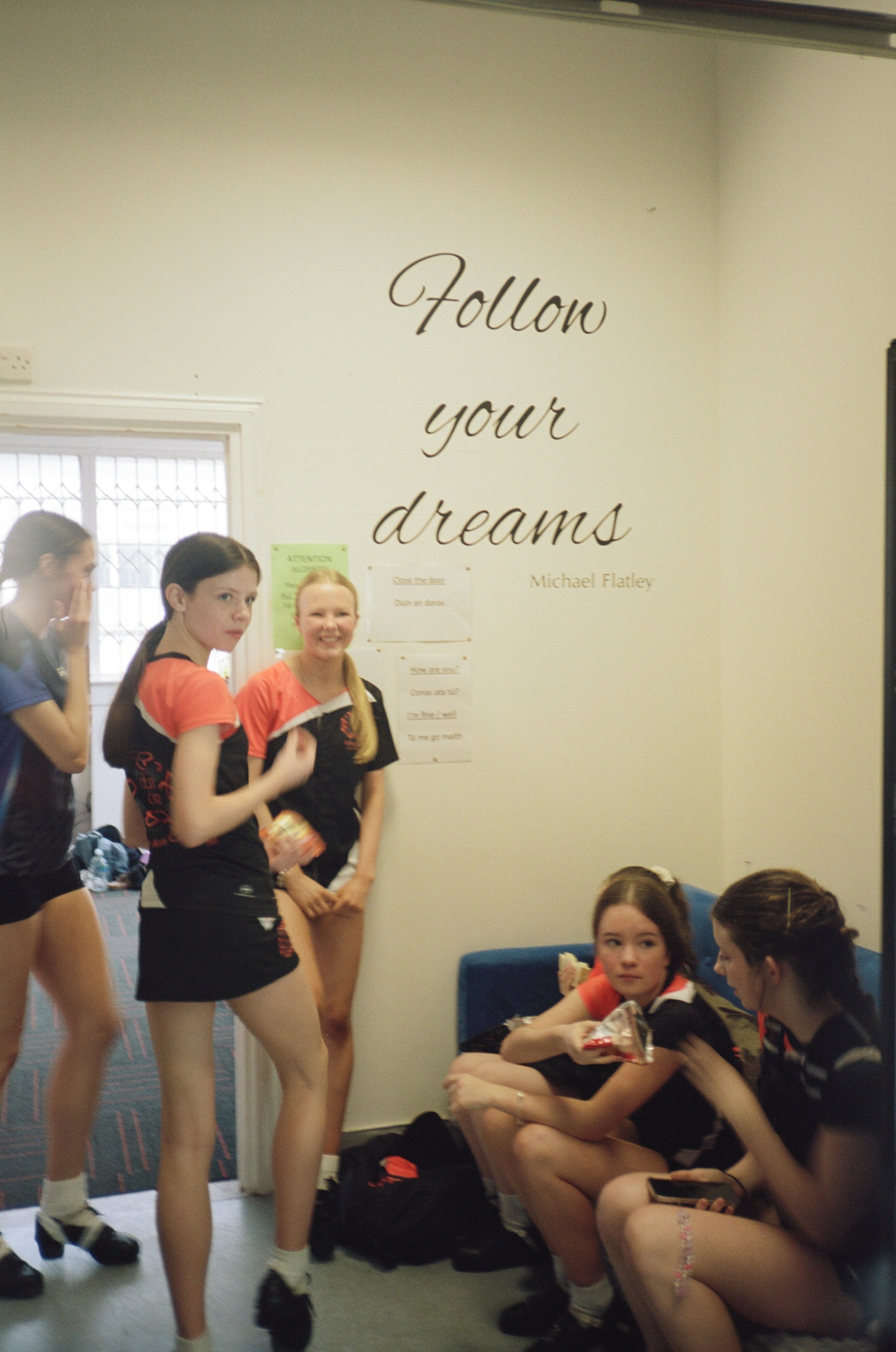
Irish dancing is often matrilineal. This is because Irish families, whether at home or as part of the diaspora, are matriarchal. Every Friday I dutifully went to our local parish hall, accompanied by my mother and my middle sister, who also danced. Girls dance because their mums danced, or their sisters or aunties or cousins. Today, in London, this remains the case. “As soon as I saw my sister dance, it made me love the sport right away,” says Connie, a 14-year-old Londoner and dancer in Brentford, who appears in the images accompanying this piece, shot by Angela Hill. “I couldn’t wait to go to class,” she adds.
Another of her classmates, 12-year-old Rose Doherty, was introduced to Irish dance through her mum and has been at the school since she was six. “She never danced herself, but she always loved watching Irish dancing and thought it was amazing.” It was also a way for Rose, who placed third in the 2024 World Championships with the rest of her céilí team, to connect to her Irish heritage. Although she has always lived in London, her grandparents are all Irish – from Dublin, Mayo, Leitrim, and Donegal.
In her decade as a dancer, Connie has competed at the All-Ireland Championships, Great Britain Championships, and the British Nationals. “Dancing requires full commitment and dedication,” she says. “I have to give up social time with my friends on top of really late nights, but the end result is always worth it.”
I loved the history of Irish dancing, the mysticism of it. In ancient Ireland, feiseanna were places where communities could come together to celebrate their identity and heritage, to perform for one another in dance, combat, or chariot races – places where bards and storytellers could pass down oral histories. The largest festival, Aonach, took place at Tara, the seat of Ireland’s High Kings (or, less romantically, present-day County Meath). In modern Ireland, feiseanna were places where I could watch girls better than me kick their legs over each other so high they almost bent in two, coming quickly and gracefully down to the hard ground without ever losing their rigid balance. They were too graceful, too quick, too talented to inspire jealousy – anything other than awe. I loved watching them execute the steps I couldn’t, from leap-overs to complicated, tap-dance-like toe wiggles.
Ella, now 16, has been dancing for ten years. She fell in love with it after her half-Irish mum took her to a performance of Riverdance when she was very young. “I’ve been obsessed ever since,” she says. “I always put it on TV and danced along.” Since then, dance has become a huge part of Ella’s life. She practices four times a week at school, balancing it with gym sessions for strength training, seeing her friends, and studying for exams. But it is, she says, worth it. “Irish dancing has become such a huge part of my life, so I can’t imagine giving it up anytime soon,” Ella says. “My proudest moment was when I got the opportunity to perform alongside the Lord of the Dance cast for my teacher’s 80th birthday party – it was a night I won’t forget.”
Her classmate Erin, also half-Irish and a dancer of ten years, faces similar struggles balancing practice with academic work and the general busyness of being a teenage girl. Both her mum and dad danced, and at just 14, the sport has taken her around the world to compete. “We spend so much time in different hotels,” says Erin. “We get to see and experience so much. The thing I find most difficult is fitting my schoolwork in with all the dance practices I have. I would love to continue when I’m older, and I hope I never quit.”
Like Ella, I was entranced by the technicality of dancing. The most magical Irish dance step to watch, I think, is called ‘rocks,’ sometimes also known as ‘rocking steps.’ To execute it, a dancer rises onto her toes and rapidly shifts her weight from side to side on the balls of her feet with her ankles crossed and locked. It’s a technical feat – putting body weight on a small part of the ankle generates huge amounts of pressure – one that dancers learn by holding themselves up between two chairs and swinging back and forth until they’re confident enough to do it unaided. Onstage, it looks as though they’re almost floating.
I never managed to master rocks, and eventually I stopped going to the parish hall in an admission of defeat and, like most children, because I moved on to the next expensive temporary hobby my mum was persuaded to indulge. In my early twenties, I sold my Irish dance dresses on Gumtree. A dad bought them – his daughters just wanted to practice around the house in them, he said. At the time, I was broke and happy to get rid of them, not very interested in where they ended up. Years later, I saw one of them hanging in the window of a secondhand shop in Belfast. It was black velvet with pink piping in the shape of two swans, meant to evoke the Irish mythological story of the Children of Lír – four siblings turned into swans for 900 years by their jealous stepmother. The underside of the skirt, visible through the glass, was silk in the color of pink highlighters.
Our fascination – my fascination – with these adult, professional Irish dancers isn’t just due to their technical proficiency or impressive expertise. It’s also because they represent something akin to alchemy. They’ve managed to preserve a part of their girlhood and carry it into their adult lives. When they perform, it isn’t just them performing; it’s the younger version of themselves. The girl who sacrificed nights out with friends, who exhausted herself with weekday practices and dragged herself out of bed at 5 a.m. on weekends to travel to a feis. The girl who danced because she loved it and never grew out of it, never gave it up as a childish fantasy. That, I think, is the magic – not just the twisting legs and muscle control, but the preservation of a feeling, the idea that you’re not just dancing, you’re flying.
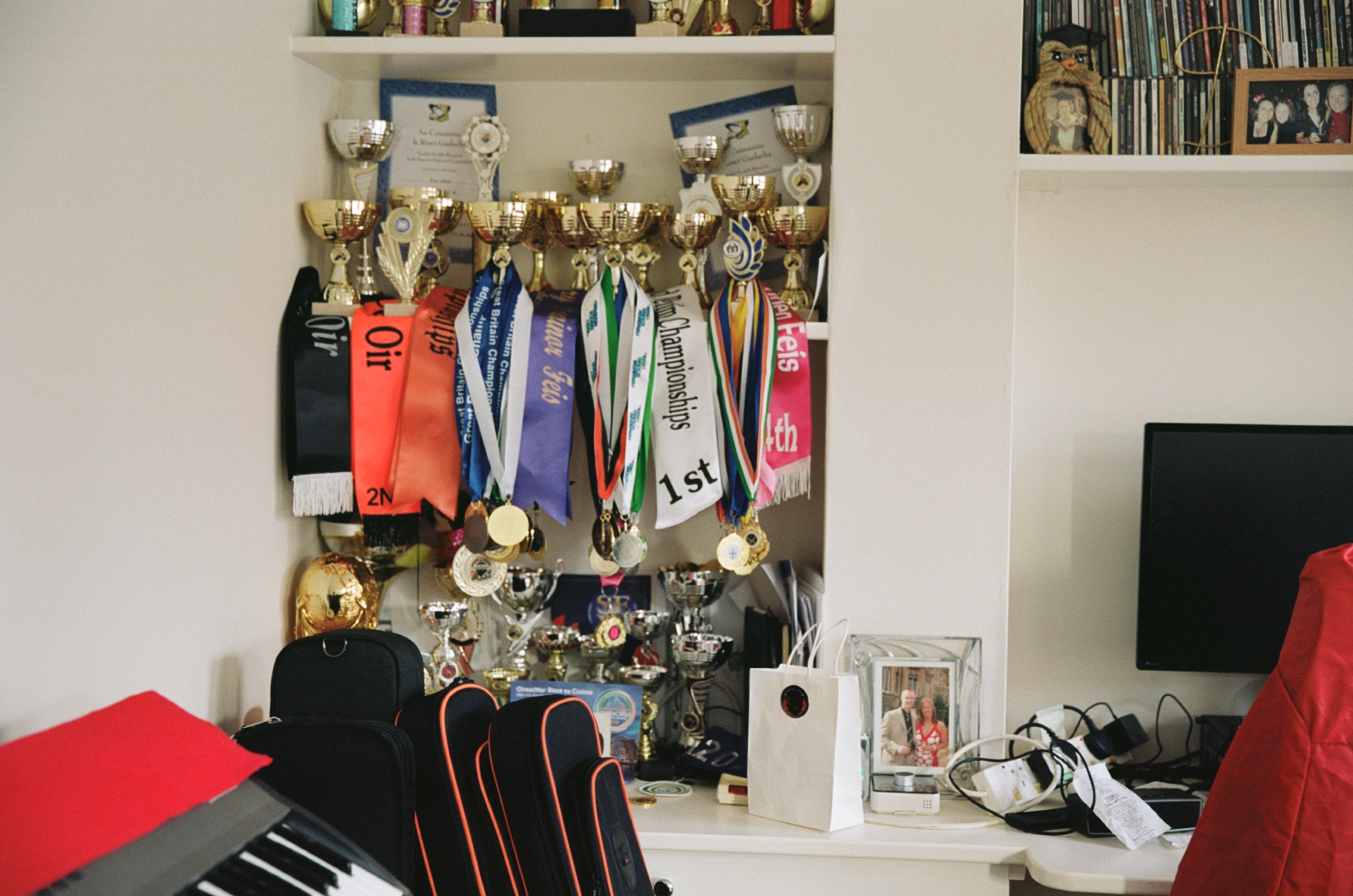
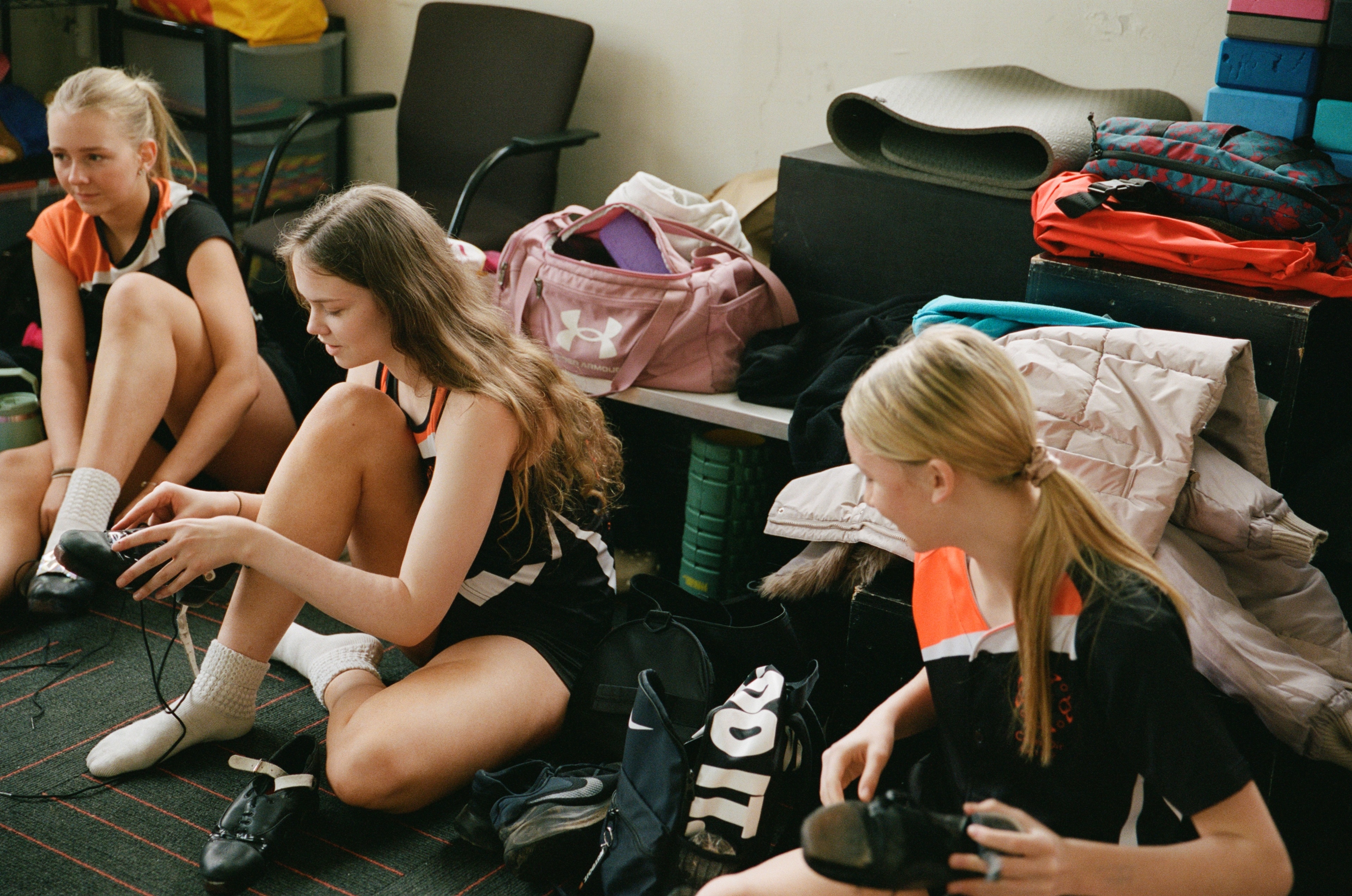
Elen, Freya-Rae, and Connie
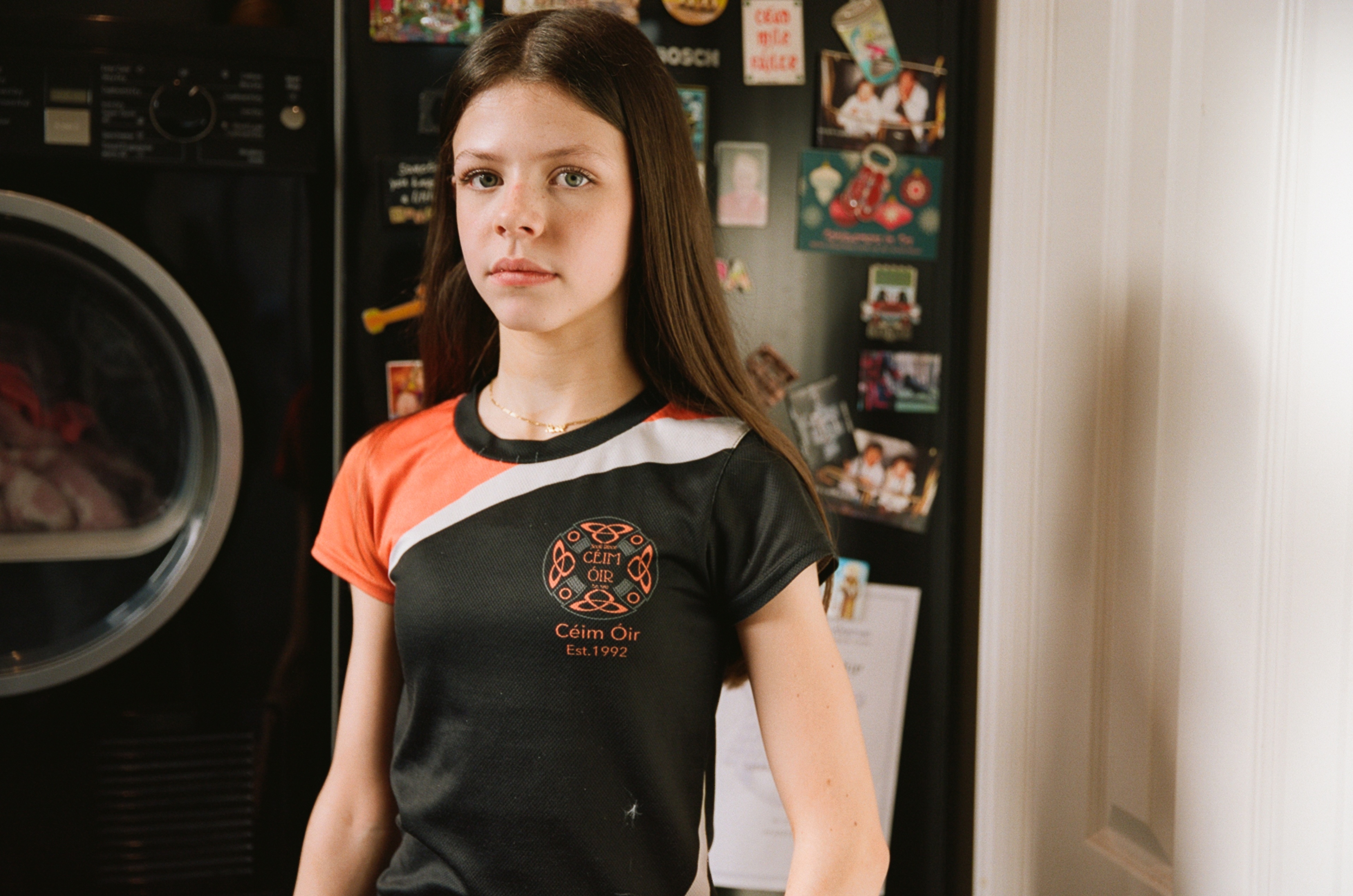
Rose D
"YOU'RE NOT JUST DANCING, YOU'RE FLYING."
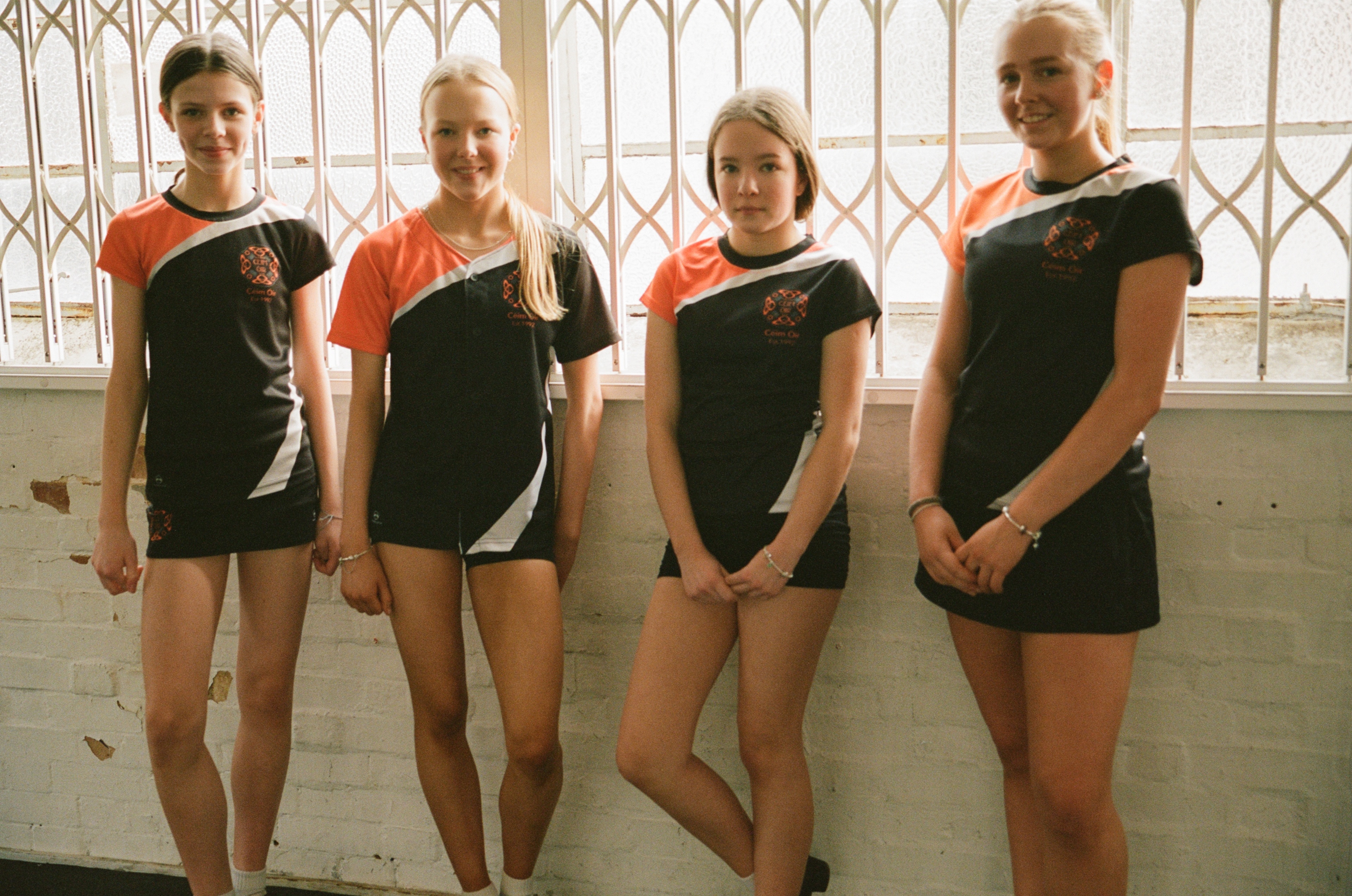
Rose D, Erin, Rose G, and Elen
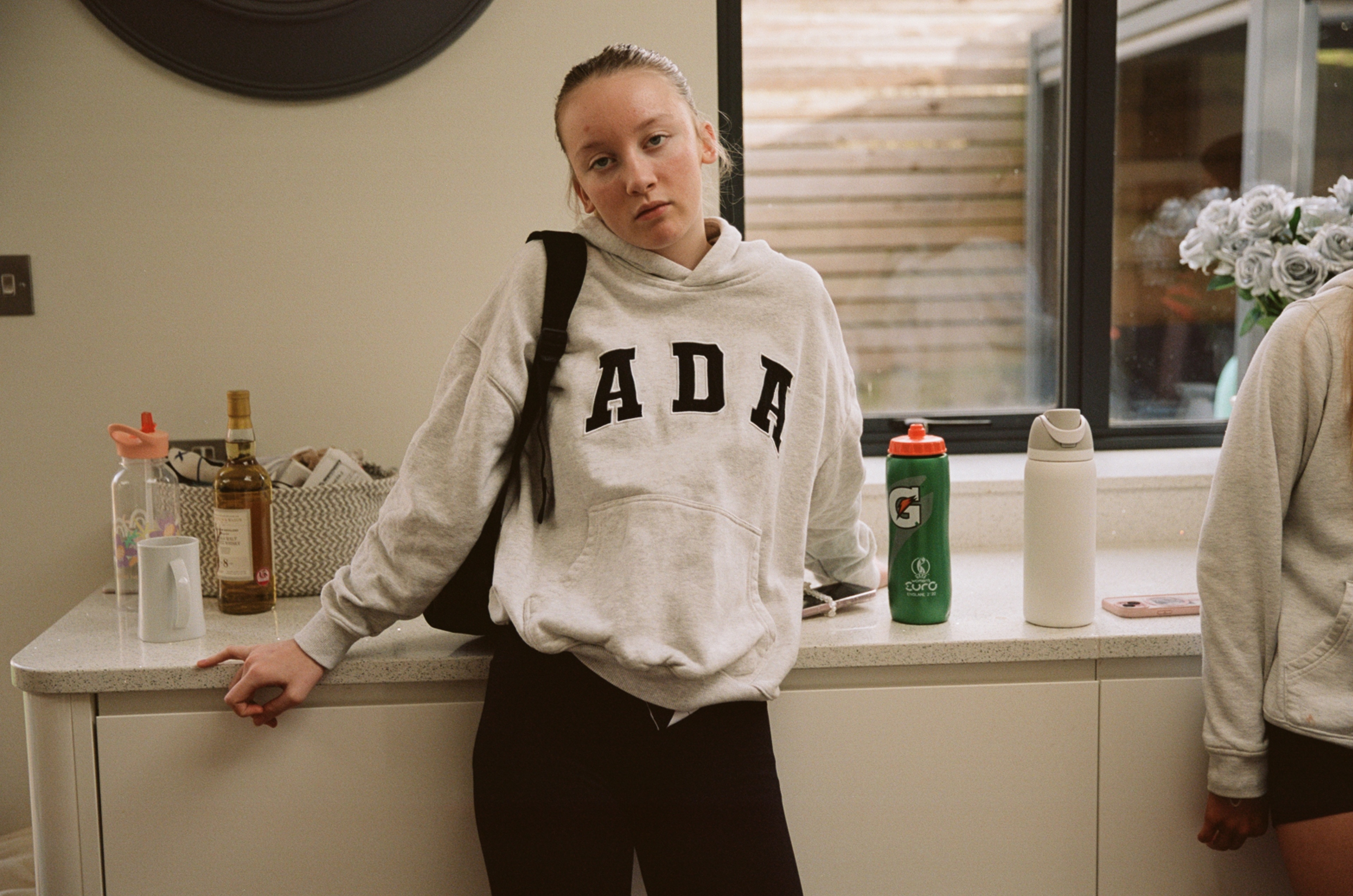
Connie
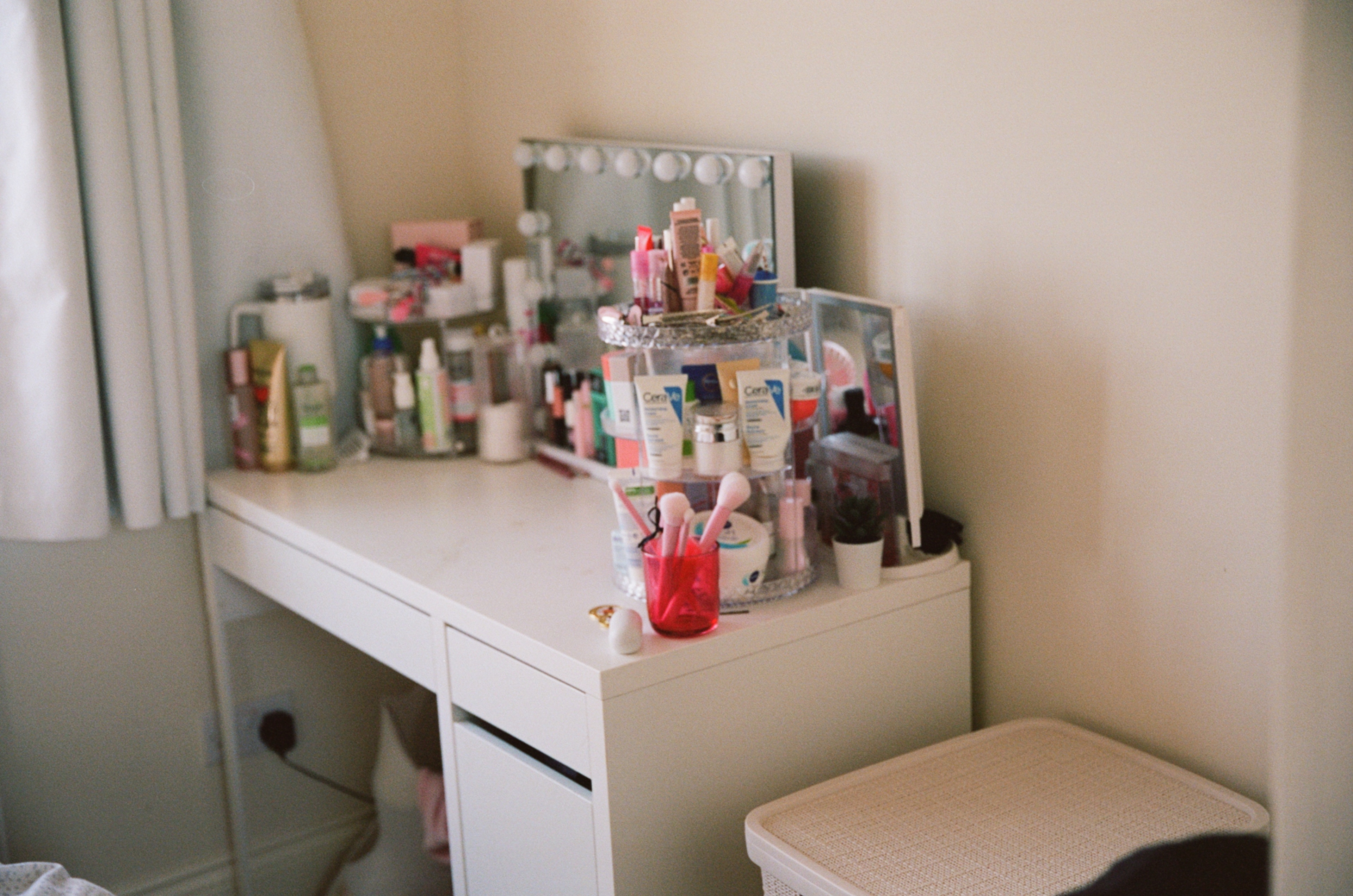
CREATIVE DIRECTOR + EIC
SARAH RICHARDSON
PHOTOGRAPHY
ANGELA HILL
CASTING
Emma Matell
PRODUCTION
Claire Murphy
SPECIAL THANKS
CÉIM ÓIR SCOIL RINCE, Hilary Owens
Beyond Noise 2026
CREATIVE DIRECTOR + EIC
SARAH RICHARDSON
PHOTOGRAPHY
ANGELA HILL
CASTING
Emma Matell
PRODUCTION
Claire Murphy
SPECIAL THANKS
CÉIM ÓIR SCOIL RINCE, Hilary Owens
Beyond Noise 2026