Noise
ISSUE NO. 05: BURÇIN MUTLU-PADKIL
Burçin Mutlu-Pakdil by Sabrina Santiago
BURÇIN MUTLU-PADKIL
Words: 1126
Estimated reading time: 6M
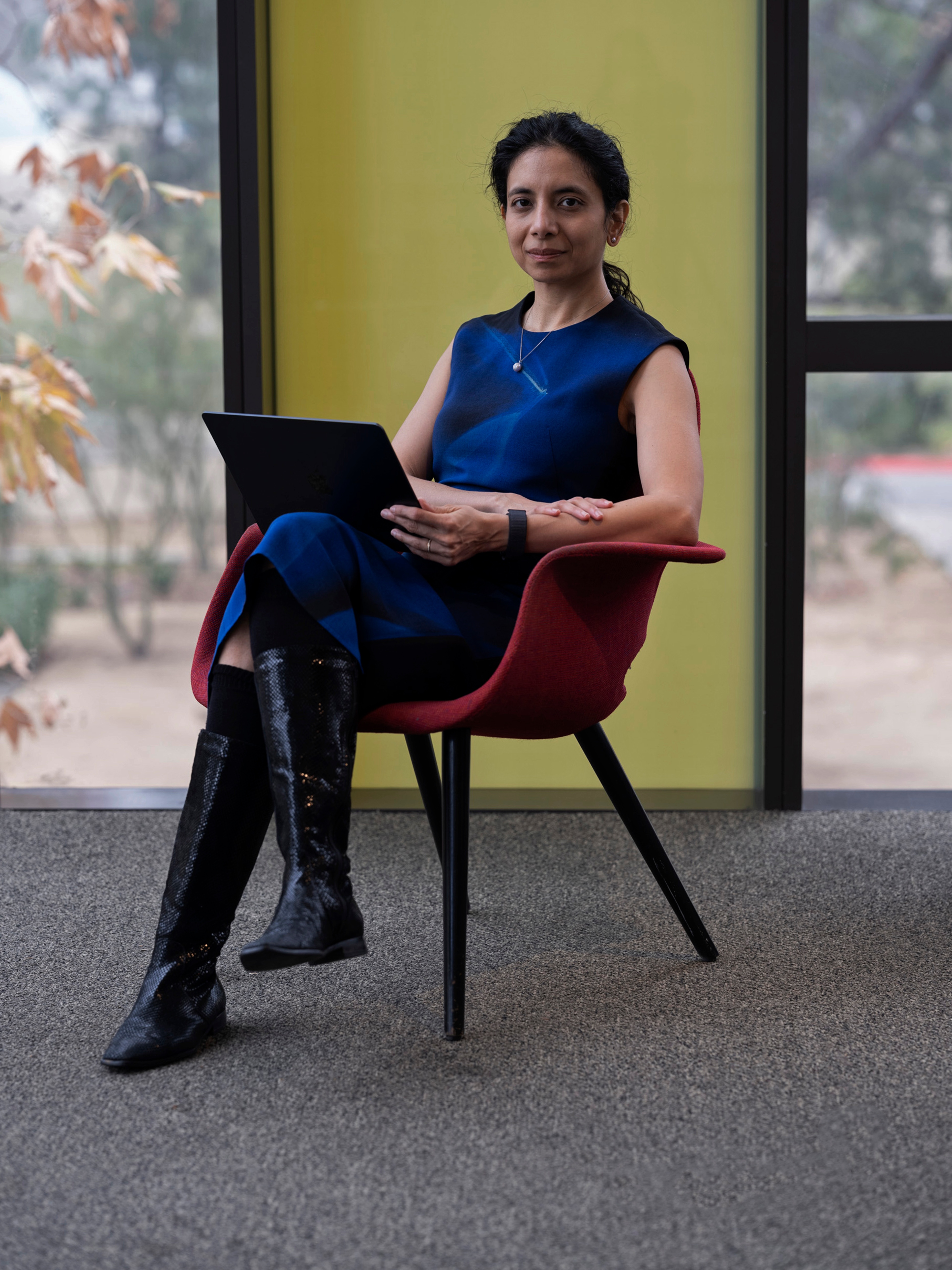
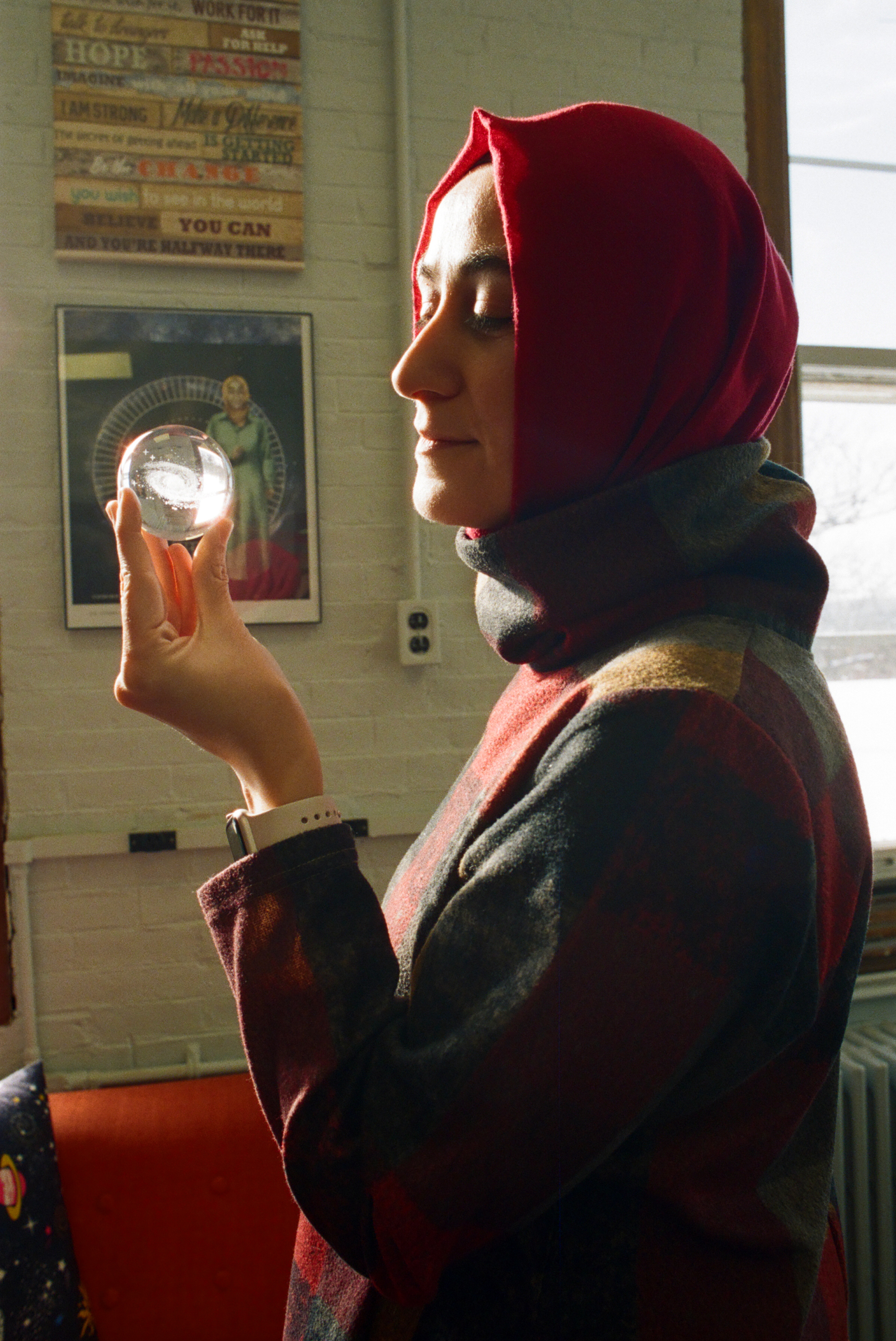
Early on in conversation with the astrophysicist Burçin Mutlu-Pakdil, you get a strong sense of her individual spirit and willingness to break convention, qualities it’s easy to assume helped assure her success in a male-dominated field. In Burçin’s view, however, she owes much of her extraordinary journey to the mentors she’s had along the way, starting with her older sister. Noticing her obsession with Albert Einstein as a teenager, Burçin’s sister gave her some science journals, igniting a love of astronomy that led Burçin to study first at Ankara’s Bilkent University, before moving to the US for her Masters, then PhD at the University of Minnesota, Twin Cities. It was while researching her PhD that Burçin made the discovery that would see her make global news – galaxy PGC 1000714, or ‘Burçin’s galaxy’ as it’s been nicknamed. Today, Burçin is a professor at Dartmouth, where she balances her lifelong love of the skies with helping a new generation enter her profession.
BEYOND NOISE: You were the first generation of your family to go to university. How do you think that shaped your journey?
BURÇIN MUTLU-PADKIL: Both of my parents had to drop out after fifth grade, because of financial issues in Turkey at that time. Growing up, my dad would always tell us stories about how clever he had been at school, and if he had had the chance, he could have done all these amazing things. These stories were also about dreams that he couldn’t reach, right? So I think that really motivated both of us, my sister and I, to follow our dreams, and do whatever it takes.
Being a woman in astrophysics is not easy, I’ve encountered a lot of weird things, but I’ve always reminded myself how much education meant to my family. I decided early on that I wouldn’t let others define me or put me in a box, I didn’t want it to fit in any mold that they wanted to put me in.
BN: You advocate for better representation of Muslim women in science, and you’re a faculty mentor for Dartmouth’s Women in Science Project. What do you think needs to happen for there to be better diversity in science?
BMP: Mentorship is very important. I have been lucky to have had amazing mentors throughout my career. My PhD supervisor in particular was incredible. When we discovered the galaxy during my PhD, he immediately said, “You need to take all the credit, you did the work.” When the press wanted to talk with us, he always put me to the front. There are academics who would speak before their students, to get the spotlight, but he wasn’t like that at all. He always nominated me for things, and he encouraged me to challenge my expectations.
That kind of mentorship really changed my perspective, and helped with my self-confidence. Generally, when I go to a conference I’m the only woman, and a woman who wears the hijab at that, it can make you self-conscious. But with these support systems, I felt that I could stay in this world and succeed. Now I want to show the next generation that they don’t need to do it all alone.
BN: How has your research evolved since you discovered the galaxy?
BMP: Since that discovery, I’ve moved on from researching extremely rare galaxies. Now I am studying tiny galaxies, which are much more common. We believe that these faint, small galaxies actually dominate the universe, but since they are so tiny it’s hard to find them. These galaxies are like the part of the iceberg that’s below the surface; they’re hidden, but they’re the most numerous.
When we’re trying to understand the whole galaxy population, and how galaxies form and evolve, we need to have an idea of the general population. It’s like with humans, if we only looked at the flashiest artists, whose lives were very public, our understanding of human life would be very biased and wrong. Right now, most of our understanding of astronomy relies on studies of the biggest, brightest galaxies because they are easy to absorb. The galaxies that are harder to observe are like the general population, they are dominant in number. So that’s my research.
BN: I’m interested in how you conduct your research. I read that some of the telescopes you need to use can be difficult to access, even for researchers.
BMP: The galaxies that I’m studying are really small, so my research requires big telescopes. There aren’t many of these big telescopes, and everyone wants to use them because they are very powerful, so they can be hard to access. Several times a year observatories will put out calls for pitches: what do you want to observe, and why? I spend a lot of time thinking about new projects, and writing proposals to try to convince other astronomers that I should have time on certain telescopes. Before Covid-19 you would often travel to use these telescopes, but now most observatories have shifted to remote observing. You connect with the telescopes online to view through video call technology, and there are operators there who help you from the observatory.
BN: You’re an educator as well as a researcher. What do you think you get from these two different aspects of what you do?
BMP: When you do research, it’s not always flashy and motivating. Sometimes you get so deep into the weeds that you can forget the bigger picture behind it. Being an educator helps remind me why I love space. It motivates me. I really like sharing science, I always think, what’s the point of discovering something if nobody knows about it? The excitement you see in students, or in the general public, when you share interesting space knowledge, the spark in their eye, it’s amazing. I love it, and it tells me it’s worth it.

CREATIVE DIRECTOR + EIC
SARAH RICHARDSON
Beyond Noise 2026
CREATIVE DIRECTOR + EIC
SARAH RICHARDSON
Beyond Noise 2026