Noise
ISSUE NO. 05: VERONICA LEONI
FEMALE SENSIBILITY
Words: 3225
Estimated reading time: 18M
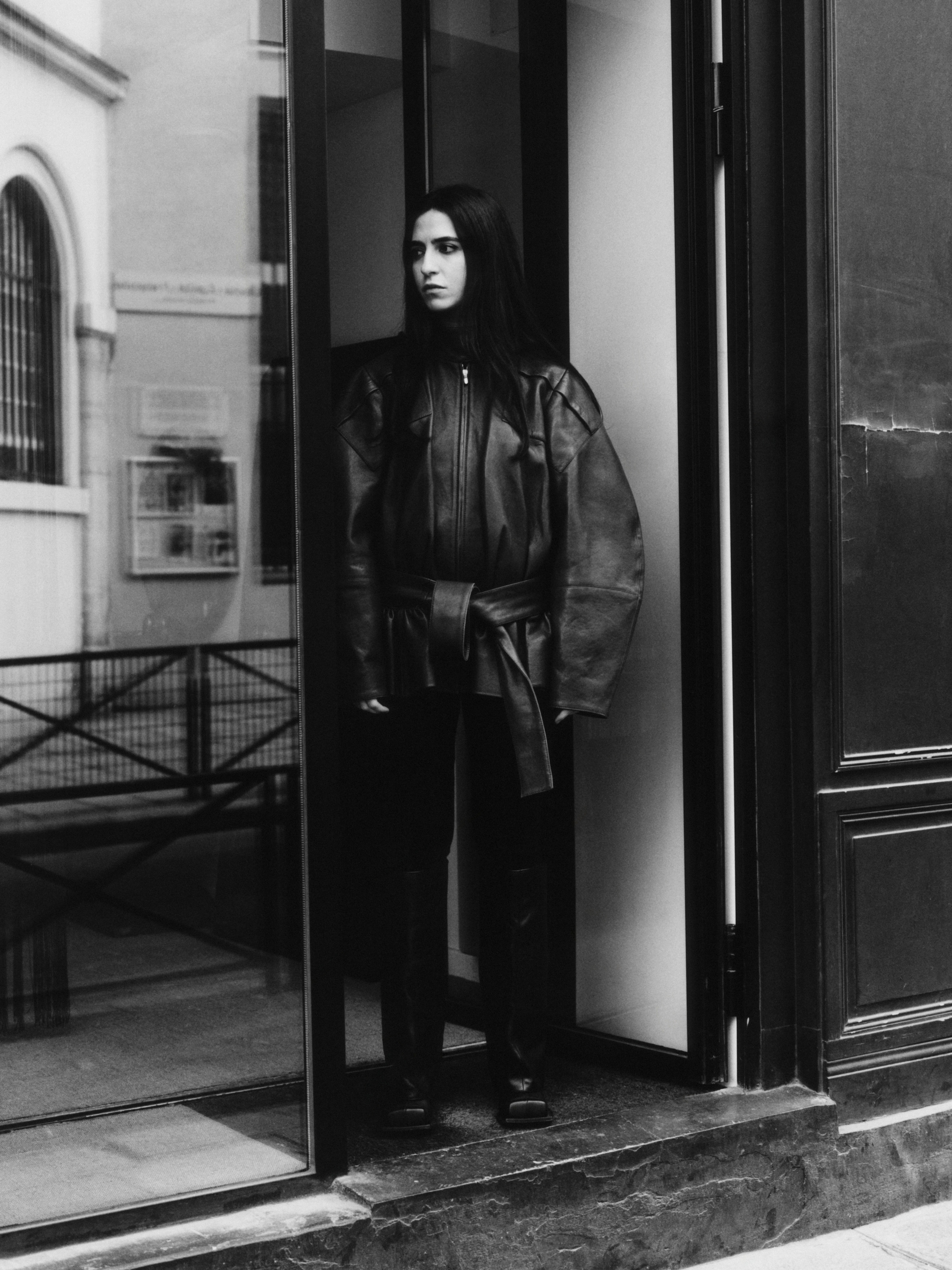
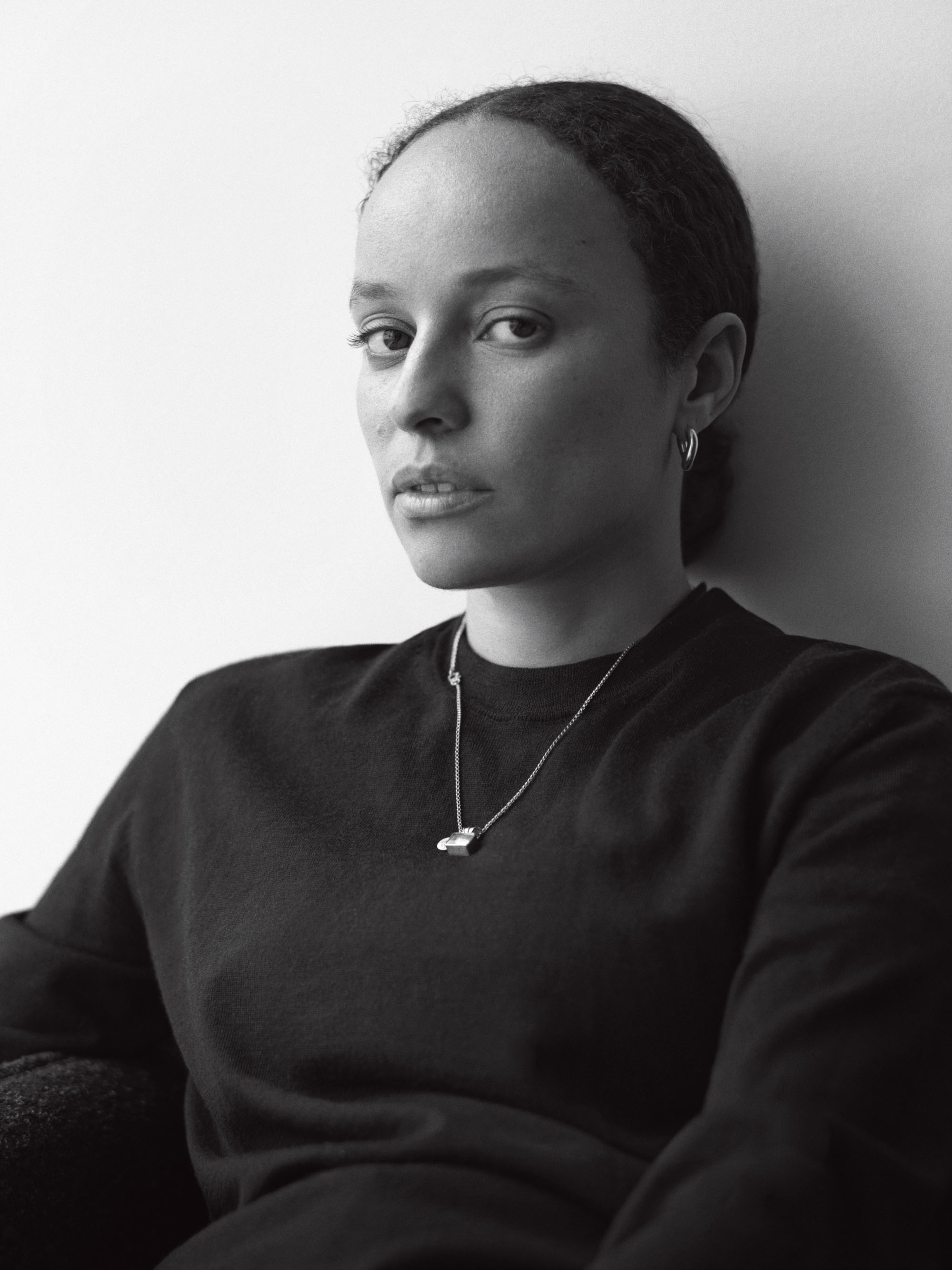
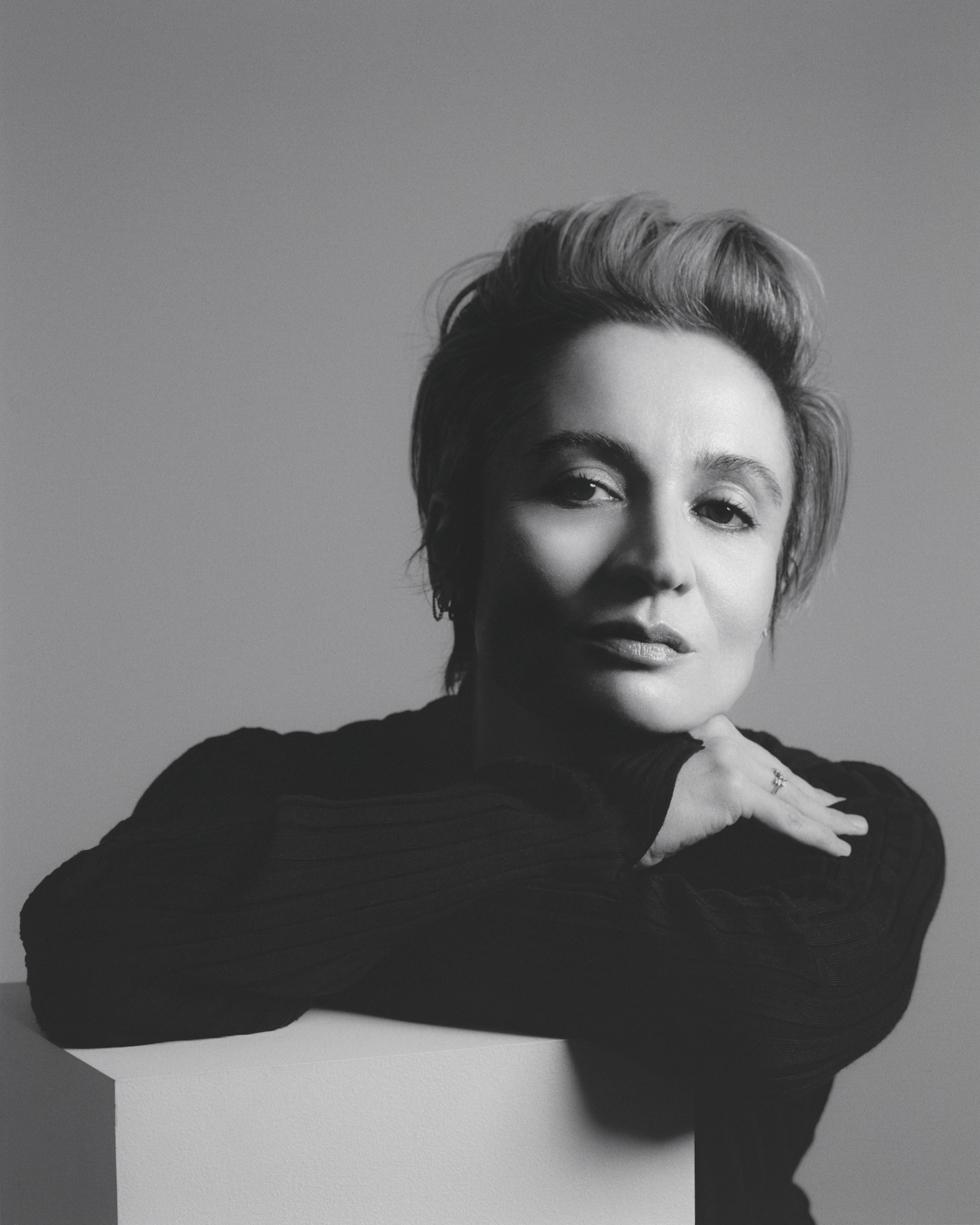
Creative director Veronica Leoni and seminal fashion editor Tonne Goodman discuss mentorship, learning on the job, and generations of Calvin Klein.
By Holly Connolly
It would be hard to imagine a better training in contemporary minimalism, and masterful, understated elegance, than the journey of the Roman Calvin Klein creative director Veronica Leoni. Drawn to architecture initially, Veronica instead studied philosophy and fashion theory at La Sapienza di Roma, then began interning at a family-run fashion house.
Her singular design ethos can be best traced back through her formative roles, though, starting with her breakthrough head knitwear design job at Jil Sander. In 2014, Veronica left Jil Sander to join Céline, working under Phoebe Philo for three years, and then in 2021 she launched her own brand, QUIRA, named after her grandmother Quirina. A synthesis of everything Veronica had learned, QUIRA was a finalist for the LVMH prize, and led to a stint working with the Olsens at The Row too.
Then, in 2024, Veronica joined Calvin Klein. The first female designer behind the label, and one of very few women currently leading a major fashion house, her Fall/Winter 2025 collection was Calvin Klein’s first runway show since 2018. “I feel the responsibility more than the weight of it. I deeply respect Calvin, and his aesthetic has been so important in the way that I’ve been trained as a designer,” she says. “There has been no season in my entire career, regardless of the brand I was working for, that there weren’t Calvin Klein images on the mood boards. It’s really embedded in me, so there’s a sort of seamless overlap between Calvin and what I’ve always been aiming to do.”
For Veronica’s third collection for the brand, she went deep into the archives, surfacing imagery and pieces from the ‘80s and early ‘90s. This was the era which saw Tonne Goodman join Calvin Klein first as a stylist, then as vice president of advertising in 1988. Having started her career working under Diana Vreeland at The Metropolitan Museum of Art Costume Institute, Tonne’s time at Calvin would be foundational for her long, seminal career shaping fashion imagery. After periods at The New York Times Magazine and Harper’s Bazaar, she served as Fashion Director for Vogue between 1999 and 2018, and is now a sustainability editor at the magazine.
HOLLY CONNOLLY: How did you first encounter each other’s work?
TONNE GOODMAN: I have been aware of your work since QUIRA. You were one of the finalists for the LVMH prize, and that’s when I started to pay attention. I was so impressed by your honing of all of the things that you had experienced before, you really embraced everything and made it your own in a very specific way that was extremely chic.
VERONICA LEONI: This is emotional, because QUIRA was a baby of mine.
TG: That was the thing that was so fabulous, that it was a baby of yours. It didn’t explode into what it should have, actually, but it was there as your foundation. So when you came to Calvin Klein, I thought, ‘Well, that’s absolutely perfect.’ They picked the perfect person, really.
VL: Thank you. Regarding Tonne, how can you not be aware of her? She’s so iconic. You are such a foundation of decades of fashion, in terms of image and style. When I think about doing a white pant, I always think about Tonne and how she would style it. I feel that every step of the way in terms of visual training – as both the young designer I was a few decades ago and where I am now – has always been spiralling around Tonne’s taste, her way of shaping the image. I still remember that Times Square image of Amber Valetta as an angel. I was just a kid from abroad, and it was the most poetic way of helping me dream about New York. So this is an iconic moment of my career, hearing Tonne say that about QUIRA. I got goosebumps.
HC: That famous image of Amber Valletta as an angel was shot while you were at Harper’s Bazaar, after you left Calvin, yes Tonne?
TG: Yes, I was at Calvin Klein in the late 80s and early 90s, and then I left to go to Harper’s Bazaar when Liz Tilberis took over as editor in chief. What was interesting for me at that point, was that at Calvin I had been completely in my zone. Our sensibilities were locked together, and my entire focus was Calvin’s mindset. When I got to Harper’s Bazaar that was exploded, because I was then in the position of appreciating lots of different points of views of fashion, as a reporter and a fashion editor. That experience, going from one singular thing to all of a sudden seeing a great deal of different points of view, must have applied to you too Veronica? With Phoebe, and the Olsens, and seeing these different points of view, that you were then able to collect for QUIRA.
VL: That’s a nice way of putting it. It was the most natural thing for me, filtering everything I had learnt on my journey. Having the chance to work with so many women – who have been my school, in a way, or my mentors – allowed me to see things from different angles. I feel that I took something from Jil Sander, something else from Phoebe [Philo] and then something else from the Olsens as well. I really felt that QUIRA was a very good translation of that experience, and that way of being a woman in business. Calvin is a very different reality, and belongs to a huge public company, but I’m trying to keep my tenure as human as possible.
HC: How much have mentors, and particularly female mentors, shaped your trajectories?
TG: Well, my first mentor was Diana Vreeland, as my first job was at the Metropolitan Museum of Art with her, so I hit the ground running. She was such a character, and so relentless, and she taught me everything that I needed to know about how to conduct myself in business. One thing she said to me, which I have never forgotten, was, “How do you know unless you ask the question?” People can be so fearful of exposing that they don’t know something, and her point of view was exactly the opposite.
VL: I don’t know about you Tonne, but my female mentors have just tended to happen in my life, I didn’t look for them. I wonder now if maybe it’s been due to women deciding to work with me. It’s definitely been fortunate, because I have always found myself really sharing a certain sensibility, more than trying to upgrade or transform myself into something else. In my working life there has always been a total osmosis between the overall ambition and instinct, and the way that I was trying to learn and exchange creativity. I also feel that there’s a certain awareness, and pragmatic attitude, that comes when a woman has designed a womenswear collection. The act of design is really practical, and then abstraction happens in the way that you tell a campaign, or the way you put together an image. Learning that has been very fortunate, because it’s allowed me to stay grounded in the job, and I think this is important. I feel it every day.
TG: Do you feel that it is inappropriate for me to say that women own sensibility? That the practicality that we have to have within our lives is foremost? I mean, the reason that I wear white jeans all the time is because there came a point where I had two young children, I was on my own, and I just had to simplify things. It was sensible, that was the motive, right there.
I think it’s really interesting, Veronica. The next person that I worked with was Carrie Donovan at the New York Times Magazine section, and she was another character who was fabulous and outspoken. I was called a fashion reporter at that point. I had to find the merchandise that I wanted to photograph, and I had to do the entire thing, including writing the copy for it, which back then was even done on a typewriter. I had never done anything like that, and Carrie came by my desk one day when I was trying to write what was called a blurb, she saw me struggling, and she said, “Tonne, let’s not make War and Peace out of this.” So these women, the sensibility of the women, really gave me the idea that sensibility is what it’s all about, and that goes right through to clothing, to what you put on your body. What you put on your body broadcasts how you feel about yourself, and your position in the collective audience you have. You’re saying a lot by wearing a tailored suit versus a dress, for instance.
HC: You both have had such interesting, varied careers. I’m curious to know how much pushing yourself to do things that are unexpected, or learning as you go along, has been a part of your journeys?
VL: I’m a very good observer, I have to say. I feel that I absorb a lot, and I try to own my perspective in every part of the job that I’m involved with. QUIRA was the most reckless experience of my life. I was doing almost everything on my own, even from a business perspective, which as a designer working in a big group you get shielded from. But I’m extremely real in the stuff that I do, so I’m never not interested in, say, what it means to merchandise a collection, or how you work on price ranges. Apart from creativity, and the ambition of being a trend leader and helping dictate taste, I feel that there’s always a certain reality that is present in fashion, and I never forget about it.
Each and every moment of any season leaves some mark in terms of what I could do better for next. I’m like a sponge, both in terms of creative point of view and business point of view. I also think there’s a certain level of responsibility that you have towards the people who surround you, you want to make sure that you’re a good inspiration for them. If what we do was just about making the suit of the season, I would be very much at peace. But there’s so much surrounding all of this, that I feel it’s important not to get scared by what this job brings in every day, and to actually face it with courage and creativity. I think you want to be creative at every level.
TG: It’s a learning curve. It’s always been a learning curve. The point of really appreciating a learning curve also, is that you realize that the things that you have learned need to be passed on. You need to be able to give that knowledge to the people that you work with, just like the ones who gave us the opportunities did. I really appreciate having somebody with me who has a great work ethic, which is one of the things that I think is suffering these days, the work ethic I was brought up with. I wouldn’t say it was rigorous, because that makes it sound as though it was very hard, it was just there. It was part of your life, and how you conducted yourself.
I have a really important question for Veronica, because it’s on everybody’s lips in some form or other, which is, AI, do you use it? I stay away from it as much as possible.
VL: No, I need to catch up on it. I’ve got my little pencil and ruler, and I still don’t even design on a computer. I’m really behind here, so I can’t say anything about it. I’m sure that there will be some way that it will be extremely functional to our industry, but I’m not sure the creatives are the ones who will benefit first. I haven’t had the chance to explore the possibilities just yet.
TG: Let’s say for young designers, in circumstances where they have an iPad, and they can just alter a design in seconds, it’s the same thing as erasing and putting a different line there, but it’s just faster.
VL: I love technology as this way of keeping track of the work, and making sure that information flows smoothly and accurately from one department to another. But I’m also a person who spends a lot of time in fittings. Fittings, for me, are sort of holy moments, and I feel very creative when I’m in front of a garment, when I have the chance to chop and cut and try to explore the material reality of the design itself. So I have to say, I’m not sure that in that moment where creativity really sparkles, that AI would be crucial. I’m very hands on, I still need my hands I feel.
HC: You have both now helped shape distinct generations of Calvin Klein, I’m interested in what each of your experiences have been?
TG: I was with Calvin in the early 1980s as the stylist for the ads, and then in 1988 I joined the company as the Vice President of advertising, working with the creative team that Sam Shahid had set up as an in-house agency. I think the thing that I appreciated about Calvin the most, was the fact that we would go out on these ventures and he didn’t want to know what we were going to come back with. He wanted us to bring it to him. That gave us enormous freedom, and that’s where so much of that imagery came from. As a designer Calvin was so focused on something that was practical, and that sustained itself for women. Then there was the other part of him, which was the visual creative in terms of advertising, which was completely unique, because it was outrageous in some aspects, and it was emotional in all aspects, and it was incredibly beautiful and very inspirational for so many people. There’s no one like Calvin, he stayed ahead of the curve always. I left the company, actually, and joined Harper’s Bazaar when Marky Mark came in. That was a whole different genre of advertising that was being introduced.
VL: That’s wonderful. I love this, because I spent the entire season trying to deconstruct the stereotype we all have of Calvin. I feel that it’s that era of Marky Mark and Kate Moss, which is a very limited perception of the brand, and we kind of forget what Calvin was before. I spent the season trying to surround myself and the team with images from that Bruce Weber period. As soon as you go into the archive, and start to open those boxes of photos, you discover the designer, the taste maker, the person who was really focused on lifestyle, and was making himself an early icon of an American dream that he wanted to promote, that is very different from any other American Dream. I feel Calvin was very specific, and he was the first protagonist of that lifestyle that he wanted to put out. It was so before its time, because at the time you were not selling lifestyle, you were selling just ready to wear, you were selling a garment. Calvin is so smart, I could spend ten hours every day in front of him, just listening to what he has to say. It’s very rare to hear that dry, but still very sentimental, analysis of time and the way that he contextualizes the choices that he made for the brand make total sense with the period that he was living in it.
I wanted to surround the team with those images, not as an act of nostalgia, but more as an act of foundation. To really trace what Calvin was and how, apart from that Marky Mark and Kate Moss moment, he influenced everything that came after him. It was so unique for America to have such a character that really embodied this idea of the American Dream, that people are still fascinated by. So I really relate to that foundational, seminal work, because I think that it’s all we have to carry forward. It was extraordinarily before its time, and you want to celebrate that and try to catch again that energy that was so radical for the time, and is still so relevant today.
TG: Energy is such a good word to apply to it. It was very sublime, and it was minimal, but it also had enormous energy. It fuelled a lot of personal identities, and it gave you licence, even in its simplicity, to be exactly who you wanted to be.
VL: I want to also reframe the word simplicity, because again, when you see these collections in the archive, the pieces are not simple. I am a fabric obsessed person, and I was shocked by the fabric research that he had been doing since the 1970s. You get closer to a neutral beige fabric and you discover that it’s maybe a superstructure linen that has a micro texture. It was so avant garde, also the way these pieces were pushing design through, making you believe they were simple but really they were loaded with such a deep complexity that makes them so unique, and so valuable. I’m always fighting a little against this idea of the white slip dress, because it was about so much more than the white slip dress.
“Apart from creativity, and the ambition of being a trend leader, I feel that there’s always a certain reality that is present in fashion, and I never forget about it.”
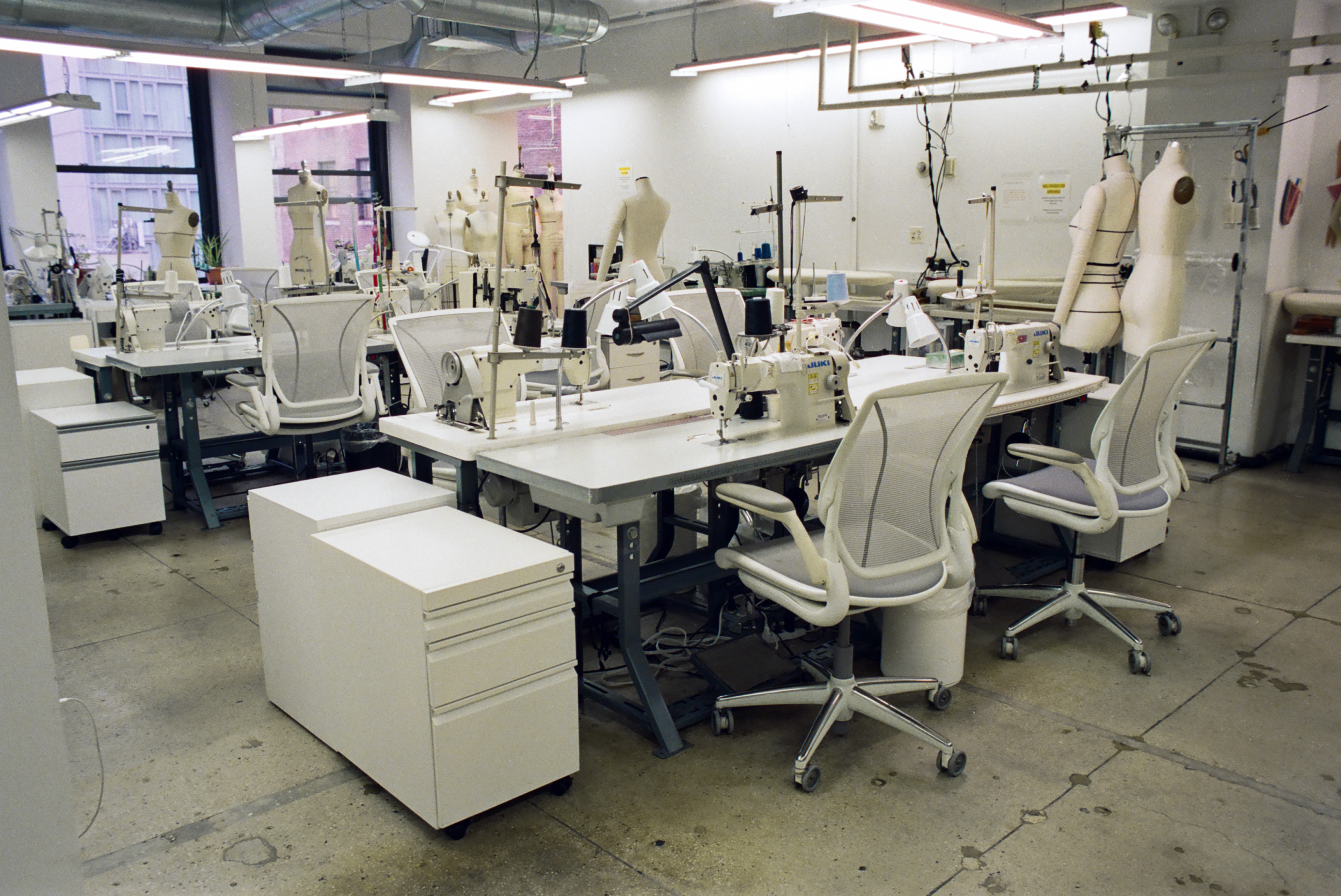
Studio image by Sabrina Santiago.
CREATIVE DIRECTOR + EIC
SARAH RICHARDSON
PHOTOGRAPHER
ANDY HARRINGTON
Beyond Noise 2026
CREATIVE DIRECTOR + EIC
SARAH RICHARDSON
PHOTOGRAPHER
ANDY HARRINGTON
Beyond Noise 2026