Noise
ISSUE NO. 04: SAVANAH LEAF
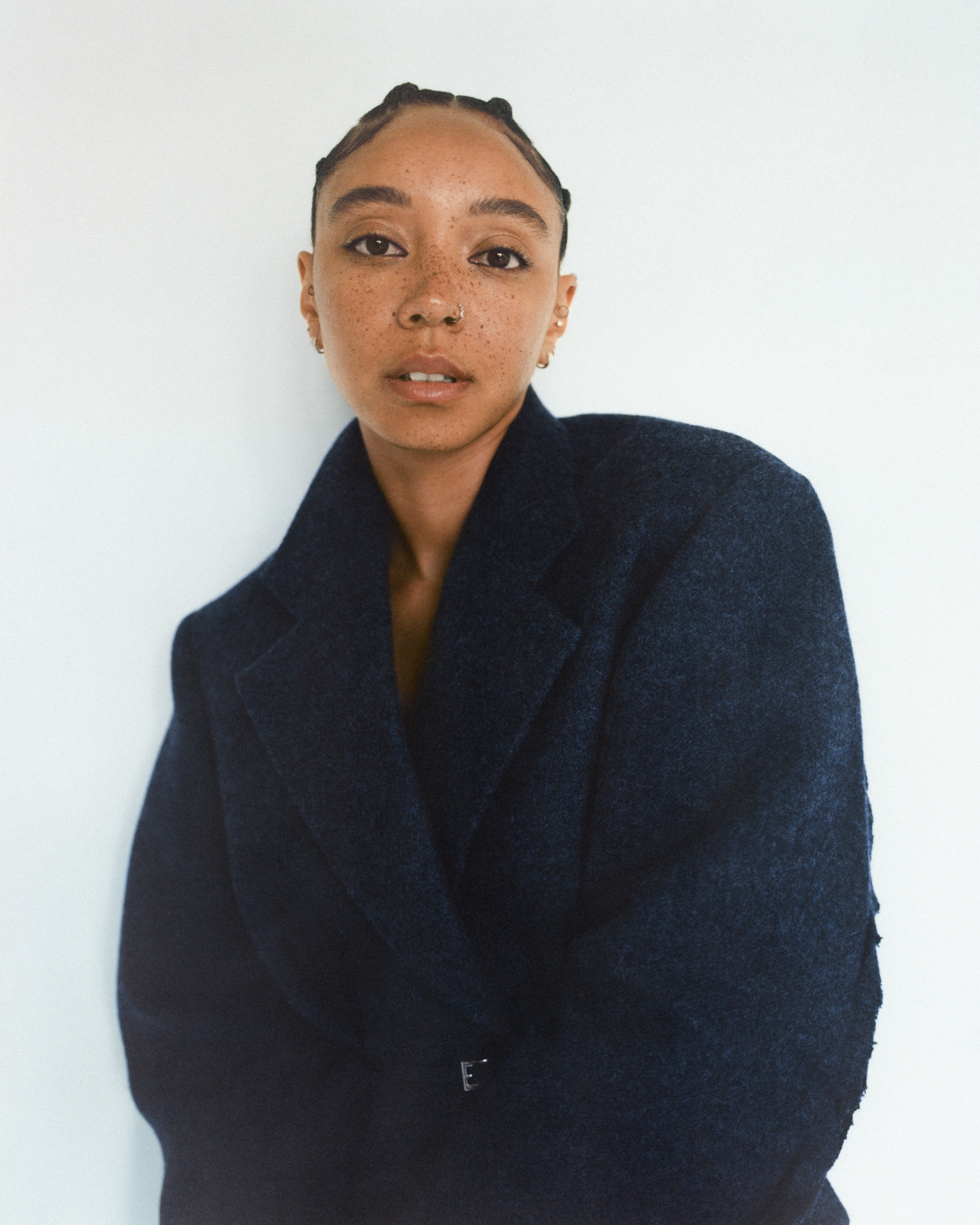
Savanah wears coat and belt by PRADA.
THE LIGHT BETWEEN
Words: 2202
Estimated reading time: 12M
Savanah Leaf and Kelsey Lu consider what it means to turn life into art, and how that art speaks back to life
By Emma Russell
Art has long been a vessel for exploring the depths of human emotion and the complexities of the interior landscape: joy, pain, and everything in between. Savanah Leaf’s first feature film, Earth Mama, is no different. There’s a haunting beauty that permeates her depiction of single motherhood, while Kelsey Lu’s heart-wrenching score carries that vision into another register.
Lu, a classically-trained cellist with an other-worldly voice, fuses jazz and blues with dream-pop beats and left-field electronics. She released her melancholic debut album Blood to critical acclaim in 2019; informed, in part, by a conservative upbringing as a Jehovah’s Witness in Charlotte, North Carolina, as well as the eclectic music scene of her hometown of New York, and London, where she’s worked closely with the British singer-songwriter Sampha on his live show since 2017. After leaving a major label and finding her feet as an independent musician once again, Lu was drawn to the freedom of composing.
The artists found a surprising symmetry working together. Savanah, a former Team GB volleyball player who competed in the 2012 Olympics, was born in Vauxhall, South London but raised in the Bay Area, where her film is set. It follows a young Black mother, played by the rapper Tia Nomore, who is struggling against structural oppression: she is recovering from drug abuse, is pregnant again, and has had her two children taken into foster care. Savanah uses long zooms and tracking shots to show the challenges she faces, while Kelsey channels her own struggles through drawn-out notes on string instruments and vocals that hold for an unnerving length of time. “I think that [they] really complemented each other,” says Savanah.
In conversation, Savanah and Lu are softly spoken and whimsical, bursting into spontaneous laughter. It’s clear this is a friendship that is rooted in patience and a desire to let each other be the truest version of themselves.
Kelsey Lu: My team told me about the end sequence for Earth Mama. And I was like, “I don’t have time. I was working on this nine-hour-long composition.” And then you were like…
Savanah Leaf: “Maybe you could do the whole film.”
KL: And then, suddenly, I had time.
SL: We met at this quiet little restaurant in New York that I think is no longer. And we just instantly got along. It was some weird synergy.
KL: Not so weird—but we could be weird.
SL: It felt like I’d known this person for a long time. And then we shared a frightening experience with a rat.
KL: A real bonding moment. Classic New York City rat.
SL: We were approaching the car, and saw a rat scuttle under [it] and jump into the vent. It went up the wheel and then into the car. I was like, “I’ll drive down the street and then you hop in once it’s a little bit further in.” I started driving towards you, and as I was driving—
KL: —the rat jumped out. It was so nasty! [Laughs]
SL: The movie has this pacing that is almost like we're following [Gia] in her world, and we are watching her go through these quite traumatic scenes but oftentimes at a slow, thoughtful pace. It was dealing with motherhood and these maternal instincts. And I think at the time, you really resonated with that.
KL: I definitely did. I had just come back from a really, really enlightening trip to Indonesia. Before I went, I had an abortion, and so I was doing a lot of work around womb healing and letting go of shame and guilt and judgment. I was also out of an abusive relationship and in the midst of healing. I was coming through the other side of this really beautiful experience and coming back into making music again because I had taken a hiatus. Within the first five minutes of watching the film, I was like, I know that I want to do this—because of the moments of rest where you’re left to ponder and think. The glimpse of a mother connecting with their child, knowing that they have to leave them within five minutes, because that’s the only amount of time that they have. It made sense to me.
SL: It did. I really like the idea of people returning to art, returning to a piece—this hum that it leaves you with after the film is finished, or after a song is finished—leaving people with a question to discuss or to just sit with. I think that’s maybe something we both enjoy. We had about a month to make the music and learn each other’s process, then about each other.
KL: It was like speed dating.
SL: It was speed dating and moving in together. So it was a lesbian relationship. [Laughs] I think within a day of me saying, “Let’s do this,” you went into a studio recording yourself on the cello. There was one session you did in London with Moses Boyd, and you sent me a video with these cotton balls on top of drumsticks that were lying on the cymbals.
KL: I wanted a deeper sound, and Moses brought all these cotton balls.
SL: It was so instinctual. You would bring in these sick musicians to improvise, but with your guidance on top of them.
KL: Most of it happened in the UK. Then in New York, we brought in other musicians like Brandee Younger, Isaiah Barr, and Mikael Darmanie. These are all friends and musicians where I’m like, I know you all are exceptional, you know your way around feeling, and can improvise in a way that you’ll know how to get to the root of the feeling. I never saw Mikael because he was uptown going from gig to gig, but he sent over a recording, and it had these kids who had just got out of school and were walking by the window, and the noise of them bled into it. I was like, That’s perfect.
SL: I just met Mikael. He was playing the piano at Little Island. It was so nice to see him.
KL: Wait, he said something so funny. “It was so nice to meet Sav, she’s so tall.”
SL: Yeah, people get confused. I’m 5’11, pushing on six feet. I had the same size feet as I do now when I was in elementary school. Who’s that character from The Proud Family? I was like LaCienega.
I grew up for part of my life in Vauxhall, which is like a second home to me. My neighbors are the same neighbors that I had as a kid. They’re like my family. I moved when I was seven or eight, but I always return to London.
KL: Because you got that passport.
SL: There’s a creative soul there. It’s where I started my film career. I really resonate with a lot of the art that gets made in the UK. Partly because there’s a lot more funding of the arts, or at least there has been; government funding of the arts is a rare thing in the US. There was such warmth for the film in the UK. The film was in part distributed by this Black-owned company called We Are Parable, and we were their first film. A big part of making this movie was that I wanted it to reach Black women. But we were releasing the movie at the same time as Barbie and Oppenheimer. You’d think that wouldn’t affect us, but weirdly, those movies were in the most indie, small theaters.
KL: I couldn’t believe it. I was shocked at the theaters that were out here playing those movies.
SL: You feel like you’re fighting for not just the movie but every single person that’s in that movie. Everybody put their soul into it.
KL: On the musical side of things, it was part of the healing that I was going through at the time. The repair of being dropped by a major label, while also never feeling like I really belonged in that space in the first place. I felt really trapped, and so it was emerging back to music with this newfound freedom and sense of I can do whatever I want whenever I want.
SL: I remember during the making of the music, you weren’t singing for a while. And then it got to the final credits song, and all of a sudden, you put your voice in it, and it was like, Oh shit. That’s how Gia felt in the film: not really speaking and then in the end, saying what she had to say.
KL: Now we’re going into therapy, but I just got into an accident. I was hit by a car, and I can’t play my instruments right now. It’s taken me a long time to feel comfortable acknowledging my voice as an instrument. I think coming from a classical background where there’s the strictness, and foundation upon which [it] can contain oneself—it’s lodged deep into the subconscious. And even though it’d been years since I had departed from that structure, there were still elements of it that I was holding on to. For a long time, singing was wrapped up in a lot of pain; it was my way of getting out pain. The past few years, [it] has been a way of discovering and finding a place of love and joy, and not always as pain. While I was in the abusive relationship, I was also not really making music. All of my energy and all of my attention were being poured into the relationship that I was in. And coming out of it, I was resurfacing. I was like, I can sing!
SL: I loved that. It’s like you’re waiting for you to sing the whole film, and then you’re like, Ah! Ah! Ah! I grew up with just my mum, and I think I’ve always had this yearning to understand why a parent isn’t around or why a parent isn’t parenting you. In my case, it’s a father figure, but for this character, I was thinking about this young girl and this child. If you’re adopted, you might not understand or fully know why your parents aren’t parenting you. And this is an attempt to either spark that conversation or give a more well-rounded depiction of the difficulty of some single Black women. I was thinking about that, thinking about my sister, thinking about myself. I think these themes run through me in so many different ways, some of which I’m still discovering.
KL: Not to be cheesy and be like, <<I read this Tarkovsky quote…>>
SL: Let’s hear it.
KL: It was around the notion of when the experience is coming from a personal one, and when that’s poured into a film, into cinema, and people are able to capture and feel that there’s an undeniable feeling—that makes it stand out. That experience of watching something that’s so deeply personal, you can’t help but have feelings from it. That’s how it resonated for me, so much so that I couldn’t tell what was scripted in parts and what wasn’t, as so many things felt so real to life. I didn’t ask you because I also enjoyed not knowing. How I approach music-making or scoring is where it leaves space for that unknowing of what notes are going to come next, or like where improvisation lies. I’m having my own personal experience with your personal experience and then bringing other musicians to have their personal experience with that feeling, that yearning or longing, and just what is coming from the gut.
The real quote goes: “In the course of my work I’ve noticed time and again, that if the external emotional structure of a film is based on the author’s memory, when impressions of his personal life have been have been transmuted into screen images, then the film will have the power to move those who see it.”
SL: I feel that.
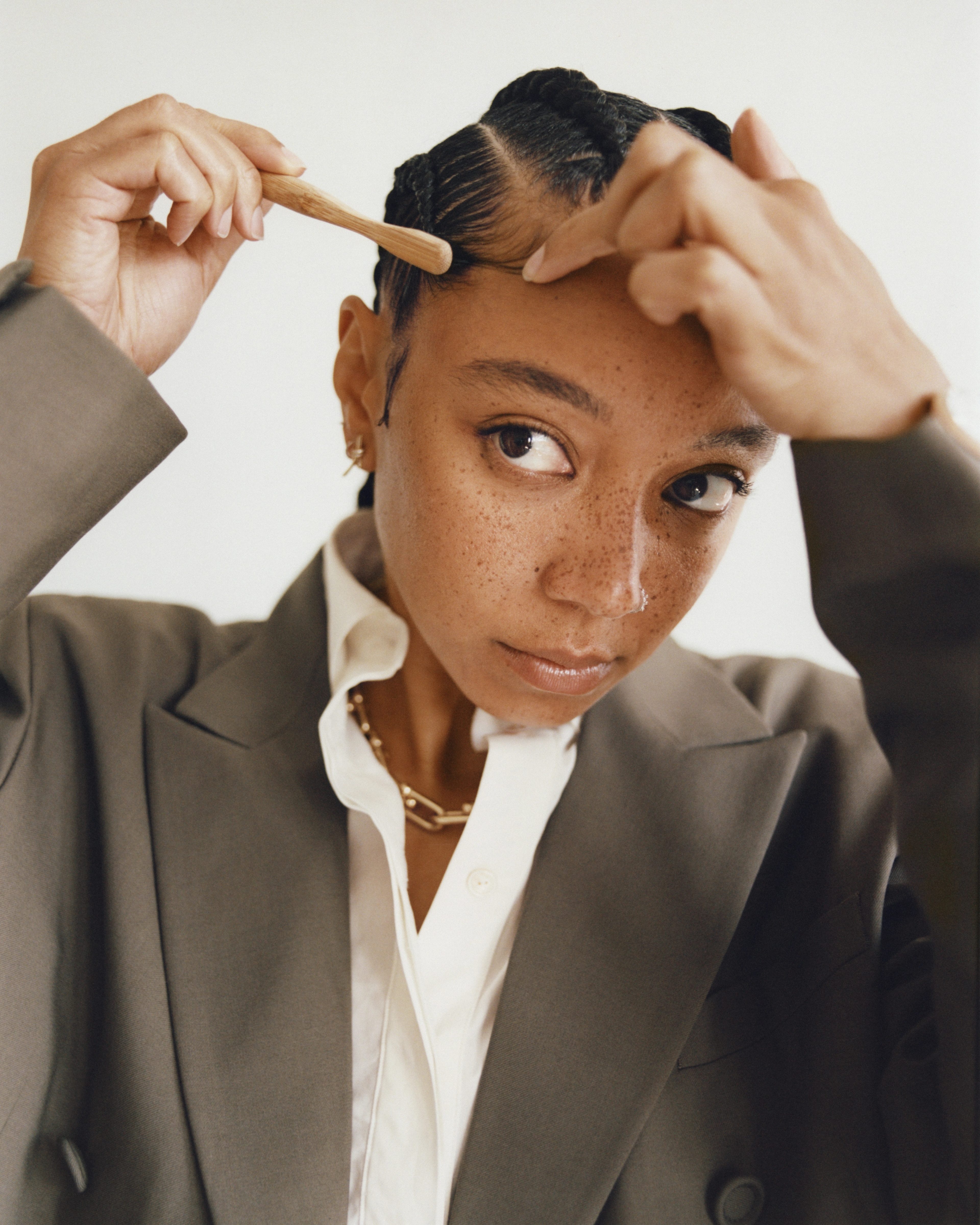
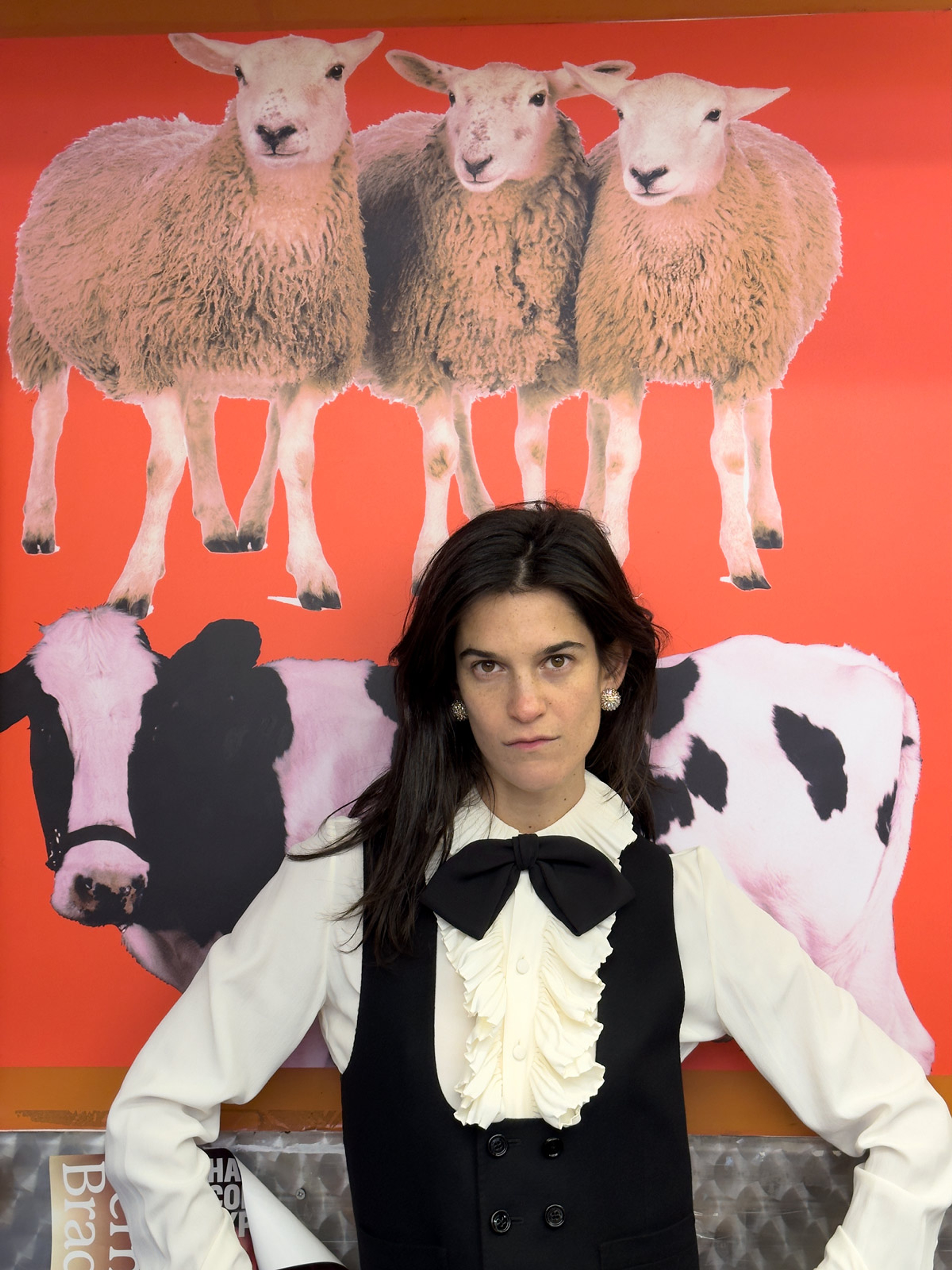
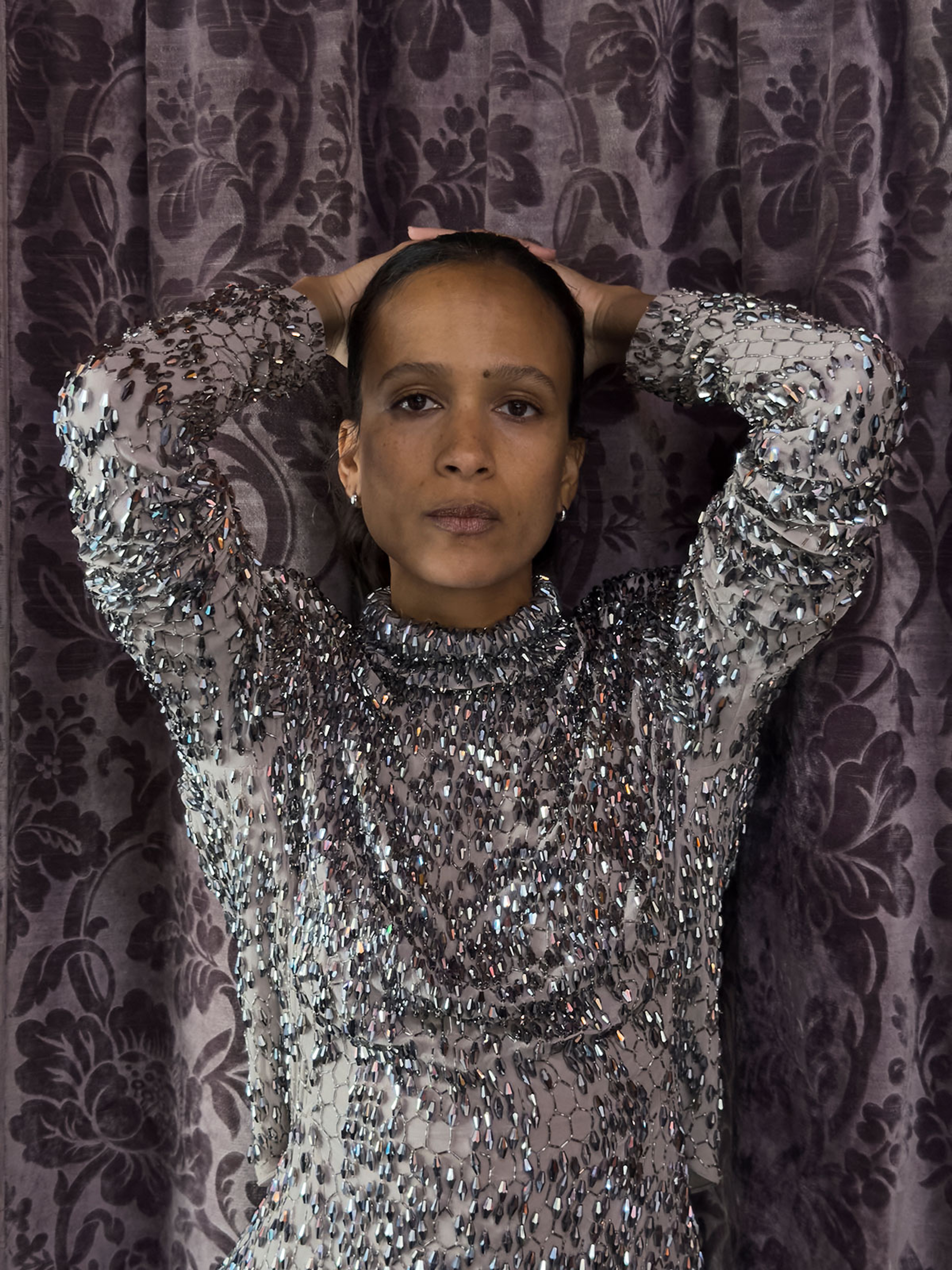
Shirt by THE ROW. Jacket by GUCCI. Earring and necklace by TIFFANY & CO.
“I really like the idea of people returning to art, returning to a piece—this hum that it leaves you with.”
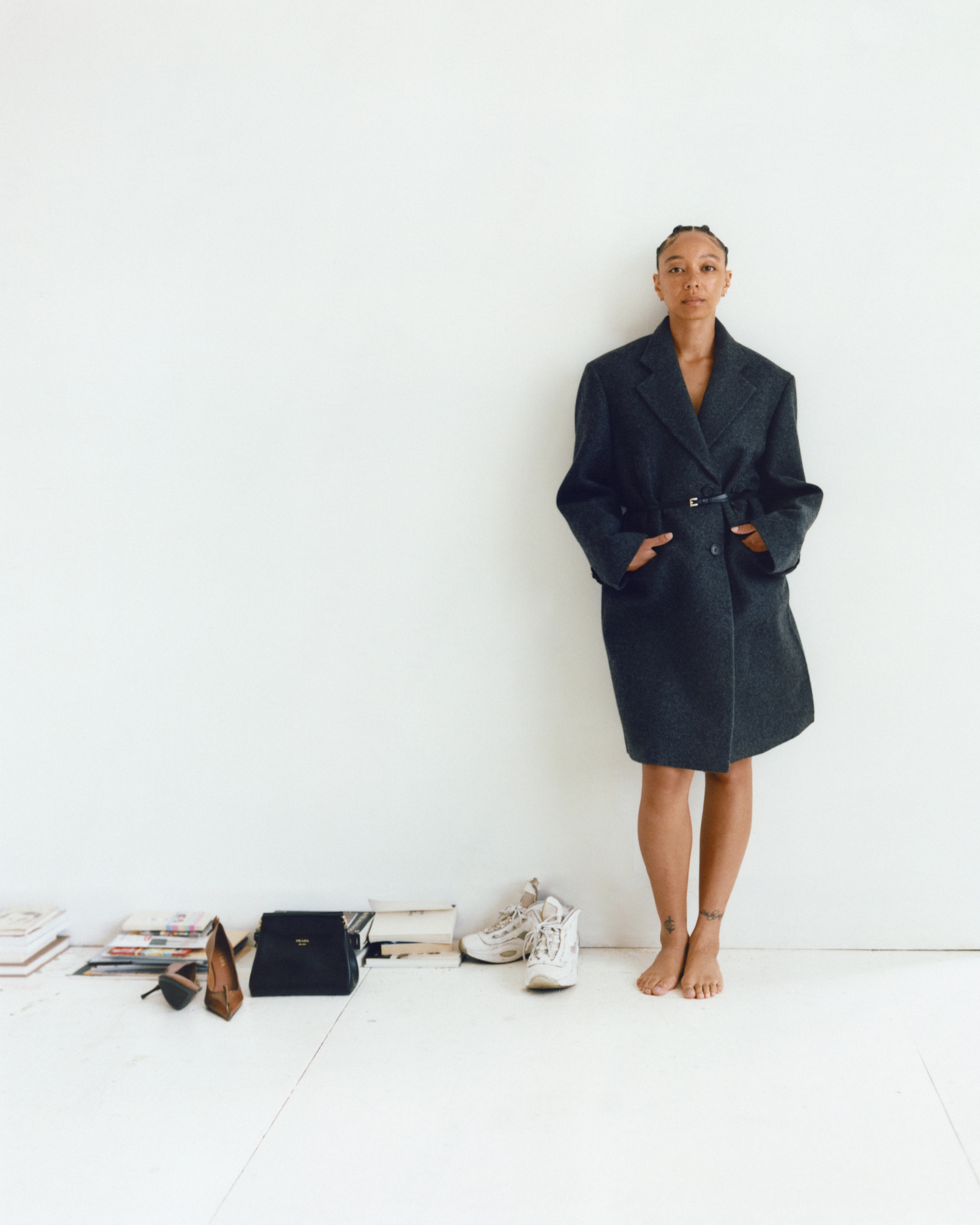
Coat, belt, bag and shoes by PRADA.
PHOTOGRAPHER
KOBE WAGSTAFF
Fashion Editor
Gabrielle Marceca at Streeters
Hair
anika Fortson
Make-up
Michaela Bosch at Bryant Artists
Stylist Assistant
Kristyn Williams
Beyond Noise 2026
PHOTOGRAPHER
KOBE WAGSTAFF
Fashion Editor
Gabrielle Marceca at Streeters
Hair
anika Fortson
Make-up
Michaela Bosch at Bryant Artists
Stylist Assistant
Kristyn Williams
Beyond Noise 2026