Noise
ISSUE NO. 04: TATIANA BILBAO
TATIANA BILBAO
TATIANA BILBAO
Words: 1421
Estimated reading time: 8M
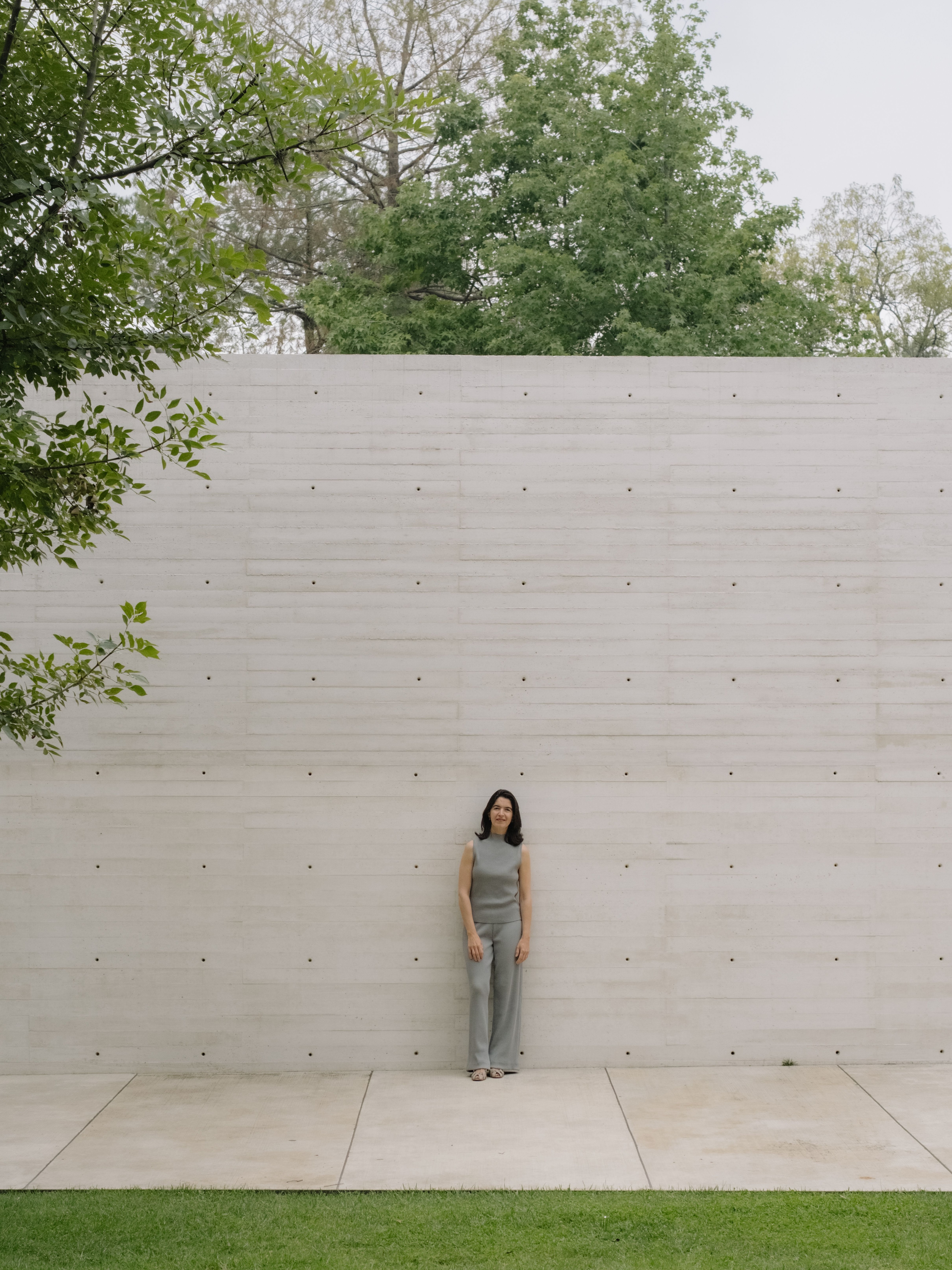
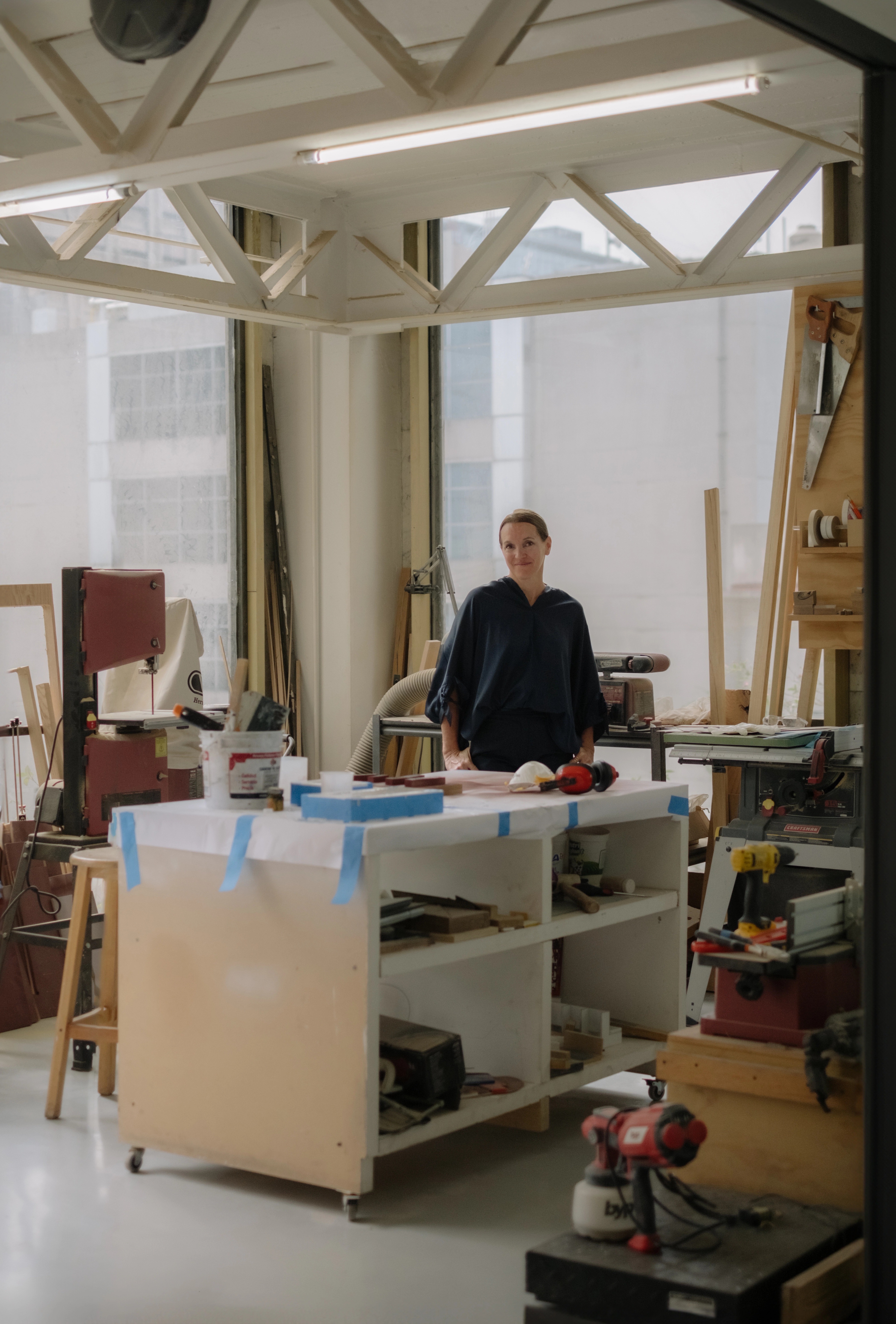
Long before she could articulate it, Tatiana Bilbao intuited that architecture should be more than flashy forms born of technological advancements. Since founding her eponymous studio in 2004, Tatiana has focused on designing spaces that exist to care for the lives they harbor. Her work embraces trial and error through methods that invite imperfection: Collages and hand drawings, for example, became characteristic of her studio after she banned digital renderings from her process in 2019. Based in Mexico City, the studio has produced a body of work that spans continents and typologies, but remains grounded in social and environmental responsibility. This is perhaps most salient in the Culiacán Botanical Garden, an ongoing project that Tatiana began working on in 2005, which involves the gradual transformation of a public garden in one of Mexico’s most crime-ridden cities. Over two decades, Tatiana has designed and overseen the construction of a library, an office space, an outdoor theatre, and more public infrastructure for the garden, which, as a whole, embodies her conviction in the power and responsibility of architecture to dignify the lives of its users. Alongside her practice, Tatiana has taught at Yale, Harvard, and Columbia, where she brings her humanistic vision to a new generation of architects.
After you graduated from architecture school and before you began designing, you worked in the public sector, within Mexico City’s Secretariat of Urban Development and Housing. What drew you to that job, and why did you ultimately leave?
My grandfather was an important architect and politician, so the desire to design for the public sector was innate to me. I was interested in the production of public spaces as well as social housing. Once I was working there, I began to realize that the actual design decisions were not made by the government, but by people who worked in the academic and private sectors, who were brought in as consultants. I wasn’t interested in pursuing a career in politics; I wanted to design! I worked in the public sector for a little more than two years, an incredibly enriching period during which I learned so much. Ultimately, though, the moment I had an opportunity to leave and work in a design studio, I did.
What was your next step?
I co-founded a studio with the architect Fernando Romero, who I met in school. We started it out of his father’s garage—just kids figuring things out as we went along. Eventually, we invited another architect, Mark Seligson, and formalized the company by naming it LCM, Laboratorio Ciudad de México. I was there from 1998 to 2003. We did several experimental projects: a house on the moon, a house for [the artist] Gabriel Orozco, whom we did not know. We brought Herzog & de Meuron to give a conference at Bellas Artes in Mexico City, just by showing up and knocking on the door. We organized an exhibition at Casa Estudio Luis Barragán, curated by Hans Ulrich Obrist, again, just by going to Casa Estudio and asking to talk to whoever was in charge. We had so much energy to pour into our work—it was a very exciting time, but it was also somewhat of a ticking time bomb. There came a point when I had to face that I did not share the same ethics and values as my partners, and so I left. Certain clients and employees left with me, and though my intention wasn’t necessarily to start my own studio, I had to finish those projects. My team and I worked on them from my dining table. Six months later, I said, ‘What am I doing? This is a studio.’ And that’s how it was officially born.
You were one of the first women architects in Mexico to lead a studio independently. What was that experience like?
I used to hate this question. When I began to be invited to give lectures, it frustrated me that I was often the only woman in the line-up; the men were asked about their architecture, and I was asked what it means to be a woman. I would decline to answer, saying that to respond was to set myself apart from my colleagues, when we were no different. One day, my good friend Derek Dellekamp said to me, ‘Tatiana, I understand your frustration. But when you were a student, what women architects did you see on stage?’ I hadn’t. The renowned Mexican architects I knew at the time were Alberto Kalach, Enrique Norten, Mauricio Rocha, Isaac Broid, Teodoro González de León, Ricardo Legorreta. But no women. Whether I liked it or not, that was the role I was filling. I started to understand myself not as an architect who happens to be a woman, but as a woman who designs architecture.
When I finished school, I remember thinking, Wow, I didn’t learn anything! I saw the way my peers worked, and I thought perhaps I hadn’t tried hard enough in school, or maybe I just wasn’t that bright and I needed to find a way to catch up. Eventually, though, I realized that what was really going on was that I saw things differently. I studied architecture in the ’90s, when the profession was the epitome of spectacle—buildings designed with parametric software to make it taller or curvier than the last. It was, frankly, the work of privileged white men. For me, though, architecture has always been a form of caring for the body. I saw it as this thing that is necessary for life to develop, and as an enormous responsibility. So after that conversation I had with Derek, I allowed myself to question the reasons behind my specific approach. Later, after I gave birth to my daughters, it was even more clear to me—and what really closed the loop of these questions was hearing Isabel Abascal speak about her project, Mother Architecture. She described how motherhood had made her understand architecture in a new way, after she herself became architecture for the child she was carrying. I thought, Of course! That’s what I mean when I say I’ve always understood it as an act of care.
In your design process, you have been adamant about working with physical models, collage, and other representational techniques that some might consider antiquated, with digital tools at our disposal. The most recent is artificial intelligence. What is your stance on these technologies?
I am very far removed from the digital world. Very far removed. I don’t have a clear stance on the technologies you describe, because, to be honest with you, I don’t know them. I have deliberately separated myself from them, because I fundamentally believe that human beings must inhabit the world in a physical way. We are physical beings, the world is a physical place, even my ideas go from my mind to the physical realm. Of course, I use digital tools to make the work more efficient or enable collaboration, but I do not see them as valid means for designing. Recently, someone in the office prompted an AI to “design a house in the style of Tatiana Bilbao.” And I don’t believe—I don’t want to believe—that it’s the same. I don’t think AI can replicate the process, which includes errors and frustration and stumbling around to arrive at a solution. So, no, I haven’t used that technology, and I’m not interested in using it.
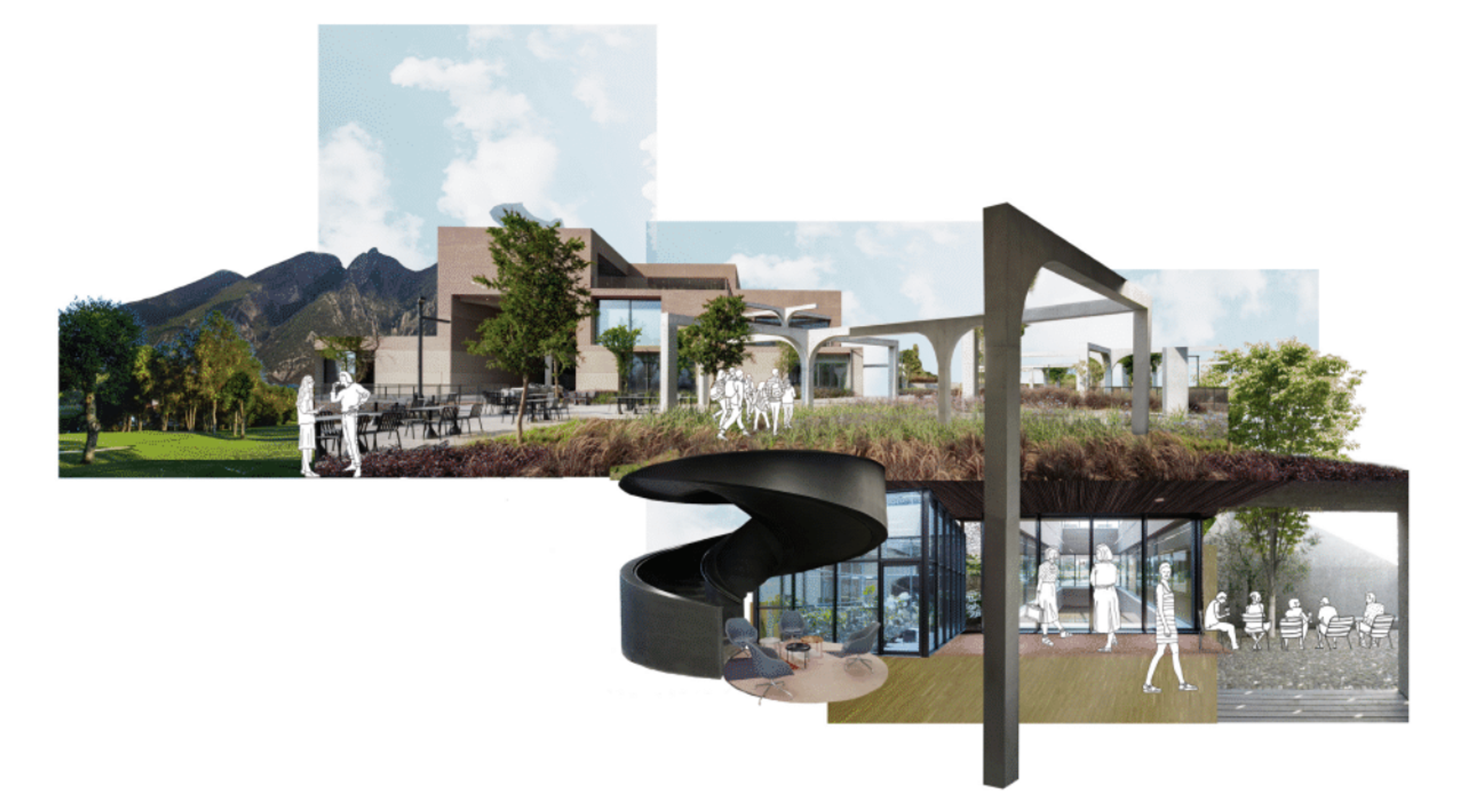
Artwork by TATIANA BILBAO ESTUDIO
PHOTOGRAPHY
Manuel Zúñiga
INTERVIEWS
ANA KARINA ZATARAIN
Beyond Noise 2026
PHOTOGRAPHY
Manuel Zúñiga
INTERVIEWS
ANA KARINA ZATARAIN
Beyond Noise 2026