Noise
ISSUE NO. 04: GABRIELA CARRILLO
Gabriela Carrillo
GABRIELA CARRILLO
Words: 1371
Estimated reading time: 8M
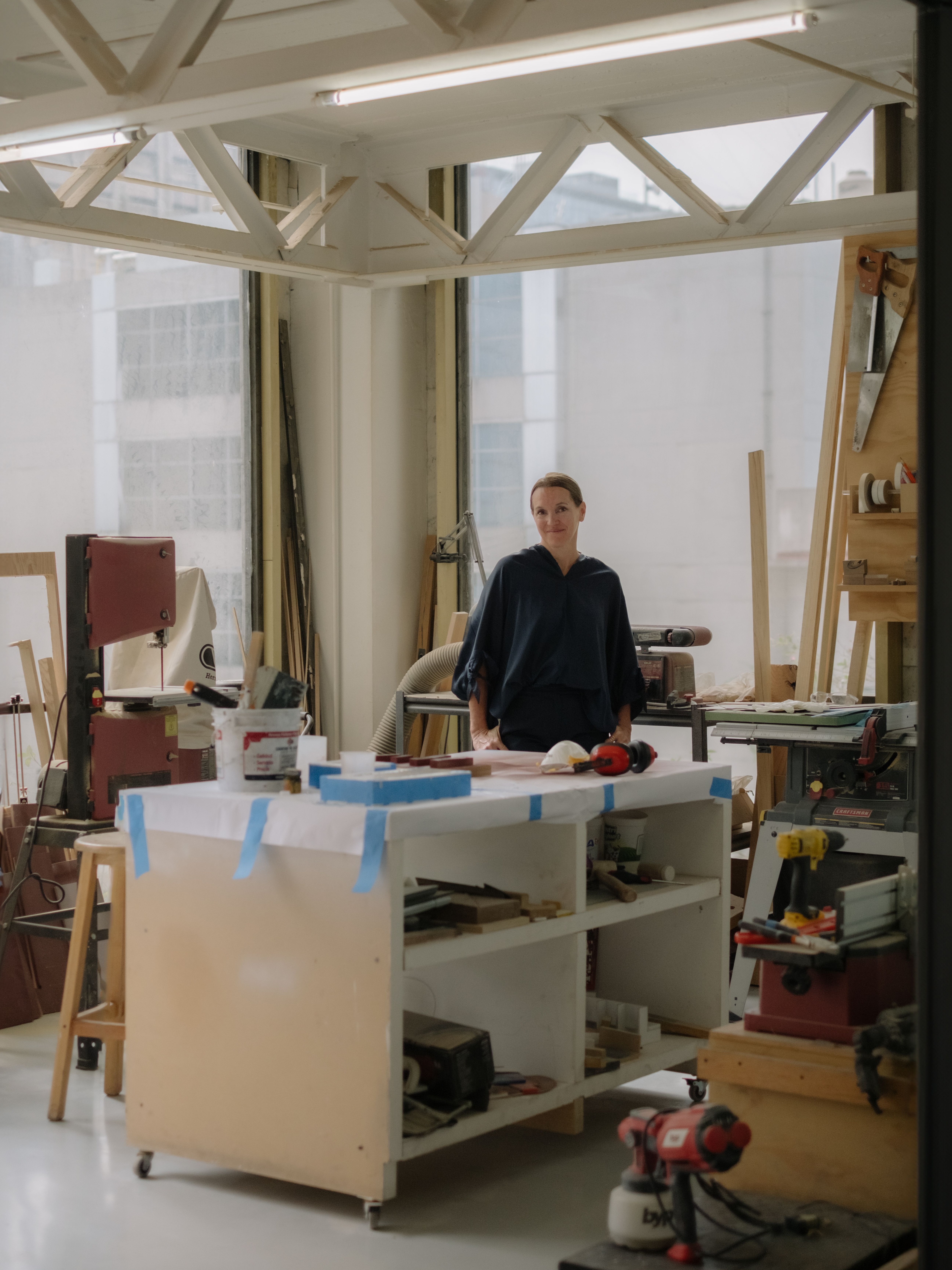
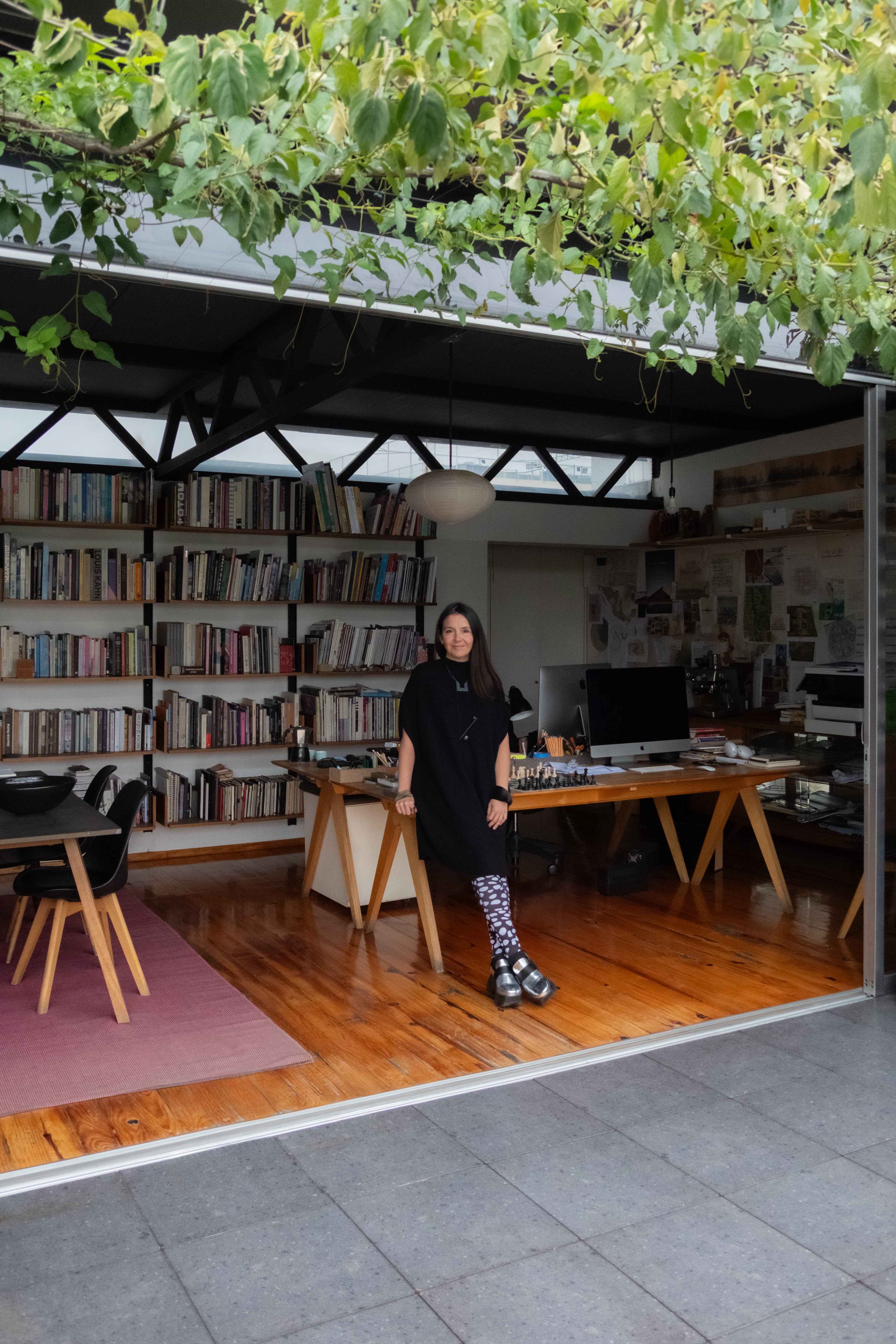
In the past century, figures like Le Corbusier, Frank Lloyd Wright, and Ludwig Mies van der Rohe gave rise to the familiar image of the architect: a man at a drafting table, working in isolation. Though the myth of the lone genius still looms over the profession, architect Gabriela Carrillo is determined to challenge that narrative, emphasizing collaboration as central to her practice. In 2019, after nine years working in partnership with Mauricio Rocha, she founded her own studio, Taller Gabriela Carrillo, seeking new and more radical modes of designing that center collective and interdisciplinary authorship. Her firm is one of five that comprise C733, a Mexico City-based collective focused on developing essential public infrastructure within vulnerable communities across the country. She approaches academia in a similarly horizontal way, treating the construction of knowledge as a shared endeavor that begins with empathy and demands constant curiosity. For 25 years, her evolving professional trajectory has been shaped as much by failure as by success, particularly during times of crisis, which she views as catalysts—calls to ask different questions and listen more closely to the answers that emerge when many voices are invited in.
How different is your approach to architecture when you’re designing versus when you’re working in academia?
Architectural design responds to an immediate reality—there are building codes, regulations, and a series of restrictions that come with each project, which all shape what you can propose. In academia, I’m more interested in looking further down the line; in speculating about what cities and buildings could look like. It allows for more freedom. In both realms, however, an important point of departure is the idea of crisis. We’re facing a reality where access to a professional architect has become a luxury that only the wealthy can afford, but I believe that spatial dignity is a human right. Great architecture doesn’t necessarily require lavish materials or sophisticated technologies—it can be designed through common sense and an almost primitive sort of intelligence.
You’ve mentioned that there were two crises that re-shaped your career: the 2017 earthquake in Mexico City and the global pandemic of 2020.
“Crisis,” for me, is not necessarily a negative event but an inflection point. And in that sense, becoming a mother in 2015 deeply shifted how I approach my career. Having a child radically transformed my sensitivities, my vision of the cities and the spaces I design, my interests, the things I wanted to communicate. At that point, I understood that architecture began with the construction of empathy. In 2017, my immediate response to the earthquake was to get involved in reconstruction efforts within communities who had lost their homes in Morelos. I consider that project a failure. I approached it with a focus on cultural heritage, but the fact is, during a state of emergency, it’s more urgent to cover basic necessities. People need guaranteed access to shelter, food, clean water, and a sense of safety before they can think about abstract things like patrimony. It was a humbling experience, but what I took away from it was that architects have the responsibility to provide preemptive solutions; to study the characteristics of a site in a deeper way than we’re accustomed to. Geology, hydrology, anthropology—often, these disciplines are afterthoughts, so I’ve tried to integrate them into the beginning of my process. The pandemic came shortly after I dissolved my partnership with Mauricio [Rocha]. There was a sudden change of rhythm. To see the city transformed so radically opened my mind and allowed me to question how I wanted to live my day-to-day life, imagine my workspace, and define my practice.
Often, separating from a partner to head one’s own practice is born of a desire for more independence. In your case, however, it seems that you’ve sought to make your work even more open and collaborative since founding Taller Gabriela Carrillo. What makes you insist on that mode of work?
One of the things I loved most about the space Mauricio and I built was that it was quite democratic—it wasn’t just our voices but those of a group of collaborators, both internal and external. In a way, separating from my partner gave me pause because it seemed like a contradiction of everything I appreciated about teamwork. What I later realized was that, actually, that desire came not from me wanting to work alone but wanting to open the door to more radical forms of collaboration, with even more voices. It sounds paradoxical, but I’ve found that [when] more perspectives are involved in a project from the start, the solutions you arrive at are more simple, more specific, and much more powerful.
What are you working on now?
Under the last administration, C733 completed around 50 public projects in five years: for the federal government, the government of Mexico City, and the government of the Iztapalapa municipality. Once the former administration left office, I shifted my focus back to academia and communication. I taught a class at Columbia as well as the National Autonomous University of Mexico. I think it’s important to take the time to look back on past experiences and analyze their results, so C733 has now entered a more academic stage in which we’re developing a space for research. Within my own studio, I’m working on several projects for private clients—some houses and hotels, which take a little longer to develop.
Do you see any major differences between your students today and previous generations?
There’s a very apparent difference between today’s generation of students and mine when I was in school, which I think is mainly due to how immediately accessible information is today. Part of why teaching is important to me is because I learn, as well. It’s so easy to construct absolute truths, especially as one acquires professional experience. If there’s one thing I’m terrified of, it’s becoming a person who has a lot of experience but is trapped in my idea of truth. Working with students throughout the years has given me the gift of always facing new questions and developing new interests. When I was in school, my classmates and I sort of blindly accepted what our professors imparted on us. That is not the case with students today—they question and demand much more; they impose their own timelines and methods. I can agree or disagree, but at the end of the day, that’s the reality. And I think it’s important to recognize that, because nothing is static: human relationships, ways of communicating, how we relate to territories, nature, climate, and the social, political, and economic issues we face. For me, being able to formulate new questions is the most stimulating and exciting experience.
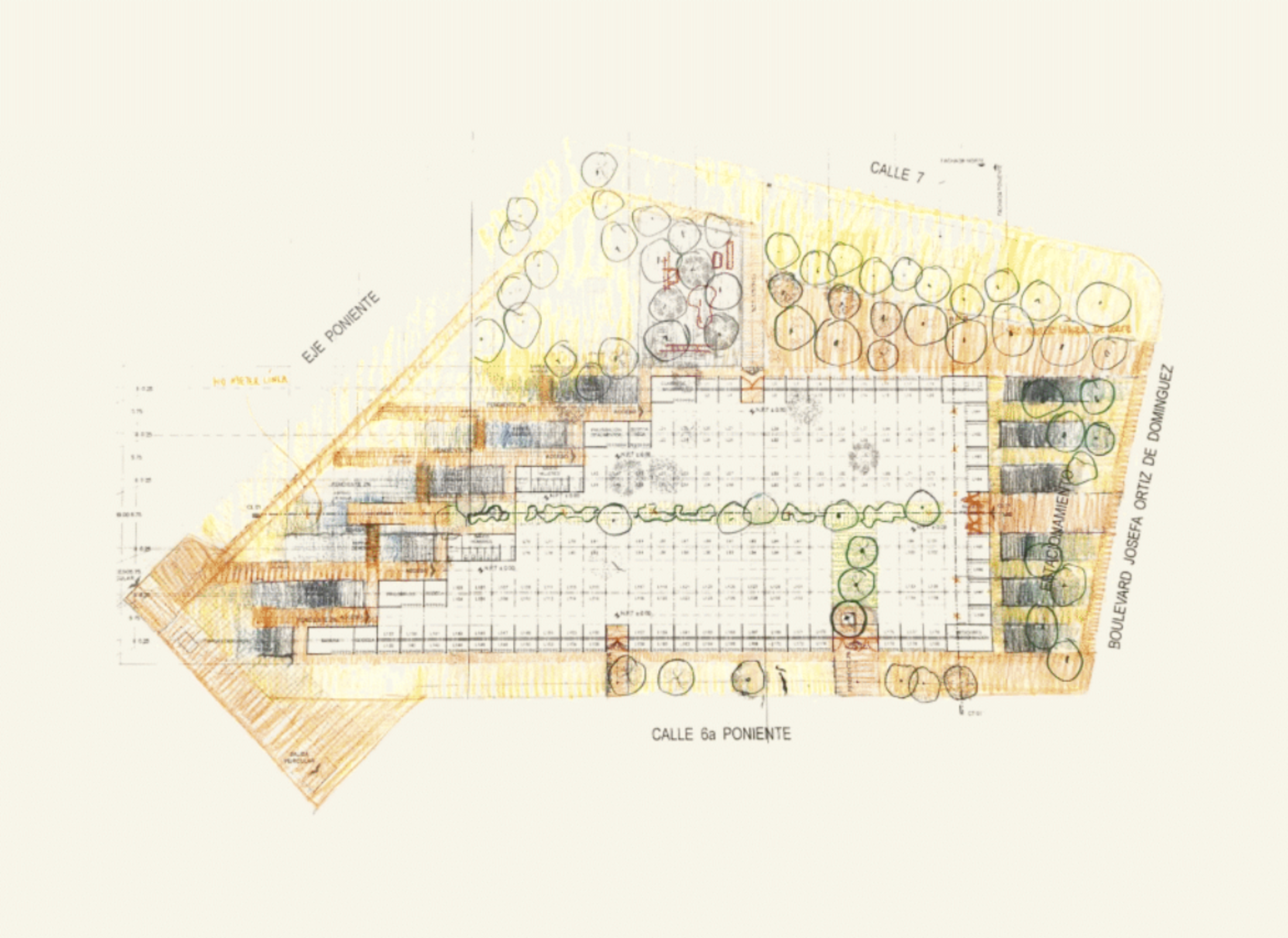
Artwork by GABRIELA CARRILLO, TALLER GABRIELA CARRILLO & COLECTIVO C733
PHOTOGRAPHY
Manuel Zúñiga
INTERVIEWS
ANA KARINA ZATARAIN
Beyond Noise 2026
PHOTOGRAPHY
Manuel Zúñiga
INTERVIEWS
ANA KARINA ZATARAIN
Beyond Noise 2026