Noise
ISSUE NO. 04: NEW FOUNDATIONS
FIVE ARCHITECTS SHAPING THE FUTURE OF MEXICO CITY WITH INTENTION.
By Ana Karina Zatarain
FERNANDA CANALES
Words: 1162
Estimated reading time: 6M
At the start of this decade, when pandemic lockdowns went into effect, the world became intimately acquainted with a notion that architect Fernanda Canales had long studied: the interdependence of the private and public realms. A prolific theorist and designer, Fernanda understands her architectural practice as a means to explore the porous boundaries between the home and the city, the individual and the collective. Her work examines how domestic space is never merely private, always entangled in broader cultural and political contexts. Since 2006, Fernanda has led her eponymous, Mexico City-based firm, designing projects ranging from minuscule to massive. Perhaps the most ambitious undertaking of her career was completed in 2024: a series of public infrastructure built along Mexico’s northern border, serving communities which previously lacked safe spaces to gather in. The project was deeply informed by her scholarship, and in books such as Architecture in Mexico, 1900–2010, Shared Structures, Private Spaces, and My House, Your City, she maps the shifting terrain of domesticity and urban form—tracing how architecture reflects and shapes the lives it shelters. In Fernanda’s vision, architecture is never just a matter of walls and roofs; t is a civic act, a way of building the social fabric that binds us together.
How would you describe the way you think about architectural scale?
I think about scale as it relates to the human body, its day-to-day experiences. In that way, the idea of scale is no longer an abstract thing—a number—but a system of proportions that is ruled by everything it can touch. This approach is what allows me to design, in a single day, a portion of a city and the small drawer of a desk. There’s not much difference between thinking of a chair and how the body adapts to it, and thinking of a building’s entrance and its relationship to the city. The private and public realms are not two separate spheres. Rather, they’re elements that have many interconnected parts. The house is not separate from the city, and a bathroom, the most intimate and private space of all, is linked to a larger system of water management infrastructure. This is not the way architects have traditionally thought about these matters, but today, the collective repercussions that individual desires have on a shared world are more visible than ever.
Speaking of your books, you recently published a revised and expanded version of two of them: Collective Housing in Mexico and My House, Your City. Why did you decide to do that?
I understand books as living works that are not finished once they go to print. There’s always something new to learn or discover, and it’s necessary to rethink the material so that it reflects that. Recent events such as the pandemic and the climate crisis forced me to incorporate new examples and themes that were not relevant just a few years ago.
In what ways does your research feed your design work, and vice versa?
I can’t imagine being able to design without researching, so I don’t think of them as two separate endeavors. Writing and learning about history are part of the same creative process that leads me to designing architectural projects. For me, it’s about constant exploration, whether it be something I saw in a film, read about in a book, or witnessed on the street. It’s true, however, that research and design are two very different processes. The time and solitude that writing demands is different from the high-paced environment of a construction site, or the dynamic of a meeting with clients. Each situation requires an almost opposite state of mind, so I try to focus on each of them as they come.
You have designed many government-funded public projects in Mexico, where budget constraints are common. What can you tell me about that experience?
It’s a very complex experience to design a public project, mainly because its intended users are not the clients you’re dealing with directly. There are many people involved, the process is quite unstable, and the deadlines are almost impossible to meet. This situation demands that an architect familiarize herself with the project’s context and the needs of its future users in a direct way, so that the building is useful beyond what the politicians who commissioned it diagnose or desire. And yet, despite the challenges, public work is crucial. It is the most impactful sphere you can tackle; it’s where an architect can be most useful to society.
The most important aspect of the projects in Agua Prieto and Naco, for example, was reprogramming the specifications that the federal government had set from a remote office. This meant questioning, for example, what the point was of having an “auditorium” or a “market” in a small town with no public infrastructure or safe spaces, knowing that in the future there would be no budget for ongoing maintenance and that no one would be in charge of caring for them once they were open. Adaptability and openness were the main design strategies, which allowed for the spaces to be flexible rather than prescriptive.
How do you engage with architecture’s potential to spark change and bring social justice? And in that sense, what are the limits it faces?
Architecture is the main antidote against situations of vulnerability and social injustice because it has the capacity to make people feel welcomed and safe. This potential, however, is limited by the common insistence on creating enclosed spaces, as buildings conceived as closed interiors tend to turn their backs on much of society and exclude many uses. In contrast, buildings conceived as roofs, frameworks, or open spaces are able to accommodate a variety of uses and users at all times, and they become shelters that the community can make their own.
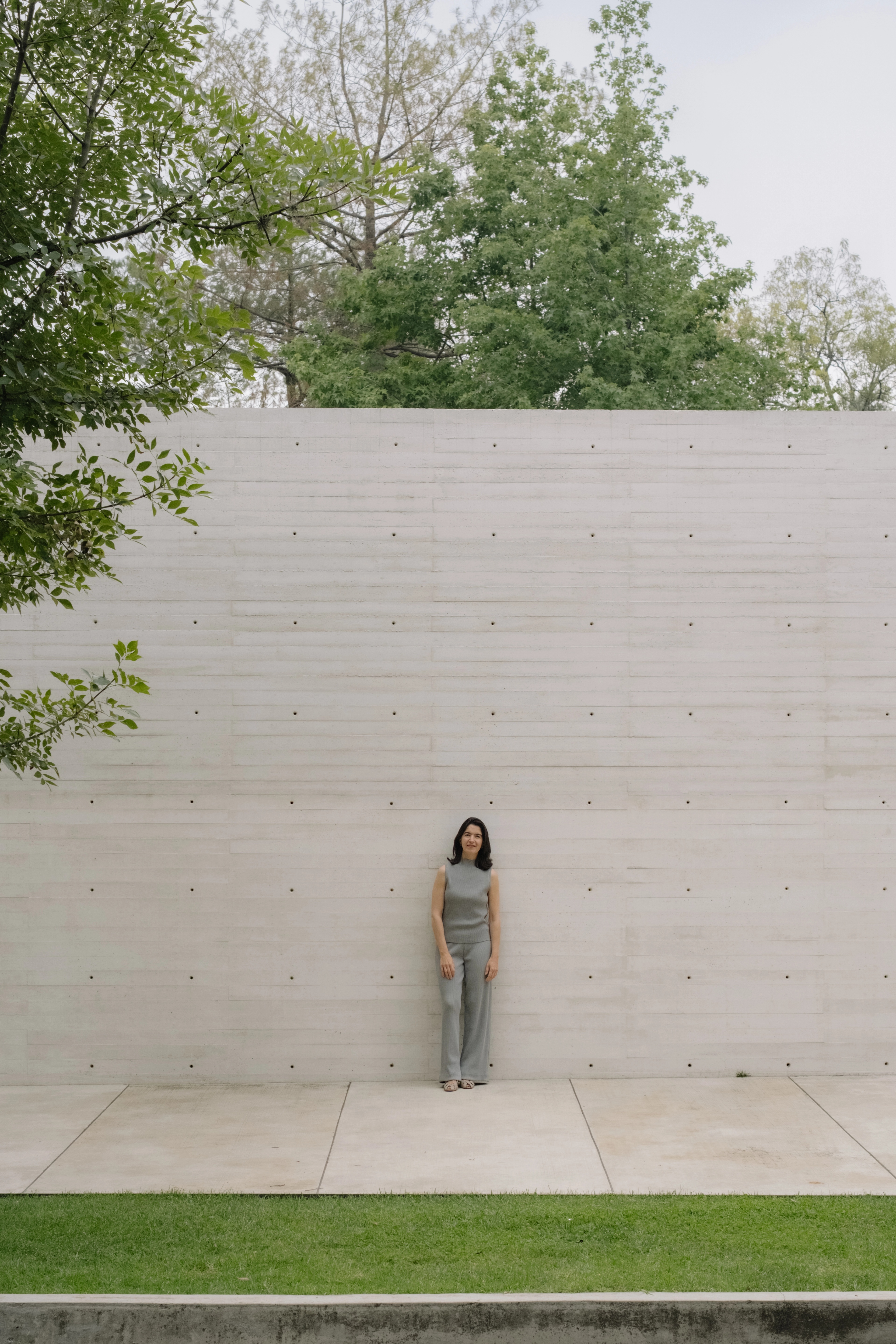
FERNANDA CANALES
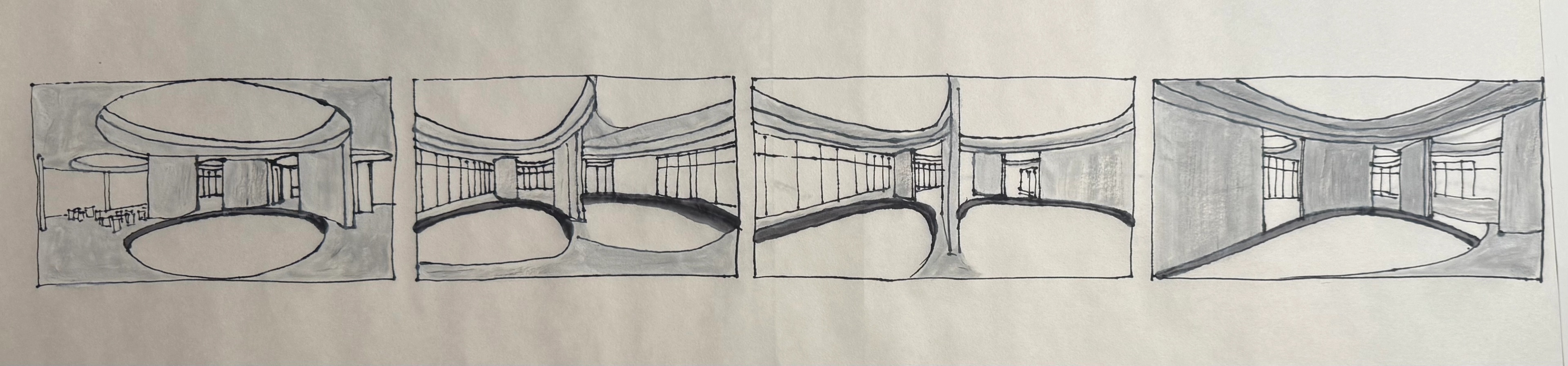
Artwork by FERNANDA CANALES
ISABEL MARTÍNEZ ABASCAL
Words: 1215
Estimated reading time: 7M
Most people think of architecture as a profession limited to designing and constructing buildings. For Isabel Abascal, however, it’s much broader. She sees it as a way of thinking—a framework for understanding history, language, politics, and the quiet forces that inform everyday life across cultures. Madrid-born, Isabel has lived and worked in Japan, Germany, Brazil, and India. She is currently based in Mexico City, where she has co-directed LANZA Atelier with Alessandro Arienzo since 2015. Together, they have designed projects ranging from cultural institutions to private homes, museum exhibitions to furniture—but their work is equally rooted in research and theory. As a writer, Isabel favors literary prose over the technical and often impenetrable style that characterizes criticism, crafting surprisingly poetic essays without sacrificing intellectual rigor. In Mother Architecture, her first book, Isabel draws unexpected connections between her field and subjects like motherhood, linguistics, and state power, revealing how, in the end, inhabiting space shapes every aspect of human experience.
What drew you to studying architecture?
Many people think of architecture as a technical discipline, related most strongly to math and physics. But really, it’s a fully humanistic profession that involves studying history, philosophy, poetry… When I was 17, I thought I could study art because I liked to draw, or engineering because I was interested in physics, or theater because I liked literature and mythology. I found that architecture was the meeting point of all my interests.
What drew you to a peripatetic lifestyle, and how did it shape your professional relationship to architecture?
Learning about architecture for me was always strongly linked to getting to know other places and cultures. I was interested in Japanese architecture because of how different it was from the European tradition, so while I was still in school, I took an internship at SANAA in Tokyo. Later, I lived in Berlin as part of a foreign exchange program. I was drawn to the unfinished quality about it, with the fall of the wall and its specific history. [Berlin] was still in the process of becoming itself, which was exciting. I thought I would return after I finished school, but as it happened, a visit to a friend who was living in Brazil changed my course. The sensation I’d had in Berlin—of being somewhere that wasn’t fully consolidated—was magnified. Everything felt larger there, even the empty spaces. I took a job as an assistant professor at a university in São Paulo, where I spent six years teaching but also learning while traveling with my students to other countries in Latin America. Then I met Alessandro [Arienzo], and we opened Lanza Atelier in 2015. Of course, leading an architecture firm requires the stability of living in one place, which for us was Mexico City, where Alessandro is from. I think what I took from those years was a profound sense of respect for the past. I’m not necessarily interested in technological innovation; I don’t want to create something that’s never been done before. In a way, the modernist movement subverted the idea of architecture that’s unique to a place—buildings across the world started to look more similar to each other. In Mexico, there’s a strong relationship to locally sourced materials and constructive traditions, but also a history of modernization and progressive design. What I’d like to demonstrate is that looking towards the future requires understanding the past.
Within your studio, how do you and your partner approach division of labor? Have your roles changed in the 10 years you’ve been working together?
When we started working together, we tried to have a pretty 50-50 approach to each task, but that was actually quite unsustainable. As the years have gone by, each of us has settled into our strengths. Alessandro thinks in a more graphic way than I do. We’re both involved in the conceptual part of designing, then he takes the lead in executive aspects. I find it easier to think in words, which is why I’m enamored by the conceptual and investigative aspects of architecture. In a way, this makes us a great team, but it’s also a challenge. We have moments of great empathy with one another, but our process also requires constant negotiation.
Five years ago, you had your first child. How did motherhood change your approach to your profession?
It’s interesting because, in the end, architecture is a service, and each project we’ve developed—private and public—has come from a client with specific needs and desires. When my son was born, for the first time in my career, I started to work on a project that no one had commissioned from me: my book.
Mother Architecture is a collection of four essays that explores the relationship between motherhood and architecture, where both are acts of creation. The first essay examines pregnancy and how patriarchal systems have influenced the way spaces for birth are designed, often benefiting practitioners more than mothers-to-be. Then there’s an essay about bodily autonomy and reproductive rights, which I compare to a Zapotec archaeological site, analyzing the way the state exerts control over Indigenous heritage and women’s bodies for surprisingly similar reasons. The next chapter investigates the vernacular construction mechanisms of an Indigenous community in Chiapas, as well as the concept of language—how a child acquires it and how a community can lose it. The final one is about the design of parks, where children begin to relate to society and public space. Though the case studies I use are specific, the subject matter is universal. Unlike a house or even a public project, a book is something that can fall into the hands of anyone, anywhere. And it’s my hope that, through my work, I can contribute to breaking the echo chambers around architecture criticism by relating the profession to seemingly unrelated subjects, showing an unspecialized audience that architecture is relevant to their lives, as well.
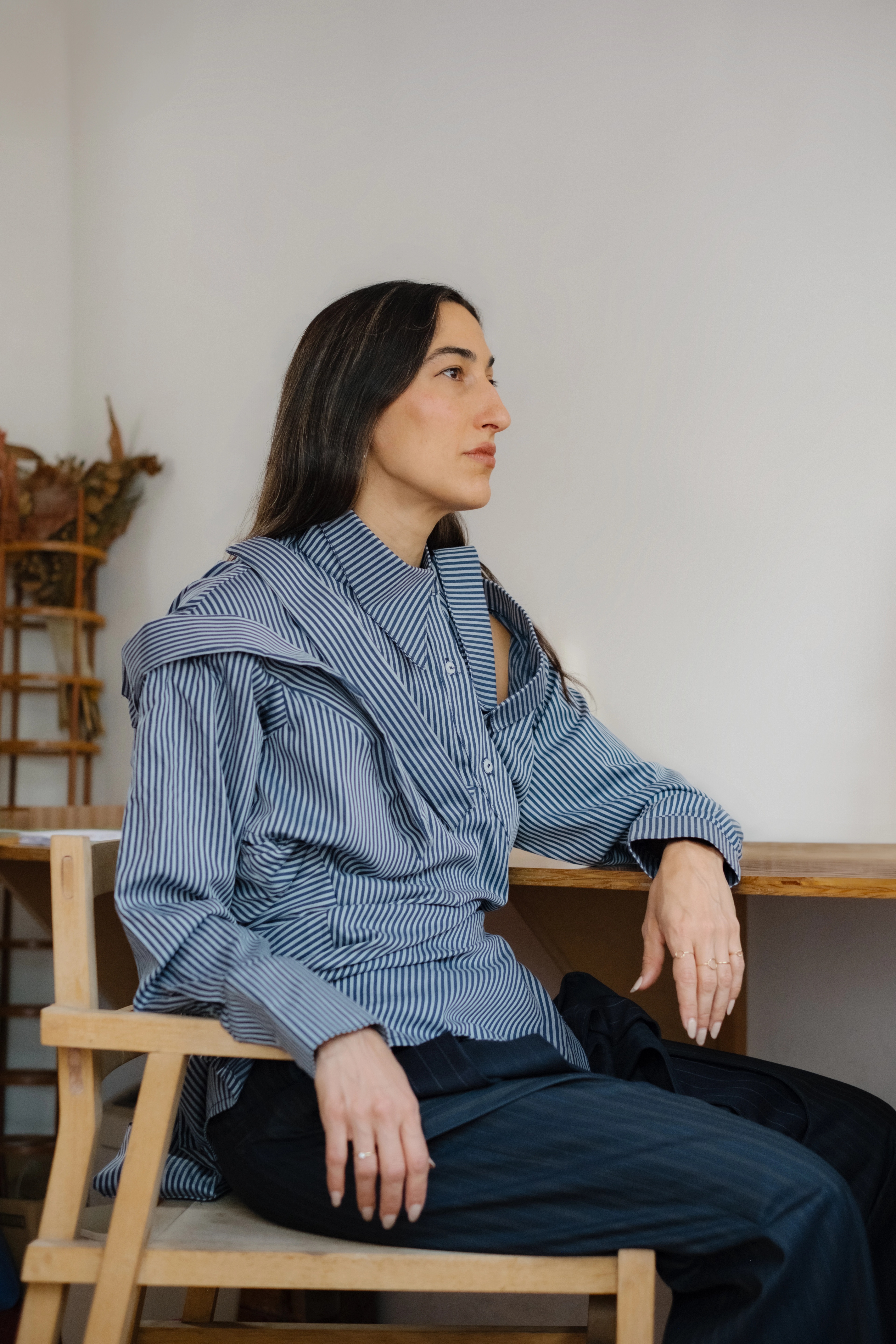
Isabel Martínez Abascal
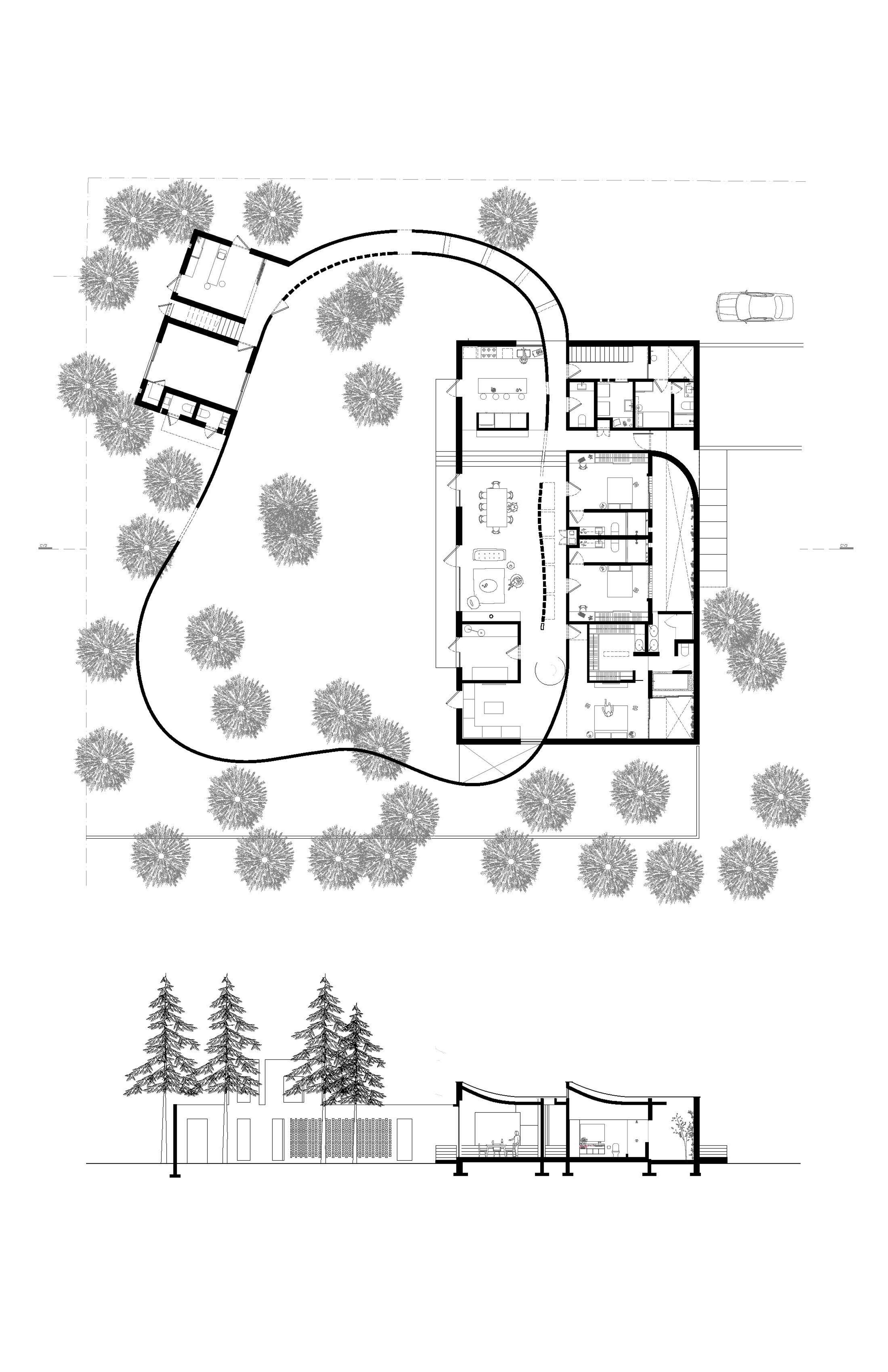
Artwork by LANZA ATELIER
GABRIELA CARRILLO
Words: 1371
Estimated reading time: 8M
In the past century, figures like Le Corbusier, Frank Lloyd Wright, and Ludwig Mies van der Rohe gave rise to the familiar image of the architect: a man at a drafting table, working in isolation. Though the myth of the lone genius still looms over the profession, architect Gabriela Carrillo is determined to challenge that narrative, emphasizing collaboration as central to her practice. In 2019, after nine years working in partnership with Mauricio Rocha, she founded her own studio, Taller Gabriela Carrillo, seeking new and more radical modes of designing that center collective and interdisciplinary authorship. Her firm is one of five that comprise C733, a Mexico City-based collective focused on developing essential public infrastructure within vulnerable communities across the country. She approaches academia in a similarly horizontal way, treating the construction of knowledge as a shared endeavor that begins with empathy and demands constant curiosity. For 25 years, her evolving professional trajectory has been shaped as much by failure as by success, particularly during times of crisis, which she views as catalysts—calls to ask different questions and listen more closely to the answers that emerge when many voices are invited in.
How different is your approach to architecture when you’re designing versus when you’re working in academia?
Architectural design responds to an immediate reality—there are building codes, regulations, and a series of restrictions that come with each project, which all shape what you can propose. In academia, I’m more interested in looking further down the line; in speculating about what cities and buildings could look like. It allows for more freedom. In both realms, however, an important point of departure is the idea of crisis. We’re facing a reality where access to a professional architect has become a luxury that only the wealthy can afford, but I believe that spatial dignity is a human right. Great architecture doesn’t necessarily require lavish materials or sophisticated technologies—it can be designed through common sense and an almost primitive sort of intelligence.
You’ve mentioned that there were two crises that re-shaped your career: the 2017 earthquake in Mexico City and the global pandemic of 2020.
“Crisis,” for me, is not necessarily a negative event but an inflection point. And in that sense, becoming a mother in 2015 deeply shifted how I approach my career. Having a child radically transformed my sensitivities, my vision of the cities and the spaces I design, my interests, the things I wanted to communicate. At that point, I understood that architecture began with the construction of empathy. In 2017, my immediate response to the earthquake was to get involved in reconstruction efforts within communities who had lost their homes in Morelos. I consider that project a failure. I approached it with a focus on cultural heritage, but the fact is, during a state of emergency, it’s more urgent to cover basic necessities. People need guaranteed access to shelter, food, clean water, and a sense of safety before they can think about abstract things like patrimony. It was a humbling experience, but what I took away from it was that architects have the responsibility to provide preemptive solutions; to study the characteristics of a site in a deeper way than we’re accustomed to. Geology, hydrology, anthropology—often, these disciplines are afterthoughts, so I’ve tried to integrate them into the beginning of my process. The pandemic came shortly after I dissolved my partnership with Mauricio [Rocha]. There was a sudden change of rhythm. To see the city transformed so radically opened my mind and allowed me to question how I wanted to live my day-to-day life, imagine my workspace, and define my practice.
Often, separating from a partner to head one’s own practice is born of a desire for more independence. In your case, however, it seems that you’ve sought to make your work even more open and collaborative since founding Taller Gabriela Carrillo. What makes you insist on that mode of work?
One of the things I loved most about the space Mauricio and I built was that it was quite democratic—it wasn’t just our voices but those of a group of collaborators, both internal and external. In a way, separating from my partner gave me pause because it seemed like a contradiction of everything I appreciated about teamwork. What I later realized was that, actually, that desire came not from me wanting to work alone but wanting to open the door to more radical forms of collaboration, with even more voices. It sounds paradoxical, but I’ve found that [when] more perspectives are involved in a project from the start, the solutions you arrive at are more simple, more specific, and much more powerful.
What are you working on now?
Under the last administration, C733 completed around 50 public projects in five years: for the federal government, the government of Mexico City, and the government of the Iztapalapa municipality. Once the former administration left office, I shifted my focus back to academia and communication. I taught a class at Columbia as well as the National Autonomous University of Mexico. I think it’s important to take the time to look back on past experiences and analyze their results, so C733 has now entered a more academic stage in which we’re developing a space for research. Within my own studio, I’m working on several projects for private clients—some houses and hotels, which take a little longer to develop.
Do you see any major differences between your students today and previous generations?
There’s a very apparent difference between today’s generation of students and mine when I was in school, which I think is mainly due to how immediately accessible information is today. Part of why teaching is important to me is because I learn, as well. It’s so easy to construct absolute truths, especially as one acquires professional experience. If there’s one thing I’m terrified of, it’s becoming a person who has a lot of experience but is trapped in my idea of truth. Working with students throughout the years has given me the gift of always facing new questions and developing new interests. When I was in school, my classmates and I sort of blindly accepted what our professors imparted on us. That is not the case with students today—they question and demand much more; they impose their own timelines and methods. I can agree or disagree, but at the end of the day, that’s the reality. And I think it’s important to recognize that, because nothing is static: human relationships, ways of communicating, how we relate to territories, nature, climate, and the social, political, and economic issues we face. For me, being able to formulate new questions is the most stimulating and exciting experience.
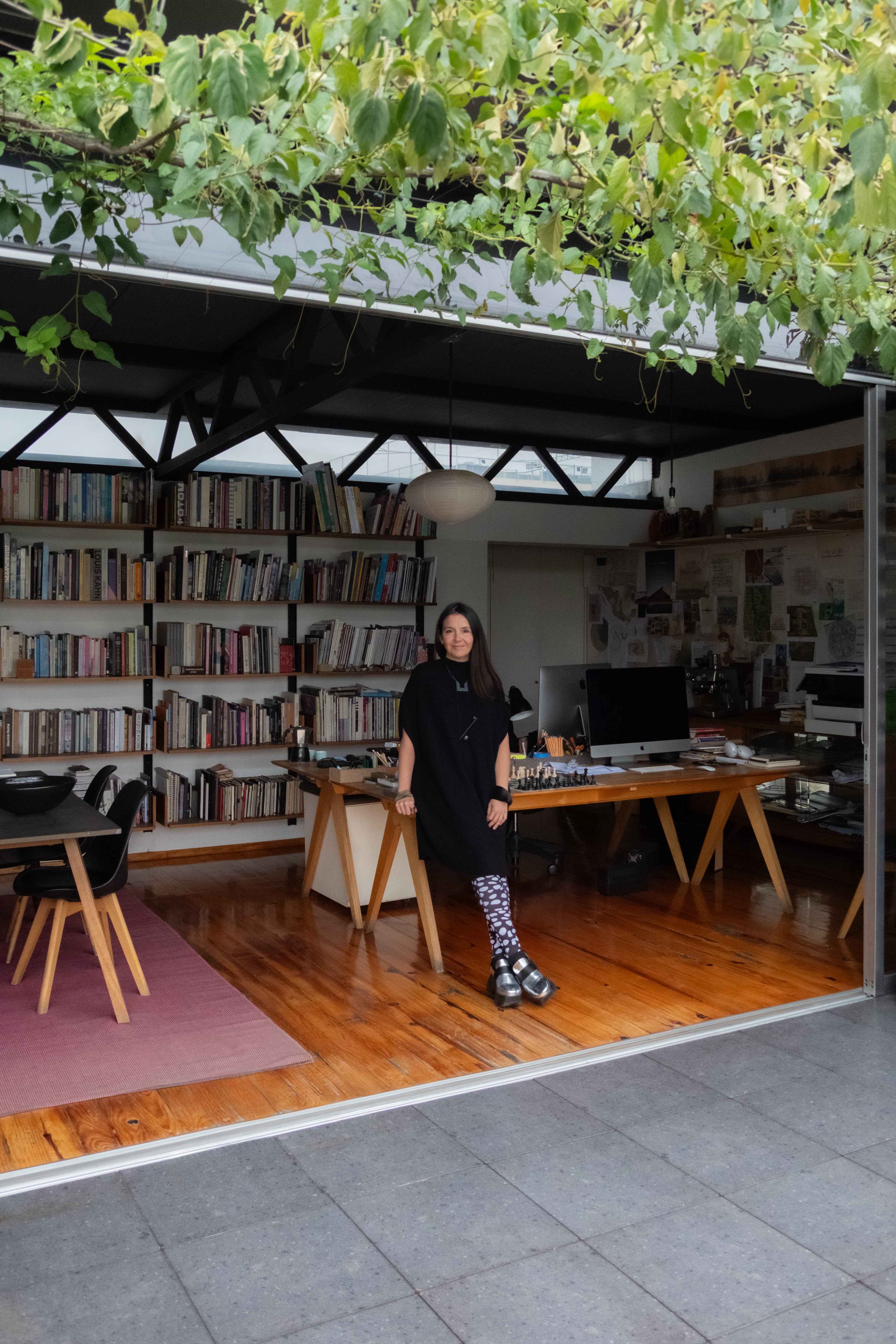
Gabriela Carrillo
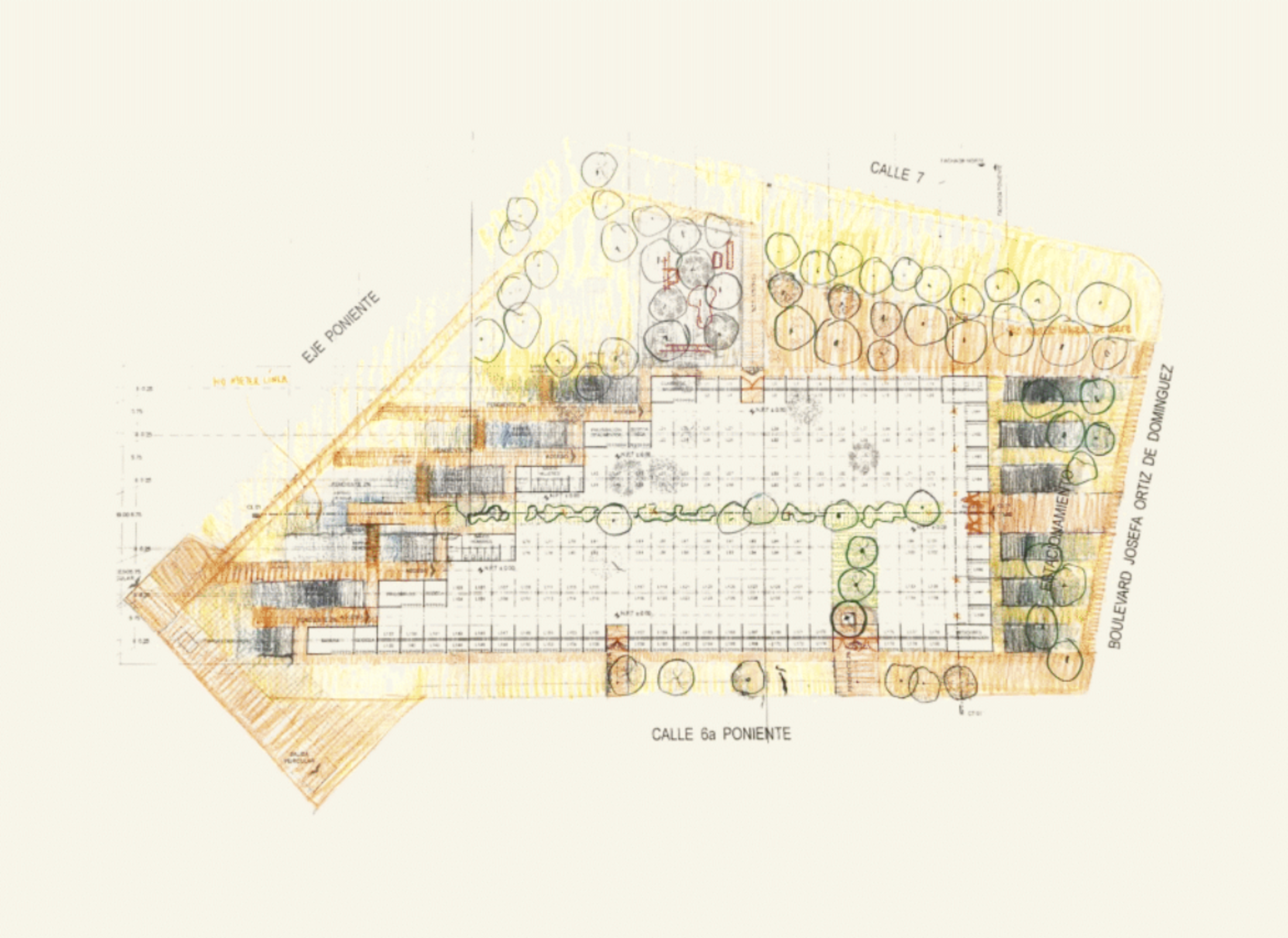
Artwork by GABRIELA CARRILLO, TALLER GABRIELA CARRILLO & COLECTIVO C733
GABRIELA ETCHEGARAY
Words: 965
Estimated reading time: 5M
As many architects do, Gabriela Etchegaray began her career eager to see her designs fix themselves on the horizon of the built environment. Nearly two decades later, however, she has come to see architecture less as the production of objects and more as the cultivation of meaning. Her practice, Ambrosi Etchegaray, which she co-founded with partner Jorge Ambrosi in 2011, is known for quiet, site-responsive buildings that favor continuity over rupture and restraint over excess. Gabriela completed her graduate studies at Columbia University, where theory and criticism broadened her understanding of architecture as a discursive act. In 2018, she curated the Mexican pavilion at the Venice Biennale. Today, her work is a quiet rebuke of spectacle, often relying on gestures so subtle they nearly vanish into the landscape. What remains is an intention at once ethical and poetic. For Gabriela, architecture is a living inquiry into memory, place, and the possibility of constructing a better future.
What drew you to focusing on the more abstract or theoretical dimensions of your profession?
Looking back on when I started my career, I recall that my main interest was construction itself: seeing ideas take tangible form. That remains today, but it has undergone such a radical transformation. Engaging with conceptual practices has made me more open to forms that are not necessarily built: They can be documents, installations, museographies… That possibility allows me to understand architecture not as an aim or an object, but as a worldview, in which the question of how to inhabit a space becomes the question of how to live. The projects we take on at the studio now are attempts to pose certain questions and offer potential answers or solutions: How do we relate to each other? How do we relate to the environment? What do we decide to preserve or not? Though, of course, we remain interested in aesthetics, they are no longer our guiding axis.
You were born and raised in Mexico City and work there most of the time. What have you learned from it?
I think back to one of the first projects Ambrosi Etchegaray took on, which was an extension of the Papalote Children’s Museum located in the middle of the city, within the Chapultepec Forest. Our proposal ended up turning the museum’s exterior into spaces that represent the different landscapes and ecosystems of the surrounding territory. In retrospect, it informed our process, which always begins with observation: of a site, its landscape, its history, and patrimony. Many of our projects deal with preexisting structures and we always prefer to keep something of the past. This sense of nostalgia is inherent to Mexico City. This region used to be a lake, and there were pre-Hispanic buildings that seemed to be born of the earth, with this structural heaviness and so much symbolism in their ornamentation. It’s this heritage that Mexican architects can study and incorporate into more contemporary work. Today, I think our focus is less on the aesthetic dimension of a project and more on the ethical one; the questions we ask have more to do with sustainability and a sense of social justice: Who will this space include or exclude? To design a home or an entire environment is to take a stance that both proposes and enforces a certain way of living. And every way of life comes with rules, which impose hierarchies of gender, class, culture… Mexico City’s landscape is so vast, naturally and socially, that it demands constant new readings.
The fields you’ve focused your graduate studies on often explore the intersection of architecture and contemporary art. How do the two show up in your day-to-day work?
Ten years ago, our studio statement was something like “art and architecture.” But that intention to view architecture as art has faded. Architecture is its own thing. The process of questioning how it takes shape from a critical and ethical standpoint—that is what imbues it with artistic meaning. I’m very interested, for example, in the Land Art movement and the artists who used such resoundingly simple gestures. They took the work out of the white cube of the gallery and onto the earth itself, making the art speak of the environment by embodying the environment. In our work, I think of the projects where we’ve opted for a more austere solution, rather than something flashy or monumental. For a plant nursery in Puerto Escondido, we proposed an excavation for the worker to avoid having to bend over: Instead, the plants were at the height of his hands. It was a very subtle gesture, but it functions. I think our architecture understands luxury not as something ostentatious, but as ritual, poetry, the way light enters a space, the sense of journey and discovery that a user can feel as they make their way through it.
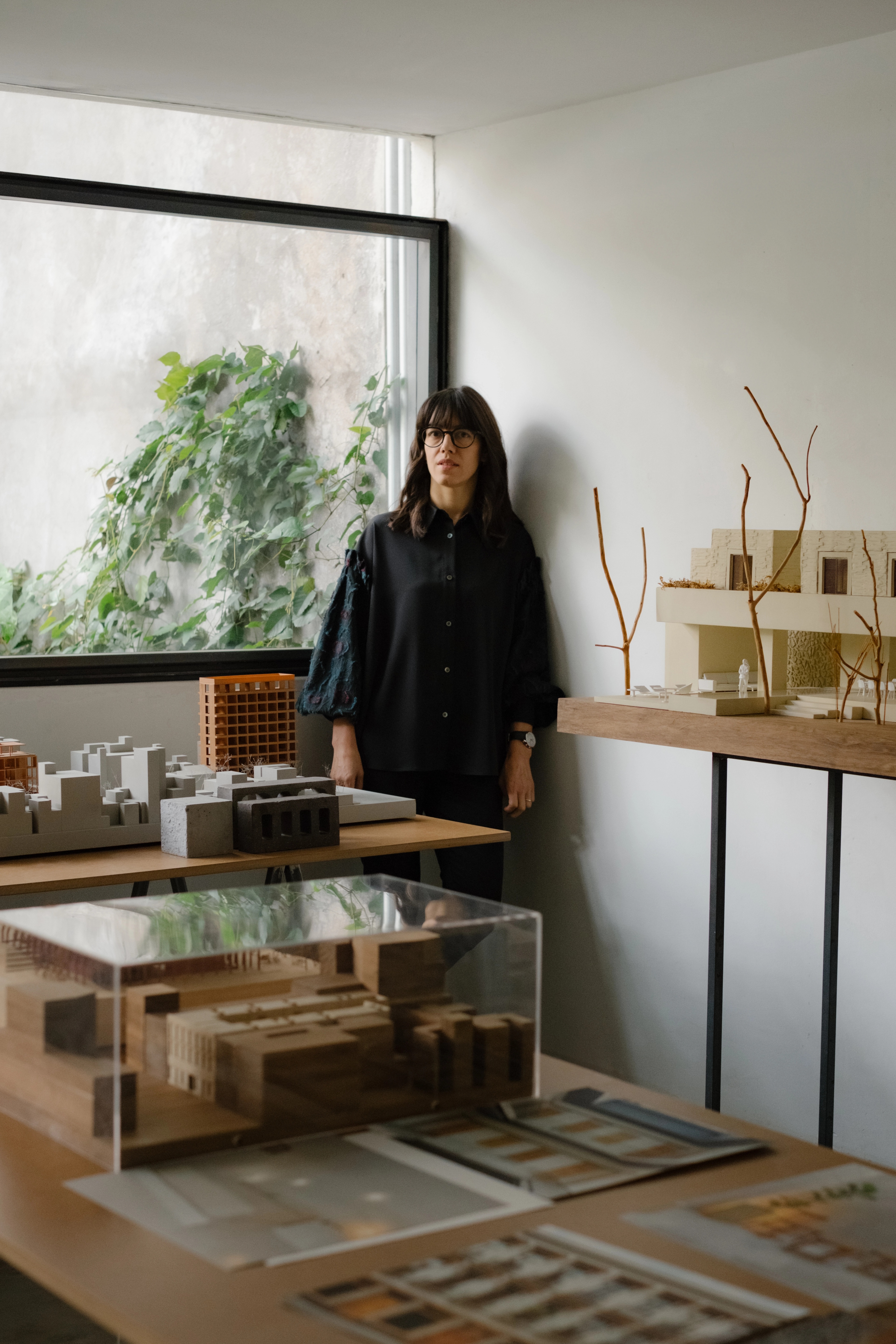
GABRIELA ETCHEGARAY
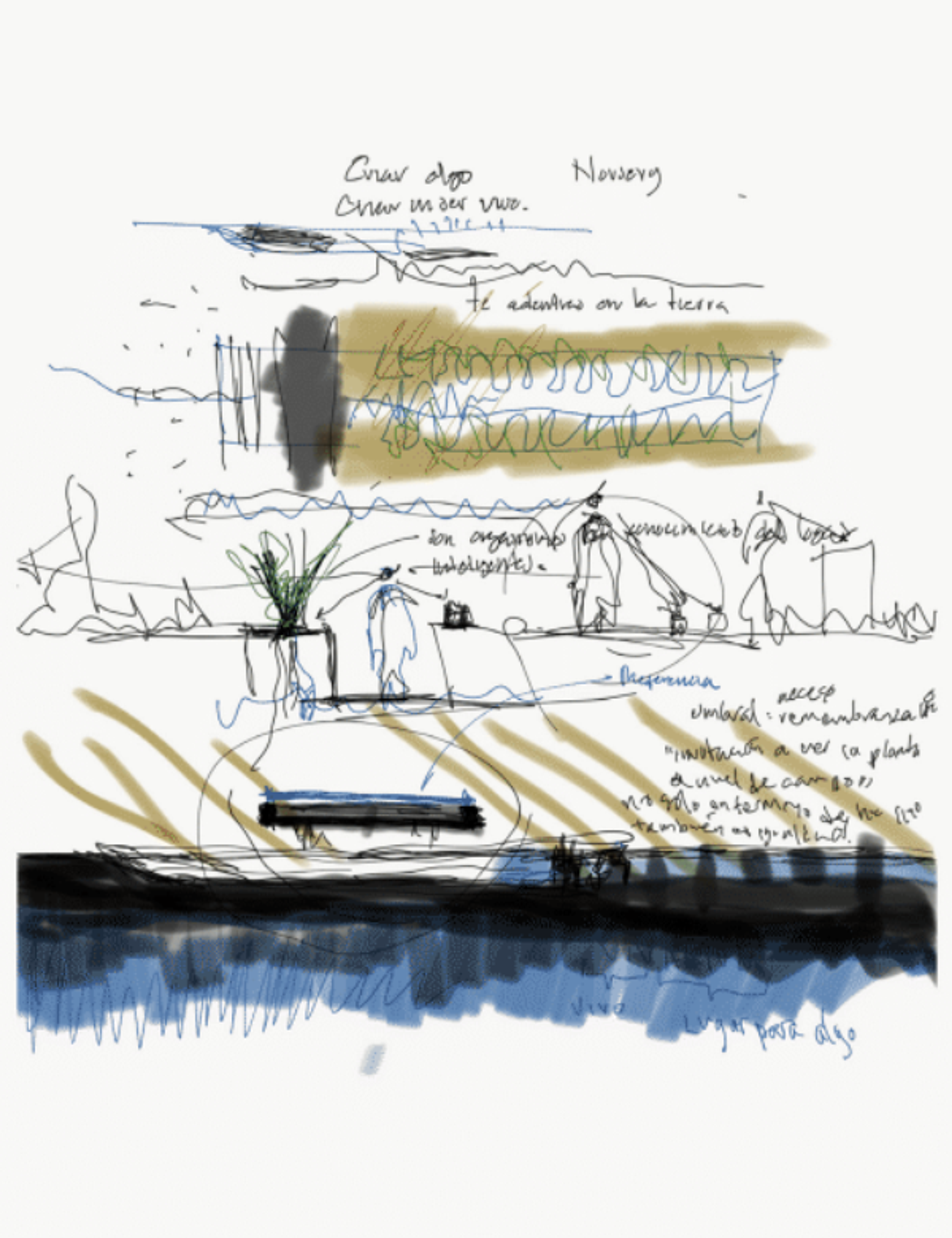
Guayacán Pavilion. Conceptual drawing by GABRIELA ETCHEGARAY. © Ambrosi Etchegaray, 2018.
TATIANA BILBAO
Words: 1421
Estimated reading time: 8M
Long before she could articulate it, Tatiana Bilbao intuited that architecture should be more than flashy forms born of technological advancements. Since founding her eponymous studio in 2004, Tatiana has focused on designing spaces that exist to care for the lives they harbor. Her work embraces trial and error through methods that invite imperfection: Collages and hand drawings, for example, became characteristic of her studio after she banned digital renderings from her process in 2019. Based in Mexico City, the studio has produced a body of work that spans continents and typologies, but remains grounded in social and environmental responsibility. This is perhaps most salient in the Culiacán Botanical Garden, an ongoing project that Tatiana began working on in 2005, which involves the gradual transformation of a public garden in one of Mexico’s most crime-ridden cities. Over two decades, Tatiana has designed and overseen the construction of a library, an office space, an outdoor theatre, and more public infrastructure for the garden, which, as a whole, embodies her conviction in the power and responsibility of architecture to dignify the lives of its users. Alongside her practice, Tatiana has taught at Yale, Harvard, and Columbia, where she brings her humanistic vision to a new generation of architects.
After you graduated from architecture school and before you began designing, you worked in the public sector, within Mexico City’s Secretariat of Urban Development and Housing. What drew you to that job, and why did you ultimately leave?
My grandfather was an important architect and politician, so the desire to design for the public sector was innate to me. I was interested in the production of public spaces as well as social housing. Once I was working there, I began to realize that the actual design decisions were not made by the government, but by people who worked in the academic and private sectors, who were brought in as consultants. I wasn’t interested in pursuing a career in politics; I wanted to design! I worked in the public sector for a little more than two years, an incredibly enriching period during which I learned so much. Ultimately, though, the moment I had an opportunity to leave and work in a design studio, I did.
What was your next step?
I co-founded a studio with the architect Fernando Romero, who I met in school. We started it out of his father’s garage—just kids figuring things out as we went along. Eventually, we invited another architect, Mark Seligson, and formalized the company by naming it LCM, Laboratorio Ciudad de México. I was there from 1998 to 2003. We did several experimental projects: a house on the moon, a house for [the artist] Gabriel Orozco, whom we did not know. We brought Herzog & de Meuron to give a conference at Bellas Artes in Mexico City, just by showing up and knocking on the door. We organized an exhibition at Casa Estudio Luis Barragán, curated by Hans Ulrich Obrist, again, just by going to Casa Estudio and asking to talk to whoever was in charge. We had so much energy to pour into our work—it was a very exciting time, but it was also somewhat of a ticking time bomb. There came a point when I had to face that I did not share the same ethics and values as my partners, and so I left. Certain clients and employees left with me, and though my intention wasn’t necessarily to start my own studio, I had to finish those projects. My team and I worked on them from my dining table. Six months later, I said, ‘What am I doing? This is a studio.’ And that’s how it was officially born.
You were one of the first women architects in Mexico to lead a studio independently. What was that experience like?
I used to hate this question. When I began to be invited to give lectures, it frustrated me that I was often the only woman in the line-up; the men were asked about their architecture, and I was asked what it means to be a woman. I would decline to answer, saying that to respond was to set myself apart from my colleagues, when we were no different. One day, my good friend Derek Dellekamp said to me, ‘Tatiana, I understand your frustration. But when you were a student, what women architects did you see on stage?’ I hadn’t. The renowned Mexican architects I knew at the time were Alberto Kalach, Enrique Norten, Mauricio Rocha, Isaac Broid, Teodoro González de León, Ricardo Legorreta. But no women. Whether I liked it or not, that was the role I was filling. I started to understand myself not as an architect who happens to be a woman, but as a woman who designs architecture.
When I finished school, I remember thinking, Wow, I didn’t learn anything! I saw the way my peers worked, and I thought perhaps I hadn’t tried hard enough in school, or maybe I just wasn’t that bright and I needed to find a way to catch up. Eventually, though, I realized that what was really going on was that I saw things differently. I studied architecture in the ’90s, when the profession was the epitome of spectacle—buildings designed with parametric software to make it taller or curvier than the last. It was, frankly, the work of privileged white men. For me, though, architecture has always been a form of caring for the body. I saw it as this thing that is necessary for life to develop, and as an enormous responsibility. So after that conversation I had with Derek, I allowed myself to question the reasons behind my specific approach. Later, after I gave birth to my daughters, it was even more clear to me—and what really closed the loop of these questions was hearing Isabel Abascal speak about her project, Mother Architecture. She described how motherhood had made her understand architecture in a new way, after she herself became architecture for the child she was carrying. I thought, Of course! That’s what I mean when I say I’ve always understood it as an act of care.
In your design process, you have been adamant about working with physical models, collage, and other representational techniques that some might consider antiquated, with digital tools at our disposal. The most recent is artificial intelligence. What is your stance on these technologies?
I am very far removed from the digital world. Very far removed. I don’t have a clear stance on the technologies you describe, because, to be honest with you, I don’t know them. I have deliberately separated myself from them, because I fundamentally believe that human beings must inhabit the world in a physical way. We are physical beings, the world is a physical place, even my ideas go from my mind to the physical realm. Of course, I use digital tools to make the work more efficient or enable collaboration, but I do not see them as valid means for designing. Recently, someone in the office prompted an AI to “design a house in the style of Tatiana Bilbao.” And I don’t believe—I don’t want to believe—that it’s the same. I don’t think AI can replicate the process, which includes errors and frustration and stumbling around to arrive at a solution. So, no, I haven’t used that technology, and I’m not interested in using it.
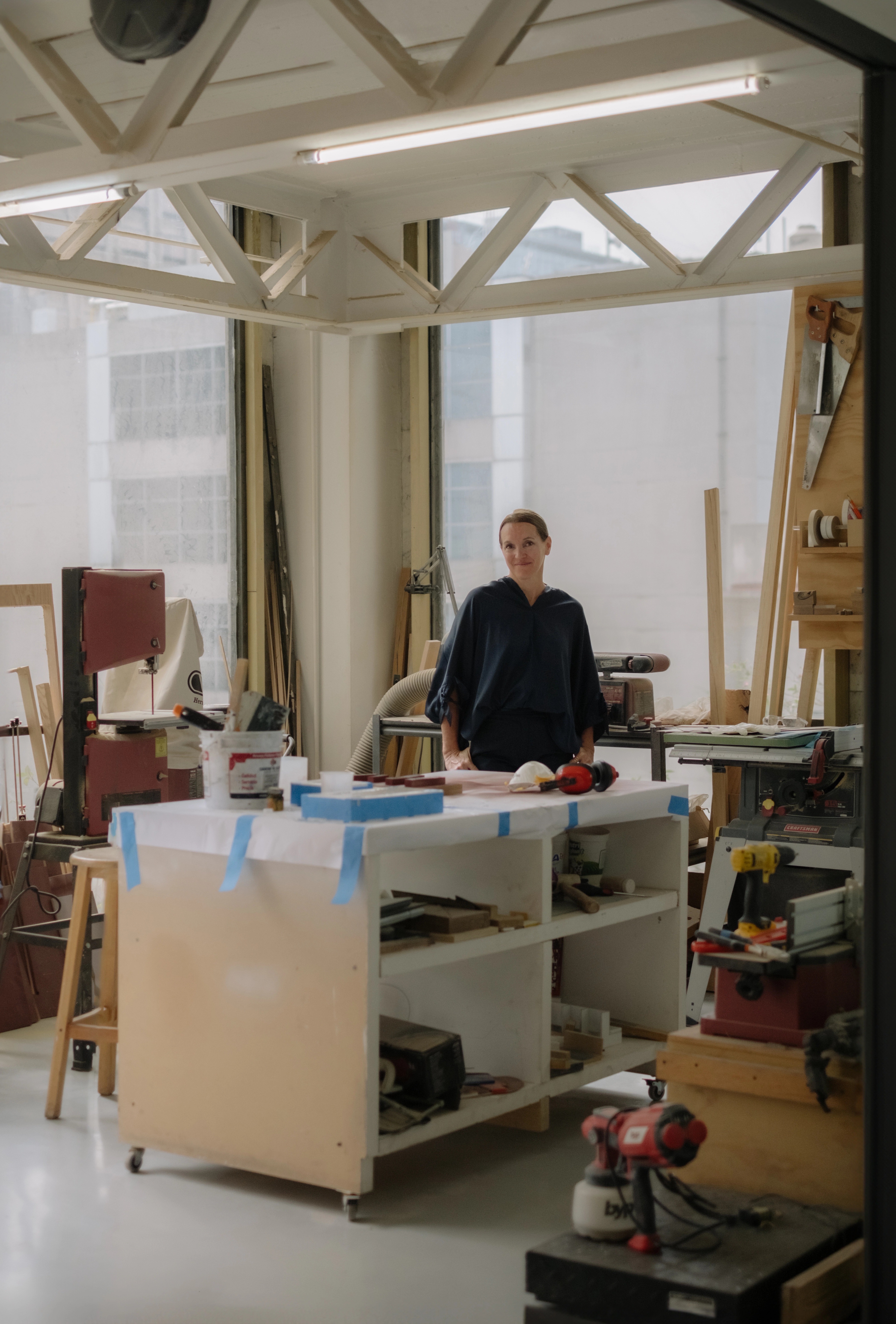
TATIANA BILBAO
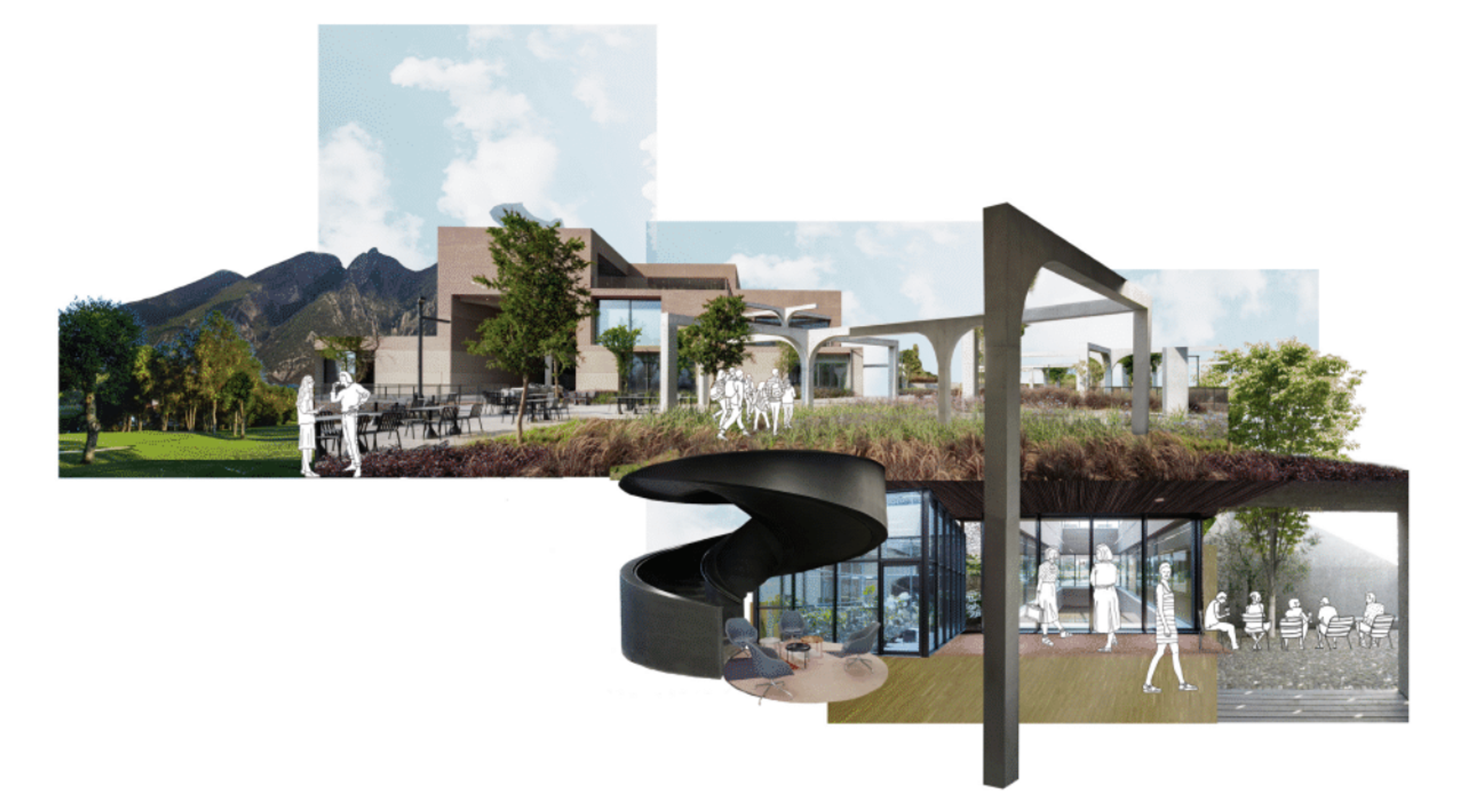
Artwork by TATIANA BILBAO ESTUDIO
PHOTOGRAPHY
Manuel Zúñiga
INTERVIEWS
ANA KARINA ZATARAIN
Beyond Noise 2026
PHOTOGRAPHY
Manuel Zúñiga
INTERVIEWS
ANA KARINA ZATARAIN
Beyond Noise 2026