Noise
ISSUE NO. 04: THE MODERN WOMAN
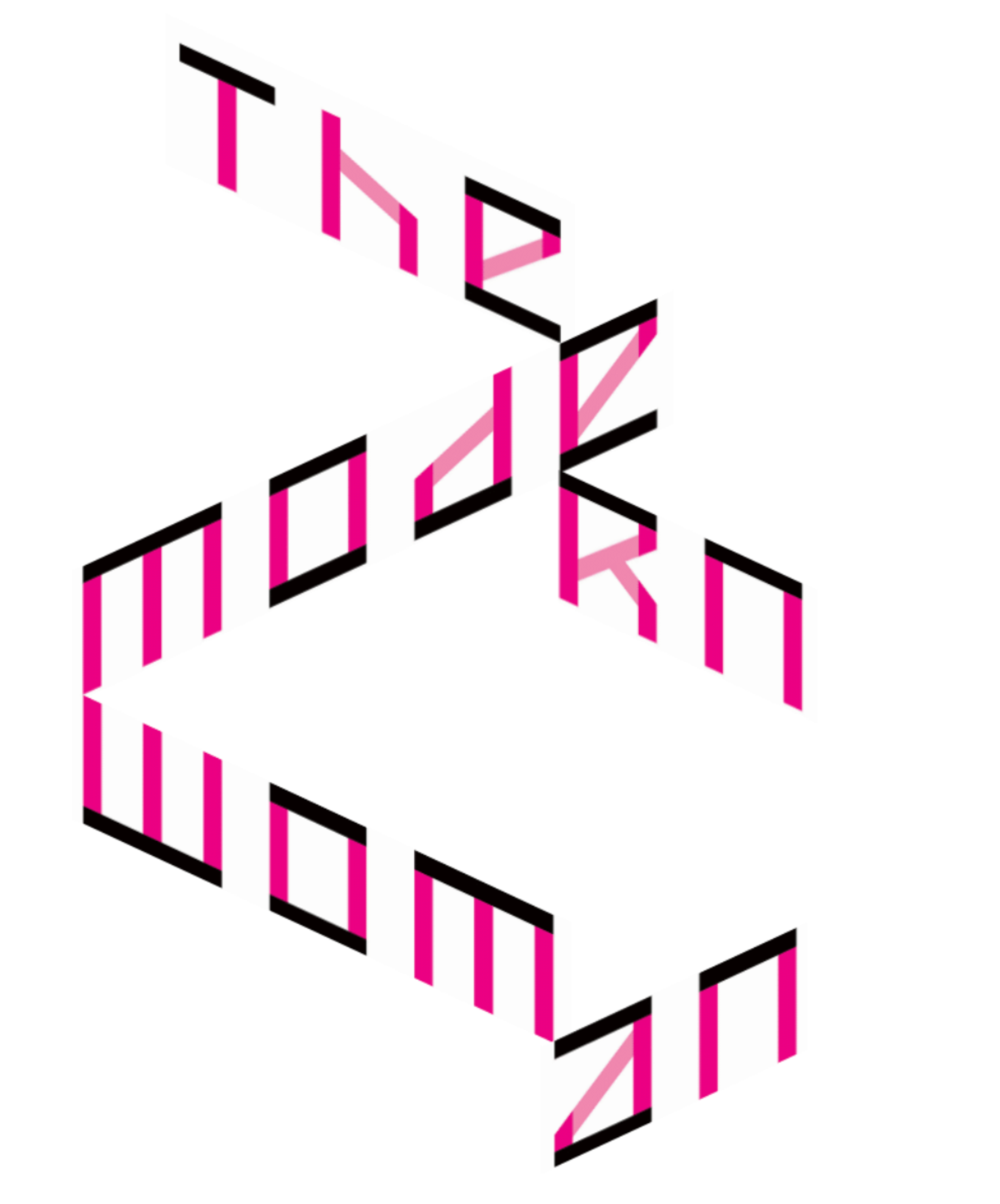
THE MODERN WOMAN
Words: 2425
Estimated reading time: 13M
Femininity today is a negotiation of identity, labor, survival, and relentless reinvention
By Gabriella Karefa-Johnson
To think of the modern woman as the pristine outcome of liberation is to flatten her multidimensionality as a consequence of accumulated resistance: choices made in defiance and constraints broken by necessity, rather than design. She is what emerges when inherited systems no longer serve, when prescribed narratives disintegrate. She is a condition more than a concept, and is shaped, above all else, by three essential forces: refusal, rebellion, and survival.
To understand the modern woman as refusal is to reject the fantasy of fixed identity that the culture so desperately tries to impose on her. It is to interrogate the long-standing impulse to trap her in language and name her in ways that feel comfortable for the dominant gaze: muse, mother, martyr, girlboss, tradwife. These monikers, recycled and repackaged for every new wave of consumer feminism, do little to describe her and everything to prescribe what she should be. They are aesthetic containment strategies posing as cultural recognition.
This reliance on archetype is not accidental; it is a function of what Black intersectional theorists like Sylvia Wynter and Hortense Spillers identified as the colonial project of typology: the need to define the margins to stabilize the center, and thus create order through narrative flattening. Womanhood, in this framework, is not an identity but a function: a role designed to support, seduce, produce, reproduce, or disappear. It is not surprising that women who deviate from these scripts are often accused of being “too much.” Too loud, too emotional, too sexual, too angry, too big, too Black, too queer, too complicated to market.
I am the daughter of a single woman.
This is not the totality of my identity, but it is foundational and essential to who I am. It’s an invisible scaffolding that holds much of my worldview in place, even when I pretend it doesn’t. The phrase “daughter of a single woman” contains, in just eight syllables, a dense architecture of history, pain, improvisation, resilience, and inheritance. Within it lives the shadow of patriarchy and its discontents; the implications of gendered social abandonment; the generational repetition of self-reliance cloaked in strength. It is a descriptor that evokes, simultaneously, absence and surplus: the absence of a partner in a world built to prioritize the nuclear family and its patriarch, and the surplus of expectation placed on the woman who must parent, provide, protect, and persist alone.
To be single is to have been left alone in a system that has long defined womanhood through attachment. It is a rejection, willing or otherwise, of the social fantasy of wholeness through male partnership. It is a condition marked by both marginalization and autonomy. To be a woman in this formulation is to carry the burden of a primordial otherness that predates language itself: to be cast as the origin of sin, the vessel of desire, the keeper of civility, the scapegoat for decline.
To be a daughter, then, is to live within the echo of all that, to inherit both the wound and the will to heal it. For me, this manifests manifold, but I often investigate it in terms of my relationship to success, which somehow feels hollow when it isn’t gained in abject defiance, easy to come by unless forged in the flames of constant rejection and resistance, and even null if furnished by any help at all. I consider how chained I am to the credo that guided my mother, and indeed all Black women: Fuck it, I’ll do it myself.
For my mother, adhering to this code of womanhood came from necessity rather than choice; it was the bitter fruit of tragedy on that day in 1992, when my father’s heart stopped. No choice. Just the inescapable fact: She was in it on her own.
His physical absence from my life followed me in my relationships with men, presenting in my intimacy issues. And in my relationship to myself, informing my assessment of my own worth for many years, aiding my doubt, for much of my youth, that I was beautiful and deserving of love. To be without the presence of a man growing up shaped so much of me. It was so on the surface.
And all the while, there was my mother’s love: colossal and wild in its power. Impossible in the frequency and magnitude of its expression, but somehow further from reach. A home built deep within me, from which I can extract boundless validation, adoration, and strength when necessary, without effort to access.
Isn’t this the condition of modern womanhood? To be needed, wanted, essential. To carry the worlds of you and everyone you love on your shoulders and fight like hell not to be buried under the weight. To continue to give anyway. To contend with society’s dismissal of the complexity of the work she has done to make a universe for herself and others, and defy its attempts to strip her of the radicality in refusing prescribed notions. To be over-indexed in provision and underrewarded for it.
This anecdote serves a purpose beyond confession. It is an epistemological framing. The modern woman, if she is to be understood at all, must be read less through aesthetics or ideology, and more through genealogy: through the complex lineages of care and survival that have produced her in the first place.
We often pretend that the modern woman arrived fully formed: a postfeminist invention, the result of suffrage, Supreme Court decisions, market integration, and the advent of a well-cut pair of trousers that can accommodate her hips. But, really, she is not a product of progress. She is a product of rupture. Our mothers and their mothers before them did not arrive at womanhood with clarity—they found it, they forced it.
And yet, the modern woman refuses that assignment. Not because she has figured out who she is instead, but because she recognizes the question itself as flawed. She resists the notion that she must render herself legible through performance, that her value is contingent on coherence or public readability. In fact, her rejection of being perceived is, in itself, a radical act—a rebellion against the material and ideological structures that necessitated those definitions in the first place.
We are living through a moment in which the visibility of women is both hyper-amplified and increasingly policed, especially for those marginalized by race, class, migration, housing status, queerness, and disability. We move through the world shadowed by expectations, some inherited, some of our own making. With Instagram, TikTok, X, Threads, Snapchat, Pinterest, and Substack, the promise of digital freedom has been calcified into algorithmic categorization. To define the modern woman today is to sift through a mess of micro-trends and bogus “-cores,” each more absurd than the last. What even is a Mob Wife?
These tropes, while sometimes offering genuine access points of belonging, often function as tools of discipline, mechanisms through which capital assigns value based on aesthetic adherence rather than lived experience. Social media didn’t deliver its promise of liberating womanhood; it has branded it.
What we once called “choice” now operates like choreography. To be feminine online is to hit your marks. To know your angles. To claim your confidence and whatever the moment demands, even if fraudulently. Womanhood is product, and even when it is vapid, it is political. The body: a billboard. And within this economy of spectacle, deviation is punished. The woman who cannot be streamlined, who disrupts the scroll rather than allowing it, is marked as dangerous.
Still, she rebels. Not always loudly, not always with perfect clarity, but with consistency. She rebels when she refuses to “have it all,” and flips Sheryl Sandberg the bird. She recognizes that the myth of balance is just a euphemism for unpaid labor. She rebels when she refuses the tidy resolutions of corporate feminism, recognizing that “empowerment” without structural redistribution is little more than aesthetic compensation. She rebels when she centers rest, when she demands softness, when she celebrates pleasure, when she declines overextension. And yes, she rebels when she builds alternative systems of care, community, and kinship that reject neoliberal values altogether.
It remains an impossible task to capture the essential identity of capital-W Woman, because we are intentionally moving away from existing in relief to a dominant other. We are refusing to foil.
To that end, the collective can and should remain indefinable and as nimble as necessary to move forward into a future that is truly free and untethered from expectation. But, individually, the modern woman is becoming defined by boundaries. This time, they are imposed by her for her own protection. She is developing a framework for progress that is personal. In the past, she might have been called selfish. But, really, she is rebellious.
Her rebellion isn’t an explosive gesture. It is the quiet unraveling of what once was, and the cultivation of space. It is the decision to choose herself, even when there is no social reward for doing so. It is ancestral work, carried forward. It is choosing to live as though freedom is a condition she deserves—whether or not the world agrees.
The modern woman is not fighting for inclusion in systems that have harmed her. She is building new ones. She is freeing children from cages. She is forging community and collectives, mutual aid networks, grassroots clinics, artist residencies, queer salons, radical bookstores, underground economies of tenderness and exchange. She is writing on Substack and making futures where none were forecast. She is interested less in the vapidity of visibility than she is in possibility. She believes that the revolution will not be aestheticized, but it might look beautiful anyway.
Perhaps the most enduring, and least romanticized, dimension of the modern woman is her relationship to survival. Unlike earlier feminist narratives that centered achievement, empowerment, or access, the modern woman doesn’t necessarily strive to win the game, because she has long recognized that the game is rigged. The house always wins. So, to ascend the corporate ladder is to lean against a collapsing structure. What is seductive about “leaning in,” if the table was never meant to seat her in the first place?
Survival, in this context, moves away from enduring violence with grace or taking it on the chin. Rolling with the punches and riding the wave. It is not about enduring violence at all. It is about learning how to keep going, not as an act of resilience, but as a tactic of refusal. To survive in a world that legislates her body, undermines her labor, criminalizes her identity, surveils her beauty, and extracts from her constantly is to protest daily. As a fat femme in fashion, I encounter the micro and macroaggressions of being unwanted nearly every day. It is mirrored to me in the industry within which I wrestle with my own complicity. What does it mean to search for validation and approval from a system that refuses to look directly at you? Is there agency in that? I do find pride in my declaration that I can hang—that I’m tough enough, and strong enough to remain undeterred from my goal. Is that a condition of metabolized abuse? What does it mean to show up and show out for your abusers?
All of these questions affirm one fact: Survival is rarely elegant. How can it be when it is so often fueled by rage, by grief, by ingenuity? Instead of instant triumph, it is a negotiation. The modern woman is not an icon of composure; she is often a mess. She is nothing to which one should aspire, nor is she a polemical counterpoint. Let’s stop reducing her to hashtags or headlines. She is neither the sanitized fantasy of liberal feminism nor the caricatured villain of reactionary backlash.
She is what remains when all the myths fall apart. And she does not need to be understood to be real. She is already here. And she is not going anywhere.
“The modern woman is not fighting for inclusion in systems that have harmed her. She is building new ones.”
ARTWORK
FABIEN BARON
Beyond Noise 2026
ARTWORK
FABIEN BARON
Beyond Noise 2026