Noise
ISSUE NO. 05: HOME IN THE HEART BY LAURENCE ELLIS



HOME IN THE HEART
Words: 977
Estimated reading time: 5M
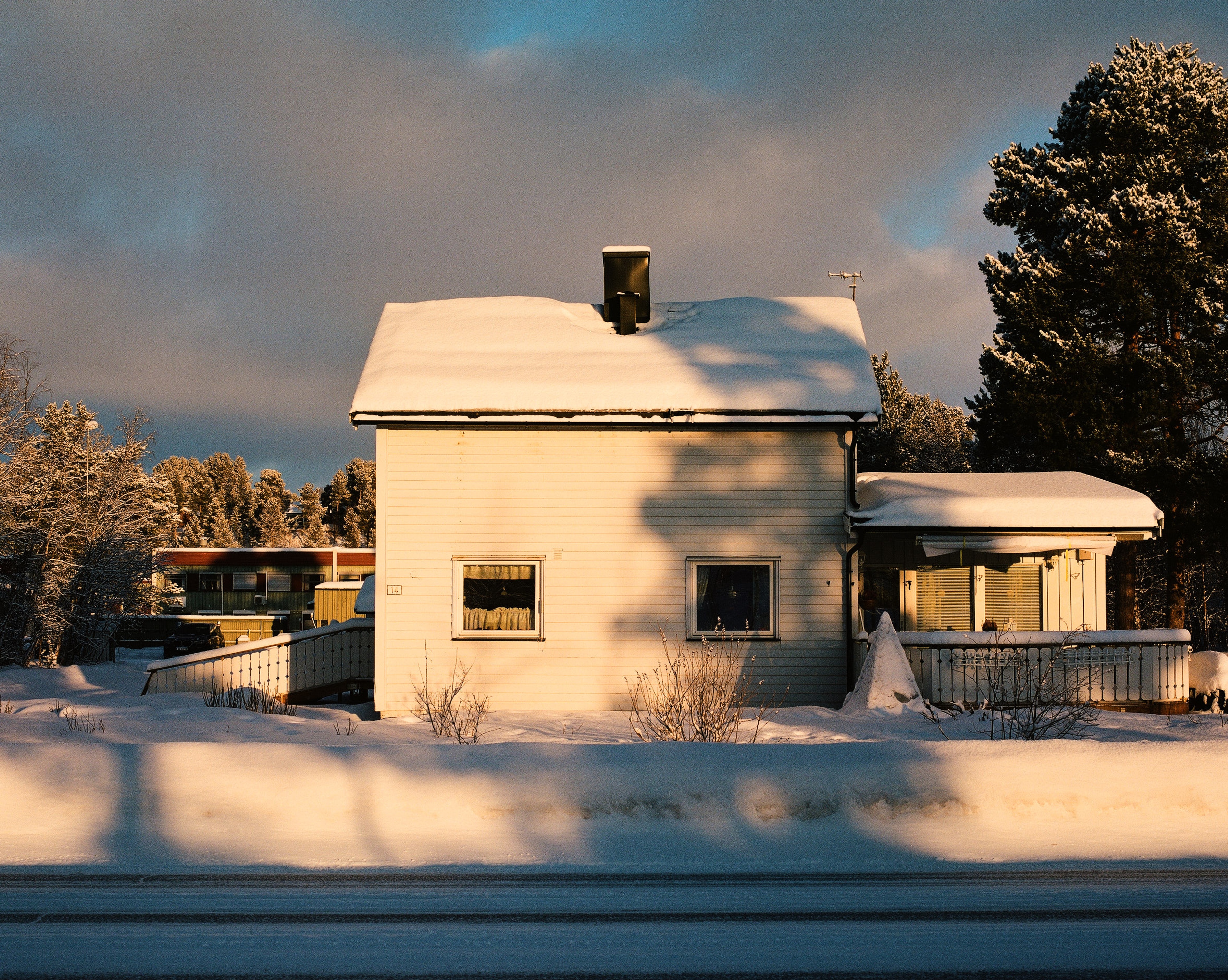
PHOTOGRAPHER Laurence Ellis TAKES to Northern Norway to document the struggle for Sámi rights through the less-often spotlit perspective of the Sámi woman.
By Mia Purcell
Like the vast rivers of the tundra, tradition is often regarded as something frozen in time—reduced to a mere relic to be observed, overlooked in its capacity to guide the future. Sámi culture embodies tradition as a living practice, moving with the seasons and through the individuals devoted to carrying it forward.
Indigenous to Sápmi—a region spanning Norway, Sweden, Finland, and the Kola Peninsula—the Sámi people have long lived in rhythm with the land. Reindeer herding is not simply their line of work; it’s a way of life, shaped and reshaped through ancestral knowledge and youthful receptors. Like their traveling herds, Sámi communities are nomadic. In general, they resist stagnation, evolving and adapting continually. In February, photographer Laurence Ellis set out to photograph the community in Northern Norway. A month later, he sat down with a pair of young Sámi he met along the way: filmmaker Mihkkal Hætta and reindeer herder Ánne Káre Nilsdatter Anti.
Herding is an inherited practice; it is something that cannot be learned in solitude. Historically, reindeer husbandry is passed down from father to son, leaving little room for women—the exclusion reflected in the term ‘husbandry’ itself. Ánne comes from nine generations of herders. Since she has four brothers, she was never expected to take over her family’s trade. But she always saw the practice as an opportunity for connection, more than an occupation. It was a way for her to be close to her father and grandfather—to protect her land and her culture. “After my father passed away during spring migration,” she reflects, “the silence sometimes reminds me of him. I remember him through that.”
Ánne recalls the philosophy of her grandfather: “The reindeer care little about anatomy. They choose their herder,” he used to say. She returns to these words as she explains the hypermasculine culture of herding. Impassiveness, stoicism, are demanded by the unforgiving Arctic landscape. Thick skin, literal and metaphorical, is developed from a young age. Feelings are rarely spoken aloud.
Says Ánne: ‘‘Traditionally, you have to hold everything inside of you. We are taught, especially in reindeer herder families, that you can’t express yourself. I feel it’s a good thing to have feminine energy in a macho community, because it brings balance—it’s not good to always be hard.”
Ánne believes that balance does not dilute tradition—it sustains it. Just as her reindeer follow ancient rivers, she is guided by the lessons of her elders. As her herd etches fresh tracks in snowfall, she forges a new path within Sámi culture: “Some people think less of me as a herder, because I’m a woman. But I have learned how to respond—how to prove people wrong. Why should someone’s gender stop them from doing what they love the most? From doing what feels like home?”
Mihkkal has witnessed the shift as more women gather herds. He recognizes the turning tide, accepting that it’s not a disruption of his culture, but its necessary progression. “I think that it’s a very good change,” he says, “because we need everyone in the community to help. If people are interested in working with reindeer, be that a man or a woman, it’s very important that the opportunity is there.”
For the Sámi at large, survival is contingent on the practice of herding. Mihkkal notes that Indigenous cultures rely upon their elders to ensure their future. He confesses that he sometimes feels suspended between the poles: “I’m very much stuck, thinking of the past and of the future simultaneously. I think of them as connected. You have to learn from what your ancestors have done, or from what has worked in the past, [to envision] what might work in future.”
Ánne, for instance, fondly speaks of a 79-year-old herder. He listens to the land, learning from it, letting it inform his next season. She describes his abilities as far exceeding modern meteorology, drawing conclusions from the height of linden flowers or the contents of a reindeer’s intestines. Mihkkal knows that this type of knowledge is not something to outgrow. It’s a tool for navigating for what lies ahead.
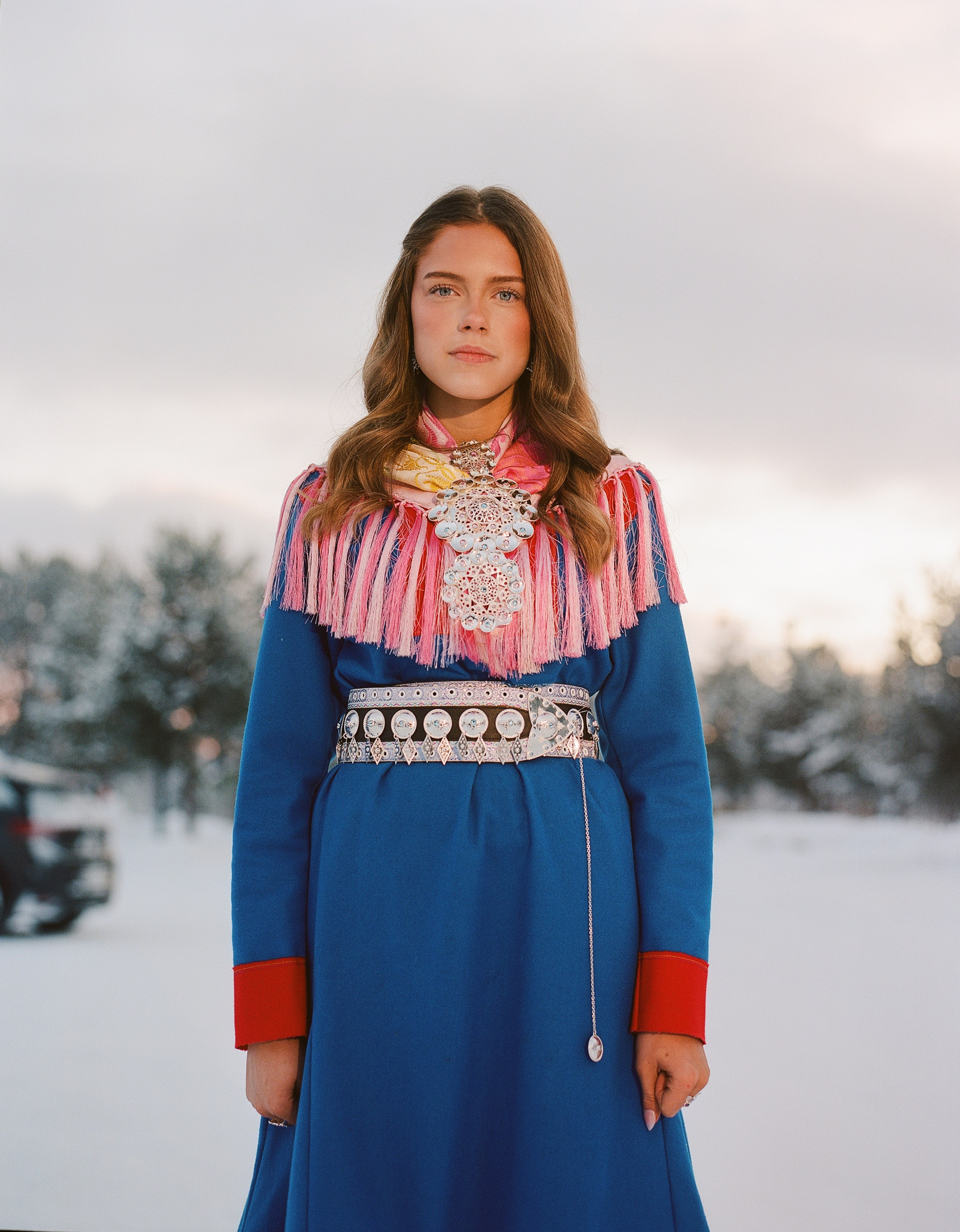
Sámi pride is clear in the way Mihkkal and Ánne speak of their traditional dress. For young Sámi, donning the gákti is an active celebration of the craft and the skill of their ancestors. Woven tapestries that document a family’s origins, each of these garments tells a story of land and of identity, carried forward, made to last.
The gákti’s bands, beads, and colors signify Sámi legacy. The most valued garments are often the oldest. They embody the community’s ingenuity, represent its way of life—not meant to sit behind a glass case, but to be worn out in the cold.

CREATIVE DIRECTOR + EIC
SARAH RICHARDSON
Photography
Laurence Ellis AT Gildon Ltd
Photo Assistants
Mia Purcell, Frederick Horn
Beyond Noise 2026
CREATIVE DIRECTOR + EIC
SARAH RICHARDSON
Photography
Laurence Ellis AT Gildon Ltd
Photo Assistants
Mia Purcell, Frederick Horn
Beyond Noise 2026