Noise
ISSUE NO. 04: THE GIRLS OF KOROGOCHO: LAURENCE ELLIS
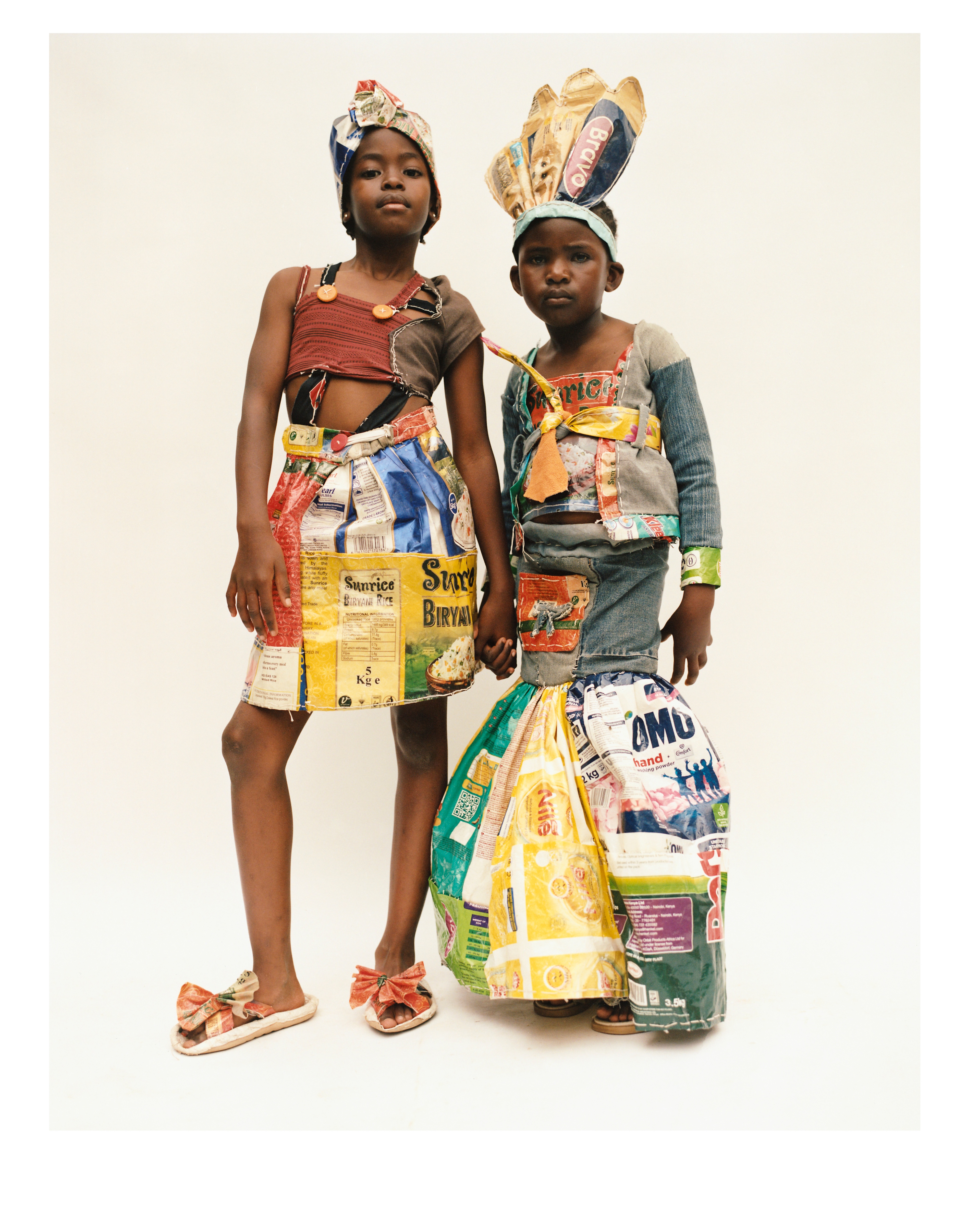
Maggie and Mamito
THE GIRLS OF KOROGOCHO
Words: 1231
Estimated reading time: 7M
At Warembo Wasanii studio in Nairobi, discarded scraps become vibrant designs and hope for the community
By Makena Onjerika
I know I am in Korogocho when stone buildings give way to low-lying corrugated iron sheet shanties built right at the curb. Young men sit idly in makeshift stalls, watching passersby with unseeing eyes. I drive slower, mindful of those pushing carts packed full of jerricans of water and the bodies spilling over from the narrow pavements. The smell of open sewers is prevalent. Vegetation is absent, and in its place, trash flourishes in garbage heaps. Above, electric poles as tall as pylons hold up large floodlights like eyes trained on a concentration camp. Google Maps announces that my destination will be on the right.
A happy woman in thick dreadlocks, a wide dress, and bracelets made of cut-up pens, USB heads, soda can tabs, bottle tops, and other upcycled bits lets me in through a lime green gate. This is Joan Otieno, Nairobi’s self-described “junk artist,” founder of Warembo Wasanii studio. I have watched some of her past interviews and know three things about her: She collects her materials from the nearby dumpsite, she considers herself a feminist, and she laughs easily and boisterously. We get into conversation in no time at all.
By my estimate, Warembo Wasanii sits on a little less than a quarter of an acre of land, and is built two stories high in flattened lubricant drums welded together. On the outside, the walls showcase large murals. Inside, the studio is a mostly open space paved in concrete slabs. One half is a playground slung with swings made out of recycled car tyres. The other holds a gallery, an art studio, a latrine, a tailoring room, and a safe room with a bed and an extra mattress for Joan’s older girls.
We sit in the gallery, our feet resting on a rag made of strips of jeans, and Joan tries to explain why she, an outsider to the Korogocho community, born and raised in Siaya in Western Kenya, has made it her mission to help the girls of Korogocho.
Joan is the daughter of a teacher and an artist who died while she was still young. She knew that she wanted to be an artist back in secondary school, but her accountant stepfather insisted that she abandon her art classes for commerce. Her mother, too, wanted her to focus on what would provide her with a steady income. Instead of attending university to study a degree that held no interest for her, Joan ran away from home and moved to the Coast of Kenya, where she hoped to be noticed and taken in by a European patron. She succeeded and even lived abroad for some time. When I ask why she came back to Kenya or left the Coast, she gets pensive and a bit tearful. I understand that she has seen her fair share of difficulties and will probe no further.
Joan moved to Nairobi before the pandemic with hardly anything to her name. Her use of waste as a medium, in fact, came about because she had no money to buy materials for her entry piece into a major art contest. Her submission caught the attention of a sponsor who was interested in her designs and promised to hold an exhibition for her if she built a collection of 10 more such dresses.
Several times during our conversation, Joan mentioned that she loves to talk to people. Her curiosity about the 10 girls who modeled her art pieces during the exhibition brought shocking discoveries. They were all, as young as 17 years old, mothers of multiple children. They were also unemployed, and their earnings from that day would be 500 shillings as compared to Joan’s 10,000 shillings. I would describe Joan as a person full of utu. This Swahili word means humanity, but also empathy—the kind of empathy that inspires a deep sense of responsibility. Joan felt that she had to do something for those girls.
I must confess at this juncture that I consider poverty in Kenya the result of grand corruption. Every month, I surrender about 50 percent of my income in taxes, yet public schools and hospitals remain grossly underfunded, and the Auditor General routinely announces that billions of Kenyan shillings have vanished from government coffers. I am frustrated and defeated by these realities. Joan, on the other hand, believes that any difference she can make is important, even if she won’t ever be able to intervene in all the lives of the thousands of girls in Korogocho. In fact, she ran the studio for its first four years out of her pocket, without any donor support.
Now mentoring 20 girls, Joan is dedicated to them, enough to be quite hesitant about attending any more residencies, as these would take her away for too long. Through candid talks and trust building, she nudges her girls away from teenage sexual activity, steering them clear of early pregnancy. Every Saturday, she brings them to the dumpsite to gather materials for their art and help them realize that they can help themselves. She finds opportunities for them to model the clothes they make, growing their confidence and helping them earn some money to free them a little from desperation. She feeds them fortified porridge once a day, cognizant of the long period between their lunch and when their fathers return home late in the night, with or without food for their families. In the tailoring room upstairs, their mothers spend time teaching each other how to sew and upcycle old clothing and waste fabric. Together, they rear chickens and ducks in a narrow space behind the studio and slaughter them during special occasions as a treat. Joan believes feeling good about oneself is critical, perhaps why she chose to call her studio Warembo Wasanii—the beautiful ones who are artists.
At the close of the interview, I asked to buy one of the paintings in the gallery: a depiction of Joan’s signature character, chama mama, on a 10-centimeter by 15-centimeter canvas. The amount I pay will not change much for this community, but maybe it is enough that the child who collaborated with Joan on this piece by affixing an aluminum cutout of the character’s blooming hair in neat stitches, will be exuberant when she receives her 200 shillings cut, and emboldened to create more.
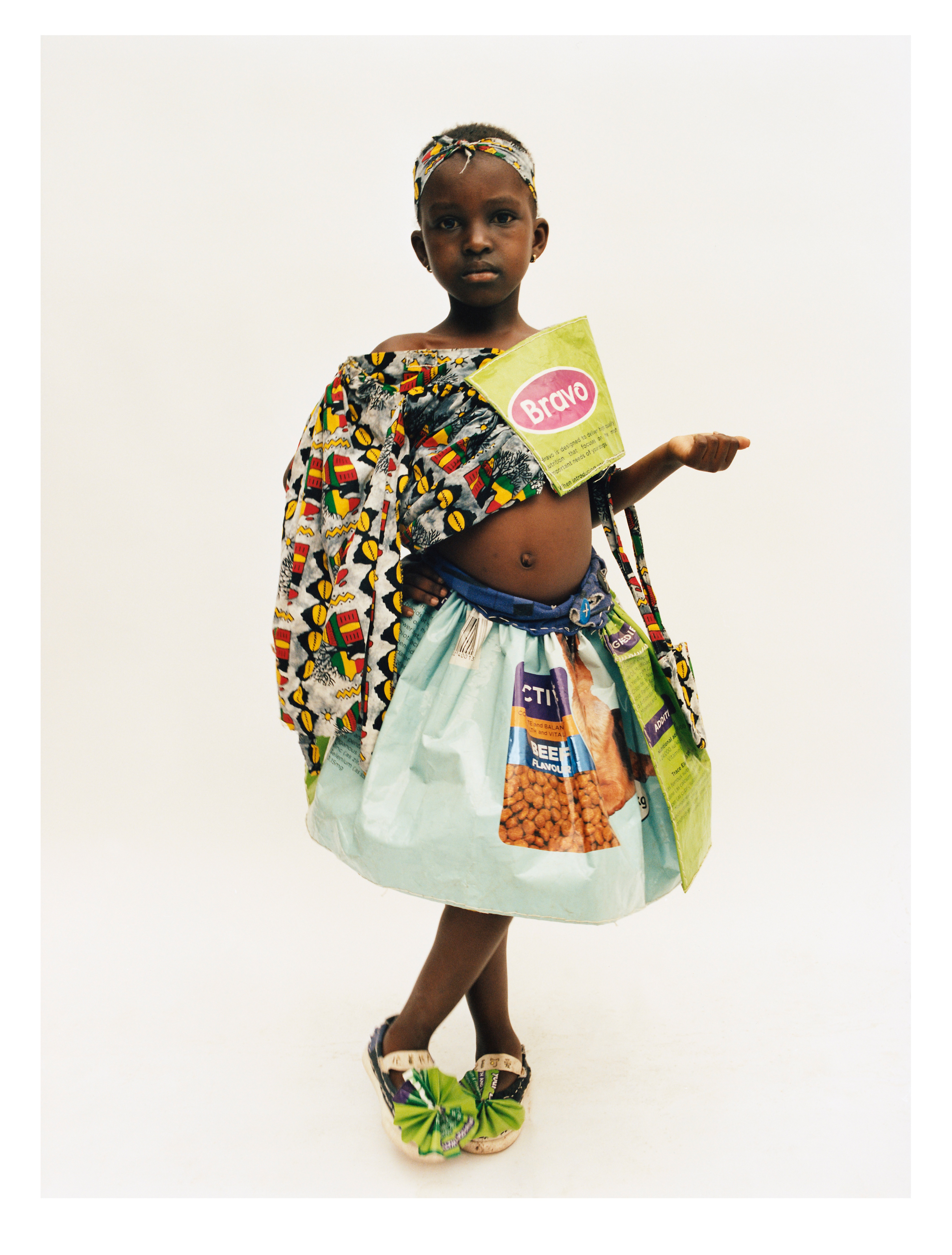
Tessy, wearing upcycled layer plastics made in Joan’s studio, Warembo Wasanii. It’s estimated thatNairobi produces between 2,000 to 2,500 tons of waste daily, 20 percent of which are plastic.
“Joan believes feeling good about oneself is critical, perhaps why she chose to call her studio Warembo Wasanii—the beautiful ones who are artists.”
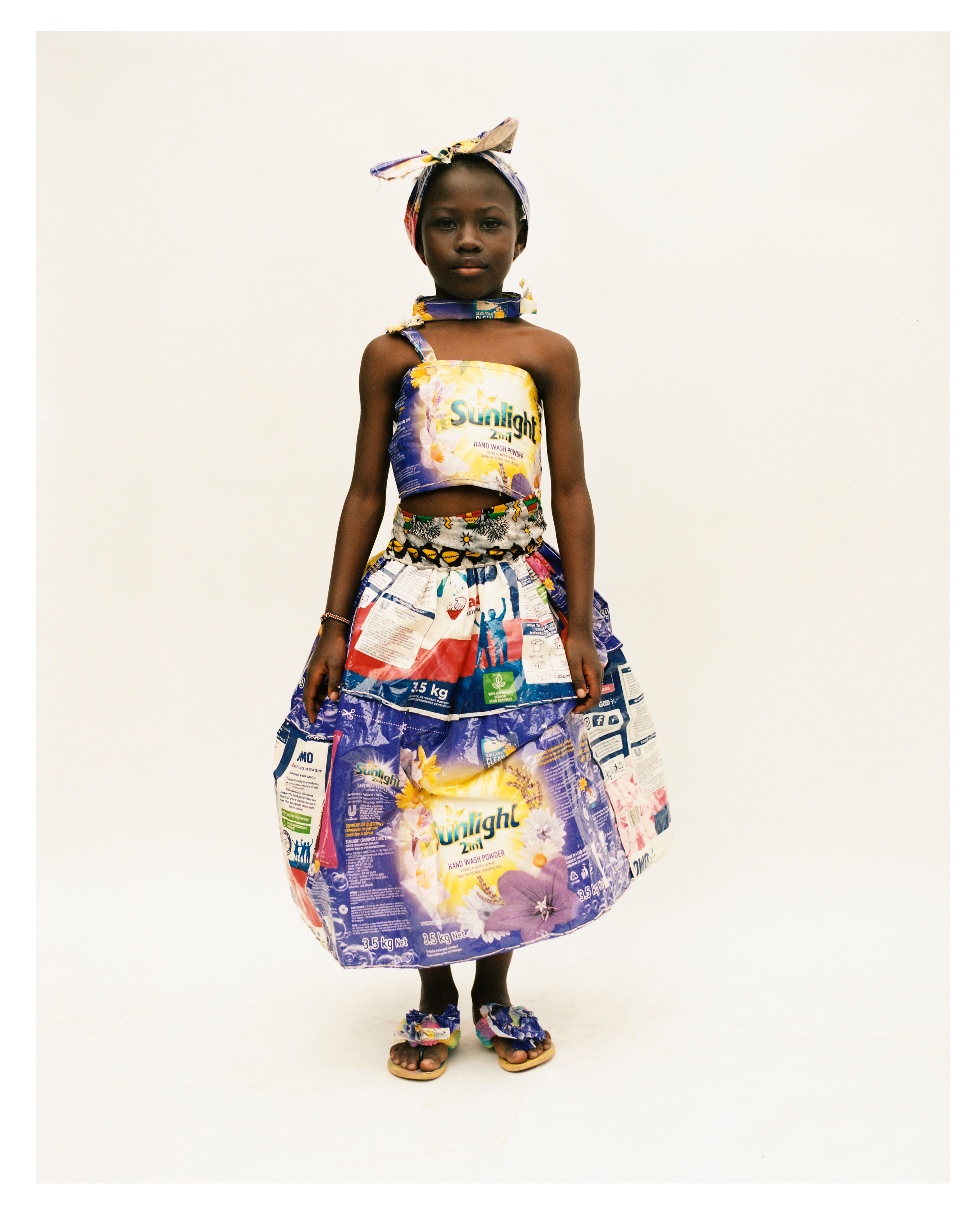
Tiffany. In providing children with a space to play, make a mess, and dress up, Joan inspires them in their creative development.
PHOTOGRAPHY
LAURENCE ELLIS
COLLABORATOR
Sophie Strobele
Production
Vonko, Omijah, Osito, AMELIA Kerr
FIELD RESEARCH
AMELIA KERR
Beyond Noise 2026
PHOTOGRAPHY
LAURENCE ELLIS
COLLABORATOR
Sophie Strobele
Production
Vonko, Omijah, Osito, AMELIA Kerr
FIELD RESEARCH
AMELIA KERR
Beyond Noise 2026