Noise
ISSUE NO. 05: MODERN CRITICISM
MODERN CRITICISM
Words: 2469
Estimated reading time: 14M
The question of who gets to be a fashion critic gets played out every few years, the same concerns clothed anew. But has it ever been less clear than now?
By Rosalind Jana
In a recent interview, the New Yorker critic Hilton Als described the moment he first encountered serious thinking about art. In a Robert Rauschenberg exhibition that he attended at MoMA as a child, he paid close attention to a museum docent who talked him through what he was seeing. What the docent offered was something beyond mere information: she gave a framework, a way in to understanding the work. Something cracked open. “Until you have language or history or context, you are in the dark about what something looks like,” Als said. “You have the feeling, but you don’t have any way of expressing it.” He described it as a life-defining entrance into the light of critical inquiry.
It is a precise and evocative description of what criticism is for. It is also, at this particular moment in fashion’s timeline, an incredibly useful one. The question of who gets to be a critic – who has standing to evaluate and pass judgement on what designers present on the catwalk or celebrities wear on the red carpet – gets played out every decade or so, the same concerns clothed anew. When Eugenia Sheppard began writing fashion as social commentary in the ‘50s, the old guard bristled. When the first fashion blogs appeared in the mid aughts, editors treated them with co-mingled suspicion and disdain. Each generation of gatekeepers has mistaken the redistribution of commentary for the end of criticism, and every generation rising behind them has laughed at the idea that the locks could be so easily rattled.
Now we find ourselves in an interesting place. That revilement of bloggers and their sleeker, commercially savvy children, influencers, has largely vanished – everyone begrudgingly accepting that they have their own role to play in the broader media landscape. But the question remains about who has the knowledge, the independence, and the capacity to do more than simply report first impressions. The answer now is that it could be anyone with a phone and a platform. This is not wrong, exactly. But while commentary has never been more abundant, the infrastructure for building serious critical knowledge has been quietly dismantled from multiple directions.
The most entrenched is the slow erosion of editorial independence across dedicated fashion media. The publications that have consistently run serious fashion writing share a common structural feature: a separation between editorial and commercial that is treated as inviolable. That separation has never truly existed inside the fashion press, but even there the enmeshment of critical and commercial interests has deepened so gradually that it now feels like the natural condition of the industry. This is not only true of the legacy glossies. Publications set up explicitly to be iconoclastic – to speak to youth culture or subculture on its own terms – find, eventually, that the same gravitational pull applies. Many broadsheet newspapers, meanwhile, have drifted toward treating fashion as entertainment: not captured by the industry, but simply incurious about it, covering collections with energy and surface engagement where more sustained inquiry once lived.
Into this gap has come a proliferation of independent voices. The democratization of commentary – TikTok, Instagram, Substack, the anonymous account with a green-tiled feed and a gift for breaking industry news ahead of the trades – offer genuine counterbalance. These voices often ask uncomfortable questions about fashion’s power structures, finding ways to recover the critical distance that institutional fashion media surrendered.
But recovering distance is not the same as recovering depth. And distance itself turns out to be more fragile than it looks. Gary Indiana, who wrote art criticism for the Village Voice in the mid ’80s put his finger on something that has only become truer since: “Mainly, criticism reflects the preoccupations of its era. But one thing criticism unavoidably does: it organizes the Cult of the Name. The Cult of the Name produces a hierarchy of importance.” In Indiana’s time, that hierarchy was reflected in stratospheric auction prices and the endless recycling of thirty proper names. In fashion, it manifests as front row politics, brand allegiances, and the circular economy of access, and it shapes independent voices as much as institutional ones. The young commentator building an audience on Instagram may have no advertiser to appease, but the invitation to the show, the seat at the table, the recognition of the industry they are critiquing: these remain the markers of having arrived. The metrics of legitimacy have not changed, only who is chasing them.
Kennedy Fraser, writing in the New Yorker in 1978, diagnosed the perceptual damage this produces with startling clarity. The fashionable mind, she argued, “is well equipped to pass on to us how things look or seem... but it is not equipped to tell us what things really are.” Fashionable perception, she continued, is incapable of fixed judgment – it is too busy tracking who else holds a given opinion, and when, and whether one arrived at it sufficiently early. It “is inclined to rove jumpily around the edges of its object, like the eyes of an ambitious guest roving beyond a conversation partner at a cocktail party full of powerful people.” The cocktail party has moved to Instagram, but the eyes are still roving. Fraser’s fashionable mind and Indiana’s Cult of the Name describe the same underlying condition: criticism captured by the very social and commercial forces it should be examining.
This matters especially in fashion because of the particular demands the form makes on its critics. A fashion collection exists simultaneously on several planes – aesthetic object, cultural document, commercial proposition – and the serious critic has to hold all of them in view at once. This is not required of the theater critic or the art reviewer in quite the same way: a painting in a public gallery does not also need to sell at a price point beyond its ticket for entry, a play is not a product. Fashion is. The critic who can only see the aesthetic misses half the picture; the one who can only see the commerce produces analysis, not criticism. And there is a further translation problem. Some people attend the show; most watch a livestream or scroll through photographs; many encounter a collection only as a product-image, filtered through other critics and editorial interpretations. The critic who has handled the clothes, felt the weight of a hem, understood what the room felt when a particular look came out, is doing something qualitatively different from someone reacting to JPEGs. That translation – rendering a three-dimensional, tactile, temporal experience into language for people who will only ever see it flat – requires genuine proximity, which in turn requires access. And access, in fashion, is never neutral.
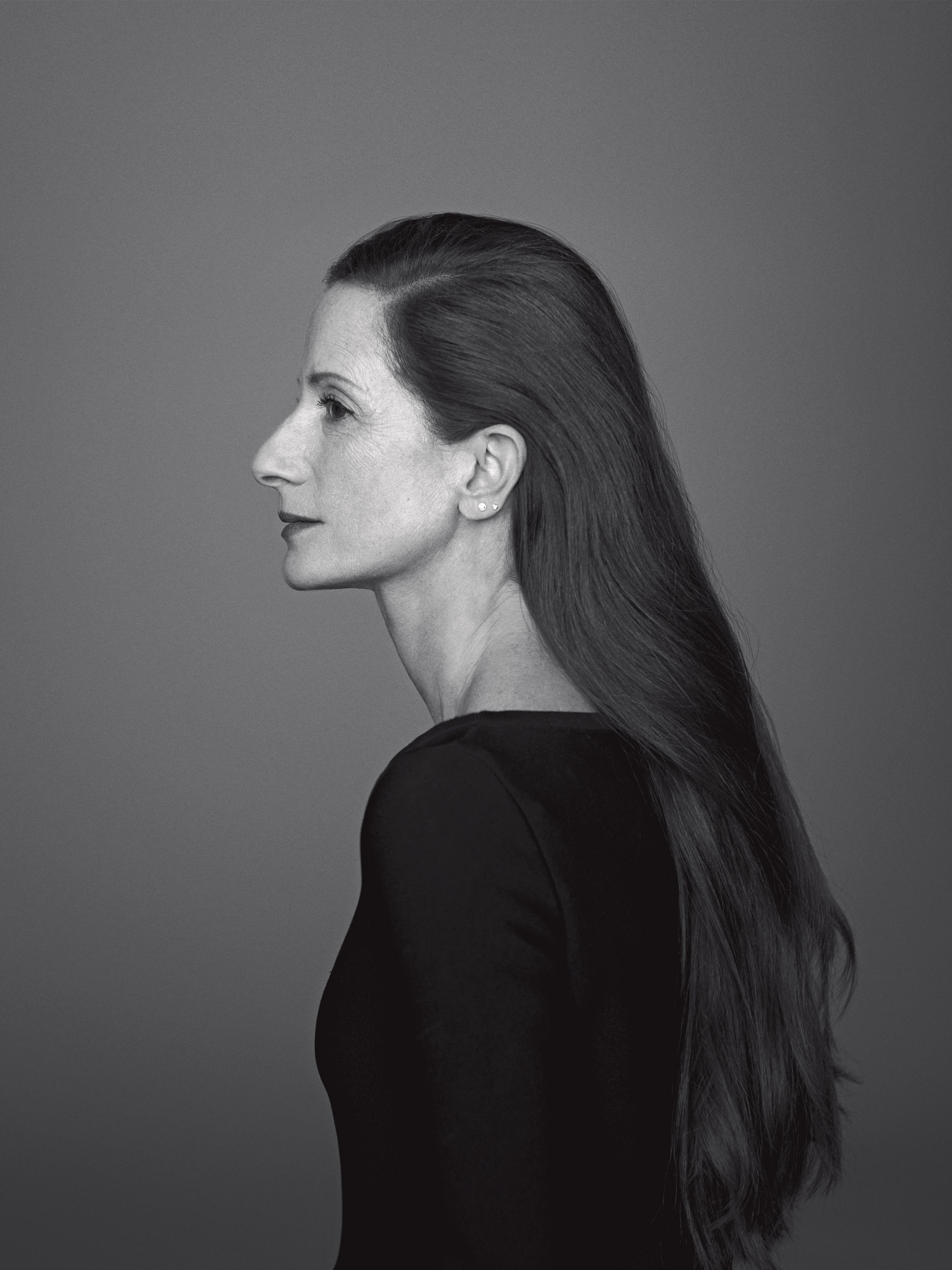
Cathy Horyn, who remains the most rigorous working fashion critic in the English language, built that proximity over decades, and the institutional protection she had at the New York Times is what allowed her to use it honestly. The publication never wavered – but the houses did. “No one ever asked me to change something, to be nicer,” she said later. “I always worked on the assumption that I could do whatever I wanted.”
That assumption is now a period detail. The pressures operating on fashion criticism are not only institutional. They are personal and granular. The individual editor trades independence for access. The history of fashion blogging makes the pattern almost too plain: what begins as adversarial commentary softens, reliably, as access and recognition accumulate.
This is the central difficulty, and there is no clean resolution to it. The serious fashion critic has to be genuinely affected by the thing they are writing about, has to adore and respect fashion enough to be moved when it succeeds and honest when it fails. Fraser’s ideal critic operates from “an isolated, dogged, unfashionable side of the mind – a sort of gawky mental provincialism,” which sounds like the opposite of adoration. But it is not. It is the circumstance under which honesty thrives. Too much distance and the writing becomes mere denunciation, clever but cold, disconnected from what makes fashion worth the attention of serious minds at all. Too little, and the critic becomes a well-dressed apologist, their genuine feeling for the work gradually indistinguishable from complicity with the industry producing it.
Als described his approach to criticism as a version of what Diane Arbus said about photography: “I work from awkwardness. I don’t like to arrange things. If I stand in front of something, instead of arranging it, I arrange myself.” The critic shapes themselves to receive the work rather than imposing a framework onto it. He called this critical love – not a supportive or validating thing, but a responsibility that runs in two directions: to the reader, who needs language and context to understand what they are seeing, and to the maker, who needs someone willing to say what is missing precisely because they have first understood what the work was trying to do. The critic is not a judge handing down verdicts but a necessary interlocutor – the person who takes the work seriously enough to tell the truth about it.
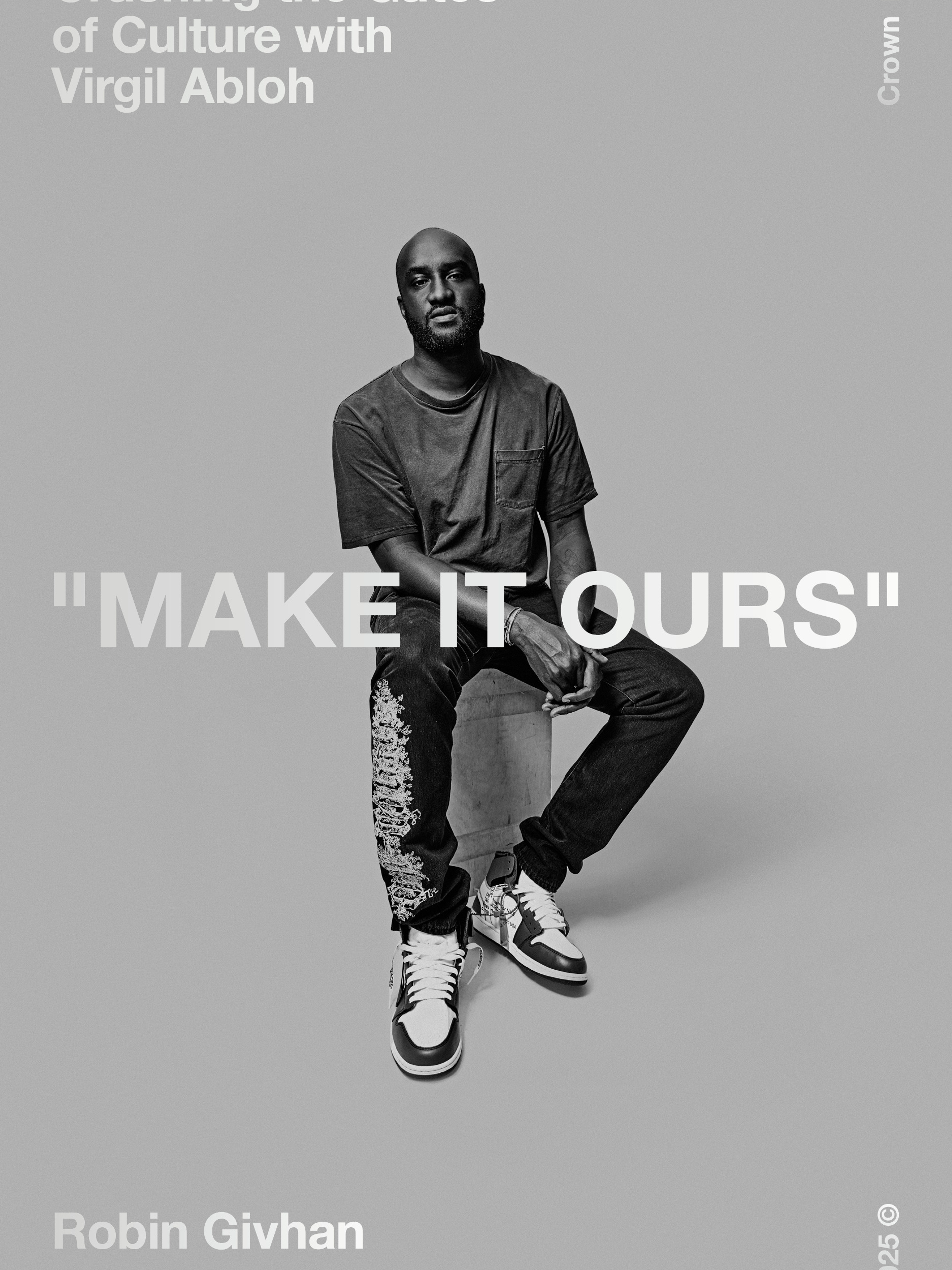
There is also the question of what happens when knowledge is missing altogether. Most online fashion commentary operates on the register of cultural currency rather than critical understanding. It can tell you that something is landing, if a look is being received as iconic or embarrassing, whether a designer is generating the right kind of conversation. This is not nothing. But it is presentist, with no depth of field. It cannot tell you why something matters historically, only whether it is working now. When Alexander Fury writes about construction, he brings decades of accumulated knowledge: what a bias cut signals in terms of tradition, what tailoring of a particular kind says about a house’s relationship to its own archive. When Robin Givhan reads a collection as political and social document, she is drawing on a framework that extends far beyond the runway. When Rachel Tashjian writes about fashion, she brings something else entirely: a willingness to dive headlong into the experience of it, to think seriously about what we wear and what we want and what that says about who we are. This knowledge cannot be assembled quickly, and the platforms that now dominate fashion commentary reward speed above everything else.
Robert Hughes observed that the art market had made the critic into “the piano player in a whorehouse” – present, skilled, but with no control over what happens upstairs. Fashion criticism has lived this arrangement more completely than any other critical form. The critics who have resisted it have done so by finding or maintaining structural independence from brand money. What the best of them share is something Fraser described, without quite meaning to describe it: the willingness to remain the awkward guest at the party, the person whose eyes stay fixed on the conversation rather than roving the room. It is not a comfortable position. It means forgoing certain invitations, certain relationships, certain forms of recognition that the industry offers as rewards for good behavior. But it is the only position from which the full picture becomes visible – the aesthetic and the commercial held simultaneously in view, the feeling and the knowledge working together, the proximity and the independence maintained in their necessary, difficult balance.
Als, asked what genuine critical response actually feels like, described it in physical terms. When something fails, you feel it as a kind of sour resin in the soul. When something is going to free you, “you feel it immediately in your heart and head. It’s a feeling almost of being shy, embarrassed, stripped a little bit bare.” This is not a verdict delivered from a safe distance but something intimate – the willingness to stay in the room with the work, and out of the embrace of the industry that produced it.
CREATIVE DIRECTOR + EIC
SARAH RICHARDSON
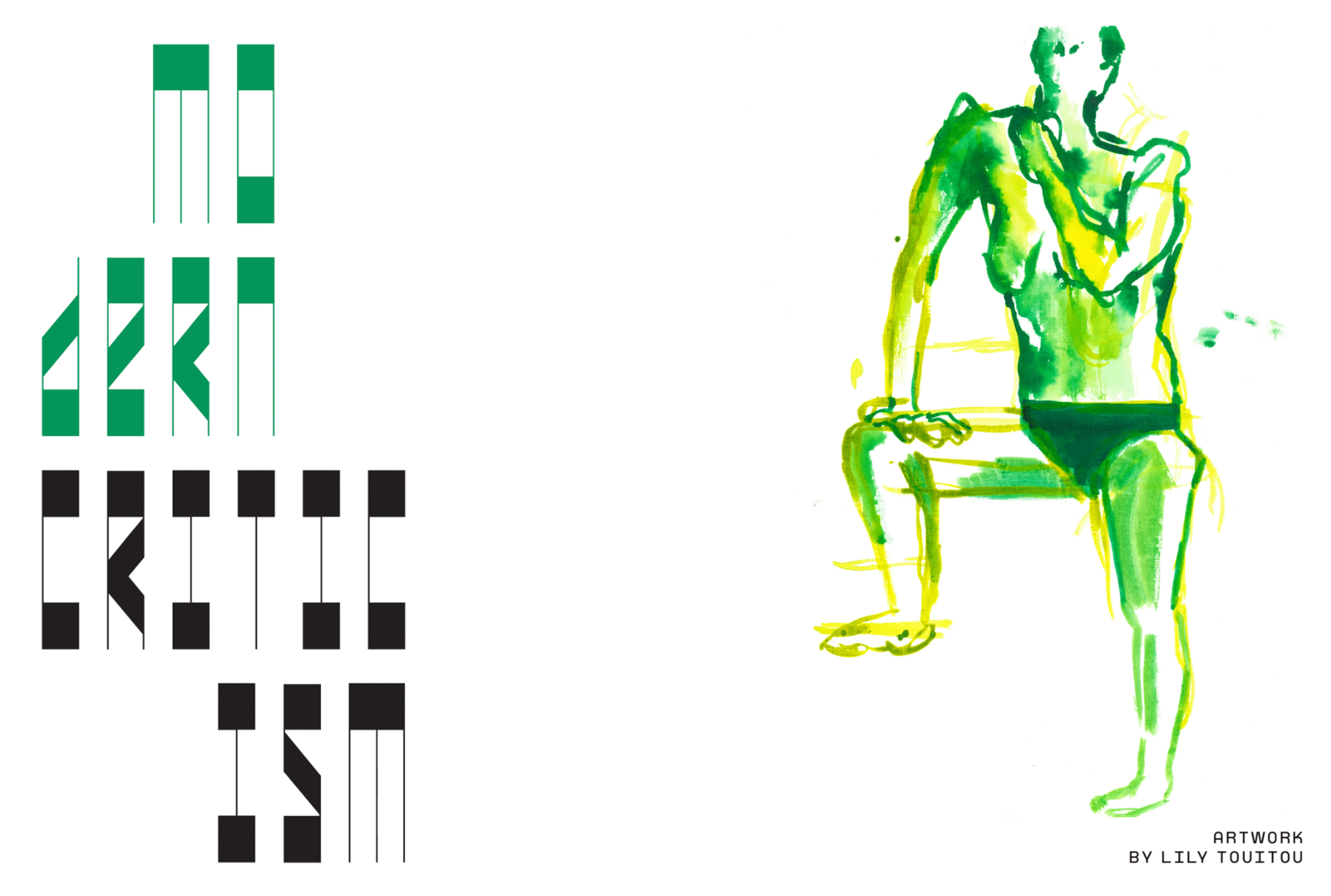
ARTWORK
LILY TOUITOU
Beyond Noise 2026
CREATIVE DIRECTOR + EIC
SARAH RICHARDSON
ARTWORK
LILY TOUITOU
Beyond Noise 2026