Noise
ISSUE NO. 05: FRANCESCA MURRI

FINDING THE FANTASY
Words: 1818
Estimated reading time: 10M
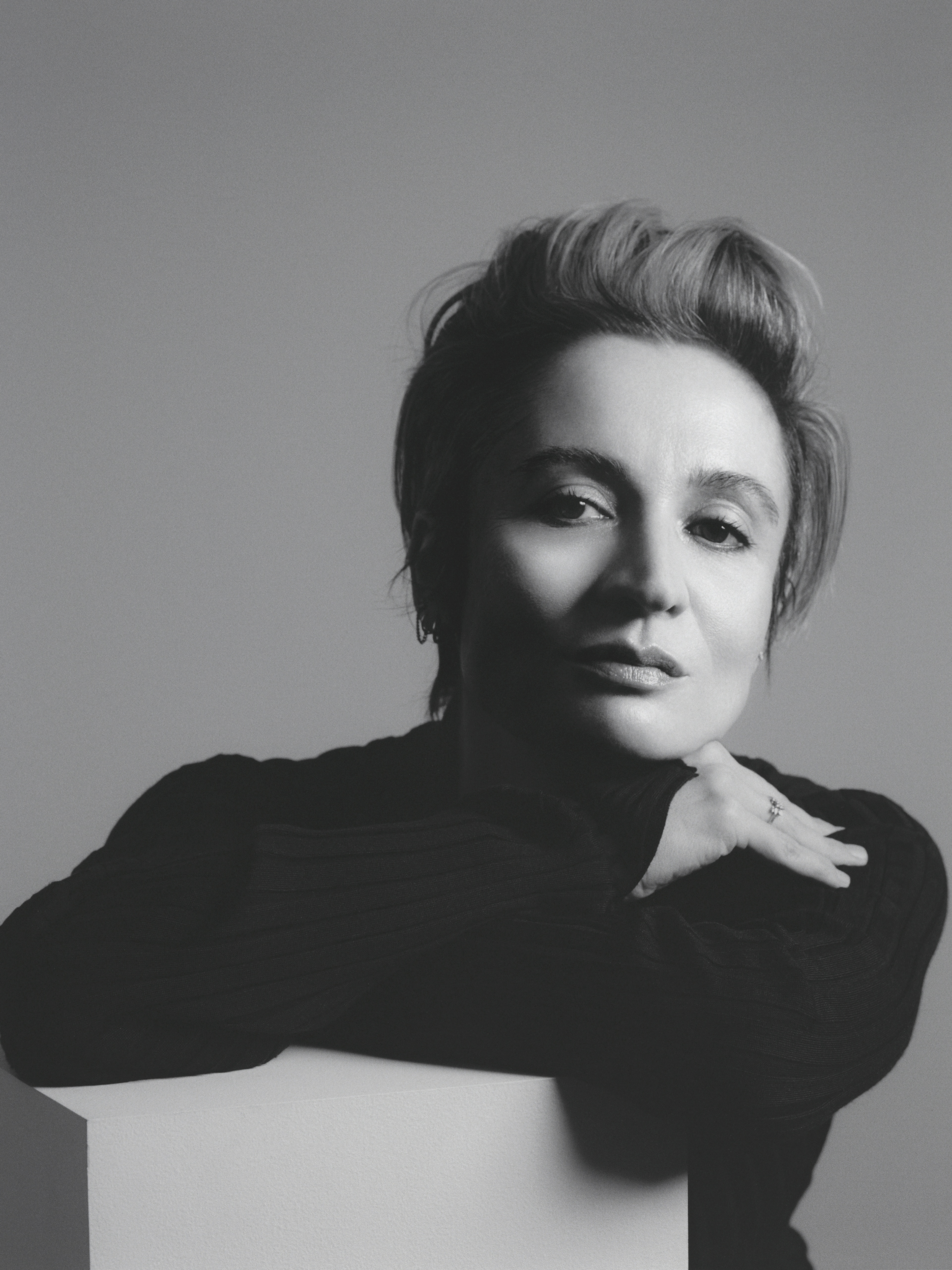
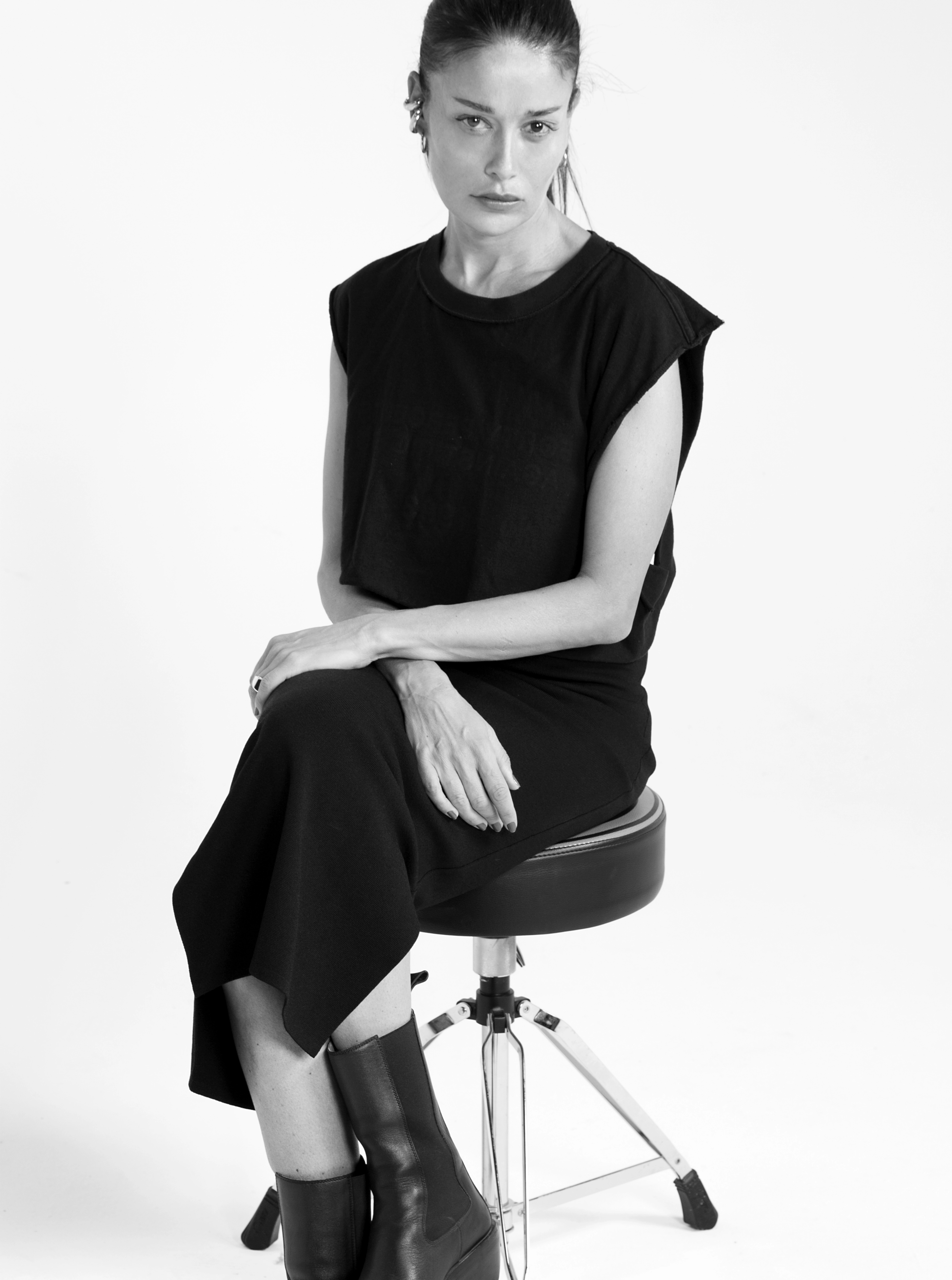
Writing a new chapter for the pop culture-shifting Milanese house, Fiorucci creative director Francesca Murri discusses legacy, ambition, and for women, by women design.
By Anna Cafolla
Fiorucci’s doe-eyed cherubs, with their star tiaras and pink-tipped wings, have loomed large in pop culture for decades. The Victoria-print, chubby-cheeked angels have illustrated the caps and T-shirts of cool kids from Stuttgart to Soho, the brand has dressed Madonna and Bianca Jagger, and, as testament to its enduring relevance, was namechecked by Sister Sledge and Charli xcx, four decades apart.
Long before all of this though, there was a store on Milan’s Galleria Passarella, opened in May 1967, helmed by the maverick designer and entrepreneur Elio Fiorucci. In the years that followed, Fiorucci became the dresser of the discos, a deft innovator in stretch denim, and a drumbeat for youth culture around the world. Its first New York store on East 59th Street became a daytime Studio 54. More than a fashion brand, it evolved into a global cultural vocabulary. Before fashion became pop culture, or the lexicon of lifestyle was folded neatly into selling clothes, before Colette and Dover Street Market: there was Fiorucci. And for this issue of Beyond Noise, Milly Alcock appears in the new Fiorucci, one which echoes the energy of Debbie Harry: a reminder of the house’s enduring dialogue across music, nightlife, and fashion.
Almost 60 years on from its inception, Francesca Murri—who took up the mantle of creative director in 2023—is shaping a new vision for the Italian house. Her Fiorucci is something of a return to the brand’s Milanese roots; placing craft at the forefront while leading with a freshly feminine perspective. Don’t worry, though: the angels remain, reworked and reimagined.
“When I was a child in the ’90s, it was all about the T-shirts,” says Murri, speaking from her offices in Milan. But studying the archive revealed a far more complex cultural story: there were silhouettes—and skirt lengths—inspired by London’s swinging Carnaby street style, as well as Afghan coats and Brazilian thong bikinis picked up from Elio’s travels that would become brand signatures. He captured subcultural styles across the world and distilled them into something exhilaratingly relevant. “Fiorucci, to me, was one of the first real lifestyle brands,” says Francesca. “It had a message. It had a community. I think Elio was probably the first influencer.”
Born in Rome, Francesca approaches design with a storyteller’s instinct, shaped by her studies in theater, cinema, and costume history. Her creative lexicon has been honed through senior design roles at Versace, Armani, Gucci, and Givenchy. The shared characteristics of Alessandro, Donatella, Riccardo, et. al? “It is being strong and focused on your ideas,” Murri says. “I started in ready-to-wear and moved into accessories at a time when there was such an accessories boom. I learned that every part of the system within a house carries responsibility. Nothing is small. But I came away with a desire to create something not just within a category, but a 360-degree brand.”
She joined Fiorucci at a pivotal moment under new ownership, tasked with writing the house’s next chapter in a way that honors its legacy while pushing it forward. “It’s not a traditional fashion company,” Francesca reflects. “It’s something more. It’s an approach to life.”
Still, Francesca takes a position that feels particularly resonant for a brand so often mythologized. “I never wanted to recreate something from a sense of nostalgia,” she says. “My starting point was more to consider a sense of fashion similar to Fiorucci, rather than being product-specific. It’s about connecting to the brand DNA.”
“It felt like both a great opportunity and a huge responsibility,” she adds. “The brand was so famous. It traced society’s evolution—not just fashion. While Elio did amazing work, through the ’90s it became more about reflecting other brands and lifestyles. Nothing was really new anymore, to a point.” Fiorucci, under Elio, was heavily referential, while Francesca hopes to expand the vision for a new generation of curious fashion lovers.
Where Francesca finds harmony with Fiorucci’s longstanding design codes is in a shared delight in dichotomies: sexy and romantic, glamour and grit, the cherubic and the devil-may-care. Her collections have incorporated Fiorucci hallmarks, like the more subversive use of denim and daring prints, but refined: soft, sensual knitwear is punctuated by lip-printed peplums, and sharp tailoring appears in Dalmatian prints, cut through with flashes of latex. Humor is harnessed like a technique, like where hidden hearts or a tailored men’s coat that features an all-over toy print lining. Having amassed her own impressive personal bag collection, the house’s reworked, kitschy lips bag is a favorite. And for Francesca, this is exactly the right time to propel the house through a stylistic renewal, while staking its place once again at the intersection of luxury and pop culture.
“Outside the door, it doesn’t say my name,” Francesca says, candidly. “I have to find a common vision—and what I found with Fiorucci was the idea of contrast. You have the showy, and you have the angelic—two very strong characteristics. The Fiorucci woman can be sexy, but also very wholesome. I connect to that. With respect, Elio was a man, not a couturier either, and I’m a woman and a designer. I wanted to translate the brand in a more feminine way.”
It’s not lost on Murri that her tenure crests at a moment when senior design roles remain largely male-dominated, even as Italian houses lead the luxury conversation. “Honestly, I think a woman knows what women want,” she says. She is inspired by women who “started revolutions” with their clothes, citing the sensual, powerful works of Elsa Schiaparelli and Phoebe Philo. “For me, the feminine is always the first and most important element when building a collection.” Her approach to femininity is subtle rather than theatrical. “It’s not vulgar,” she explains. “It’s romantic. It’s about bringing confidence that fits the body. Writing this new chapter for Fiorucci, I’ve been exploring playing with its two different poles of womanhood.”
The studio operates on an intimate scale, with a three-person design team. “In big companies, you play a small part in a huge system,” she says. “Here everything is bigger, more exciting—but also more challenging. We’ve been building step by step.”
Reconnecting with Fiorucci’s core sense of community remains a priority (after all, its NYC store is where Andy Warhol and Keith Haring chose to hang out, and where kids would gather and grab their outfits for the night’s discos), while also tapping new generations of customers through presentations and events in London and more international cities. Another enduring key element, still, is drawing from wider culture. “Fashion is a form of art, like cinema or theater,” says Francesca. “I always consider myself studying.” Film is her most potent reference point—she speaks about the surreal worlds of David Lynch, the dreamlike storytelling of Federico Fellini, and the theatrical imagination of Tim Burton. “That’s something I want to translate into a fashion show. It’s not just about showing beautiful clothes but creating something bigger.”
That philosophy extends into Fiorucci’s contemporary collaborations; Francesca describes the brand’s creative network as a kind of “circo Fiorucci”: a community of artists, performers and cultural figures who bring different perspectives into the house. This includes artist Taiba Akhuetie who made garments out of hair for spring/summer 2025, working with Milanese party-starters Gatto Verde, and exhibitions during Salone Del Mobile. “These collaborations allow us to see the brand through other creatives’ eyes,” she explains.
Looking forward, Francesca envisions Fiorucci as both deeply Italian and globally resonant. “It will always be a Milanese brand,” she says. “But it’s also naturally international.” And with that disruptive Fiorucci spirit in mind, the brand continues to look beyond the traditional formats of fashion. “The fashion show is no longer the only way people consume fashion. The fashion show, for me, has become a bit of a boring way to represent a collection. It’s why I prefer a presentation to be more like an exhibition. Still, I think we will find even more modern and different ways to tell the story of fashion. It’s within our future.”
What drives her is the idea of a Fiorucci woman and man who, she says, are assured in their curiosity and sense of play. “I think about someone with a strong personality, very confident in themselves, and who likes to play with and say something with their clothes. It’s not about following fashion, but finding your personal vision. I think women and men in Fiorucci also don’t take everything so seriously.”
“Our world is hard and heavy,” reflects Francesca, “and dreaming through fashion, finding the fantasy, is important.”
“Our world is hard and heavy, and dreaming through fashion, finding the fantasy, is important.”
CREATIVE DIRECTOR + EIC
SARAH RICHARDSON
PHOTOGRAPHER
MAURO MAGLIONE
Beyond Noise 2026
CREATIVE DIRECTOR + EIC
SARAH RICHARDSON
PHOTOGRAPHER
MAURO MAGLIONE
Beyond Noise 2026