Noise
ISSUE NO. 04: CHARLOTTE RAMPLING
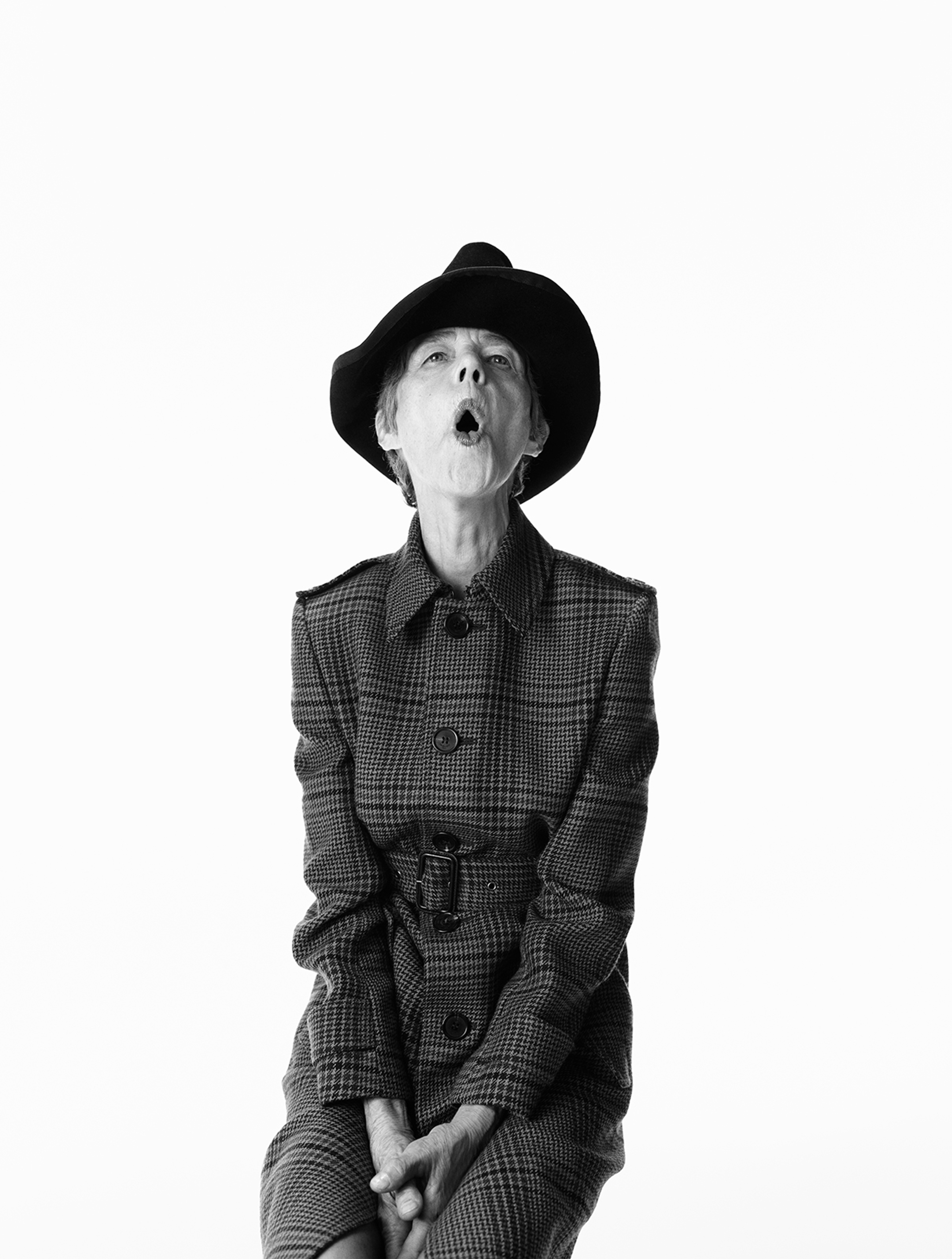
Charlotte wears coat by SAINT LAURENT by ANTHONY VACCARELLO. Vintage YVES SAINT LAURENT hat from Saint Laurent Archive.

HOLDING THE GAZE
Words: 1389
Estimated reading time: 8M
Charlotte Rampling is one of cinema’s most alluring figures, toeing the line between restraint and vulnerability.
By Anna Smith
Few performers inspire the same mixture of fascination and unease as Charlotte Rampling. For decades, critics and audiences alike have reached for words to pin her down, but none seem to suffice. Commanding. Mysterious. Aloof. These are the qualities often invoked, yet they never quite capture her full effect. For more than half a century, Charlotte has remained one of cinema’s most enigmatic figures—an actress who doesn’t perform so much as inhabit, merging her life with the worlds of her characters. She courts controversy in an increasingly cautious world. And at 79, she is as uncompromising as ever, winning new generations of fans with parts ranging from Dune to Dexter.
The child of a painter mother and an army officer father, Charlotte first took to the stage at 14, singing with her older sister, Sarah, at the parish hall in Stanmore. “Sarah and I were in raincoats and fishnets,” she recalls in her memoir Who I Am. “We wore berets. We sang Luis Mariano, our version. It was so French…” That night, Charlotte discovered she enjoyed being looked at—relishing the impact her gaze had on her audience. That became the foundation of her art: “I started to see. To understand a certain way of looking at people,” she writes. “[It holds] them, challenges them. The look that disappears when you leave the stage.” Ah, that look from those incredible hooded eyes, full of determination… Their power was there from a young age, and it has only grown.
As a teen, Charlotte’s beauty and singular style won her gigs as a model, but it was while working as a secretary that she was discovered by a casting agent. “They were looking for lots of girls to be the fantasies of the main character, Michael Crawford,” she recalled to Variety. Naturally, Charlotte stood out, but it was exaggerating her experience in water skiing that secured her a small part in The Knack… and How to Get It (1965). The 1966 comedy Georgy Girl, however, introduced Charlotte to the world. Her character, Meredith, was an outgoing hedonist, the foil to her relatively sensible flatmate. She developed a reputation for playing bad girls, like the gunslinger who knocked out John Steed in an episode of The Avengers. But her oeuvre opened up, taking a darker turn, after the tragic death of her sister in 1967. Charlotte was indelibly marked, and her mother was inconsolable. “I had lost the two women of my life,” she says in Hypnotic Charm, a documentary in which she reads fragments from her diaries.
The traumatic event would go on to inform the actress’s choices, as she sought out increasingly complex roles. She speaks of becoming “a stranger among strangers,” channeling these deep emotions while filming The Damned: “I became almost super powerful, because I had to continue… With this role, I could expose my extreme vulnerability.” Two months after having her son, Barnaby, with then-husband Bryan Southcombe, Charlotte made a bold choice, accepting a role in her most provocative film yet: Liliana Cavani’s The Night Porter (1974). Controversially, it centered on the sadomasochistic relationship between a former Nazi concentration camp officer and one of his prisoners. Playing Lucia, the prisoner, at different stages of her life, Charlotte injected the character with alarming intensity as intrinsic to her own traumatized state of mind as it was to the subject matter. And yet, while posters featured her in a sexually vulnerable pose, Charlotte was utterly in control as a performer: a woman who refused to be objectified, wielding her own complex power. “A need to devour, punish, humiliate, or surrender seems to be a primal part of human nature, and it’s certainly a big part of sex,” she said to the New Yorker.
Even when her roles aren’t overtly sexual, there is something seductive about Charlotte’s blend of startling self-assurance and emotional fragility. You can see it with QC in the series Broadchurch, and Miss Havisham in 1999’s Great Expectations. It’s a quality that has attracted many great filmmakers: “Directors want me to be really stern sometimes,” Charlotte told The Independent in 2005. “They like that quality in a woman. They find it compelling.” John Boorman’s bizarre sci-fi Zardoz (1974) hinged on Consuella’s sexual magnetism. Dick Richards cast Charlotte as the femme fatale opposite Robert Mitchum in the noir Farewell, My Lovely (1975). She even played a woman in love with a chimpanzee in Max My Love (1986).
Secrets seem to run throughout her films, whether it’s tender dramas or spy thrillers such as Red Sparrow. And secrets have been a big part of her life: Her father insisted that the nature of her sister’s death—suicide—remained a secret from her mother. He also concealed the fact that he was an Olympic gold medallist, featured in the 1938 German propaganda film Olympia. In Who I Am, she writes, “For the Ramplings, the heart is a safe. Kept by generations, the family secret becomes a legend.”
A flirtation with Hollywood by way of the film Orca confirmed Charlotte’s suspicions that she preferred to work in Europe. Fluent in French, she opted to live in her beloved Paris, starring in films like Tristesse et beauté (1985). After taking a hiatus to treat a bout of depression, she worked extensively with François Ozon, turning in remarkable performances in Under the Sand (2000), Swimming Pool (2003), and Young & Beautiful (2013). In an interview with Numéro, she credits François as enabling her to “age gracefully, to mature in a glamorous way… I was made to feel beautiful as an ageing woman coming to terms with how to be still part of the world—the essential world, the sexual world—without actually having to make a big deal out of it.”
Critic Guy Lodge told me that Charlotte’s magnetism has only intensified with age: “Charlotte Rampling hasn’t just been content to let herself visibly age on screen, but has gained power and presence from ageing. In intimate films like 45 Years and Hannah, she gets to play a myriad of complex emotions, never going for easy reactions or counting on audience sympathy.” The film resulted in an Oscar nomination for Charlotte; her expressive, haunted face conveying the troubling journey of her character, who discovers secrets about her husband as they approach their wedding anniversary.
Cinema would not be the same without the contributions of Charlotte Rampling. She’s inspired writers and directors, spanned multiple genres, pushed boundaries, and elevated projects with her fearless performances. Her next film, Jim Jarmusch’s Father Mother Sister Brother, set to release December 2025, won the Golden Lion at the Venice Film Festival—a full 60 years after she made her acting debut. Across an incredible career and lifetime, she’s made audiences laugh, cry, think, squirm... and we are all the better for it.
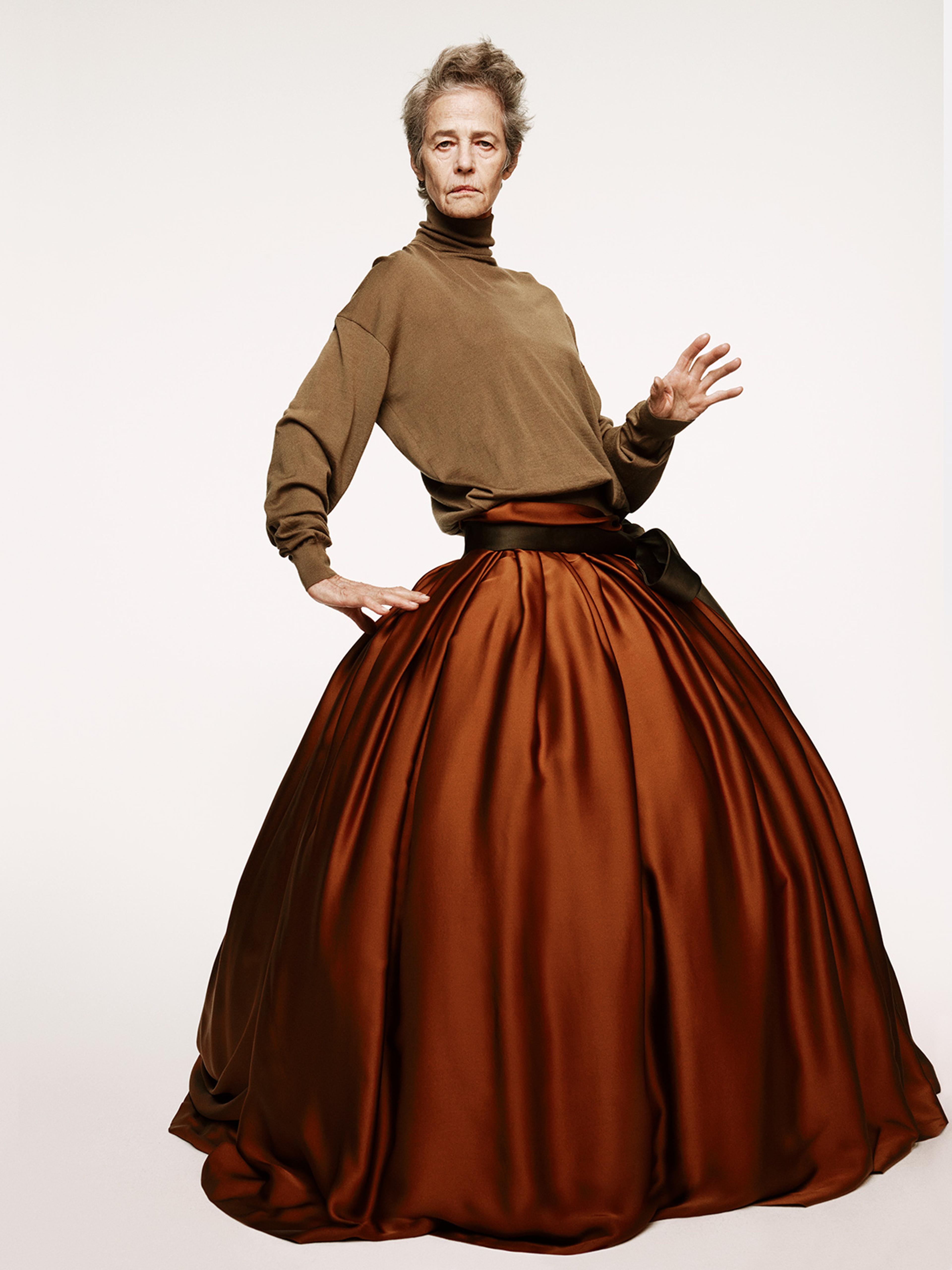
Charlotte wears top, dress and belt by SAINT LAURENT BY ANTHONY VACCARELLO.
“I started to see. To understand a certain way of looking at people,” she writes. “[It holds] them, challenges them. The look that disappears when you leave the stage.”
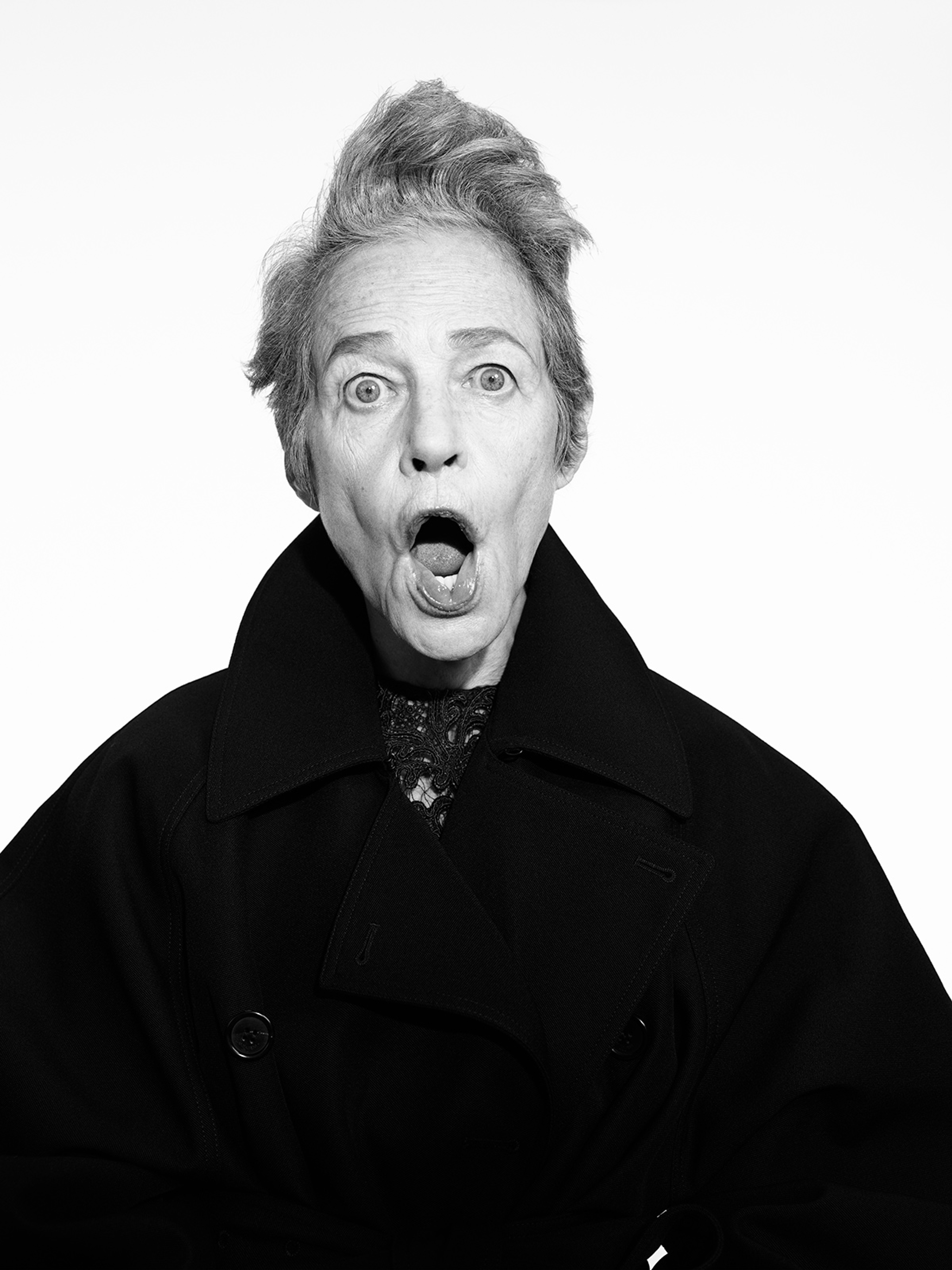
Charlotte wears dress, coat and gloves by SAINT LAURENT by ANTHONY VACCARELLO.
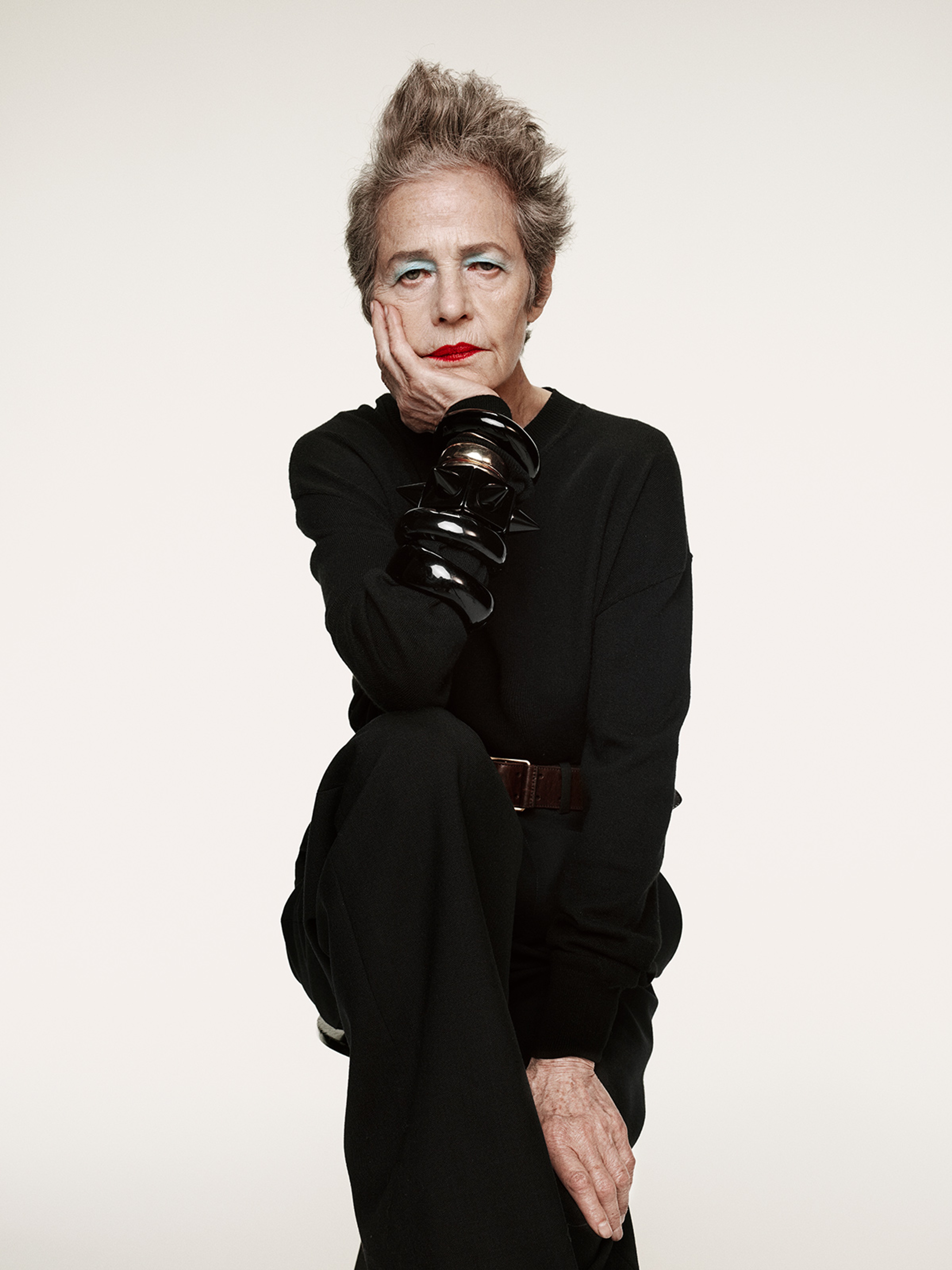
Charlotte wears top, trousers, belt and bracelets by SAINT LAURENT BY ANTHONY VACCARELLO.
PHOTOGRAPHER
Willy Vanderperre
FASHION EDITOR
PAUL SINCLAIRE
TALENT
CHARLOTTE RAMPLING at Viva Paris
Hair
Louis Ghewy at MA WORLD GROUP
Make-Up
Lynsey Alexander at Jolly Collective
Manicure
Huberte Cesarion at Airport Agency
Talent Director
Tom Macklin
Lighting Director
Romain Dubus
Photo Assistants
Corentin Thevent, Yves Mourtada. Digital Technician Henri Coutant
Stylist Assistants
Louise Victor, Maria Fernandez. Hair Assistant Nao Sato
Makeup Assistant
Sarah Edenborough
Production
One Thirty Eight Productions
Beyond Noise 2026
PHOTOGRAPHER
Willy Vanderperre
FASHION EDITOR
PAUL SINCLAIRE
TALENT
CHARLOTTE RAMPLING at Viva Paris
Hair
Louis Ghewy at MA WORLD GROUP
Make-Up
Lynsey Alexander at Jolly Collective
Manicure
Huberte Cesarion at Airport Agency
Talent Director
Tom Macklin
Lighting Director
Romain Dubus
Photo Assistants
Corentin Thevent, Yves Mourtada. Digital Technician Henri Coutant
Stylist Assistants
Louise Victor, Maria Fernandez. Hair Assistant Nao Sato
Makeup Assistant
Sarah Edenborough
Production
One Thirty Eight Productions
Beyond Noise 2026