Noise
ISSUE NO. 04: ATOMIC DREAM BY CAJSA VON ZEIPEL
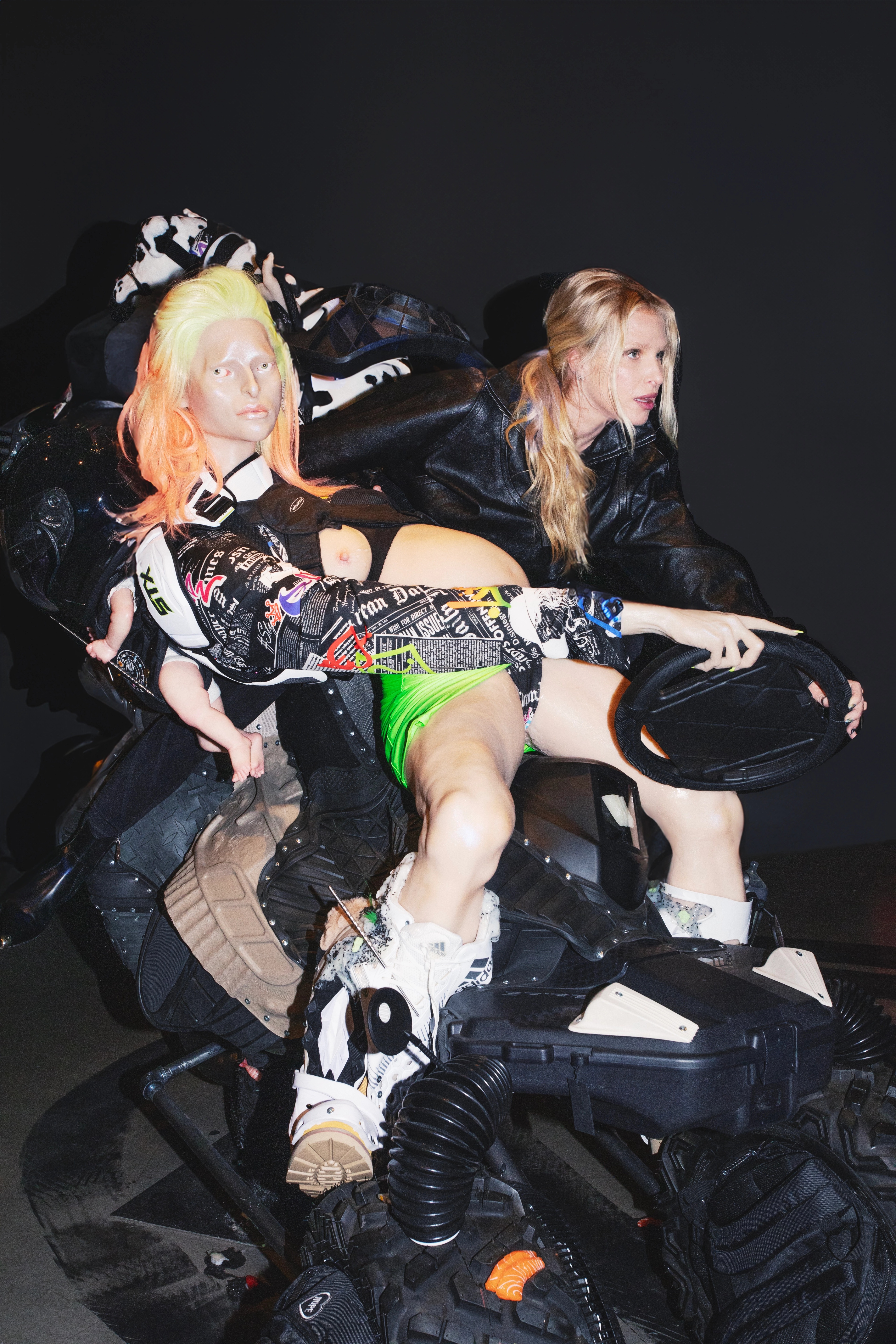
Cajsa wears dress and boots by LOUIS VUITTON.
ATOMIC DREAM
Words: 2677
Estimated reading time: 15M
Cajsa von Zeipel transforms the language of consumption into survival aesthetics, reimagining the maternal body as a site of resilience & invention
By Magnus Edensvard
In many ways, we seem to be living through an apocalypse. Everything feels imbued with looming chaos. Yet, is our present any different from past generations’ experiences of primeval fear in the face of the unknown? Looking back, we have always created images and stories shaped by our perceptions of the world around us. This is especially true when things appear to be going south—proportions swell into gigantic schisms, particularly through the lenses of art and literature. If that is the scene being set, then pressing questions about our individual and collective survival inevitably emerge.
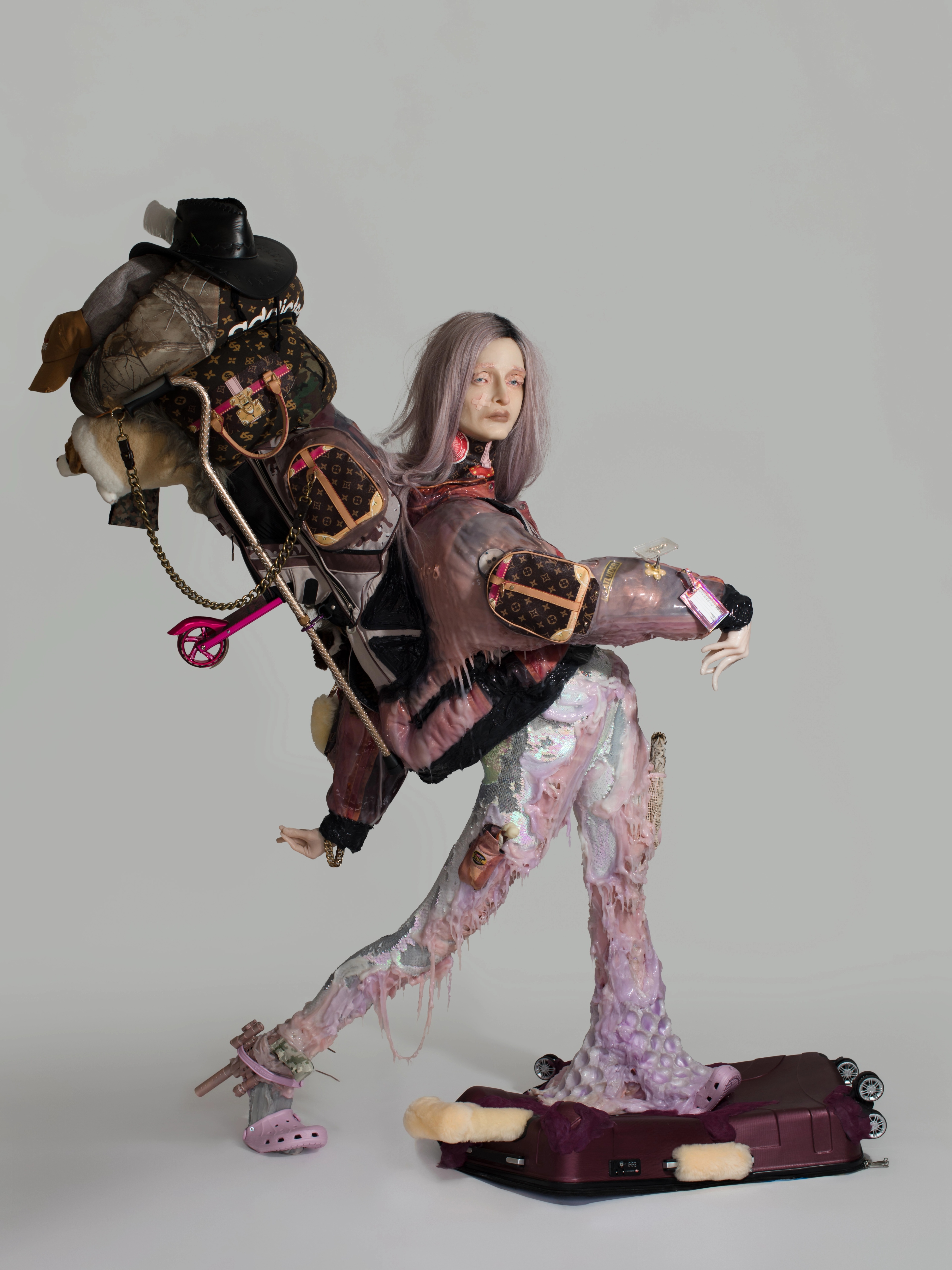
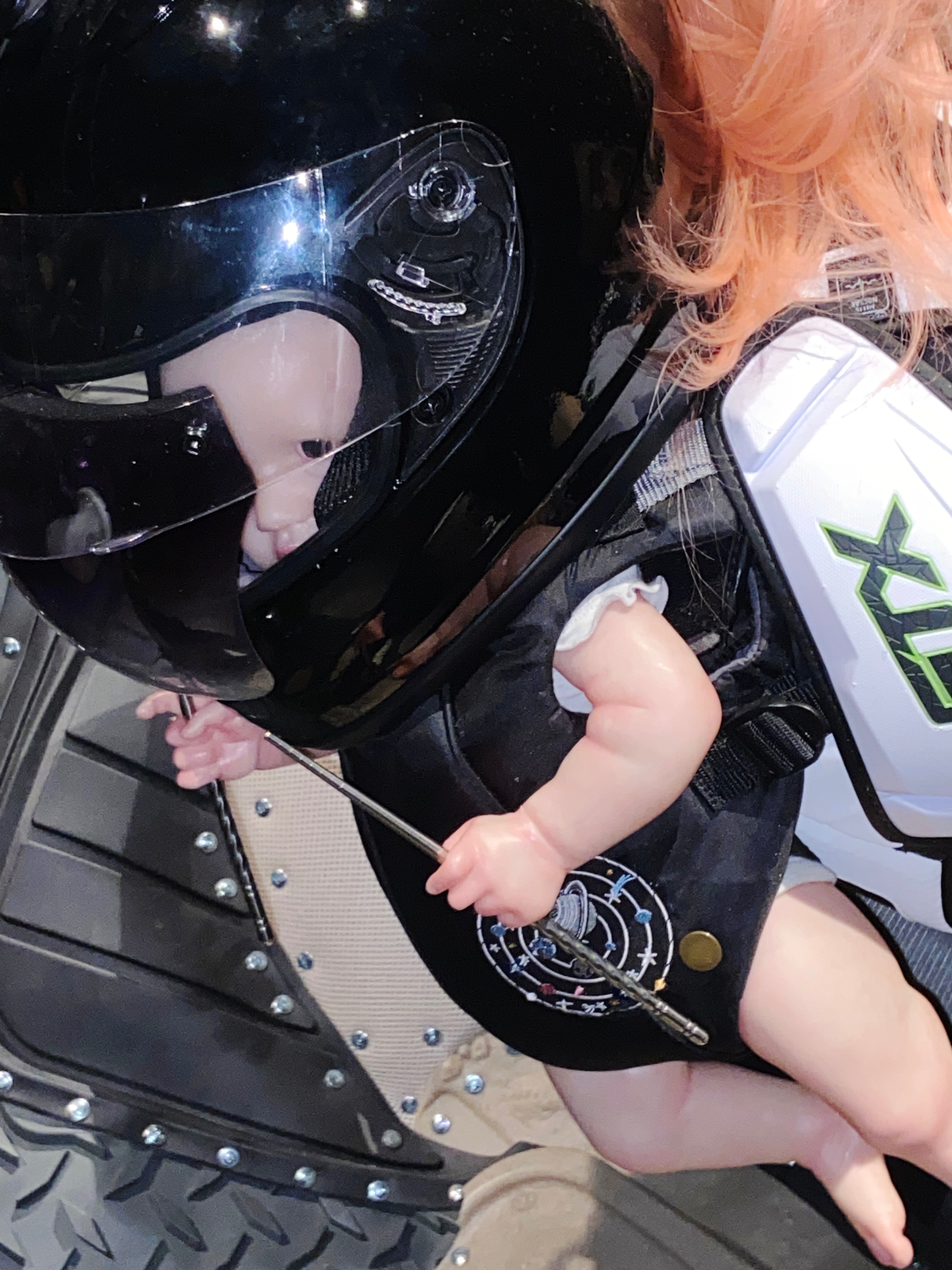
Cajsa von Zeipel’s practice has long engaged with these themes through an extraordinary body of sculptures and installations, often led by a female protagonist or alter ego. Her figures are enigmatically cast into precarious roles, equipped with phantasmagorical tools, makeshift bags, toys, vehicles, and infant-feeding mechanisms, some of which may come in handy as they confront their fate. As Cajsa’s characters prepare to safeguard their offspring—whether carried in a pregnant belly fitted with a see-through window, strapped to the body, or secured in a purpose-built harness—they project a state of readiness for what looks to be a bumpy ride into an unknown station, or future.
One such work, Formula X (2021), is currently on prominent display in the ambitious exhibition and catalog Apocalypse: From Doomsday to Climate Threat at the Gothenburg Museum of Art, curated by Eva Nygårds and Kristoffer Arvidsson. I caught up with Cajsa and Eva to discuss how this work came to be included in the exhibition, the broader themes underpinning the show, and how an apocalypse might unfold were it to descend upon Scandinavia.
Eva, tell us about the research for the exhibition.
EVA NYGÅRDS: We were awarded funds from Riksbankens Jubilee Fund for a research project that we thought underlined current topics. We wanted this to become a big experience, incorporating quite a large amount of the museum’s collection, showing them alongside interesting contemporary artists’ works. Whilst [the apocalypse] has been a theme that’s been explored in art for hundreds of years, it still feels so current. When we started this project, Ukraine had gone into war, and things got worse as we proceeded. Cajsa has worked with dystopian themes in her work before. Her sculptures have so much power and break from these antique marble sculptures that feature mainly older men.
Cajsa, can you tell us about what was going on when you were making Formula X?
CAJSA VON ZEIPEL: I made this for the Athens Biennale. This piece was heavily affected by COVID, the sense of escape, and of not knowing what was going to happen. You’re gathering things, and everything you need is packed in your backpack. It was about the skills of the female body. Since I started with silicone, I’m especially interested in the evolution of biology and what the body can do. [The woman protagonist] is carrying a newborn on her back while she’s about to burst—maybe she’s on her way to the hospital. The idea of a shorter pregnancy is a wild sketch in itself. Why can’t we rearrange it when we can do so much in the world?
EN: You’re looking at the ways consumption is reflected in society. That’s something you can see in artists like Hariton Pushwagner and Ulf Rahmberg from the 1960s and ’70s, when there was a lot of talk against consumption in society. I think Formula X represents a good continuation of these concerns, as if these works in the show are talking to each other, with yours leading into a more contemporary comment.
CVZ: It makes me very happy you said that, because a lot of people read my work and comment on the consumerism of the objects I bring in. They look like a representation of money in a sense. And because I don’t work much with sound, I incorporate new consumer goods and things like ‘newborn objects.’ I wanted it to look a little messed-up, perhaps drawn from a Target or Åhlens Department Store display of all these things that seem wrong for each other, like a new kind of Android made out of things we can buy. I like the idea of not knowing how things are made—things that’ve been made by my hands compared to what’s been produced by a machine. I really relate to Ulf Rahmberg’s works, especially the rubber piece with a big man with all his practical things, yet there is a gooeyness to it all. Not knowing where to place things, and embracing that feeling of disorientation.
Cajsa, how do you approach turning everyday consumer goods into complex sculptures through different materials and textures?
CVZ: I never really know where I will end up when I start a new piece. It’s more of a sense or a taste that I’m looking for. Perhaps it’s like a gift I give to myself—to not have to start off with a straight set of goals. I try to make my work as little ‘work’ as possible, and [lean] more into the creative process, step-by-step. I may start making a face out of clay, then you cast it and make it into silicone. After that, I add lips and eyes and put makeup on. Then I can change the facial expression by inserting metal rods, as the silicone is flexible, so I can change the structure of the face. There are so many steps that I need to follow to keep the process open. And it’s the same with the materials I use. I see this process almost as if it’s a collaboration between me and Walmart.
I made Formula X in upstate New York, where they have huge industrial shopping areas. When I go out there looking for things, it’s heavily affected by what’s within a half-hour’s drive, and then what my arm can reach once I’m inside these massive stores. And I like that. Many of the things I collect come together more by accident or coincidence. That later becomes a thing with a car-mat from Walmart’s car accessories department, with a cat hammock or this hard shell rifle bag from Target, and some stuffed animals, of course, and another million things. I felt liberated when I found that shopping could also be my creative process. [Laughs] I enjoy it on a personal level, but it’s become something that I’m more skilled at and have more patience for. To look through all the boxes and continuously ask myself, What can I do with this? How can I transform that? And later back at the studio, I sketch with the materials on the floor to explore ways in which materials may actually come to ‘like each other’ or even ‘melt together.’ I like it when it reaches a point where things begin to look like they just came like that, and they start to belong somewhere again. I like subjects or themes to do the same thing. I see myself as a sticker or like this melting pot of whatever is happening around me. I usually have a female figure in the center of it all. As Eva also mentioned, I like to be pushing out more representative stuff and what that figure can do as an object in art.
Eva, how did you envision the relationship between this particular work by Cajsa and the other more traditional and art historical works in the exhibition?
EN: When people experience Formula X, some might find it a bit scary—there’s a character on a vehicle trying to flee from something, but who is also powerful and makes a stand. In the exhibition, she is placed facing Georg Baselitz’s painting Verschiedene Zeichen (1965), depicting men walking around in this scattered world after World War II, trying to pick up the pieces of something that has been completely destroyed. I can sort of see the woman featuring in Formula X in this same world. But at the same time, she appears to be going towards the future. She’s like a lifesaver, safeguarding her children, taking them somewhere safe at almost any cost. I think that was the aim of the sculpture placements: to put Formula X within this apocalyptic narrative, which in itself has been a creative spur for many artists. It’s also something that can be a positive drive, or at the very least, progressive.
As dystopian themes are so frequently explored today in films and literature, we could almost see Formula X as an avatar character in a computer game like Lara Croft, where nature is the backdrop for what’s perceived as scary—a threat to humanity, if you like. Whereas today, in real life, we as people are the threat against nature, so it’s really the other way around. And perhaps consumerism is a grave part of this shift.
Indeed. Utopia traditionally precedes dystopia, the latter arising when the ideal collapses. Cajsa, if you imagined a sequel to Formula X, what might happen to this character next?
CVZ: In parts, her story has already been continued through some of the other pieces I’ve made since. The political climate in the US has been so insane, it’s hard to make work today and not comment on that. People haven’t formed their minds about how to talk about things. I wanted this sense of urgency that Eva integrated into the Apocalypse show with pieces made centuries ago, but they still embody this same sense of urgency today. I wanted to fill [Formula X] with things you can clearly grasp, as it’s so hard to understand what’s happening. It depends on what news sources you return to. It’s this very confusing state of mind. Recently, I wanted to bring in more classical themes into my practice, so I built up this structure of scaffolding with a lot of plasterwork. I created a more historic world with an older aesthetic for my recent solo show at Company Gallery in New York. It’s connected to the day when democracy was created. Talking about it may sound really pretentious, but I wanted that to be close to the aesthetic language. I wanted to invite a riot in the movement of the sculptures for their presence. The stickiness of knowing this is happening and entering my world—it just naturally brought these [themes] into this next project.
EN: It’s also interesting to see what happens with an artwork in a different context. From seeing pictures of Formula X when it was displayed in its own room at the Athens Biennial, and now it’s shown in close proximity to works by Anselm Kiefer, Baselitz, and John Martin. Artworks speak to each other, and you gain a new angle. I think that’s the most exciting thing about creating a show like this, with so many different visual expressions from different epochs in art history.
CVZ: I feel truly honored for the placement of my work in the show and in such great company. [Regarding] the idea of making part two of Formula X, the theme actually continues through another sculpture I made, Mommy Crane (2022), where she can’t use her hands because she’s trying to hold on to all these babies. So she has a breastfeeding bra that connects to her hand so she can feed her infants on her shoulder. In another piece, Gay Milk, she has a small infant strapped to her leg and a transparent belly so she can see the development of her growing baby. It has a little teddy bear in the belly, too. It’s an evolutionary sketch on how these pieces develop. I tend to reuse or reshape faces from one work to another. I love creating these versions of clones or sisters using the same mold but shifting hair choices and eye colors, or making them appear in a different position.
Eva, if you were to curate a sequel to the Apocalypse exhibition, what would we find?
EN: It was interesting to reflect on the fact that the apocalypse theme has been ongoing for as long as humans have been alive. It’s something that intrigues a lot of artists, and we see that the concept of paradise is not nearly as interesting. I think it would be interesting to dwell a bit more on dystopias because that’s something that’s also so current. We also wanted to create a positive end and give hope, because a lot of people, especially the younger generation, harbor a lot of anxiety and worries about the future.
Cajsa, how do you envisage what’s coming for us all in this and the next generation? Do you feel hope when you look ahead into the near and distant future?
CVZ: At my core, I am a pretty optimistic person. But it’s challenging to be optimistic living in the US these days. It’s hard to see what’s happening and how fast society is falling. In my situation of reproducing and putting people into this world, it makes you question where you want them to grow up. What are my hopes and dreams for the next generation? Well, I’m not moving to the countryside like my parents. [Laughs]
In the end, it’s about keeping working, and representing what you want to see in the world. It’s easy to feel tired and devastated by the things that are happening. But I think if you look through history, your favorite artists just kept pushing on with what they believed in. It may seem complex, but you need a core as an artist—to be pushing on, no matter if your career or the world goes up and down. I hope that we will be on the other side of this situation one day, like climate change. But I think it’s going to be really hard. I just have to put my trust in science; someone is going to come up with solutions to fight the rapidity of what we’ve created together. We’re proving every day that we’re continuing to put violence into nature. We just [have to] hope that human creativity can solve it.
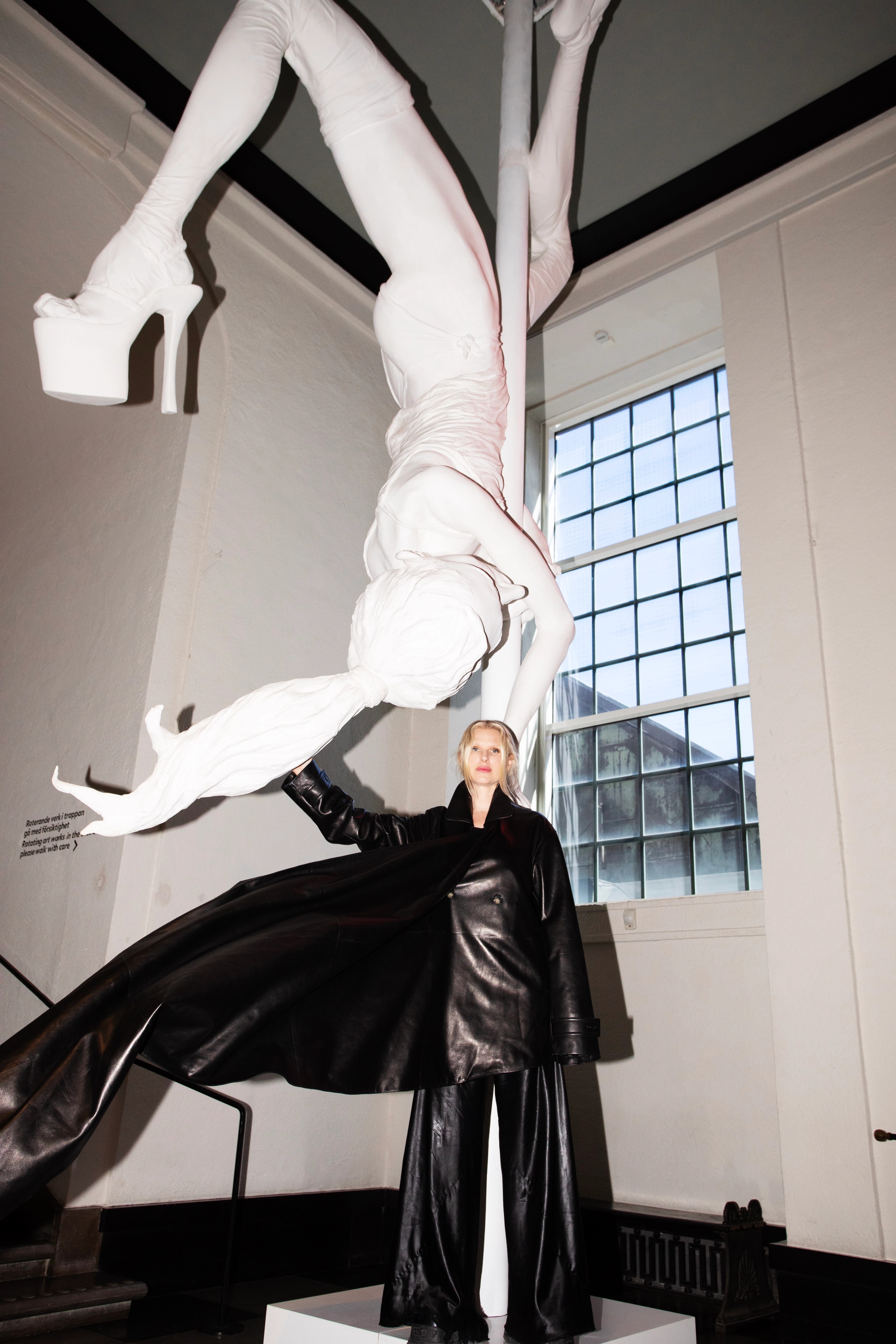
Jacket by LOEWE. Trousers and shoes talent’s own.
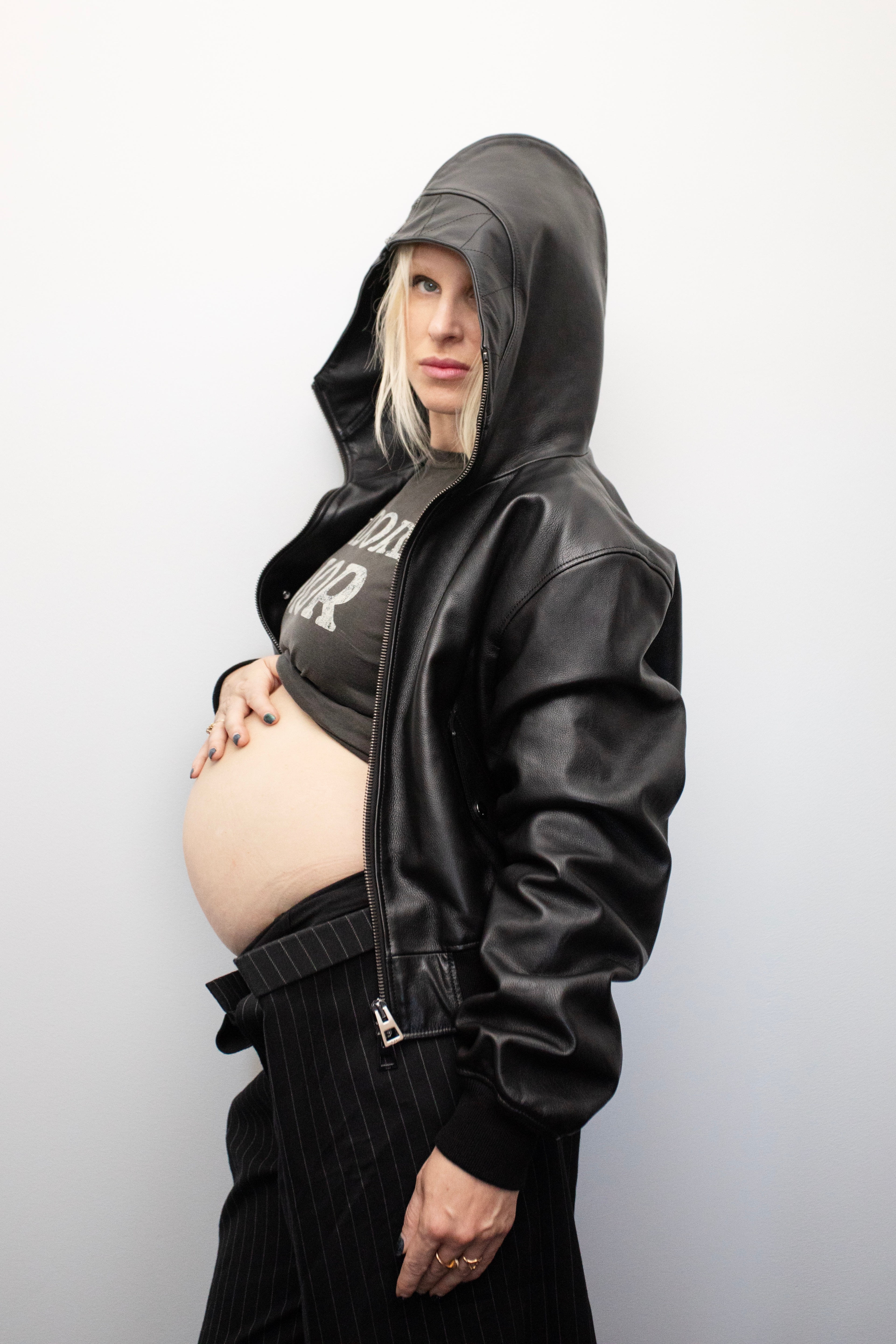
Top and jacket by DIOR. Trousers by DURAN LANTINK.
PHOTOGRAPHER
ARVIDA BYSTRÖM
FASHION EDITOR
Sungwon Serena ParK
ARTS EDITOR-AT-LARGE
MAGNUS EDENSVARD
Beyond Noise 2026
PHOTOGRAPHER
ARVIDA BYSTRÖM
FASHION EDITOR
Sungwon Serena ParK
ARTS EDITOR-AT-LARGE
MAGNUS EDENSVARD
Beyond Noise 2026