Noise
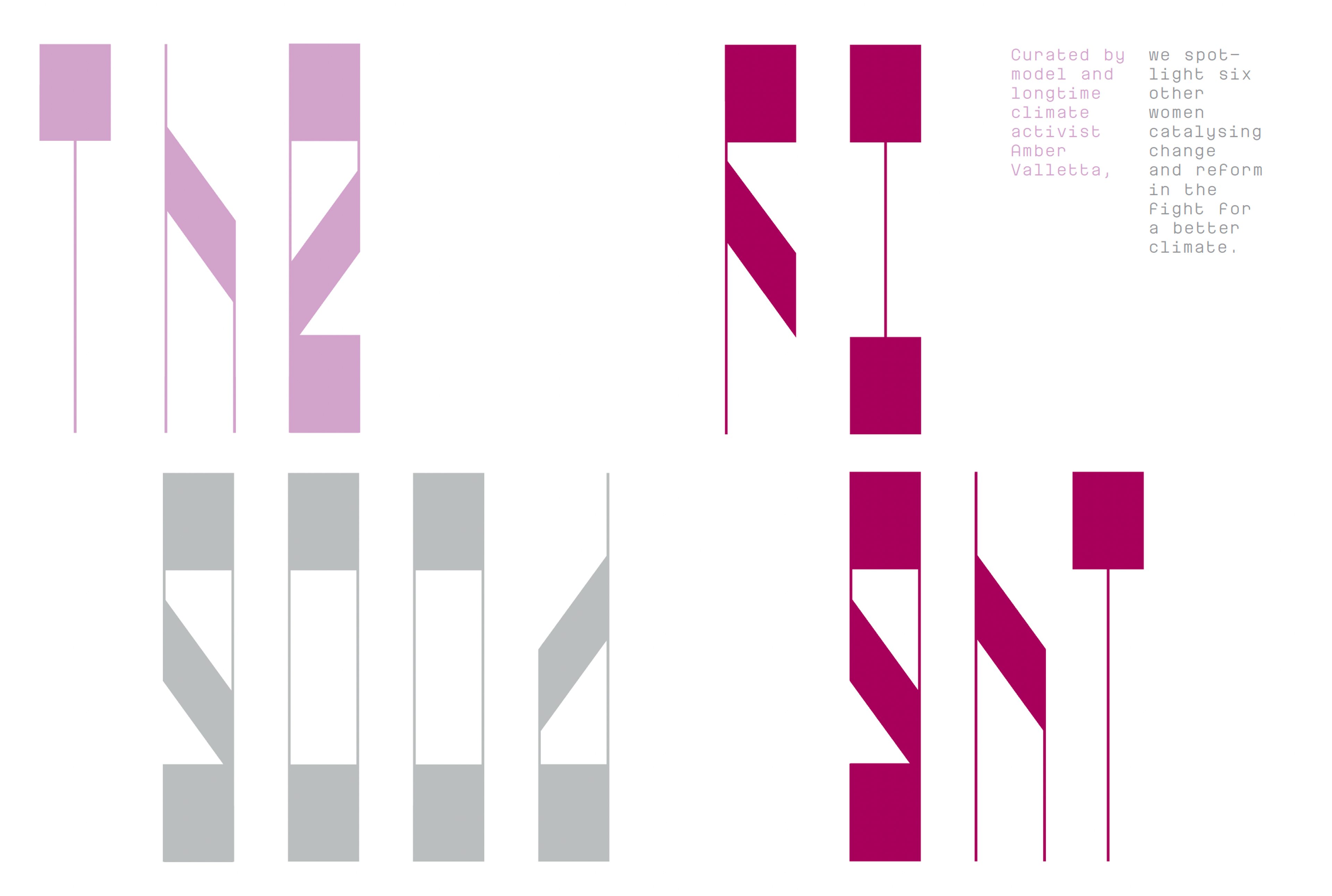
ISSUE NO. 05: QUANNAH CHASINGHORSE
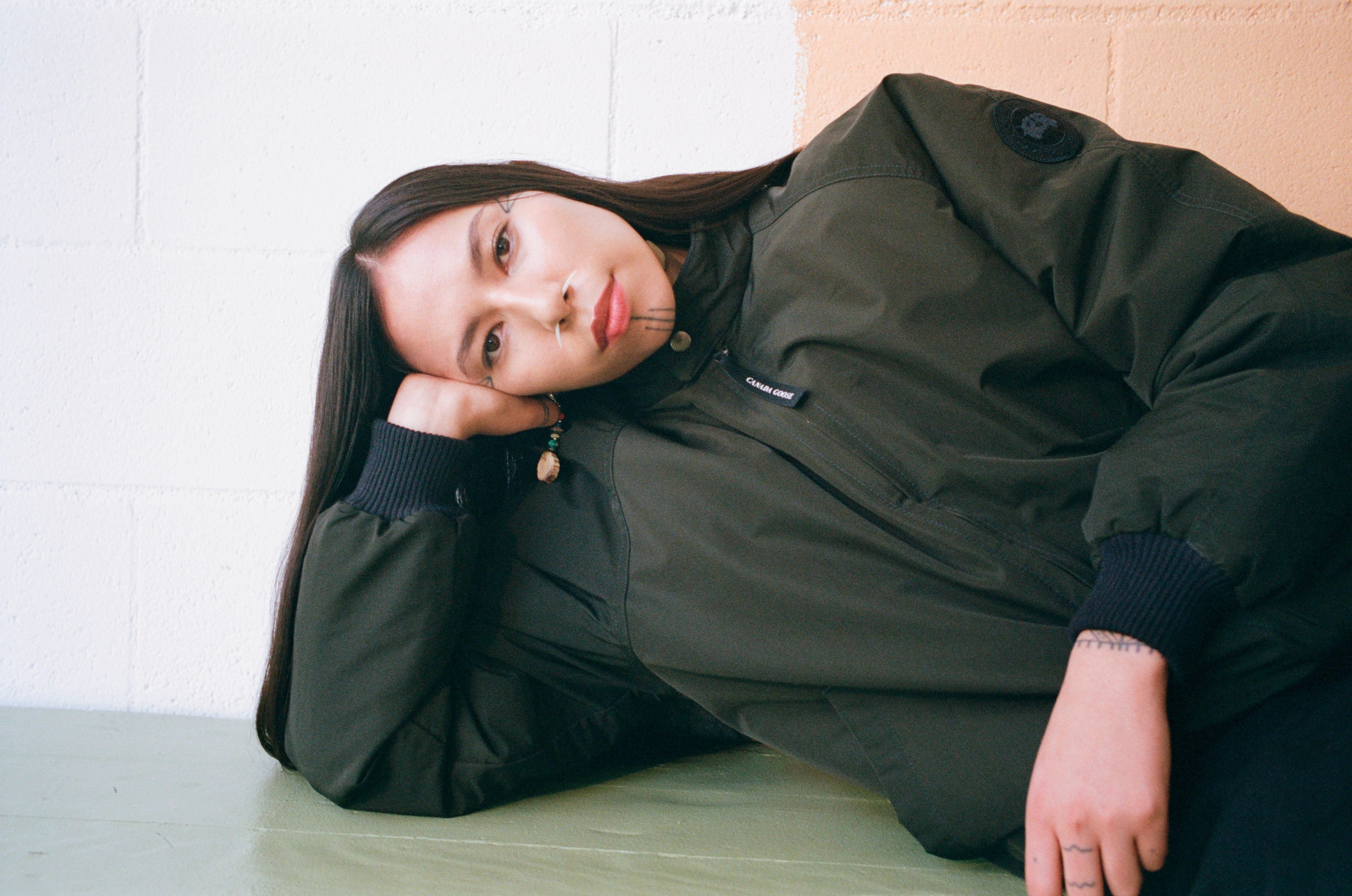
QUANNAH WEARS JACKET BY CANADA GOOSE.
QUANNAH CHASINGHORSE
Words: 1629
Estimated reading time: 9M
For Quannah Chasinghorse, the modern sustainability movement is simply a reflection of the work Indigenous communities have always carried out. She assumes the title “protector” over “activist,” asserting that safeguarding land, water, and ways of life isn’t by choice; it’s an extension of Indigenous identity and survival. In her teens, Quannah began to understand the impact of oil and gas extraction on her hometown of Eagle Village, Alaska; speaking on that issue, in addition to Indigenous rights and Arctic conservation, collided with a burgeoning career in modeling—growing Quannah’s platform and establishing her voice as among the most influential to the youth climate movement.
This responsibility can be heavy, considering the lack of understanding most Americans (let alone the rest of the world) have of Indigenous peoples in their home nations and beyond. Quannah reckons with the weight by leaning on the women who raised her, staying grounded in ritual and tradition, and trusting the power of her voice. Her message is firm: “We’re in a society where we’re so far removed from nature—where we place ourselves above it, controlling it. In order to protect it and preserve it and respect it, we have to understand that we are a part of the life cycle, we are a part of nature, we are nature in itself.”
MB: When did the sustainability movement first become personal for you?
QUANNAH CHASINGHORSE: I’m Hän Tr’öndёk Hwëch’in-Gwich’in from Eagle Village, Alaska and Sičangu-Oglala Lakota from the Rosebud Reservation in South Dakota. As an Indigenous person, we have a responsibility to our lands, to our people, our culture, our traditions, our way of life—to protect what we have left of it. Growing up, sustainability was a natural thing. Indigenous people, we never seek to become advocates or land protectors or water protectors. It just happens out of responsibility and necessity. Our existence is inherently political. I guess it got more real as I became a teenager and started to recognize how deeply impacted our people are, in regards to climate change, to oil and gas extraction. I started to really see things for what they were.
MB: Have you found it difficult to balance your career in fashion with your advocacy?
QC: In the beginning, it was challenging to navigate it. The women who raised me, they’re all incredibly smart. I turn to them when [I’m facing] difficult choices, whether or not I take a job. I have a good support system and community that wants to see me succeed, but also wants to make sure that I feel good about the work that I’m doing. It really is who you surround yourself with and how you move in this world. I stay very close to my culture, I have my rituals, so I feel grounded and rooted in the ways that I was raised.
MB: You call yourself a “protector,” rather than an activist. Could you speak to the distinction between those two terms?
QC: For many Indigenous people, the word activist can feel performative. Somebody will post on Instagram, speaking up on something so simple, [and claim the label]. Overall, we do need more activists. We need more people who care and use their voice. But we don’t get to pick and choose what we stand for. With this new administration, we had our birthright citizenship questioned as Indigenous people to this land. We had Native people being detained. It’s scary living in a society that doesn’t understand us, that doesn’t respect us—and so when it comes to this work, I don’t like to be called an activist, because I am protecting my ways of life, my home, my people, myself. And many others feel the same. I’m not trying to talk down on activists; I think it’s incredible work. But a lot of the time, how they operate is a reflection of the work Indigenous people have been doing for a very, very long time. It’s really important that our titles are respected. People can feel, not exactly threatened by it, but probably removed from it. They want to be part of [these identities], but since they can’t or don’t understand, they want us to conform. And that’s just not who we are.
MB: If you could impart a lesson or truth you’ve gained from your Native community to the rest of America and the world, what would it be?
QC: We’re in a society where we’re so far removed from nature—where we place ourselves above it, controlling it. We’re making decisions on its behalf. We’re taking away its rights and freedom to exist, and in order to protect it and preserve it and respect it, we have to understand that we are a part of the life cycle, we are a part of nature, we are nature in itself. Only then are you able to do the work.
MB: What’s been your greatest moment of victory, across your activism?
QC: The first helped me recognize the power of our voice: I was 13 years old and our local school district was discussing whether or not to change Columbus Day to Indigenous Peoples Day. They were trying to keep the meeting under wraps, but my aunt found out and took me out of school to speak on my experience growing up. You know—little kids come home to their parents, excited to tell them about what they learned in school that day. We told our mom, ‘Columbus was such a great explorer!’ She had to sit us down and explain the history without being too gruesome, because the reality of it lies in his own journals, and it’s not pretty. It’s quite literally disgusting. Having to have that conversation with your kids as an Indigenous person is a very harsh reality. And you start not trusting the school system, you don’t trust your teachers. My mom had to have that conversation with each of us, and each time, we would end up in tears—wondering why. One of our elders, a local chief, was on his way to work and heard [the meeting] being broadcast on a local radio station. And as I finished speaking, he walked into the room and stood behind me. I’d been alone, the whole board right there in front of me—as a little kid, like, that’s intimidating. I saw him and felt a big weight taken off of me. He spoke right after me, like, ‘If a kid is skipping school to come and talk about this, you better take it seriously.’ That’s when they [renamed the holiday] in our district.
And then, we have this big conference called the Alaska Federation of Natives; it’s our biggest gathering, a place to sing and dance. Everyone sells their arts and their jewelry and their crafts. We also have important tribal meetings, finding solutions for the issues that still plague our community. When I was 17, I put forward a resolution with someone I consider a younger sister, stating that there was a state of emergency in Alaska, and that we needed to shift away from oil and gas. Mind you, there’s a thousand people in the room. We’re in a big hockey stadium. [A leader] of a big oil corporation came up and tried to argue us on our points. We didn’t back down. They said things like, ‘You kids don’t know what it’s like to have to build a fire to keep the house warm.’ I had to go up there and say, ‘Actually, I do. My family didn’t depend on oil and gas.’ It was the first time in history that a resolution was passed on the floor of AFN without an amendment. Some of the oil corporations that were supporting [the conference] pulled out. They lost a lot of money.
MB: What are you working on these days?
QC: There’s a lot happening in Alaska. The last time this administration was in office, we had a lot of work to do—and now we’re back at square one. I’ll be going to DC to strategize with the Gwich’in Steering Committee; we’re trying to sue Donald Trump, and we have a bunch of partners working with us on this. Our lands are at risk. We’re doing it to protect the Arctic.
There’s also a movement called No Ambler Road, [against a proposed 211-mile private industrial route between Alaska’s Dalton Highway and the Ambler Mining District.] It affects our salmon—our food security. People don’t even know what’s going on in Alaska, because it’s so far removed from the rest of the US. But we’re still a part of the States, and we need more people to know what’s going on so that we can protect this vast [region] of North America.
EIC + CREATIVE DIRECTOR
SARAH RICHARDSON
PHOTOGRAPHER
MAX FARAGO
FASHION EDITOR
SHAWN LAKIN
TALENT
AMBER VALLETTA AT THE SOCIETY, QUANNAH CHASINGHORSE AT THE SOCIETY, ANDREEA DIACONU AT DNA, NALLELI COBO, MONIC URIARTE, STEPHANIE SUGANAMI
HAIR
TEDDY CHARLES AT NEVERMIND
MAKE-UP
HOLLY SILIUS AT R3
SET DESIGN
JEREMY REIMNITZ
PHOTO ASSISTANT
KEITH KLEINER
SPECIAL THANKS
CANADA GOOSE
Beyond Noise 2026
EIC + CREATIVE DIRECTOR
SARAH RICHARDSON
PHOTOGRAPHER
MAX FARAGO
FASHION EDITOR
SHAWN LAKIN
TALENT
AMBER VALLETTA AT THE SOCIETY, QUANNAH CHASINGHORSE AT THE SOCIETY, ANDREEA DIACONU AT DNA, NALLELI COBO, MONIC URIARTE, STEPHANIE SUGANAMI
HAIR
TEDDY CHARLES AT NEVERMIND
MAKE-UP
HOLLY SILIUS AT R3
SET DESIGN
JEREMY REIMNITZ
PHOTO ASSISTANT
KEITH KLEINER
SPECIAL THANKS
CANADA GOOSE
Beyond Noise 2026