Noise
ISSUE NO. 05: NALLELI COBO & MONIC URIARTE
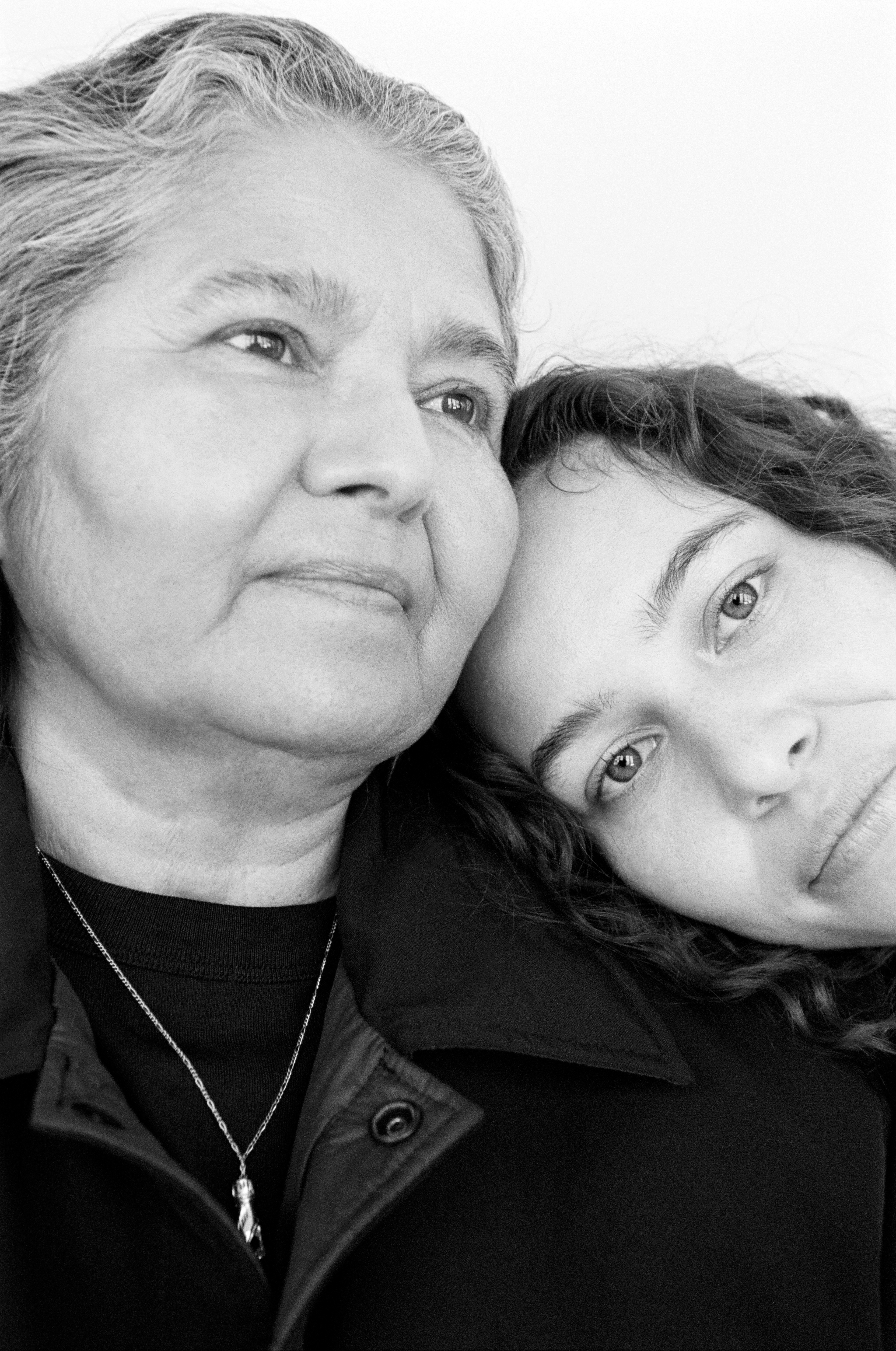
NALLELI WEARS T-SHIRT AND JACKET BY CANADA GOOSE. MONIC WEARS T-SHIRT BY CANADA GOOSE.

NALLELI COBO & MONIC URIARTE
Words: 1787
Estimated reading time: 10M
Nalleli Cobo and Monic Uriarte are forces of nature: mother and daughter in a David and Goliath-style battle with the fossil fuel industry. What started as a struggle to protect the then-nine-year-old’s health (Nalleli, and many others in her South Central LA neighborhood, have faced serious illness that traces back to an oil well down the road from her home) became a massive force in the clean air movement. The pair started off knocking door-to-door, eventually organized a grassroots coalition, managed to shut down the toxic facility—and they keep pushing, to this day, for stronger public health protections in the state of California and beyond.
Despite the lack of investment in their community, despite years gone unheard, Nalleli and Monic share with the rest of the world generations of knowledge of how to care for the Earth and for others. Their belief in the collective is unshakeable. As Nalleli puts it: “My mom always says that if we realized the power that we have, we wouldn’t let any of this [continue]. They try to intimidate us as a tactic. But we have to remember that we are stronger.”
MB: When did the sustainability movement first become personal for the pair of you?
NALLELI COBO: My work really began when I was nine years old, out of survival. I grew up in what’s called a sacrifice zone, 30 feet away from an active oil and gas well that severely impacted my health. From nosebleeds to asthma to cancer—I ultimately had it all, unfortunately. So I fight for policy change to have my story end with me.
MONIC URIARTE: Seeing Nalleli getting sick for no reason, and my neighbors and my whole community… We started organizing ourselves to shut down the oil well. My whole life, my grandparents [taught] me how to save energy. Being sustainable, for us, was economic—but also my grandfather was raised as a native Tarahumara in Chihuahua. They taught him how to protect the land, the air, the elements. My grandfather transferred to me that knowledge and that respect for nature.
MB: Your work in sustainability intersects with other types of advocacy, such as housing reform. In your view, how closely intertwined are social and economic and environmental justice issues?
MU: We used to separate everything: social justice, human rights, the environmental and the economic. In the end, it’s a domino effect. [If our] environment is affected, our health is affected, our economy is affected. We need to see it as a whole.
MB: Your work is based in South Central LA. What are the biggest challenges facing big urban regions like that, that might not be the first to come to mind when the average person envisions the effects of the climate crisis?
MU: It goes back exactly to what I said before. We used to separate [these issues]. But just because we’re living in an urban area doesn’t mean we’re not affected. We have a lack of green canopies, we have a lack of clean water. Air is part of nature, water is part of nature, soil is part of nature. And in urban areas, our relationship with nature is not clear. We need to fix that.
MB: How do you think we might bridge that gap—generate that interest and connection with nature, particularly in urban regions?
NC: The interest and the want are there. When I was growing up, we didn’t have a park. It’s so bad, looking back, but you make do with what you have: The only green space, or green ’lot,’ we had was right in front of the oil well. It was really common for families to have picnics or barbecues on their lawn. Nature just isn’t that accessible where we grew up. I remember my mom would make the trip, take us to parks in other communities. It’s devastating that it comes down to us traveling three zip codes away to see greenery.
MU: It’s a lack of investment in our community that’s [affecting us].
MB: Tell me about working together as mother and daughter. What have you learned from each other’s activism?
NC: I love working with my mom. I hope she feels the same way. She’d better feel the same way! [Laughs] But really, the more you know my mom, the more you know that she’s really the epitome of strength. She’s someone who has always taught and led by example. She always puts her community first and herself last. To show up for others—in whatever time and space they need—is extremely admirable. In the pandemic, when I was going through treatments and she was taking care of me, she still found time to organize grocery deliveries or virtual community meetings. She has never wavered in her beliefs or in her work. It’s a tough act to follow.
MU: You made me cry, Nalleli! It’s an honor working with [my daughter]. She’s shown me what it means to be strong, not only in herself, but strong for the mission. I remember when she was on chemotherapy and she was doing interviews, she was [taking] meetings. Even though I asked, ‘No more organizing, no more work, focus on your health,’ she never stopped. It’s her love and respect for our community, and for a common good, even when she feels sick and even when she was connected to a machine. She’s my hero.
MB: Monic, you talked about learning from your grandfather. It seems like this drive toward community has been passed down generationally.
Yeah, my grandfather raised me. He lost his father [around the age of six] and became the man of the family, for five sisters and his mother. Back in Chihuahua, on the Sierra Tarahumara, the community embraced him and taught him how to use the land. [They also] taught him the basics of respect—how to be a good human on this Earth. He always told me, ‘Nobody owns Earth. We are transients, and while we’re here living, we need to respect the four elements.’ I saw how he opened his arms, asked the higher powers of that land to provide food for others. He collected water on rainy days. He didn’t waste food. That ancestral knowledge, he shared with all the grandkids. It’s a little example, but it’s so deep in me. I transferred it to my kids as well.
NC: I was really lucky to grow up in a five-generation household. I had my great-grandfather until he was 98. My great-grandmother, we had her until she was 104.
MB: They were doing something right!
I wanted to ask about your greatest moment of victory as activists—and maybe about a moment you’re still hoping for.
Last year, we went from a state with no buffer zone to having the largest one in the nation. That’s a historic movement that really shapes the future of public health in California. That said, the win that feels the most special—and I still cry when I talk about it—was when we closed AllenCo Energy, the well I grew up next to. I really do feel it set a precedent, that community activism is enough to shut down one of the biggest industries in the world, the fossil fuel industry. It was truly me and my mom and other community members mobilizing for years, tirelessly, before we culminated that win. When my mom got the phone call that they were [shutting AllenCo down], it felt like the world stopped for us. We still celebrate it every year at this house.
MU: For years, nobody paid attention to us. Even though we and a few other mothers in the neighborhood got 1,700 homes to to make complaints about the air quality, nobody believed us. We started collecting our own data. The Los Angeles Times posted our story. Former Senator Barbara Boxer came to our neighborhood and AllenCo shut down temporarily, but in the end it was our people. We were invisible. So many of us had no rights, because we’re immigrants, because we’re Hispanic, because our community low-income. We’re seen as disposable, but when we show up, when we’re together, when we work for the right thing, this is the result. That shutdown became an example for organizing other communities, creating coalitions to ban urban oil extraction in Los Angeles County.
NC: We lived in a sacrifice zone. It’s in the name. It’s crazy that we have to say, in this day and age, ‘Well, we’re not a sacrifice. We’re real people.’ It’s something that we have to continue to talk about, educate ourselves on, and make noise about, because no human life should be viewed as a sacrifice, especially for profit.
If I can say one last thing… I think it simply is cool that Latinos, as a culture, have always had sustainability ingrained in us. Whether we know we’re being or energy-efficient, we turn off the lights and carpool as much as we can. Every Latina knows the blue cookie tin—we’d get excited, [and then realize] our grandparents were using it as a sewing kit. Whether it was out of necessity or not, they instilled those things in us. I find it really empowering that I get to belong to such a beautiful culture that is so conscious of the world that we live in, especially at a time when there’s so much hate towards us, or hostility or anger or false narratives. Ultimately, to know that we’re part of a family that is so resilient is a beautiful thing. It shouldn’t be ignored.
EIC + CREATIVE DIRECTOR
SARAH RICHARDSON
PHOTOGRAPHER
MAX FARAGO
FASHION EDITOR
SHAWN LAKIN
TALENT
AMBER VALLETTA AT THE SOCIETY, QUANNAH CHASINGHORSE AT THE SOCIETY, ANDREEA DIACONU AT DNA, NALLELI COBO, MONIC URIARTE, STEPHANIE SUGANAMI
HAIR
TEDDY CHARLES AT NEVERMIND
MAKE-UP
HOLLY SILIUS AT R3
SET DESIGN
JEREMY REIMNITZ
PHOTO ASSISTANT
KEITH KLEINER
SPECIAL THANKS
CANADA GOOSE
Beyond Noise 2026
EIC + CREATIVE DIRECTOR
SARAH RICHARDSON
PHOTOGRAPHER
MAX FARAGO
FASHION EDITOR
SHAWN LAKIN
TALENT
AMBER VALLETTA AT THE SOCIETY, QUANNAH CHASINGHORSE AT THE SOCIETY, ANDREEA DIACONU AT DNA, NALLELI COBO, MONIC URIARTE, STEPHANIE SUGANAMI
HAIR
TEDDY CHARLES AT NEVERMIND
MAKE-UP
HOLLY SILIUS AT R3
SET DESIGN
JEREMY REIMNITZ
PHOTO ASSISTANT
KEITH KLEINER
SPECIAL THANKS
CANADA GOOSE
Beyond Noise 2026