Noise
ISSUE NO. 05: AMBER VALLETTA
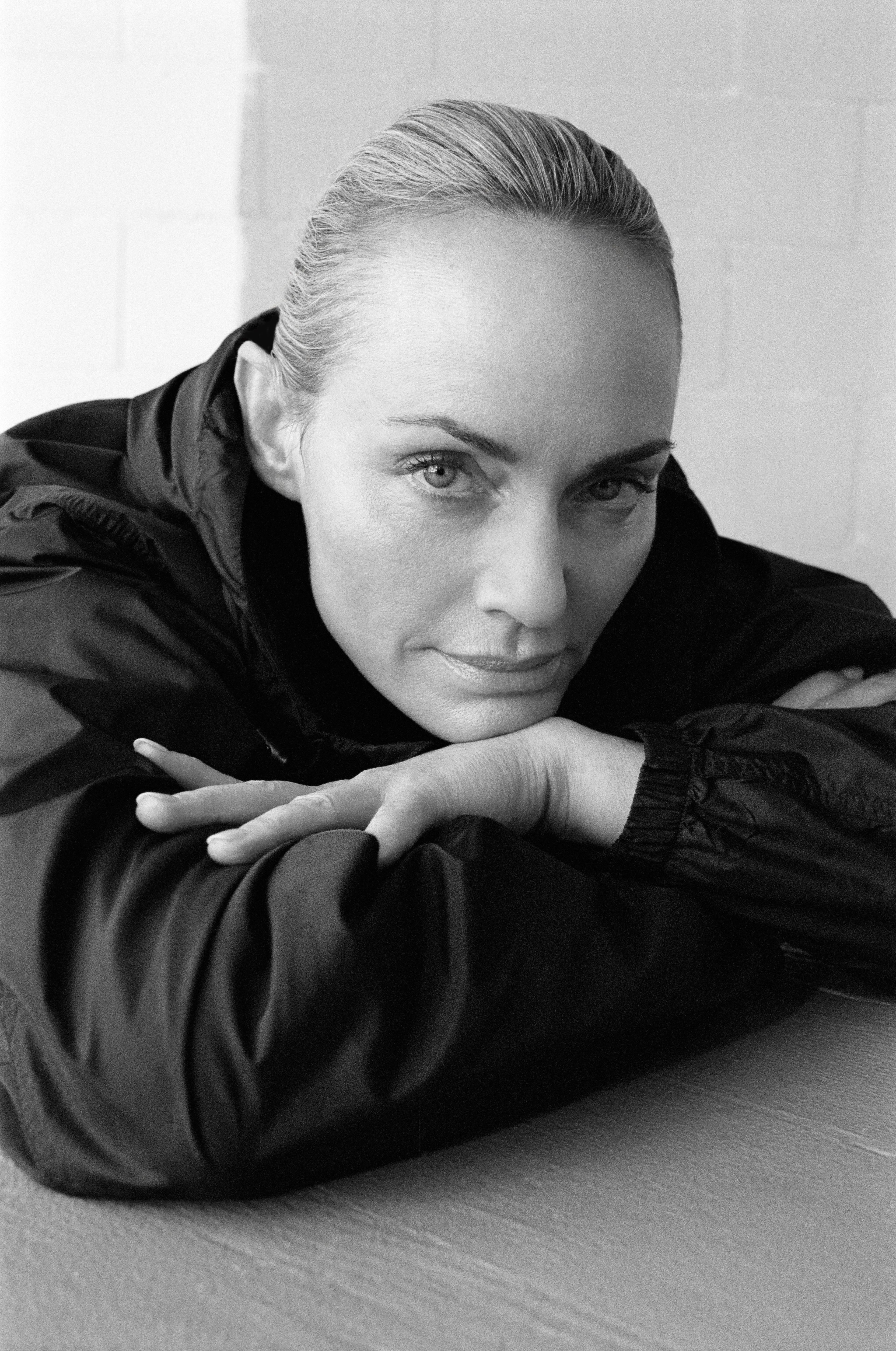
AMBER WEARS JACKET BY CANADA GOOSE.
THE GOOD FIGHT
Words: 2422
Estimated reading time: 13M
MODEL AND LONGTIME CLIMATE ACTIVIST AMBER VALLETTA SPOTLIGHTS SIX WOMEN CATALYZING ENVIRONMENTAL REFORM.
By Morgan Becker
You probably know Amber Valletta from one of dozens of Vogue covers, or the catwalks of Versace, McQueen, Mugler, or Tom Ford’s Gucci. Maybe you’ve watched her steal a scene in a film like Hitch or The Family Man. Arguably, though, Amber—actress, businesswoman, and bona fide supermodel—should be singled out for her advocacy first and foremost. As soon as she’d captured the world’s attention, she began to use her platform for good, championing conscious consumption, sustainable design, and industry accountability—demanding change in fashion from within it.
At the risk of losing out on work, Amber took on cause after cause, from ocean health to Indigenous rights to climate policy reform. She’s joined forces with nonprofits like Oceana, schools like FIT, media companies like A Squared, and major houses like Karl Lagerfeld. In some sense, it’s all culminated in her recent appointment to the UN Environment Programme. As a Goodwill Ambassador, Amber is afforded “a much more global perspective on the initiatives [she believes] in,” borrowing a cape to “fight for the good team.”
She talks about planting the seeds of the future: Amber might not see the impact of her activism today, or tomorrow, or even in her lifetime. That doesn’t stop her from striving to correct long-established ovextraction—harm of the planet and all life on it. She sees the environmental movement as a kind of network, bolstered by individuals all around the world, who find strength in community as they oppose oil extraction, greenwashing, factory farming, and much, much more. To that end, she’s curated a portfolio of women from all walks of life, in the vanguard of the green movement.
MORGAN BECKER: You’ve made such amazing progress, putting sustainable fashion on the map. What sorts of experiences or realizations led you to realize the necessity for change?
AMBER VALLETTA: To be honest, I had exposure very early on. My mom, with a group of community grassroots activists, helped stop a nuclear power plant from being built on Native land outside of Tulsa, where I’m from. It was called Black Fox. It took them five years, but they did it. She was a single mom; she took my cousins and me to protests because she didn’t have anywhere else to take us. We knew that they were doing something bad in our community—and also, what kid doesn’t love the opportunity to scream and be obnoxious? So this idea that community can make change was implanted in me very young. I also grew up in nature. My grandparents had a farm and we spent every weekend out there, playing outside. We had a creek and we would skip rocks and run from snakes. It was just very idyllic. There was something really cool about it.
When I started modeling, there was no such thing as fast fashion. You had mom and pop shops and small brands, but you didn’t have this amount of stuff. It was a very different time. I felt this internal discrepancy because, even then, stuff was happening with the environment. In my young 20s, Al Gore was vice president and he had started speaking about ozone layer depletion and climate change. I started connecting the dots that industry was causing problems. I didn’t know that fashion specifically was an issue, but I knew I couldn’t work within any industry and feel okay about what we were doing to the planet or the people. I took a break. I had my son, started doing some work here in California, all climate-related. Then I got connected with the Natural Resources Defense Council, the first NGO doing scientific and legislative work within the fashion industry.
When I started modeling again, about 15 years ago, fashion had completely changed. Fast fashion was a huge player. I don’t want to point the finger; it’s the textile industry and the beauty industry, as well. We can’t single any entity out. I had this aha moment, like, ‘You know what? I cannot come back to work and not take my values with me. I’m an adult now, and the industry needs support.’ At the time, I was like, ‘Shit, nobody’s gonna hire me anymore, because I’m the whistleblower.’ But I try to be very diplomatic. I’m a cheerleader, not a persecutor, because I don’t believe that’s what brings change. I started using my platform: I started Master & Muse, an online store for responsible fashion. I partnered with Yoox. I started talking to designers who were friends of mine. And since I’ve started my collaboration with Karl Lagerfeld, and now FIT—things just organically grew. It’s never been a trend. I’m very excited that everybody’s talking about sustainability and using these words, but it’s changed a lot in the last 15, 20 years.
MB: One of the throughlines from all these conversations is that an awareness of the natural world usually comes from family—this idea that community exchange is always sustainable, whether it’s carpooling or handing down old clothes. What you learned from your mom, did that start with her? Or does it go even further back?
AV: My mom has always been someone in service to the community. And my family is Cherokee, so it’s possible that it has some generational presence. I know that my grandfather was very committed to knowing his lineage, and he was involved with his community. Just by virtue of that, he had a different philosophy and connection to nature. I’ll give them credit because I think they deserve it.
MB: Beyond fashion, your environmental work encompasses policy reform, conservation and animal rights, marine protection, and so on. How do you choose which issues to focus on—and do you find you’re often taking on new ones?
AV: It’s hard to say no to anything, because it’s all connected. But I do feel the older I’ve gotten, the more I’ve had to narrow my focus and find out where I can be most impactful. I’m now a UN Environment Programme Goodwill Ambassador—it feels like this opportunity to take a much more global perspective on the initiatives I believe in. But it is hard to narrow it down, because I believe so many things are vitally important. If somebody says to me, ‘Can you make us a PSA?’ I’m gonna do it. I’m gonna make one for the wolves, I’m gonna make one for bees, but that doesn’t mean I’m gonna spend all my time there. What’s exciting with the UNEP—I could be a Goodwill Ambassador for a decade. It’ll give time in the field to really cultivate deep roots in the things I want to focus on, which is mostly fashion, waste, and biodiversity loss. I have a business that I’m launching that will harness all of this. At the end of the day, it’s all important.
MB: I’d love to hear more about the Goodwill Ambassador role. What does that achievement mean to you?
AV: I was just named in September, so the relationship is really fresh. I’ve already done a few things for them: a PSA, a voiceover for a climate week in Nairobi in December. This week, we’re having a meeting to talk about the year—what sorts of activations they want to do with me. Their focus is on the Triple Planetary Crisis: climate change, biodiversity loss, and pollution and waste. They know how committed and connected I am to fashion, so I’m assuming there’ll be some fashion initiatives specifically. It’s a great honor. It’s almost like you get a cape. They’re the superheroes, and you get to borrow a cape and fight for the good team. To be part of the team that’s trying to do good globally, no matter what it is, feels very important. I have to show up with my full self for that.
MB: Congratulations, it’s well-deserved.
Could you tell me about the process of selecting climate activists for this portfolio? What sorts of qualities do these women share?
AV: They’ve all been doing this work for a long time, some of them as children. [The throughline] is their connection with community; I know them all, in some way, through community. They all have different lanes, whether it’s animal rights or climate change. With Nalleli, it’s oil setbacks and grassroots organizing. Her mother is a community activist and taught Naelli to speak out. Quannah is this incredible Indigenous model, but also a voice for Native people, beyond her own community. Stephanie is really glam, of another world, but then also this environmentalist who started a really cool online platform, giving people palatable information about climate change and how to get active. Andreea’s spent her time as a student, using her platform to speak about climate and fashion. They are all powerhouse women who are so active. I’ve met a few of their mothers, so there is a throughline with women teaching women, women using their voice. The truth is, most of the people I meet in environmental work and social justice are women. The thing I’ll say about each one of these incredible souls is that they care. They genuinely care. They all have their heart in the right place. They’re motivated by the good fight.
MB: What was it like as the shoot come together? Did you get to see everyone?
AV: I stayed the entire day—to greet them, to hug them, to say thank you. And honestly, I had reasons not to stay. Physically, I’ve not been feeling great, but I just was like, ‘Put on your big girl panties on and stay, because these people have shown up for this, and it’s so important.’ I wanted them to feel the love and chill and hang out and root them on.
MB: How do you stay hopeful and driven in the face of the reality of climate change?
AV: I mean, listen: I’ve had very dark days. I’ve had dark periods. I don’t do it alone. I believe in community, and I’ve gone and sought help through community from other climate activists, to try to find the buoyancy and the joy. I’ve called friends, I’ve cried. But on the same token, I went to a retreat at Plum Village in Bordeaux—and actually, I’ve become a Buddhist since this retreat—[learning] Thich Nhat Hanh’s philosophy. And what this Buddhist philosophy is, is that we plant the seeds of everything. If you plant the seeds of joy, you’re cultivating joy.
Every day, it’s what we put in our bodies, what we put in our minds, what we allow ourselves to watch and consume. We also plant the seeds for the future. I might never see what my work has done to affect the Earth, to affect change, right? These young people that you’ve spoken to, they might not either. Great leaders, teachers, whoever don’t always see the fruits of their labor, but they still plant the seeds. I can only hope that the future will be better. When I’m lost and in the dark, that simple thought is my North Star. Because if I take this all very seriously, it can be very doom and gloom. But I also believe that this isn’t the end.
It’s also that I don’t want suffering. People suffering, animals suffering—that’s the thing that fucks with my head. Even if this is not finite, consciousness goes on, life goes on after we die… I don’t want the people that I love, or people I don’t know, to be suffering. I have to believe that these seeds will make greater change, even if it’s just being kind to someone in the grocery store, or signing a petition or whatever, or getting out and protesting. We create the world that we believe in. Otherwise, none of this is a reality, right? Buildings don’t just appear overnight. People dream them up, and that’s how they’re built.
MB: What’s the greatest lesson you’ve learned across your career as an environmental activist?
AV: Be teachable. Be open to learning. And my mom always said, ‘Be here now.’ You can’t be open if you’re not in the present moment.
MB: What’s the most important contribution the average person can make in the fight against the climate crisis?
AV: Not checking out. Doing whatever you can. The little things matter. I know they say that, that the little, individual things won’t change [the impact of], say, the fossil fuel industry. But that’s not what we’re talking about. We’re talking about not losing hope. We’re talking about not being defeated. What we’re seeing right now in the world is that there’s a lot of pushback. Don’t go to sleep. Stay awake.
EIC + CREATIVE DIRECTOR
SARAH RICHARDSON
PHOTOGRAPHER
MAX FARAGO
FASHION EDITOR
SHAWN LAKIN
TALENT
AMBER VALLETTA AT THE SOCIETY, QUANNAH CHASINGHORSE AT THE SOCIETY, ANDREEA DIACONU AT DNA, NALLELI COBO, MONIC URIARTE, STEPHANIE SUGANAMI
HAIR
TEDDY CHARLES AT NEVERMIND
MAKE-UP
HOLLY SILIUS AT R3
SET DESIGN
JEREMY REIMNITZ
PHOTO ASSISTANT
KEITH KLEINER
SPECIAL THANKS
CANADA GOOSE
Beyond Noise 2026
EIC + CREATIVE DIRECTOR
SARAH RICHARDSON
PHOTOGRAPHER
MAX FARAGO
FASHION EDITOR
SHAWN LAKIN
TALENT
AMBER VALLETTA AT THE SOCIETY, QUANNAH CHASINGHORSE AT THE SOCIETY, ANDREEA DIACONU AT DNA, NALLELI COBO, MONIC URIARTE, STEPHANIE SUGANAMI
HAIR
TEDDY CHARLES AT NEVERMIND
MAKE-UP
HOLLY SILIUS AT R3
SET DESIGN
JEREMY REIMNITZ
PHOTO ASSISTANT
KEITH KLEINER
SPECIAL THANKS
CANADA GOOSE
Beyond Noise 2026