Noise
ISSUE NO. 05: THE GOOD FIGHT
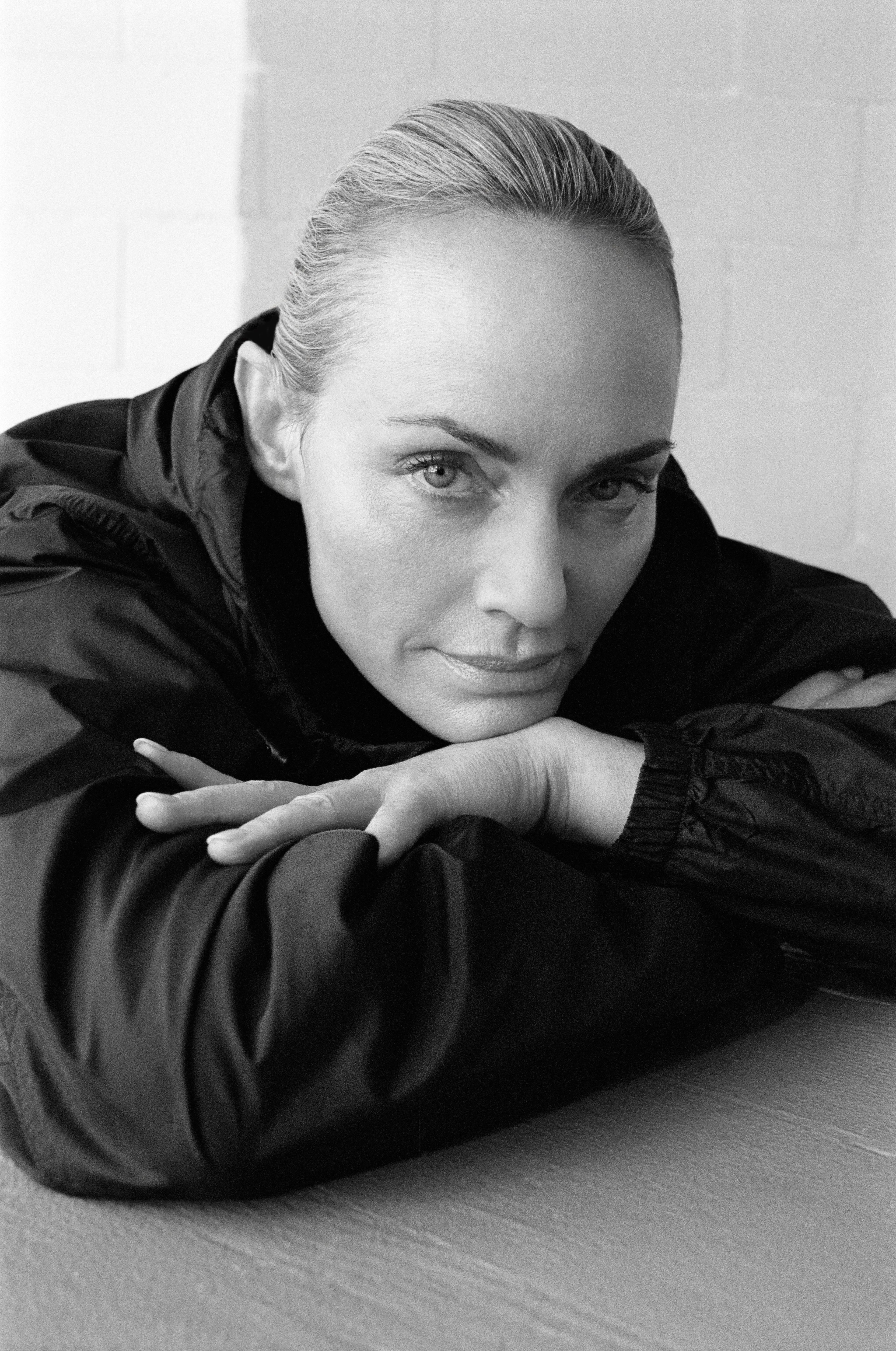
AMBER WEARS JACKET BY CANADA GOOSE.
THE GOOD FIGHT
Words: 2422
Estimated reading time: 13M
MODEL AND LONGTIME CLIMATE ACTIVIST AMBER VALLETTA SPOTLIGHTS SIX WOMEN CATALYZING ENVIRONMENTAL REFORM.
By Morgan Becker
You probably know Amber Valletta from one of dozens of Vogue covers, or the catwalks of Versace, McQueen, Mugler, or Tom Ford’s Gucci. Maybe you’ve watched her steal a scene in a film like Hitch or The Family Man. Arguably, though, Amber—actress, businesswoman, and bona fide supermodel—should be singled out for her advocacy first and foremost. As soon as she’d captured the world’s attention, she began to use her platform for good, championing conscious consumption, sustainable design, and industry accountability—demanding change in fashion from within it.
At the risk of losing out on work, Amber took on cause after cause, from ocean health to Indigenous rights to climate policy reform. She’s joined forces with nonprofits like Oceana, schools like FIT, media companies like A Squared, and major houses like Karl Lagerfeld. In some sense, it’s all culminated in her recent appointment to the UN Environment Programme. As a Goodwill Ambassador, Amber is afforded “a much more global perspective on the initiatives [she believes] in,” borrowing a cape to “fight for the good team.”
She talks about planting the seeds of the future: Amber might not see the impact of her activism today, or tomorrow, or even in her lifetime. That doesn’t stop her from striving to correct long-established ovextraction—harm of the planet and all life on it. She sees the environmental movement as a kind of network, bolstered by individuals all around the world, who find strength in community as they oppose oil extraction, greenwashing, factory farming, and much, much more. To that end, she’s curated a portfolio of women from all walks of life, in the vanguard of the green movement.
MORGAN BECKER: You’ve made such amazing progress, putting sustainable fashion on the map. What sorts of experiences or realizations led you to realize the necessity for change?
AMBER VALLETTA: To be honest, I had exposure very early on. My mom, with a group of community grassroots activists, helped stop a nuclear power plant from being built on Native land outside of Tulsa, where I’m from. It was called Black Fox. It took them five years, but they did it. She was a single mom; she took my cousins and me to protests because she didn’t have anywhere else to take us. We knew that they were doing something bad in our community—and also, what kid doesn’t love the opportunity to scream and be obnoxious? So this idea that community can make change was implanted in me very young. I also grew up in nature. My grandparents had a farm and we spent every weekend out there, playing outside. We had a creek and we would skip rocks and run from snakes. It was just very idyllic. There was something really cool about it.
When I started modeling, there was no such thing as fast fashion. You had mom and pop shops and small brands, but you didn’t have this amount of stuff. It was a very different time. I felt this internal discrepancy because, even then, stuff was happening with the environment. In my young 20s, Al Gore was vice president and he had started speaking about ozone layer depletion and climate change. I started connecting the dots that industry was causing problems. I didn’t know that fashion specifically was an issue, but I knew I couldn’t work within any industry and feel okay about what we were doing to the planet or the people. I took a break. I had my son, started doing some work here in California, all climate-related. Then I got connected with the Natural Resources Defense Council, the first NGO doing scientific and legislative work within the fashion industry.
When I started modeling again, about 15 years ago, fashion had completely changed. Fast fashion was a huge player. I don’t want to point the finger; it’s the textile industry and the beauty industry, as well. We can’t single any entity out. I had this aha moment, like, ‘You know what? I cannot come back to work and not take my values with me. I’m an adult now, and the industry needs support.’ At the time, I was like, ‘Shit, nobody’s gonna hire me anymore, because I’m the whistleblower.’ But I try to be very diplomatic. I’m a cheerleader, not a persecutor, because I don’t believe that’s what brings change. I started using my platform: I started Master & Muse, an online store for responsible fashion. I partnered with Yoox. I started talking to designers who were friends of mine. And since I’ve started my collaboration with Karl Lagerfeld, and now FIT—things just organically grew. It’s never been a trend. I’m very excited that everybody’s talking about sustainability and using these words, but it’s changed a lot in the last 15, 20 years.
MB: One of the throughlines from all these conversations is that an awareness of the natural world usually comes from family—this idea that community exchange is always sustainable, whether it’s carpooling or handing down old clothes. What you learned from your mom, did that start with her? Or does it go even further back?
AV: My mom has always been someone in service to the community. And my family is Cherokee, so it’s possible that it has some generational presence. I know that my grandfather was very committed to knowing his lineage, and he was involved with his community. Just by virtue of that, he had a different philosophy and connection to nature. I’ll give them credit because I think they deserve it.
MB: Beyond fashion, your environmental work encompasses policy reform, conservation and animal rights, marine protection, and so on. How do you choose which issues to focus on—and do you find you’re often taking on new ones?
AV: It’s hard to say no to anything, because it’s all connected. But I do feel the older I’ve gotten, the more I’ve had to narrow my focus and find out where I can be most impactful. I’m now a UN Environment Programme Goodwill Ambassador—it feels like this opportunity to take a much more global perspective on the initiatives I believe in. But it is hard to narrow it down, because I believe so many things are vitally important. If somebody says to me, ‘Can you make us a PSA?’ I’m gonna do it. I’m gonna make one for the wolves, I’m gonna make one for bees, but that doesn’t mean I’m gonna spend all my time there. What’s exciting with the UNEP—I could be a Goodwill Ambassador for a decade. It’ll give time in the field to really cultivate deep roots in the things I want to focus on, which is mostly fashion, waste, and biodiversity loss. I have a business that I’m launching that will harness all of this. At the end of the day, it’s all important.
MB: I’d love to hear more about the Goodwill Ambassador role. What does that achievement mean to you?
AV: I was just named in September, so the relationship is really fresh. I’ve already done a few things for them: a PSA, a voiceover for a climate week in Nairobi in December. This week, we’re having a meeting to talk about the year—what sorts of activations they want to do with me. Their focus is on the Triple Planetary Crisis: climate change, biodiversity loss, and pollution and waste. They know how committed and connected I am to fashion, so I’m assuming there’ll be some fashion initiatives specifically. It’s a great honor. It’s almost like you get a cape. They’re the superheroes, and you get to borrow a cape and fight for the good team. To be part of the team that’s trying to do good globally, no matter what it is, feels very important. I have to show up with my full self for that.
MB: Congratulations, it’s well-deserved.
Could you tell me about the process of selecting climate activists for this portfolio? What sorts of qualities do these women share?
AV: They’ve all been doing this work for a long time, some of them as children. [The throughline] is their connection with community; I know them all, in some way, through community. They all have different lanes, whether it’s animal rights or climate change. With Nalleli, it’s oil setbacks and grassroots organizing. Her mother is a community activist and taught Naelli to speak out. Quannah is this incredible Indigenous model, but also a voice for Native people, beyond her own community. Stephanie is really glam, of another world, but then also this environmentalist who started a really cool online platform, giving people palatable information about climate change and how to get active. Andreea’s spent her time as a student, using her platform to speak about climate and fashion. They are all powerhouse women who are so active. I’ve met a few of their mothers, so there is a throughline with women teaching women, women using their voice. The truth is, most of the people I meet in environmental work and social justice are women. The thing I’ll say about each one of these incredible souls is that they care. They genuinely care. They all have their heart in the right place. They’re motivated by the good fight.
MB: What was it like as the shoot come together? Did you get to see everyone?
AV: I stayed the entire day—to greet them, to hug them, to say thank you. And honestly, I had reasons not to stay. Physically, I’ve not been feeling great, but I just was like, ‘Put on your big girl panties on and stay, because these people have shown up for this, and it’s so important.’ I wanted them to feel the love and chill and hang out and root them on.
MB: How do you stay hopeful and driven in the face of the reality of climate change?
AV: I mean, listen: I’ve had very dark days. I’ve had dark periods. I don’t do it alone. I believe in community, and I’ve gone and sought help through community from other climate activists, to try to find the buoyancy and the joy. I’ve called friends, I’ve cried. But on the same token, I went to a retreat at Plum Village in Bordeaux—and actually, I’ve become a Buddhist since this retreat—[learning] Thich Nhat Hanh’s philosophy. And what this Buddhist philosophy is, is that we plant the seeds of everything. If you plant the seeds of joy, you’re cultivating joy.
Every day, it’s what we put in our bodies, what we put in our minds, what we allow ourselves to watch and consume. We also plant the seeds for the future. I might never see what my work has done to affect the Earth, to affect change, right? These young people that you’ve spoken to, they might not either. Great leaders, teachers, whoever don’t always see the fruits of their labor, but they still plant the seeds. I can only hope that the future will be better. When I’m lost and in the dark, that simple thought is my North Star. Because if I take this all very seriously, it can be very doom and gloom. But I also believe that this isn’t the end.
It’s also that I don’t want suffering. People suffering, animals suffering—that’s the thing that fucks with my head. Even if this is not finite, consciousness goes on, life goes on after we die… I don’t want the people that I love, or people I don’t know, to be suffering. I have to believe that these seeds will make greater change, even if it’s just being kind to someone in the grocery store, or signing a petition or whatever, or getting out and protesting. We create the world that we believe in. Otherwise, none of this is a reality, right? Buildings don’t just appear overnight. People dream them up, and that’s how they’re built.
MB: What’s the greatest lesson you’ve learned across your career as an environmental activist?
AV: Be teachable. Be open to learning. And my mom always said, ‘Be here now.’ You can’t be open if you’re not in the present moment.
MB: What’s the most important contribution the average person can make in the fight against the climate crisis?
AV: Not checking out. Doing whatever you can. The little things matter. I know they say that, that the little, individual things won’t change [the impact of], say, the fossil fuel industry. But that’s not what we’re talking about. We’re talking about not losing hope. We’re talking about not being defeated. What we’re seeing right now in the world is that there’s a lot of pushback. Don’t go to sleep. Stay awake.
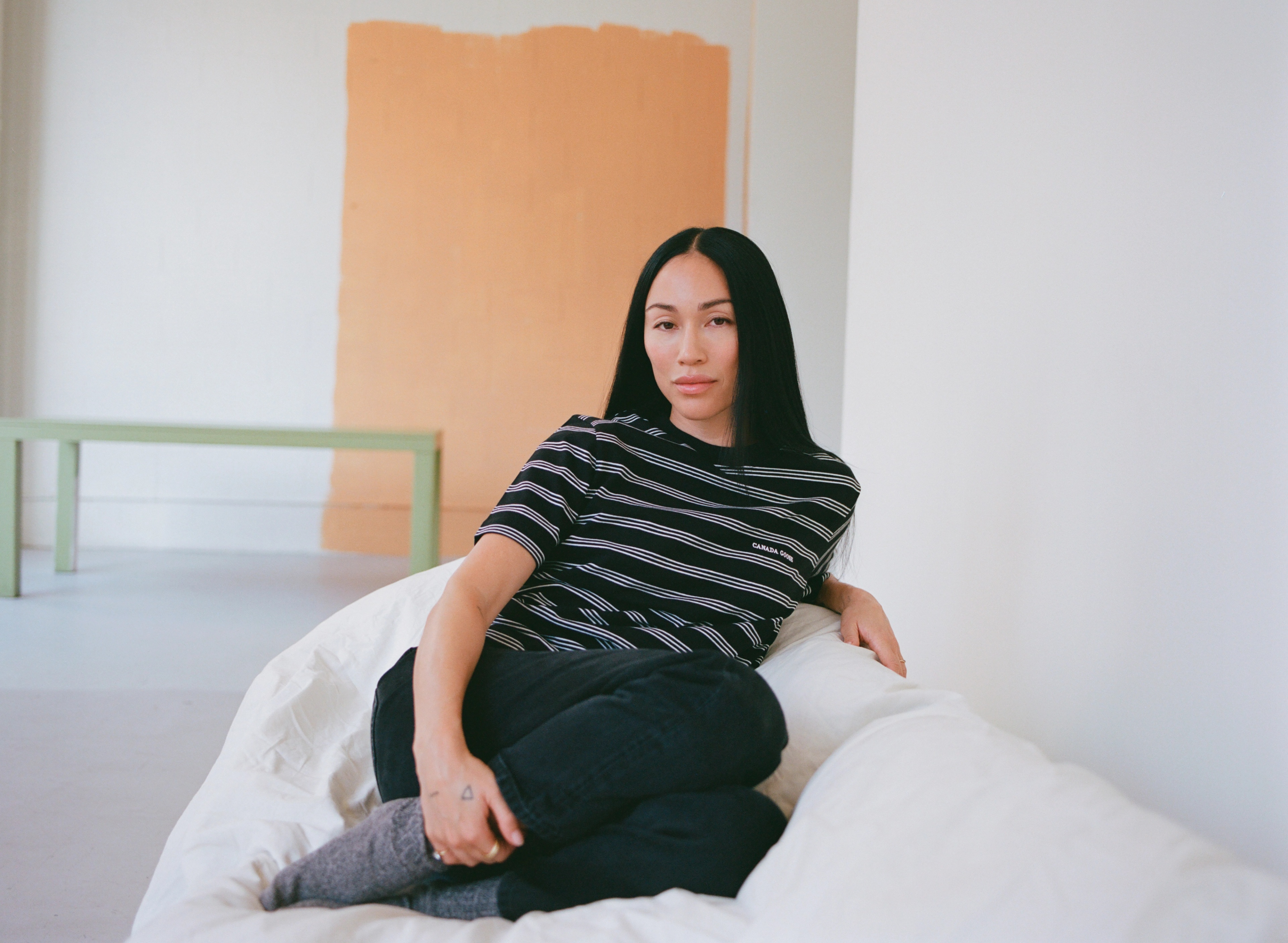
STEPHANIE WEARS T-SHIRT BY CANADA GOOSE.
STEPHANIE SUGANAMI
Words: 1251
Estimated reading time: 7M
‘That won’t make a difference,’ or ‘I don’t know enough to engage’—these two sentiments are uniquely dangerous to overarching mission of the climate movement. Stephanie Suganmi knows it well, part of the reason why she founded Future Earth in 2018. “Climate change is cultural, she says, “and culture changes when enough people decide to care.”
The Opus actor, entrepreneur, and all-around it-girl entered the public eye during her 2010s tenure as Kim Kardashian’s executive assistant. Today, in addition to running her “climate club,” she sits on the board of directors of the Climate Reality Project. Stephanie made a point of redirecting eyes from her socials to that of Future Earth’s—an online hub, open to the public, offering fact-checked, accessible, engaging environmental news and initiatives, at the clip of the digital age. The point is to empower newcomers who don’t know where to start when it comes to living greener, and to counter more traditional outlets, which on their own can feel dark or otherwise hard to tune into. As Stephanie expands Future Earth’s scope, she’s bolstered by the knowledge that people want to care, and that education is the most important catalyst for bigger, hands-on change.
MB: Tell me about Future Earth.
STEPHANIE SUGANAMI: I was just beginning my own climate journey—learning what I could and trying to find sources online that I could actually share with my community. Everything felt either too technical or too difficult to understand. And I kept thinking, in this moment where social media really shapes how we consume information, how do we talk about what’s happening to the planet in a way that resonates? How do we translate it into content that feels relatable, aesthetically digestible, and accessible without losing the truth?
MB: When did the sustainability movement first become personal for you?
SS: It wasn’t one dramatic moment. I started noticing things I’d never really questioned before: how much we throw away without thinking, how disconnected our daily lives are from the consequences of what we consume. And then there were the bigger moments—the wildfires, floods—that stopped feeling rare [and more like] the new normal. I couldn’t unsee it. Future Earth came from that place: not from perfection or expertise, but from curiosity and a quiet sense of responsibility. I didn’t want to feel helpless or overwhelmed. I wanted to understand what was actually happening, and share that understanding in a way that felt human.
MB: Across your career, you’ve worn so many hats. Did your move into activism feel like a big departure from, say, acting?
SS: Honestly, it felt very aligned. Acting is about empathy and storytelling. Entrepreneurship is about building better systems. Culture is about influence. Future Earth lives somewhere in the middle of all three. And this feels important to say—I don’t really consider myself an activist.
MB: Why’s that?
SS: I don’t think it’s fair to put myself in the same category as people who are dedicating their lives to this work. I’m just someone who cares deeply, who’s been learning, and who’s trying to use whatever influence and access I have to share the work of the people on the front lines. And I think that’s the point, right? We all have different ways of contributing. Real change happens when it’s a combined effort.
MB: A lot of why Future Earth works is because it’s engaging and cool. What do you think about the value of cool, at this often pretty serious intersection of education and environmental work?
SS: People don’t really connect with blanket information. They connect with feeling. A lot of environmental messaging is built on guilt or fear, and while those emotions are real, they’re exhausting to live with all the time. If something feels aspirational, visually interesting, or culturally relevant, you’re more likely to lean in than tune out.
MB: How has Future Earth been received, from the early days to now? I can see people feeling really grateful—and on the other hand, maybe skeptical of getting science-backed information from quick-changing venues like social media and Substack.
SS: At the beginning, what surprised me most was how much people wanted this. There was a real hunger for information that felt honest but not judgmental. People don’t want to feel powerless—they want to participate in the solution, even in small ways. I completely understand the skepticism around learning science on social media. That’s valid. That’s why rigor and accuracy are foundational to Future Earth.
MB: Are there any issues, these days, that feel particularly urgent to push on your channels?
SS: Greenwashing feels impossible to ignore, and climate inequality. Burnout, too—people care but they feel overwhelmed. Right now clarity is just as urgent as information.
MB: Any voices you were particularly proud to platform on Future Earth?
SS: I’m incredibly grateful for the Climate Talks we’ve made possible—speaking with leaders like Deb Haaland, Al Gore, Leah Thomas, Leah Stokes, Gina McCarthy, and LaTricea Adams, whose work around the Flint water crisis has brought the issue down to a deeply human level.
MB: Speaking of Al Gore, you’re involved with his Climate Reality Project. Could you tell us a bit about what that organization does and why it resonates with you?
SS: The Climate Reality Project is focused on education and activation—helping people understand the reality of the climate crisis, while giving them tools, both globally and locally, to actually do something about it. What resonated with me is how grounded it is, in both science and community. It’s not just about information; it’s about empowering people to participate in change, wherever they are. I truly believe education is a catalyst. The more we understand, the better choices we’re able to make.
MB: What do you envision for your climate club going forward?
SS: I see it evolving beyond content, into real collaborations and tangible impact. That’s really thanks to the team who’s carried Future Earth forward so thoughtfully. They just did an amazing panel at Sundance. They’ve brought so much care and intelligence to the project while keeping the heart the same: grounded in facts and emotional honesty.
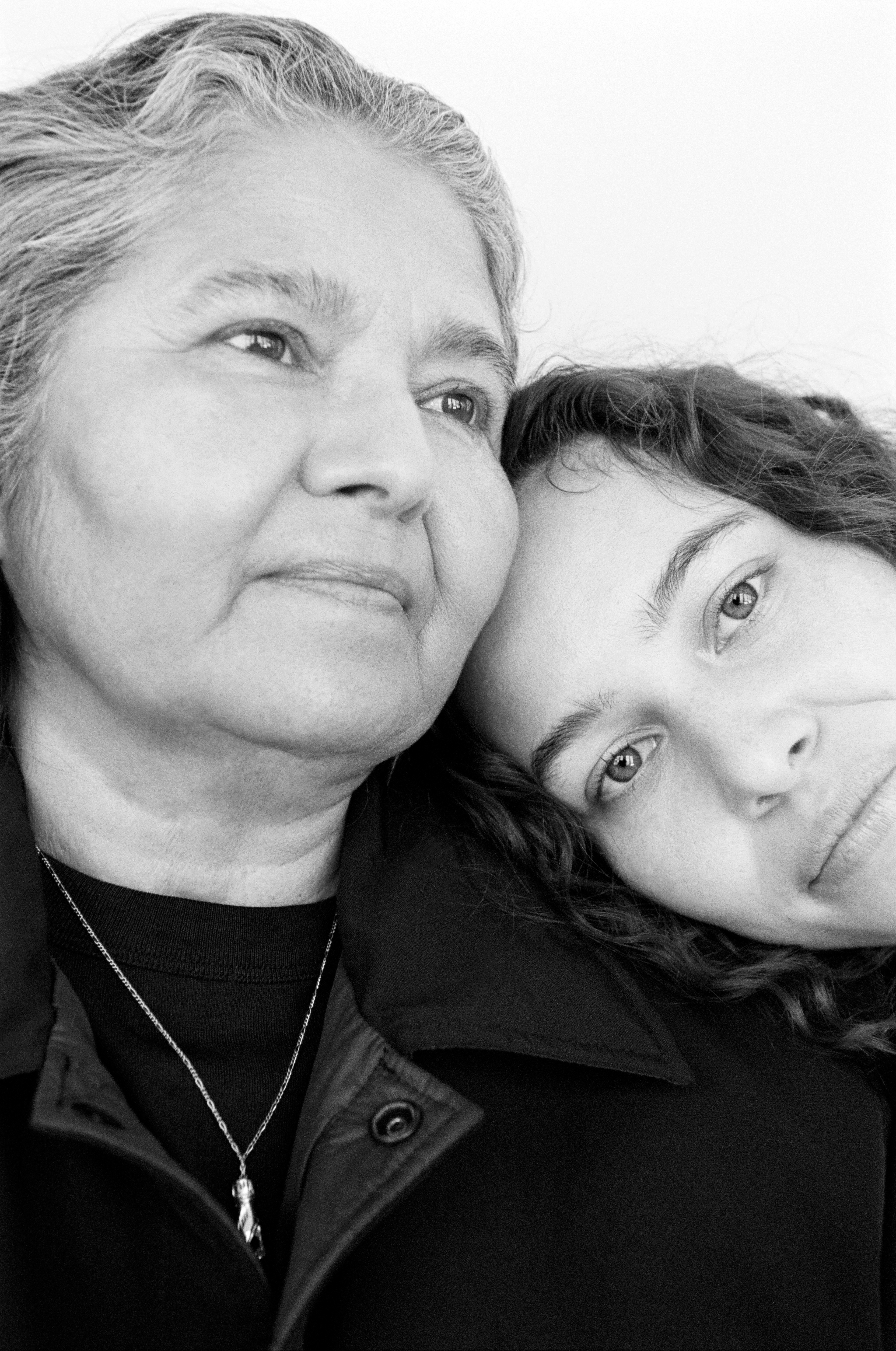
NALLELI WEARS T-SHIRT AND JACKET BY CANADA GOOSE. MONIC WEARS T-SHIRT BY CANADA GOOSE.
NALLELI COBO & MONIC URIARTE
Words: 1787
Estimated reading time: 10M
Nalleli Cobo and Monic Uriarte are forces of nature: mother and daughter in a David and Goliath-style battle with the fossil fuel industry. What started as a struggle to protect the then-nine-year-old’s health (Nalleli, and many others in her South Central LA neighborhood, have faced serious illness that traces back to an oil well down the road from her home) became a massive force in the clean air movement. The pair started off knocking door-to-door, eventually organized a grassroots coalition, managed to shut down the toxic facility—and they keep pushing, to this day, for stronger public health protections in the state of California and beyond.
Despite the lack of investment in their community, despite years gone unheard, Nalleli and Monic share with the rest of the world generations of knowledge of how to care for the Earth and for others. Their belief in the collective is unshakeable. As Nalleli puts it: “My mom always says that if we realized the power that we have, we wouldn’t let any of this [continue]. They try to intimidate us as a tactic. But we have to remember that we are stronger.”
MB: When did the sustainability movement first become personal for the pair of you?
NALLELI COBO: My work really began when I was nine years old, out of survival. I grew up in what’s called a sacrifice zone, 30 feet away from an active oil and gas well that severely impacted my health. From nosebleeds to asthma to cancer—I ultimately had it all, unfortunately. So I fight for policy change to have my story end with me.
MONIC URIARTE: Seeing Nalleli getting sick for no reason, and my neighbors and my whole community… We started organizing ourselves to shut down the oil well. My whole life, my grandparents [taught] me how to save energy. Being sustainable, for us, was economic—but also my grandfather was raised as a native Tarahumara in Chihuahua. They taught him how to protect the land, the air, the elements. My grandfather transferred to me that knowledge and that respect for nature.
MB: Your work in sustainability intersects with other types of advocacy, such as housing reform. In your view, how closely intertwined are social and economic and environmental justice issues?
MU: We used to separate everything: social justice, human rights, the environmental and the economic. In the end, it’s a domino effect. [If our] environment is affected, our health is affected, our economy is affected. We need to see it as a whole.
MB: Your work is based in South Central LA. What are the biggest challenges facing big urban regions like that, that might not be the first to come to mind when the average person envisions the effects of the climate crisis?
MU: It goes back exactly to what I said before. We used to separate [these issues]. But just because we’re living in an urban area doesn’t mean we’re not affected. We have a lack of green canopies, we have a lack of clean water. Air is part of nature, water is part of nature, soil is part of nature. And in urban areas, our relationship with nature is not clear. We need to fix that.
MB: How do you think we might bridge that gap—generate that interest and connection with nature, particularly in urban regions?
NC: The interest and the want are there. When I was growing up, we didn’t have a park. It’s so bad, looking back, but you make do with what you have: The only green space, or green ’lot,’ we had was right in front of the oil well. It was really common for families to have picnics or barbecues on their lawn. Nature just isn’t that accessible where we grew up. I remember my mom would make the trip, take us to parks in other communities. It’s devastating that it comes down to us traveling three zip codes away to see greenery.
MU: It’s a lack of investment in our community that’s [affecting us].
MB: Tell me about working together as mother and daughter. What have you learned from each other’s activism?
NC: I love working with my mom. I hope she feels the same way. She’d better feel the same way! [Laughs] But really, the more you know my mom, the more you know that she’s really the epitome of strength. She’s someone who has always taught and led by example. She always puts her community first and herself last. To show up for others—in whatever time and space they need—is extremely admirable. In the pandemic, when I was going through treatments and she was taking care of me, she still found time to organize grocery deliveries or virtual community meetings. She has never wavered in her beliefs or in her work. It’s a tough act to follow.
MU: You made me cry, Nalleli! It’s an honor working with [my daughter]. She’s shown me what it means to be strong, not only in herself, but strong for the mission. I remember when she was on chemotherapy and she was doing interviews, she was [taking] meetings. Even though I asked, ‘No more organizing, no more work, focus on your health,’ she never stopped. It’s her love and respect for our community, and for a common good, even when she feels sick and even when she was connected to a machine. She’s my hero.
MB: Monic, you talked about learning from your grandfather. It seems like this drive toward community has been passed down generationally.
Yeah, my grandfather raised me. He lost his father [around the age of six] and became the man of the family, for five sisters and his mother. Back in Chihuahua, on the Sierra Tarahumara, the community embraced him and taught him how to use the land. [They also] taught him the basics of respect—how to be a good human on this Earth. He always told me, ‘Nobody owns Earth. We are transients, and while we’re here living, we need to respect the four elements.’ I saw how he opened his arms, asked the higher powers of that land to provide food for others. He collected water on rainy days. He didn’t waste food. That ancestral knowledge, he shared with all the grandkids. It’s a little example, but it’s so deep in me. I transferred it to my kids as well.
NC: I was really lucky to grow up in a five-generation household. I had my great-grandfather until he was 98. My great-grandmother, we had her until she was 104.
MB: They were doing something right!
I wanted to ask about your greatest moment of victory as activists—and maybe about a moment you’re still hoping for.
Last year, we went from a state with no buffer zone to having the largest one in the nation. That’s a historic movement that really shapes the future of public health in California. That said, the win that feels the most special—and I still cry when I talk about it—was when we closed AllenCo Energy, the well I grew up next to. I really do feel it set a precedent, that community activism is enough to shut down one of the biggest industries in the world, the fossil fuel industry. It was truly me and my mom and other community members mobilizing for years, tirelessly, before we culminated that win. When my mom got the phone call that they were [shutting AllenCo down], it felt like the world stopped for us. We still celebrate it every year at this house.
MU: For years, nobody paid attention to us. Even though we and a few other mothers in the neighborhood got 1,700 homes to to make complaints about the air quality, nobody believed us. We started collecting our own data. The Los Angeles Times posted our story. Former Senator Barbara Boxer came to our neighborhood and AllenCo shut down temporarily, but in the end it was our people. We were invisible. So many of us had no rights, because we’re immigrants, because we’re Hispanic, because our community low-income. We’re seen as disposable, but when we show up, when we’re together, when we work for the right thing, this is the result. That shutdown became an example for organizing other communities, creating coalitions to ban urban oil extraction in Los Angeles County.
NC: We lived in a sacrifice zone. It’s in the name. It’s crazy that we have to say, in this day and age, ‘Well, we’re not a sacrifice. We’re real people.’ It’s something that we have to continue to talk about, educate ourselves on, and make noise about, because no human life should be viewed as a sacrifice, especially for profit.
If I can say one last thing… I think it simply is cool that Latinos, as a culture, have always had sustainability ingrained in us. Whether we know we’re being or energy-efficient, we turn off the lights and carpool as much as we can. Every Latina knows the blue cookie tin—we’d get excited, [and then realize] our grandparents were using it as a sewing kit. Whether it was out of necessity or not, they instilled those things in us. I find it really empowering that I get to belong to such a beautiful culture that is so conscious of the world that we live in, especially at a time when there’s so much hate towards us, or hostility or anger or false narratives. Ultimately, to know that we’re part of a family that is so resilient is a beautiful thing. It shouldn’t be ignored.

ANDREEA WEARS TOP BY CANADA GOOSE.
ANDREEA DIACONU
Words: 1351
Estimated reading time: 8M
For Andreea Diaconu, the term “sustainability” can feel overly complicated. Growing up lacking a lot of basic resources in post-communist Romania, she reused and conserved and shared with her neighbors out of necessity; protecting the land wasn’t activism, it was natural and went unquestioned—born out of care for the things and the places that sustained daily life. When Andreea moved to the States at 19, in search of financial opportunity, she was shocked by the culture of excess. But as she took up modeling, she had to prioritize her own survival over concerns about the harms of, say, the very industry that paid her bills. This was the experience that formed the basis of her climate philosophy: People can’t meaningfully engage with any reform movement if their basic needs aren’t met.
In that vein, Andreea argues that new policy must move individuals and families out of the red. She’s educated herself on that point at Columbia University’s Climate School, focusing on food systems, river restoration, and how to leverage change from within powerful industries and institutions. “I think it all boils down to the same thing,” she says. “Are the products that you’re selling or the stocks you’re buying affecting people negatively down the supply chain? If they are, then they’re not sustainable.”
MB: When did the sustainability movement first become personal for you?
ANDREEA DIACONU: It’s always been personal, just because of how I grew up. I grew up really poor in Romania; we didn’t have AC or heat or water most of the time. I moved to the US when I was 19, and all of a sudden I had access to watermelons in the winter. I made American friends, and they were just leaving the lights on when they left the room. It’s always been a part of my life because of how I was raised—the circumstances of my life. I wore my grandmother’s clothes that she tailored for my mom, and she tailored them for me, and then we gave them to my aunt. I don’t know—it’s part of most cultures. It’s new to the Western Front, maybe.
MB: So would you say, growing up, your connection to sustainability was an ethos of not wasting? Did you see those practices as directly connected to the environment back then?
AD: There’s this novel that everybody read in eighth grade when [I was growing up]. It’s about the land and how important it is, and how to tend to it. I saw that they recently took that off the curriculum—moving towards a Western modern curriculum. But in post-communist Romania, everybody was so deeply connected to the land, and everybody still farmed. Everybody had a grandfather who had the farmhouse, and you went there during the summer. You’re picking apples and sharing them with other people, and they’re giving you potatoes or onions or whatever they have. I wasn’t actively thinking of, ‘Oh, I want to protect this mountain, because that’s good for the environment.’ It’s just like, ‘This mountain is where I go to hang out by myself, because it makes me feel good.’
MB: You mentioned something earlier—which is that there’s no set definition for sustainability. That it’s a term that’s thrown all the time. Do you think that’s sometimes to the detriment of the movement’s mission? How can the average person understand what’s truly sustainable and what isn’t?
AD: Everything is so siloed, in all industries. Like in the financial system, what does ESG really mean? Then you have sustainable fashion, then regenerative farming. I think it all boils down to the same thing: Are the products that you’re selling or the stocks you’re buying affecting people negatively down the supply chain? If they are, then they’re not sustainable. If multiple people have to suffer at the end of a product, that’s not conducive to the greater good of the whole system—which then impacts you, even if indirectly. It’ll impact your children later on.
We’ve made everything so complicated. There are all these words that you have to learn, and if you’re working with people on the ground, they don’t know how to navigate that system. I think Amber did a great job with [this portfolio], because you have people navigating policy-level things, people working in NGOs, and people on the ground. And generally, if NGOs aren’t listening to the people on the ground, they should just fuck off. You’re just fighting for grant money that’s going towards a report that’s not gonna do shit.
MB: Did you move here to start modeling? How did you transition into the environmental work?
AD: And after I graduated high school, I moved to escape poverty. I started modeling. I would say that I didn’t really think about the impact of fashion on the environment at all in the first two to three years, because I was kind of in survival mode. That’s kind of my thesis for the environmental movement: You can’t care about the environment if your basic needs are not met. If you can’t pay your electricity bill, or if your mental health is impaired, you don’t have the space to [engage]. The main thing [we need is] policy that supports most people getting out of survival mode—which is a big task. But the more people who are out of survival mode, the more people will care about the built environment.
MB: How do you see your activism evolving, post-fashion?
AD: For a long time, I tried to differentiate my persona that’s working in climate from my fashion persona. There are so many wires to unravel… But, you know, speaking with colleagues of mine who have been doing activist work or grassroots organizing or whatever, a lot of them were like, ‘You can change the system more if you’re inside it.’ So I’ve come back to modeling and [I’m trying] to have conversations—getting people [in the industry] to invest in green financing, for instance. I would say that most of my work has been in food systems and river restoration. When I was at Columbia, we did a workshop on reducing their food emissions across their cafeterias. They actually took our implementation suggestions, and then we talked to Cisco, who provides their food, and they were like, ‘We’re gonna implement this in all of our cafeterias.’ That has a huge downstream effect.
MB: Are there any like figures in the sustainability movement with whom you see yourself in a lineage?
AD: My grandmother, and anyone’s grandmother who’s making somebody’s day brighter. I have zero desire to be famous as an activist. I don’t think I am an activist! But I do want to be the type of person who can help people. We’re living in a time that’s so incendiary; a huge form of activism is just regulating your own nervous system and sharing that with people. So yeah—anybody who sees an issue in their community and is an active participant. Localism is where it’s at with this administration, obviously.
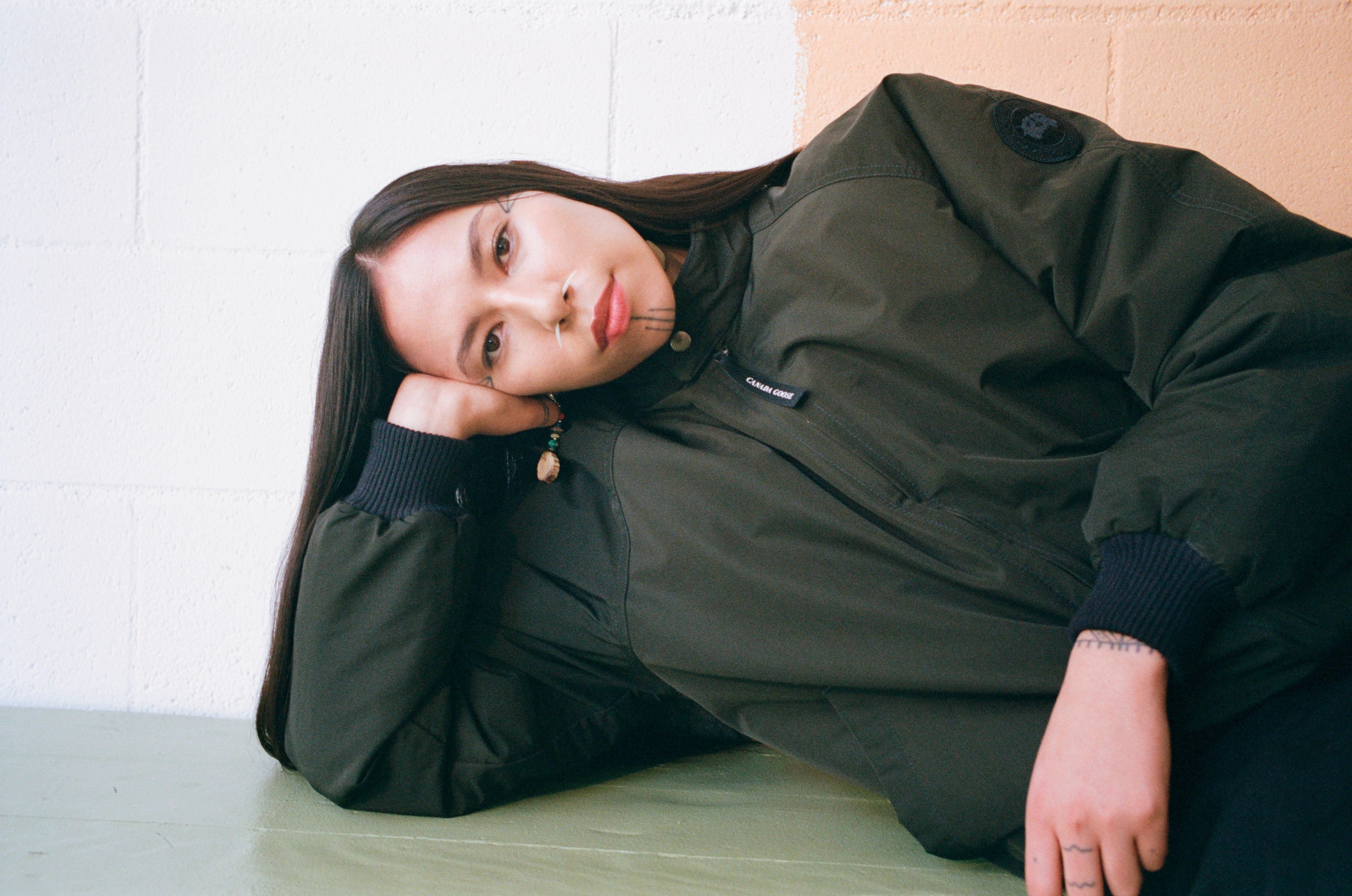
QUANNAH WEARS JACKET BY CANADA GOOSE.
QUANNAH CHASINGHORSE
Words: 1629
Estimated reading time: 9M
For Quannah Chasinghorse, the modern sustainability movement is simply a reflection of the work Indigenous communities have always carried out. She assumes the title “protector” over “activist,” asserting that safeguarding land, water, and ways of life isn’t by choice; it’s an extension of Indigenous identity and survival. In her teens, Quannah began to understand the impact of oil and gas extraction on her hometown of Eagle Village, Alaska; speaking on that issue, in addition to Indigenous rights and Arctic conservation, collided with a burgeoning career in modeling—growing Quannah’s platform and establishing her voice as among the most influential to the youth climate movement.
This responsibility can be heavy, considering the lack of understanding most Americans (let alone the rest of the world) have of Indigenous peoples in their home nations and beyond. Quannah reckons with the weight by leaning on the women who raised her, staying grounded in ritual and tradition, and trusting the power of her voice. Her message is firm: “We’re in a society where we’re so far removed from nature—where we place ourselves above it, controlling it. In order to protect it and preserve it and respect it, we have to understand that we are a part of the life cycle, we are a part of nature, we are nature in itself.”
MB: When did the sustainability movement first become personal for you?
QUANNAH CHASINGHORSE: I’m Hän Tr’öndёk Hwëch’in-Gwich’in from Eagle Village, Alaska and Sičangu-Oglala Lakota from the Rosebud Reservation in South Dakota. As an Indigenous person, we have a responsibility to our lands, to our people, our culture, our traditions, our way of life—to protect what we have left of it. Growing up, sustainability was a natural thing. Indigenous people, we never seek to become advocates or land protectors or water protectors. It just happens out of responsibility and necessity. Our existence is inherently political. I guess it got more real as I became a teenager and started to recognize how deeply impacted our people are, in regards to climate change, to oil and gas extraction. I started to really see things for what they were.
MB: Have you found it difficult to balance your career in fashion with your advocacy?
QC: In the beginning, it was challenging to navigate it. The women who raised me, they’re all incredibly smart. I turn to them when [I’m facing] difficult choices, whether or not I take a job. I have a good support system and community that wants to see me succeed, but also wants to make sure that I feel good about the work that I’m doing. It really is who you surround yourself with and how you move in this world. I stay very close to my culture, I have my rituals, so I feel grounded and rooted in the ways that I was raised.
MB: You call yourself a “protector,” rather than an activist. Could you speak to the distinction between those two terms?
QC: For many Indigenous people, the word activist can feel performative. Somebody will post on Instagram, speaking up on something so simple, [and claim the label]. Overall, we do need more activists. We need more people who care and use their voice. But we don’t get to pick and choose what we stand for. With this new administration, we had our birthright citizenship questioned as Indigenous people to this land. We had Native people being detained. It’s scary living in a society that doesn’t understand us, that doesn’t respect us—and so when it comes to this work, I don’t like to be called an activist, because I am protecting my ways of life, my home, my people, myself. And many others feel the same. I’m not trying to talk down on activists; I think it’s incredible work. But a lot of the time, how they operate is a reflection of the work Indigenous people have been doing for a very, very long time. It’s really important that our titles are respected. People can feel, not exactly threatened by it, but probably removed from it. They want to be part of [these identities], but since they can’t or don’t understand, they want us to conform. And that’s just not who we are.
MB: If you could impart a lesson or truth you’ve gained from your Native community to the rest of America and the world, what would it be?
QC: We’re in a society where we’re so far removed from nature—where we place ourselves above it, controlling it. We’re making decisions on its behalf. We’re taking away its rights and freedom to exist, and in order to protect it and preserve it and respect it, we have to understand that we are a part of the life cycle, we are a part of nature, we are nature in itself. Only then are you able to do the work.
MB: What’s been your greatest moment of victory, across your activism?
QC: The first helped me recognize the power of our voice: I was 13 years old and our local school district was discussing whether or not to change Columbus Day to Indigenous Peoples Day. They were trying to keep the meeting under wraps, but my aunt found out and took me out of school to speak on my experience growing up. You know—little kids come home to their parents, excited to tell them about what they learned in school that day. We told our mom, ‘Columbus was such a great explorer!’ She had to sit us down and explain the history without being too gruesome, because the reality of it lies in his own journals, and it’s not pretty. It’s quite literally disgusting. Having to have that conversation with your kids as an Indigenous person is a very harsh reality. And you start not trusting the school system, you don’t trust your teachers. My mom had to have that conversation with each of us, and each time, we would end up in tears—wondering why. One of our elders, a local chief, was on his way to work and heard [the meeting] being broadcast on a local radio station. And as I finished speaking, he walked into the room and stood behind me. I’d been alone, the whole board right there in front of me—as a little kid, like, that’s intimidating. I saw him and felt a big weight taken off of me. He spoke right after me, like, ‘If a kid is skipping school to come and talk about this, you better take it seriously.’ That’s when they [renamed the holiday] in our district.
And then, we have this big conference called the Alaska Federation of Natives; it’s our biggest gathering, a place to sing and dance. Everyone sells their arts and their jewelry and their crafts. We also have important tribal meetings, finding solutions for the issues that still plague our community. When I was 17, I put forward a resolution with someone I consider a younger sister, stating that there was a state of emergency in Alaska, and that we needed to shift away from oil and gas. Mind you, there’s a thousand people in the room. We’re in a big hockey stadium. [A leader] of a big oil corporation came up and tried to argue us on our points. We didn’t back down. They said things like, ‘You kids don’t know what it’s like to have to build a fire to keep the house warm.’ I had to go up there and say, ‘Actually, I do. My family didn’t depend on oil and gas.’ It was the first time in history that a resolution was passed on the floor of AFN without an amendment. Some of the oil corporations that were supporting [the conference] pulled out. They lost a lot of money.
MB: What are you working on these days?
QC: There’s a lot happening in Alaska. The last time this administration was in office, we had a lot of work to do—and now we’re back at square one. I’ll be going to DC to strategize with the Gwich’in Steering Committee; we’re trying to sue Donald Trump, and we have a bunch of partners working with us on this. Our lands are at risk. We’re doing it to protect the Arctic.
There’s also a movement called No Ambler Road, [against a proposed 211-mile private industrial route between Alaska’s Dalton Highway and the Ambler Mining District.] It affects our salmon—our food security. People don’t even know what’s going on in Alaska, because it’s so far removed from the rest of the US. But we’re still a part of the States, and we need more people to know what’s going on so that we can protect this vast [region] of North America.
EIC + CREATIVE DIRECTOR
SARAH RICHARDSON
PHOTOGRAPHER
MAX FARAGO
FASHION EDITOR
SHAWN LAKIN
TALENT
AMBER VALLETTA AT THE SOCIETY, QUANNAH CHASINGHORSE AT THE SOCIETY, ANDREEA DIACONU AT DNA, NALLELI COBO, MONIC URIARTE, STEPHANIE SUGANAMI
HAIR
TEDDY CHARLES AT NEVERMIND
MAKE-UP
HOLLY SILIUS AT R3
SET DESIGN
JEREMY REIMNITZ
PHOTO ASSISTANT
KEITH KLEINER
SPECIAL THANKS
CANADA GOOSE
Beyond Noise 2026
EIC + CREATIVE DIRECTOR
SARAH RICHARDSON
PHOTOGRAPHER
MAX FARAGO
FASHION EDITOR
SHAWN LAKIN
TALENT
AMBER VALLETTA AT THE SOCIETY, QUANNAH CHASINGHORSE AT THE SOCIETY, ANDREEA DIACONU AT DNA, NALLELI COBO, MONIC URIARTE, STEPHANIE SUGANAMI
HAIR
TEDDY CHARLES AT NEVERMIND
MAKE-UP
HOLLY SILIUS AT R3
SET DESIGN
JEREMY REIMNITZ
PHOTO ASSISTANT
KEITH KLEINER
SPECIAL THANKS
CANADA GOOSE
Beyond Noise 2026
