Noise
ISSUE NO. 04: POETICS OF THE EVERYDAY
POETICS OF THE EVERYDAY
Words: 249
Estimated reading time: 1M
In the footsteps of Perriand, Peretti, and Bo Bardi, the next generation of female designers is crafting the language for living well
By Alex Tieghi-Walker
In the studios of Grace Prince, Kristen Wentrcek, Sofie Middernacht, Najla El Zein, Hannah Kuhlmann, and Simone Bodmer-Turner, the rhythm of work is slow and deliberate. Materials are formed into structures and forms that feel simultaneously inevitable and unexpected. The dialogue here is between the hand and the material—between the imagined and the realized.
The six designers, each working from different corners of the world, are part of a new generation of makers unafraid to blur categories, moving seamlessly between applied arts, design, and craft. They follow in the lineage of figures like Charlotte Perriand, Elsa Peretti, and Lina Bo Bardi, who would also shift between disciplines, and whose visions were built as much from a deep engagement with making as from ideas on paper.
For this group, the studio is a laboratory and a sketchbook, where form emerges through touch, repetition, and risk. The confidence in this type of practice manifests in knowing when to stop—when to let work speak for itself. They know that being present is just as important as creating.
GRACE PRINCE
Words: 953
Estimated reading time: 5M
Grace Prince’s journey through Europe, from London to Milan to Zurich, has shaped a practice rooted in artisanal craft and material curiosity. Drawn to the sculptural possibilities of metal and wood, Grace immerses herself in complex processes like welding and steam bending, finding beauty in imperfection and unpredictability. Her work, which ranges from functional furniture to lyrical candle installations, reflects a tender language. The artist challenges traditional design roles, blending meticulous research with a poetic sensibility that reveals the inner ambition of materials and the power of gesture.
Hi, Grace. I can’t keep track of where you are at any given moment. Where in the world have you found yourself today?
Ha—right now I’m in Zurich, but I have been hopping about over the years. I grew up in London, and studied at Central Saint Martins; my first job was in Milan for the artist Vincenzo de Cotiis. I moved to Zurich to work for [Dutch architect] Anne Holtrop as a researcher at the university ETH Zurich, which is where I am today.
I love Milan, where I spent a lot of my childhood. Do you miss Milan?
Yeah, I do miss Italy. When I was working for Vincenzo, I was traveling a lot and visiting foundries and factories. I really got to experience the country. After two years, I started making my own work and developed my personal network in Italy. Artisanal practices are so important to my work, so when I find the right maker to realize my designs, I just stick with them and they become family.
You work with a range of materials. What prompts you to move from one to another, or to combine materials in the way that you do?
I suppose I’ve always had a fascination for material processes, and that’s why, more recently, Anne reached out to me to be his researcher. When I become fascinated with a material, I end up diving down its rabbit hole.
I definitely think of metal when I think of your work.
Yes. My work, for the most part, revolves around metal. I just bought a welding machine last week, and all morning I was welding—I’m obsessed! I will say it’s very difficult, and it takes a long time to understand how to do it, and you have to have a really steady hand. You melt one side of the metal, then the other side, then at a certain point they’ll merge.
That must be so satisfying.
When you get a really, really clean weld, you’re like, Oh! Beautiful! I’ve been experimenting to get even thinner joins, or to change the shape of the metal structures I’m working with; it becomes a very sculptural process. Same with steam-bent wood; I just made a collection for Béton Brut from defect pieces of steam-bent wood. I was visiting a bending workshop, and they took me past this room where they put all the ‘rubbish’—the twisted, deformed shapes—but I was so interested in it all. Basically, to bend wood, you put it in a steam oven, pull it out quickly, and clamp the piece into a form. And sometimes the wood just doesn’t want to behave. So it will crack and twist and it’s really stunning.
I love these processes in design where the pressure is really on—you have such a limited amount of time to create what you need to. There’s drama and tension in it all.
It becomes extremely intuitive. And I think that’s when you can tell who’s got it and who hasn’t got it. Who’s great to work with, who isn’t. Because when that intuition is in place, it either clicks or it doesn’t.
But also not knowing how something comes out is interesting—the imperfection.
Exactly, there’s poetry of fragility. Imperfection is welcomed in my practice, and it’s always been there. It’s not that I want my work to be ugly, per se; it’s more like this is the way the material wants to be.
I associate metalwork as a hypermasculine industry. When I think of welders, I picture tough, hunky Irishmen hammering rivets into the hull of a steamship. When you go to workshops, are people excited by you as a female designer?
Yeah, that stereotype exists, a hundred percent. The people I work with have been welcoming, and it’s obvious that I’m there to work. But that misogyny is a sad part of the industry. I completely agree with you. I do wonder, when I make these sorts of gentle forms—
—I actually think of your work as more… monastic? The show you did at Oxilia Gallery with the candles, it was poetic. Is that something you look for in design elsewhere?
I would say it’s kind of all about that. It’s this very slow, sensory process. It’s about building up charge to make that gesture, or to pull a gesture back. Because to reach that type of poetic principle, I want to shift an element of the sensory field via subtle compositions that orchestrate a mode of beauty that is not full presence, but one coated with a poetic absence.
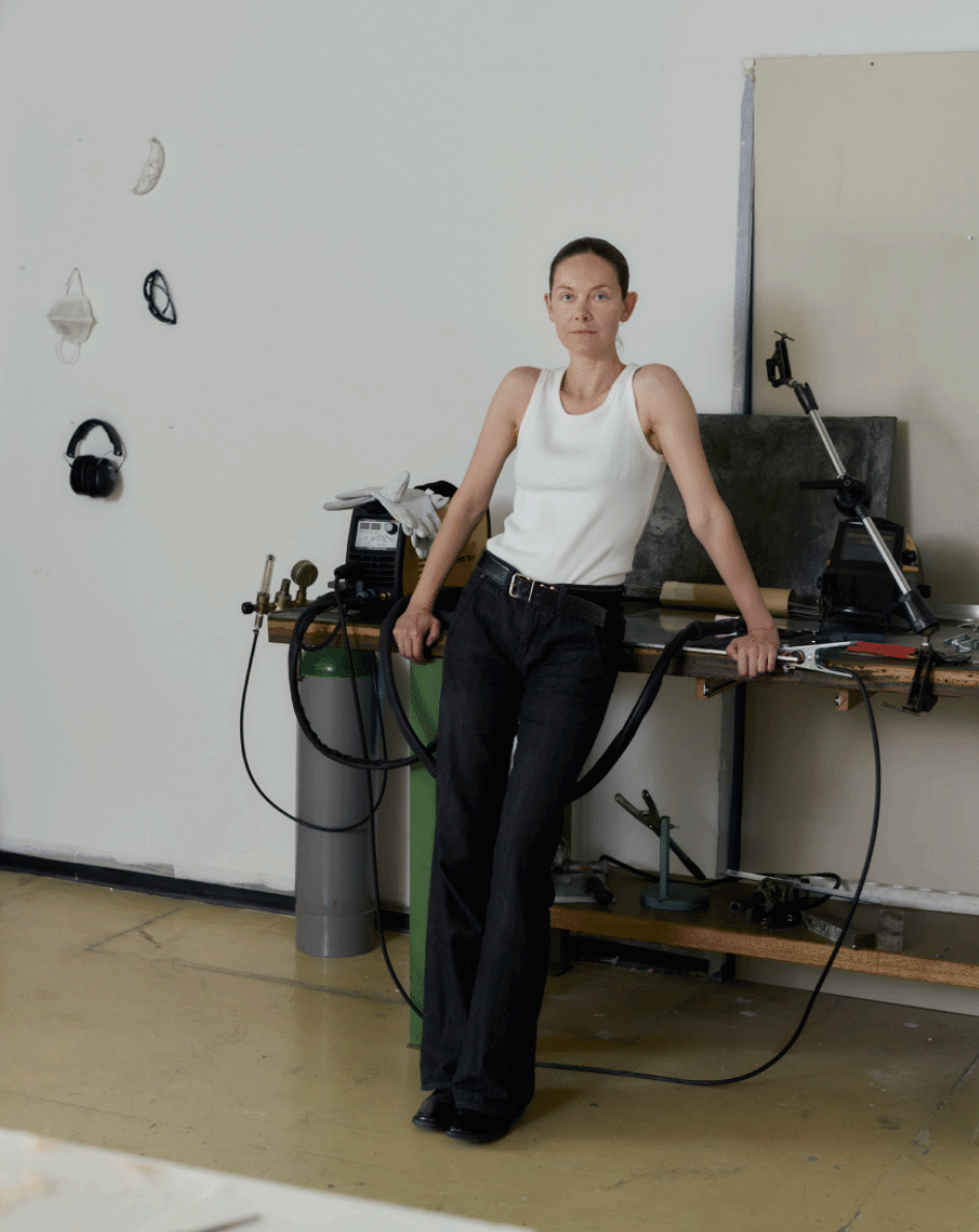
Grace Prince by Flavio Karrer
HANNAH KUHLMANN
Words: 849
Estimated reading time: 5M
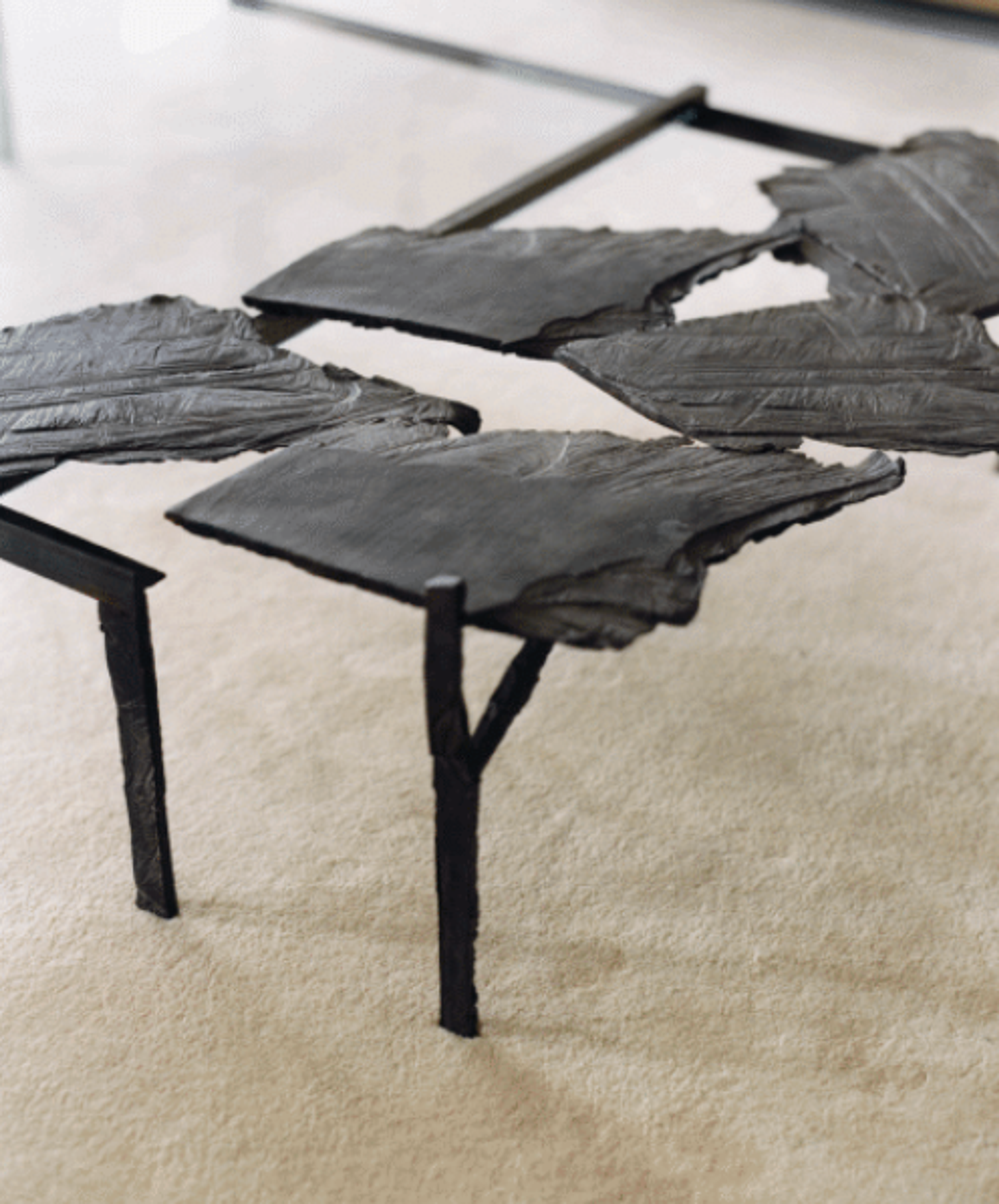
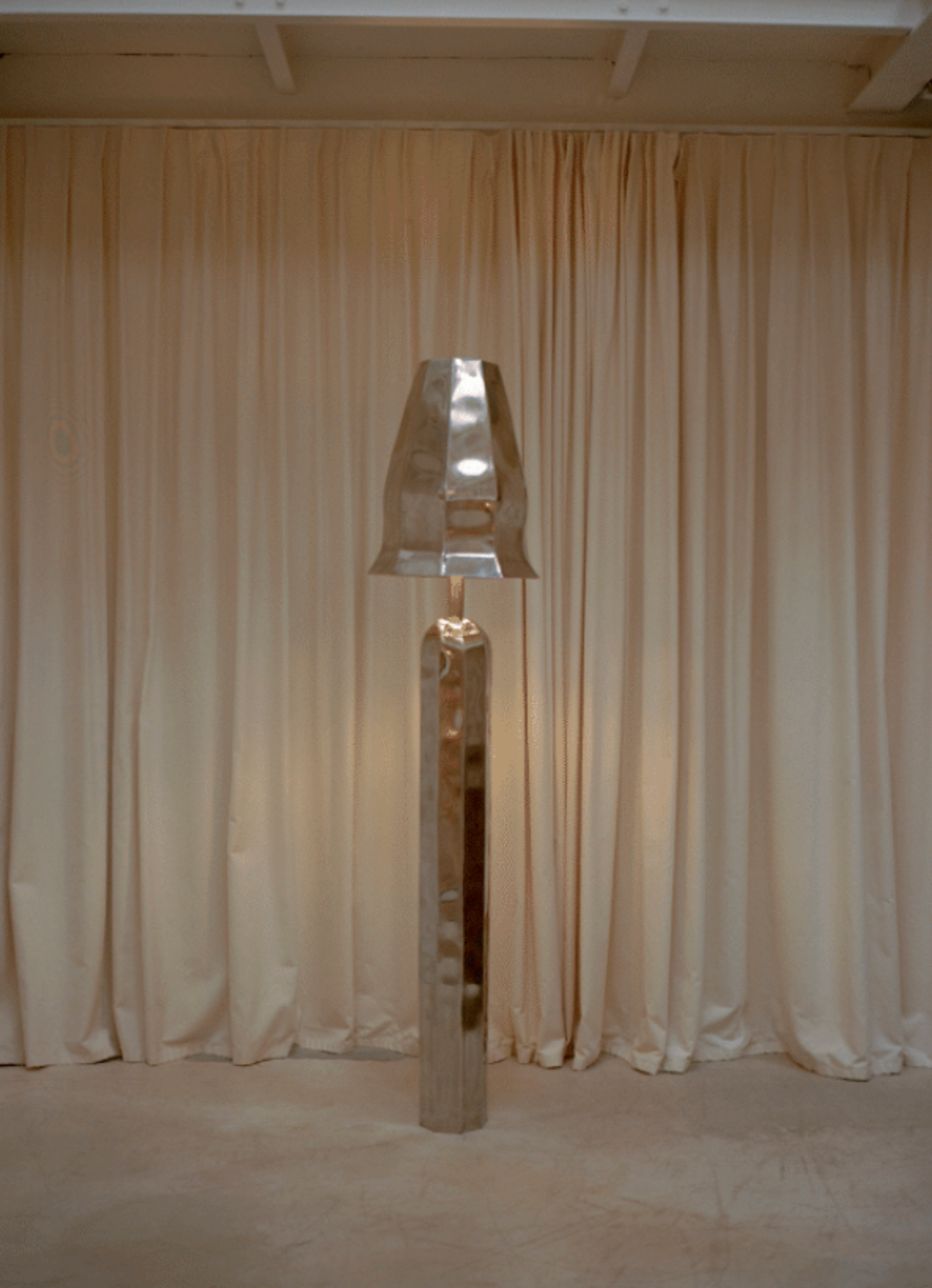
In her Cologne workshop, Hannah Kuhlmann transforms steel—a material associated with industry or heavy-duty design—into forms that feel unexpectedly gentle. Working mostly alone in her studio, her process is slow, hands-on, and deliberately imperfect. Welds remain visible, bends remain in tubes of metal, and the trace of Hannah’s hand is ever-present. Metal is both hard and soft simultaneously, and each moment of the artist’s making is a negotiation between fragility and force. Produced in small series, she sees her works as ‘companions’ in her practice, messengers of the surprising playfulness she tries to convey through her objects.
Hannah, you’re just back from Vienna Design Week—how did it go?
This year I worked on a really fun exhibition, where you had to walk through a closet to see the works. When you arrived at the exhibition you had no idea that there was this extra body of work to see. It’s been busy lately. I’m a one-woman show in the studio, you see.
I mean, your pieces have so much character—perhaps they are your studiomates?
[Laughs] Yes, I do see my pieces as tiny friends, mainly because I spend so much time with them. They’re carrying me through my daily life.
Stainless steel has become a signature material in your practice. What do you find compelling about its character, and what possibilities does it open up for you?
I like that metal appears hard and industrial, yet I can work it into something that feels gentle and kind.
Do you acknowledge or hide its imperfections?
I enjoy that steel can be highly polished and that you can achieve a mirrored effect; you can make an imperfection appear perfect by smoothing the surface. It gives a form a very high-quality, durable, and contemporary feel.
How do you negotiate between control and surrender when working with metal?
It requires both. On the one hand, I approach it with a clear idea of form and construction. On the other, there is always a moment where I have to let go, to surrender a little, because the material has its own will. Welding, polishing, bending—these processes often bring surprises.
Perhaps it’s a balance between directing and listening.
Yes, but also it’s a question of force: Technically speaking, metal is a relatively soft material that can be shaped in many ways, but it also has limits. In my more recent works, I embed gemstones, almost like birthmarks, to mark those points where the material resisted.
Many of your works invite a heightened awareness of domestic objects. What happens when an object both familiar and strange enters the home?
I think it shifts perception. If an object feels at once recognizable and unfamiliar, it interrupts routine. A table, a lamp, or a chair suddenly becomes more than functional—it becomes a companion, something that makes you pause, reflect, and perhaps see your surroundings in a slightly different way.
Your lighting pieces engage not just with form, but also with shadow and reflection. Do you see light as a kind of material in its own right?
I haven’t really thought of light itself as a material. I usually design my pieces without the lighting element, then when it comes into play, it feels like a sunrise—as if something external enters the work and redefines it.
How do you see imperfection contributing to the emotional or poetic resonance of an object?
Perfection often feels sterile. Imperfection gives an object a certain humanity. A visible weld, a surface that isn’t flawless—these details create intimacy and they make the object approachable. They can even add humor or tenderness. I like that thought very much: I don’t want things to be taken too seriously. I also don’t like when people take themselves too seriously. If one leg out of six isn’t completely straight, it makes the piece more alive.
Which part of working with metal is most exciting? You mentioned you do everything, from the welding to the bending.
I don’t know if you played with candle wax when you were young—but if I have to explain welding to a person who has no idea what welding is, I [talk about it] like that. If you have thin wax pieces, you can bend and glue them together with heat to make one piece. I love the magical process where parts of metal become one.
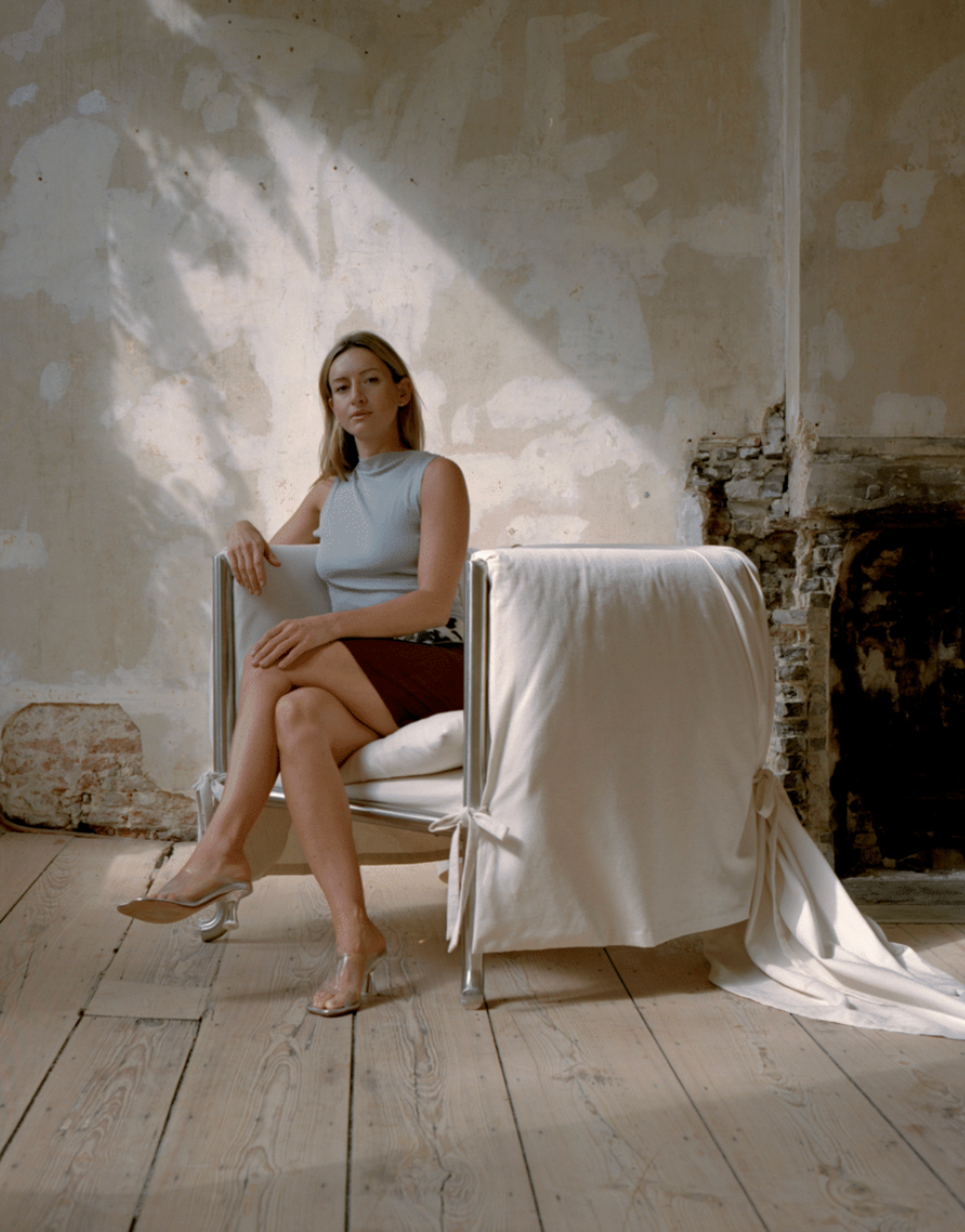
Hannah Kuhlmann by Marisol Mendez
KRISTEN WENTRCEK
Words: 877
Estimated reading time: 5M
Kristen Wentrcek has an ever so playful approach to making revels in the unexpected, transforming everyday and unconventional materials into vibrant, tactile creations. From vinyl-coated foams inspired by karate shinguards to diffraction films that color her lighting fixtures, her work is a joyful exploration of texture and form. Her bold color palette draws from the landscapes of the American West, adding energy and contrast to pieces that are at once visually arresting and in dialogue with their surroundings. Embracing both success and failure, Kristen’s process thrives on experimentation, inviting viewers to reconsider the potential hidden within the familiar.
Kristen, one of my last memories with you was of trying to roll those big, foamy sofas you made out of London’s Cork Street Galleries.
Oh gosh, those were big. I remember spending so much time cutting up that material to make those works. It’s funny when you spend so much time with a material, cutting it up, painting it, finessing it—to then see how others react. They thought the pieces would be hard, but they were really soft.
But the unexpected, I feel, is very much part of your language?
Totally. For me, the process of making stuff is playful, so the final pieces will feel playful, too. We used diffraction film for a bunch of lighting fixtures, it was such a unique material to work with.
Your works have an incredible materiality to them. I never know exactly what they’re made from.
We’re always playing with new materials for our work—that’s sort of the whole point. Have you ever done karate?
[Laughs] No, and I don’t know where this question is going…
There’s a material that gets used in a lot of sports equipment: It’s this vinyl coating that they put on top of foam. They make karate shin guards with it. The material was super hard to find, and complicated to work out how to use, but we did it. Our love for the material started from the shin guards. [Do you know] those weird gel things on bicycle seats? That stuff is so weird. I would love to do something with that.
I broke my coccyx skiing when I was like 13, and I had to walk around with a gel pillow. I’m imagining furniture made from that!
Oh gosh, we were showing with our friend, who had a lovely gallery on Orchard Street, and I bought us some tripe to play around with.
Wait, what? The animal material?
Yeah, cow stomach lining that I thought I could dry out for a sculpture. It was a total failure! We’ve tried so many. We put coal in a coffee grinder for another project.
Does the experimentation ever go wrong?
Yes, but that’s the best part. All the fucked-up versions of my work are the most interesting. I’ve been messing with fiberglass a lot. And people always tell me it’s a difficult material to work with, but I was like, Holy shit, I’m starting to sort of get the hang of it. And then you think, Okay, I get to mess with this thing again and again. The colors we use in our work are so constant, so it’s nice to have material as the changing element.
Your color palette is really incredible. How do you describe the range?
It’s probably more easily defined as an industrial palette. But I think it’s also quite Western.
Western as in Utah, Colorado, Arizona?
Exactly. I mean, colors in nature do instinctively line up based on where they are; there’s an incredible harmony between the union of those colors so particular to a place.
Do you associate certain colors with different materials? Like, you’d never paint or apply a certain color to that gel you were talking about?
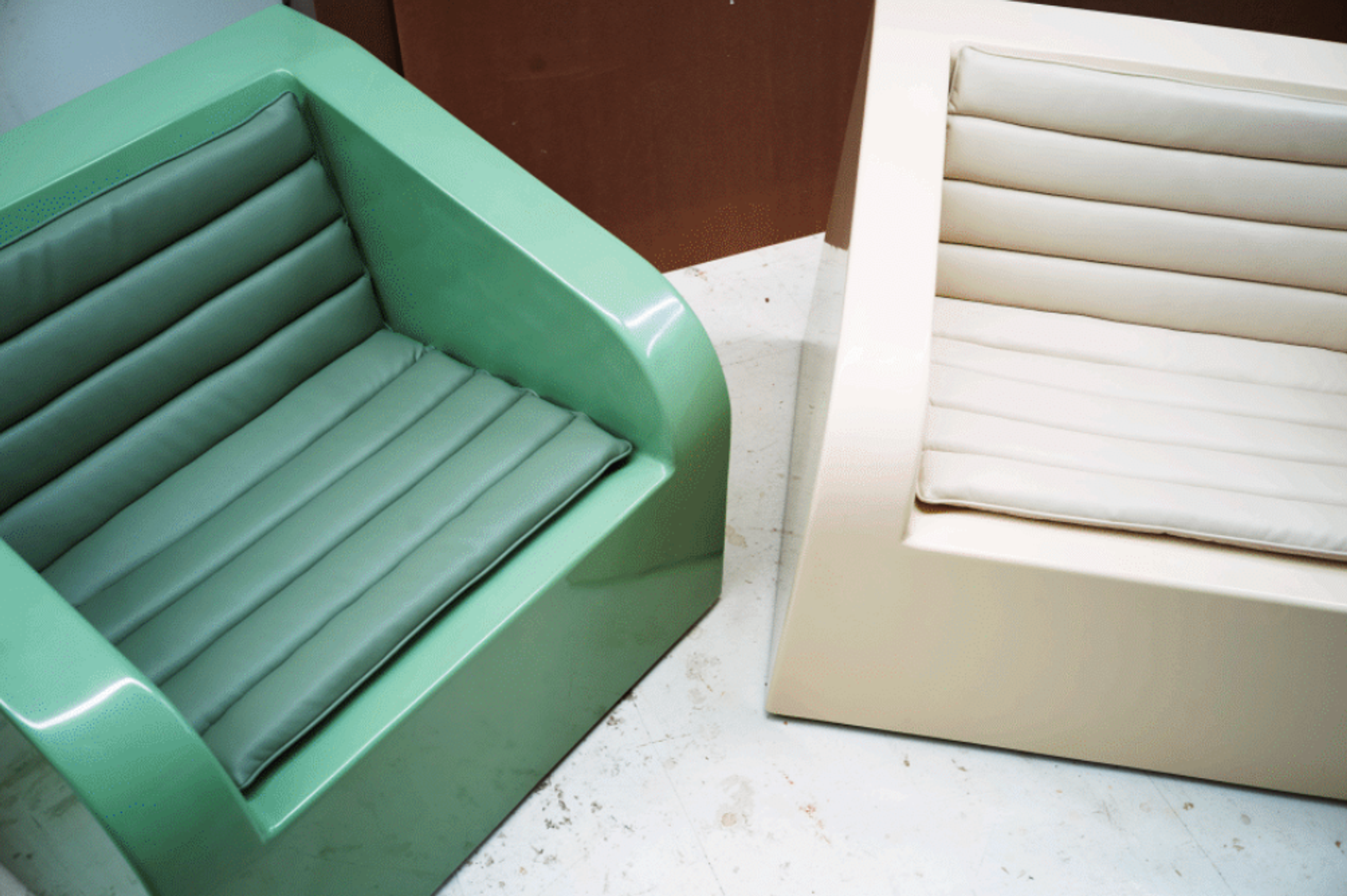
It’s more like some colors are better when they have a gloss element. Others work better if they’re matte. Colors on our works are thought about as dynamic. We did these chairs in the Stüssy store with Willo Perron and Brian Roettinger. In this case, they picked green—and I thought it was such a strange color to pick, but it looked so good in the space. The context made this green work.
But color—and the materials—obviously make your work quite ‘loud.’ Your pieces aren’t just shy and quiet in the corner.
I know what you mean. I think, with my work, it’s just that there are so many different variables—you have the form, then the form with the color, then you add the strange textures in. Sometimes I find it so weird to see my pieces in someone’s home.
I love your weird, noisy little world.
[Laughs] Me too.
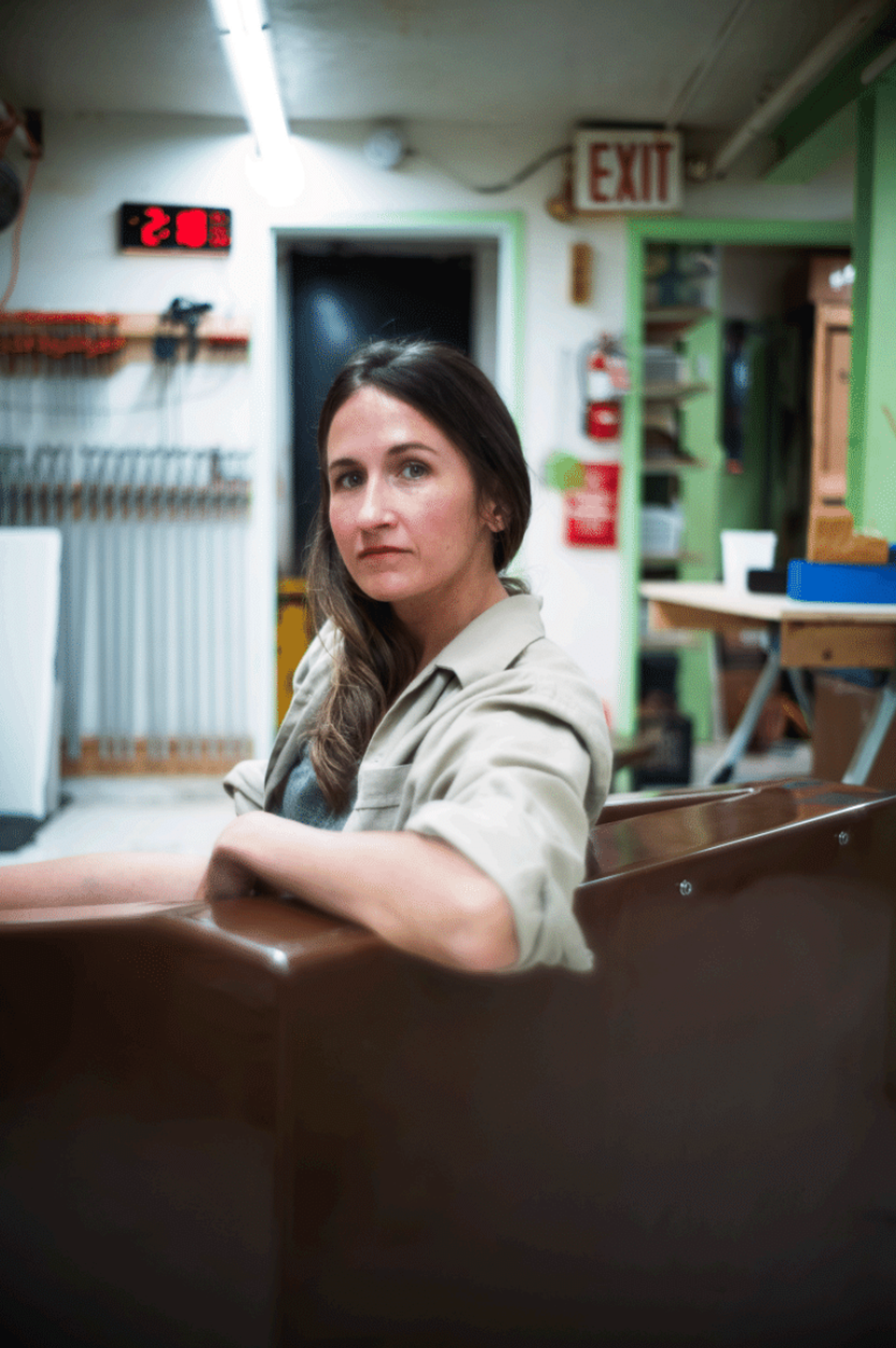
Kristen Wentrcek by Sara Messinger
NAJLA EL ZEIN
Words: 896
Estimated reading time: 5M
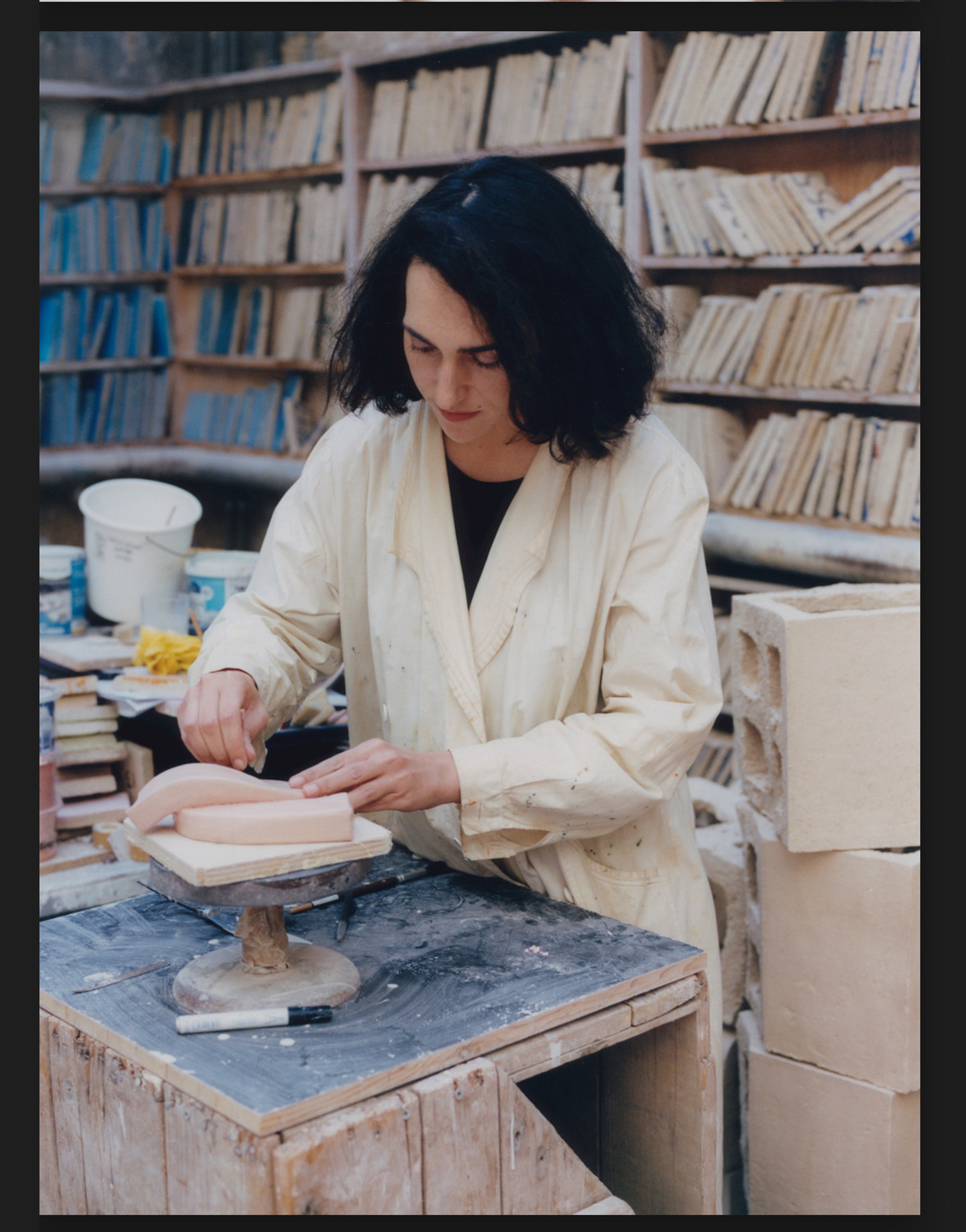
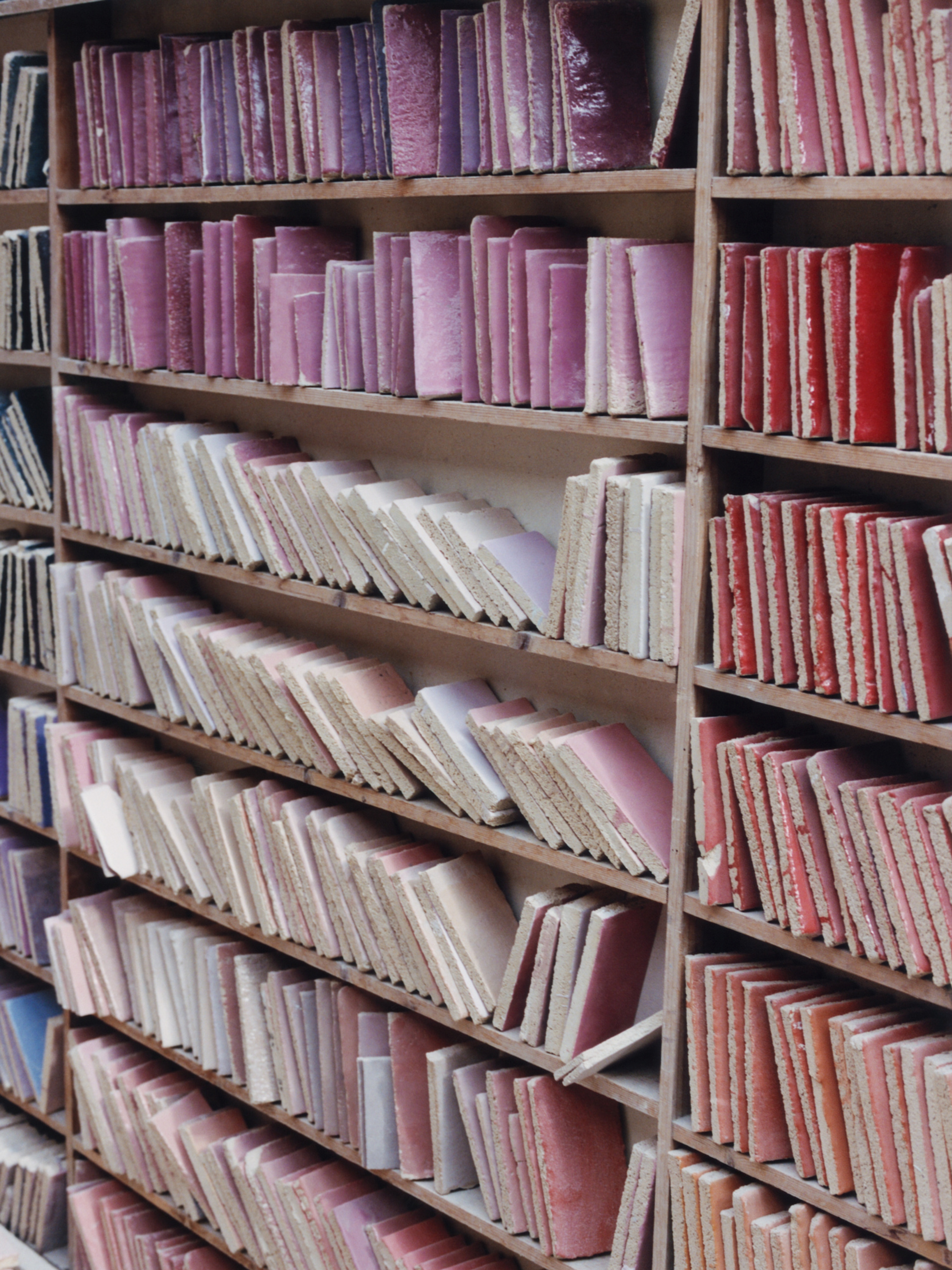
Najla El Zein is a Beirut-born, Amsterdam-based designer working in stone and glass. Her practice animates the weighty materials with curious intent, stitching together conversations about materiality, identity, and emotion. Her 2019 solo show Transition at Friedman Benda summarized key tenets of her practice, as she explored the limits of material and form through strength as it contrasts with softness. Najla approaches natural materials with soft power, seeing stone itself as a partner in a process that carries deep (often centuries-long) history and cultural resonance. Her studio is filled with maquettes of future creations, their small scale giving no sense of the force the final works might hold.
Tell me about those pieces on the wall behind you. Are those your maquettes?
Yes, those are my maquettes. They’re my little babies.
Do you keep all your maquettes?
Yes, but this is really a third of what I produce. They’re the first thing that comes out of me; the first step of my process where my hands and my body are creating works.
I like to think about what happens when ideas get put to the side—do they get resurrected? Do you sometimes come back to maquettes many years later, like, Oh, actually, now’s the right time for this to come into the world?
Yeah, definitely. My work is very much connected to where I am at a certain moment; it accompanies my own experiences. It’s very much related to a certain context, also in terms of identity. For me, but also for many fellow artists, we’ve needed this time while so much is happening in the world to process things.
Do you think stone, as a material, forces you to slow your process down just because of the time it takes to carve?
The Ceppo stone that I work with is made of so many different pebbles that have nothing to do with each other—[they] just met through nature and the movements of the earth and came together. So by itself, a stone like this already has such an interesting history of how it became what it became.
I like you mentioning the history of the stone. There’s such great responsibility as an artist or a craftsperson to honor the legacy of a material.
Materiality to me is everything. I’m drawn to natural materials. You can only be humble when you sit in front of a block of stone. I was very intimidated the first time I had to work with it. Stone, as you say, has been there for thousands of years. It carries so much history. And it speaks to you—it’s a collaborative material. You respect it and bring it out to what it’s supposed to be and express and give.
Stone feels so strong and everlasting. But when you’re working with it, do you find its softness too?
Yes, of course. Softness is embedded in the material. Stone has been formed over thousands of years—through our waters, our fires, and the movement of our earth.
You mentioned that some of your stone is from Lebanon. What’s the stone that you mostly work with?
I have access to a huge library of stones in the MENA region. Not just from Lebanon, where we do have really beautiful stones, but everywhere in the region. The way that I work is very spontaneous. I either connect with a stone that I see, or I don’t. It’s more about expression and how it can serve my narrative.
When a piece goes to a museum or a collector’s home, does it change how you think about it?
I don’t miss the work in a nostalgic sense, but I do feel the shift. In the studio or at the workshop, the relationship is intimate. When it leaves, it begins a new life with others, elsewhere. It becomes part of a wider story, and I think that’s beautiful. In some way, it finds its purpose.
You grew up between different cultures, and now your studio is in Amsterdam. I’m curious, do you think this idea of ‘softness’ changes depending on culture, like softness in Amsterdam might not mean the same thing as softness in Beirut?
The multiplicity of perspectives has shaped me, and inevitably, it shapes the work as well. I do think that, in some ways, softness can be considered cultural. It can mean openness, or vulnerability. It can also be an offering or a form of generosity. But I think of softness as something you feel in the air, in the light, in your surroundings. Beirut has so much softness, from its Mediterranean culture to its golden sunlight. Amsterdam offers a different kind of softness, through the city, the simplicity of living there, its parks, its atmosphere, and of course, its mesmerizing light and skies.
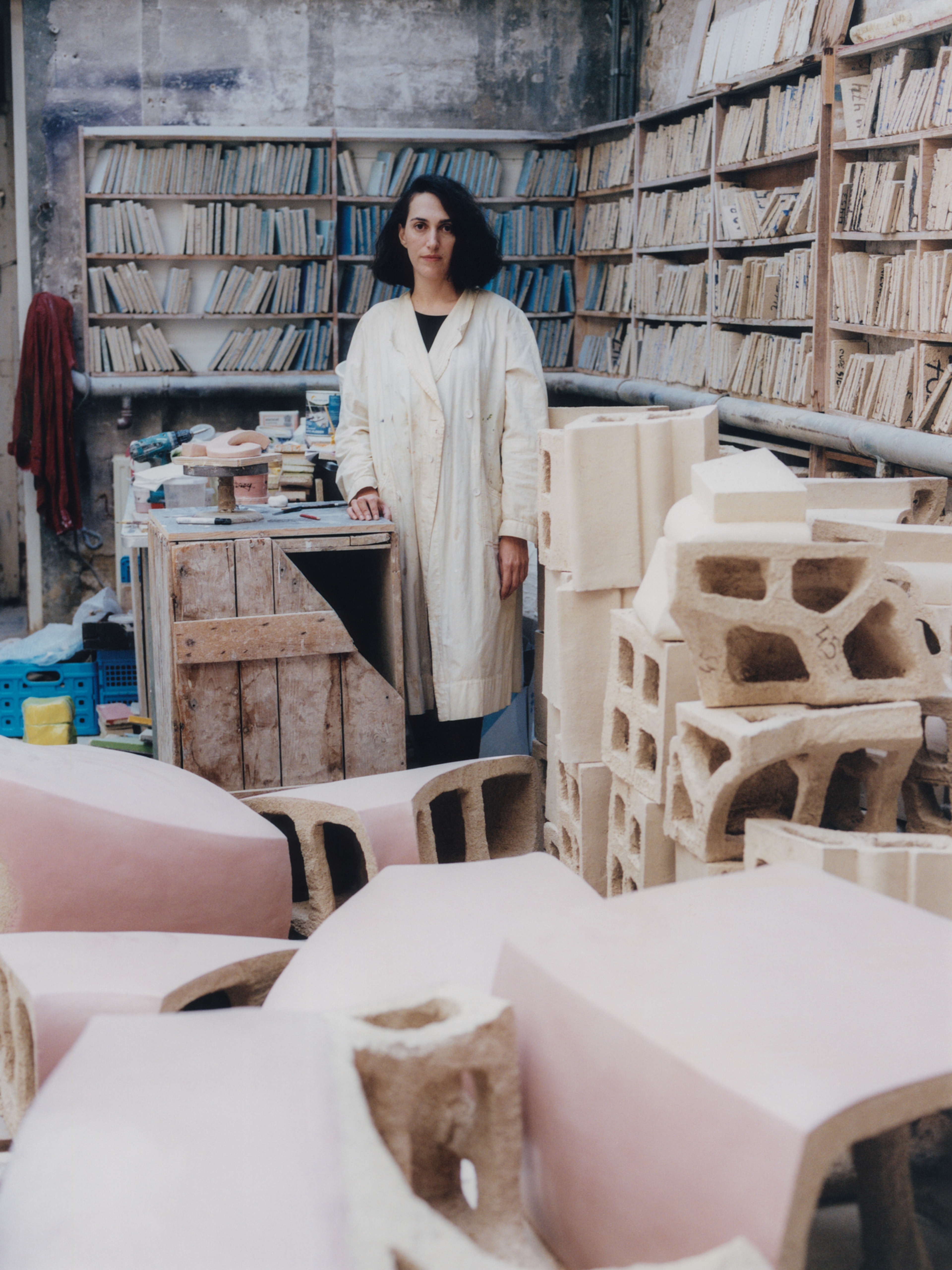
Najla El Zein by Andreas Knaub
SIMONE BODMER-TURNER
Words: 950
Estimated reading time: 5M
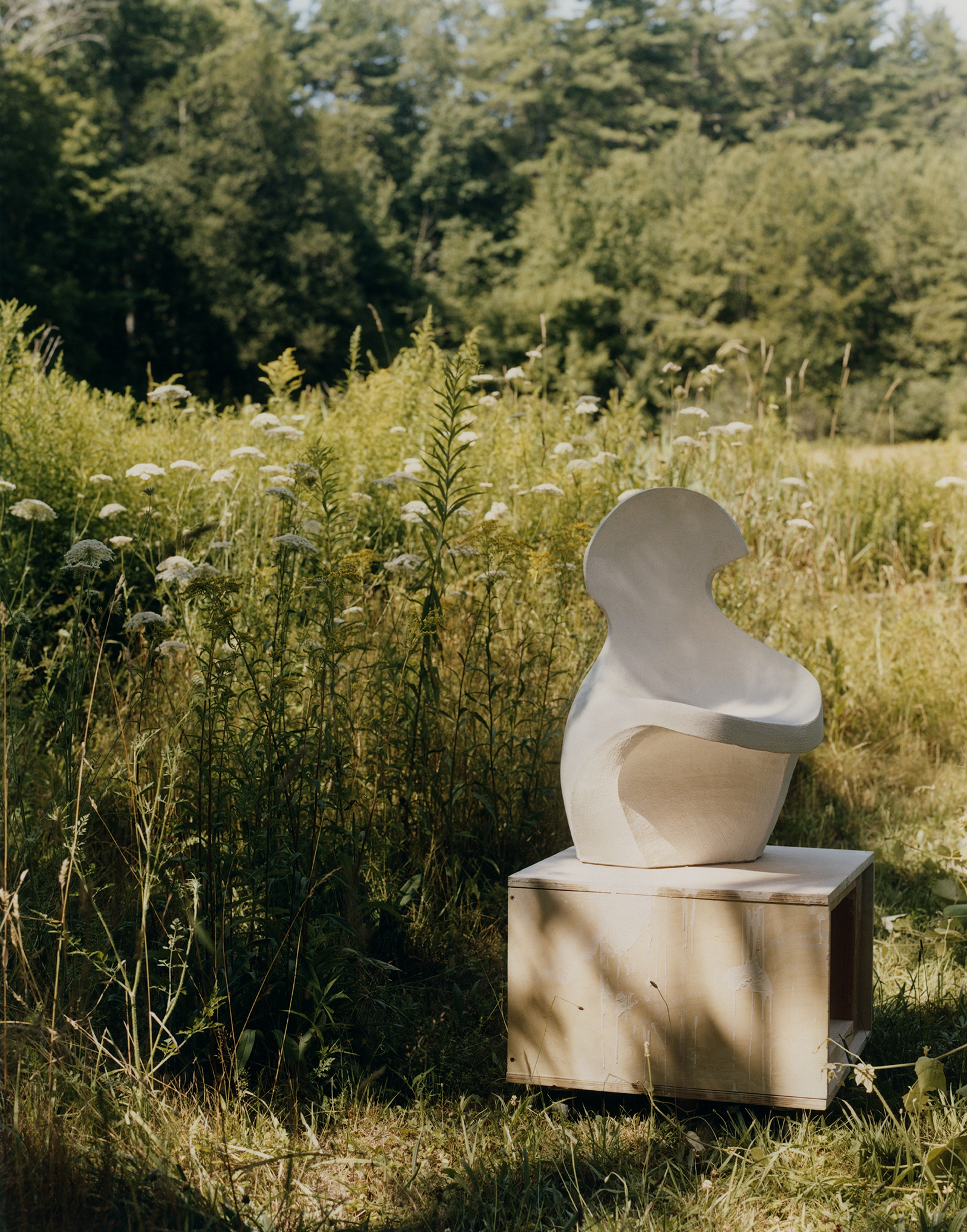
After years immersed in New York City’s relentless rhythm, Simone Bodmer-Turner has returned to Western Massachusetts to embrace a slower, more deliberate pace. Though she’s in San Francisco this summer, it’s reshaped her creative outlook: Inspired by the historic architecture and quiet landscapes of her home state, her work merges research with material exploration, often in collaboration with her partner Scott MacDonough. Simone’s practice embodies a thoughtful balance between craft and concept, where art, community, and the natural world intertwine. Drawing from the legacy of creative collectives like Black Mountain College, she envisions a holistic approach to making—one that nourishes both body and mind through connection to place.
You’ve swapped the East Coast for San Francisco this summer. How’s that project going?
It’s going really well! Me and my partner, Scott, are building an interior installation overlooking the Golden Gate Bridge, and you can tell everybody’s very into quality of life. It’s chill, everyone’s so supportive.
While you have some roots in the Bay Area, you’re a Massachusetts girl, and you’ve just moved back to the state. Do those roots influence the type of work you make?
When I did the show at Emma Scully Gallery last year, it was just after I’d moved back to Massachusetts. I was in a deep research phase about making work in this new environment—and also with completely new materials, and in partnership with Scott. I was making historical visits and pulling over on the side of the road to take photos of old buildings, stopping at antique markets, all of that. So there is an element of being back home that informed the sensibilities, for sure.
Perhaps the change in pace from New York City, where you’d been living for many, many years, also created some sort of shift for you and your practice.
Exactly. What’s really shifted for me is not so much a vernacular language—even though I’m excited to keep building on those references. It’s been about slowing down. I have clarity that comes from the quiet, not being surrounded by the New York City buzz, and this real space has opened up for the first time, maybe ever in my practice. Of course, I want to be contributing, but just a little bit slower.
I mean, I’ve been in New York barely two and a half years and it’s so hard to fit everything in. There is an immense pressure to perform, to succeed, to do.
Physically and socially, you know… All these things that we’re expected to do. Choosing if I was going to make this change in my life, to move back to nature, of course, was scary. I love New York. I’m obsessed with New York. It’s the best city in the world to me. But prioritizing focus has been really important.
How have you found the shift, finding inspiration from urban environments versus non-urban environments?
It’s more that I’m inspired and motivated by this energy that seems to come historically—groups of people leaving the city to live more connected to the land, more focused in their creative work. That energy is pretty radical. I went to the Ruth Asawa show this weekend and picked up this book, The Farm at Black Mountain College. Have you read it?
It’s been on my to-read pile for months!
It’s amazing. Everybody reveres Black Mountain College, even though it was only around for 26 years or so, because it was this microcosm of people abandoning the system to create work, to be in community, to learn in ways that were totally unconventional for a time and still are today. The story that hasn’t been told is that the people who founded the college also founded a farm that would feed all these artists living in New York City in the Great Depression. That’s kind of what made it possible, its relationship with food. [It was] accessible, sustainable, affordable in a time when so many people—creative people, specifically—were at a loss for work and income.
There are so few places doing this today. I think Salmon Creek Farm in Northern California has a somewhat similar approach. Food meets art meets community meets off-the-grid meets embracing all types of artists across mediums.
Totally. And I think there can be this artist stereotype that’s so unhealthy—self-sabotaging, drinking too much, smoking too much, forgetting to eat, all this for passion. That’s not really where I get off. In fact, it’s the nurturing of the earth, growing one’s own food, intermingling, hosting and cooking and making work. I mean, I know that you also run on this frequency. That is all a creative process—getting closer to that, and having that be something I can refer to my community when they come to visit. So often, that community is tied to my creative work. My creative work is the fuel that feeds me.
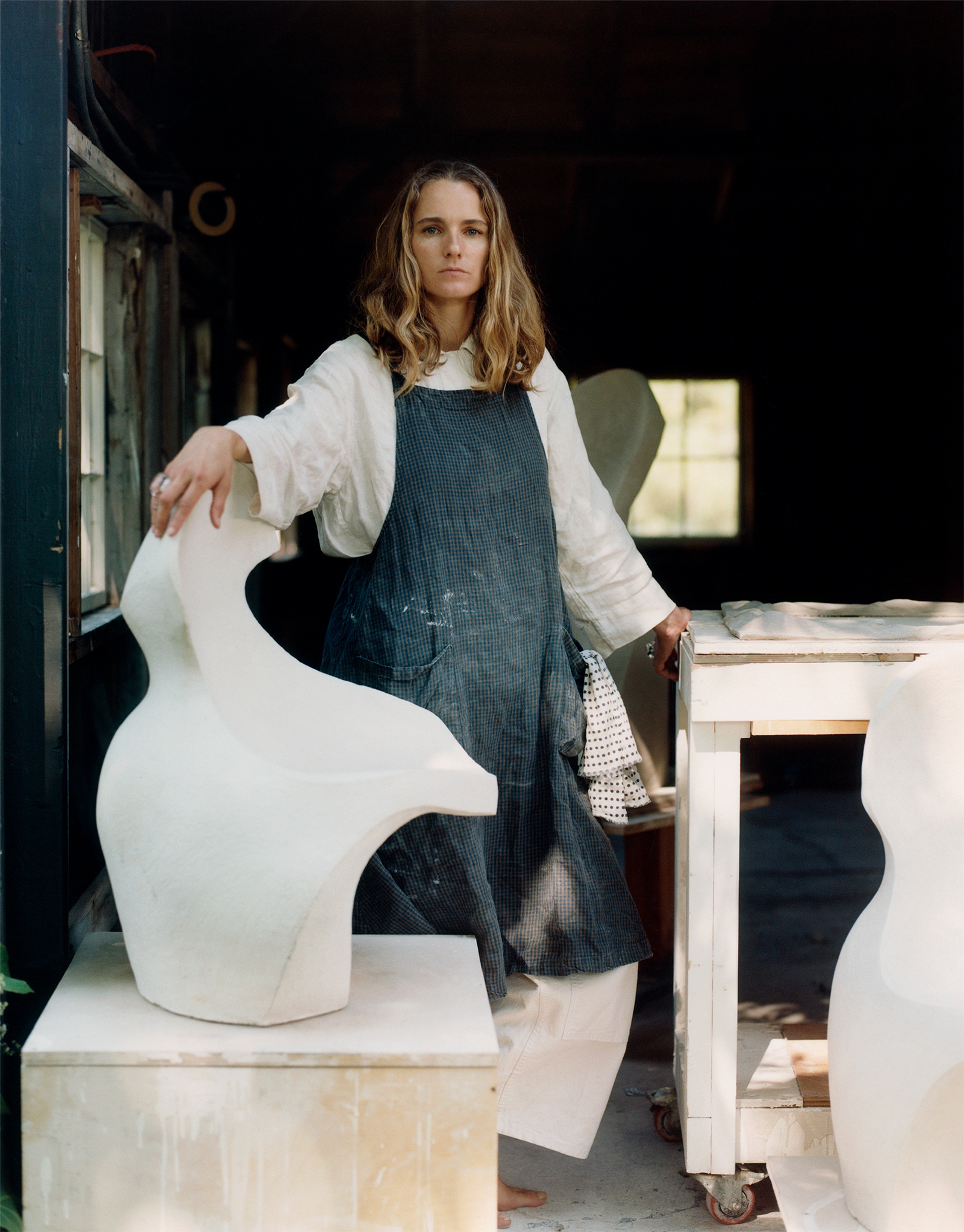
Simone Bodmer-Turner by Hailey Heaton
SOFIE MIDDERNACHT
Words: 899
Estimated reading time: 5M
Sofie Middernacht’s work lives between visibility and invisibility. Her objects serve as elegies to endurance, elevating discarded materials into thoughtful reflections on memory and loss. In collaboration with her creative partner Maarten Alexander, she wields metal as a resilient and vulnerable anchor to works spanning photography, sculpture, and installation. For Sofie, materiality drives the process, often challenging initial visions and inviting surprises that deepen the work’s emotional resonance. Her practice honors the dignity of the overlooked, fostering a quiet dialogue between what remains and what fades away.
Tell me, how’s summer been treating you?
It’s been good. I’ve kept my circle clear and my priorities sharp: my dog, my family, my friends, myself—and the goals I’ve set. These have been my compass. I rarely allow distractions nowadays, because I know every ounce of energy counts. Consistency, patience, and focus build more than talent ever could.
What’s your secret?
I do what works for me. I don’t compare, I don’t watch. I support others a lot, and it’s genuine support. I’m always in my own lane, eyes on my own paper.
Your works lately seem to sit in a sort of liminal space. Between what is seen and unseen, the trace of touch, the hint of what has been buried…
It’s all there. The heartbeat is in the tension—between what resists and what yields, what remains and what disappears. It’s fragile, but persistent.
If design is a language, could your pieces be considered a language of reflection?
Absolutely. They are elegies to what’s passing, but also love songs to what endures. Elegies don’t only mourn—they also preserve. My objects attempt to do the same.
Your collaboration with Maarten Alexander brings together photography, sculpture, and installation, but material remains the main character. How do your backgrounds converge in these pieces, and how does metal anchor that conversation?
Our collaboration works because we approach the same subject—time—from different directions. Photography captures the fleeting: atmosphere, light, memory. Our installations or artworks start with an interest in the material, but they are always about the psychological. Metal is the perfect anchor for that conversation because it carries fragility in its ability to corrode—yet strength in its ability to outlast us all.
Is there a moment in your creative process where vision overtakes material—or material quietly insists on its own path?
Almost always, the material insists. I begin with vision, but if I try to dominate the process, the work becomes false. The richest outcomes [appear] when I surrender. I am a very visual person, and often I have a clear idea in mind, but it just doesn’t work in reality. So I let the pigments and material guide me further into something that might be better than my first vision.
I’m often drawn to artists who repurpose, who find magic in trash. That’s why I love what you do so much. How easy is it to find meaning in what others discard?
[Laughs] It feels like an act of care. There’s dignity in the overlooked. By elevating the discarded, I’m saying that even what is deemed valueless carries memory and worth.
Like tending to ghosts!
Exactly. We never had the idea to work with discarded materials, but it came to us in such an obvious way that we couldn’t ignore it. I fell in love in the first minute, and my gut or intuition was screaming to me. We had a beautiful career as fashion photographers and abstract artists, but the power of the material was so strong that we decided to follow.
Does it take a certain type of madness to switch careers like that?
Yes—it’s the willingness to step without a safety net or a backup plan, without a way out. I burn the boats just to see what I’m capable of, and Maarten is the same. Going all in doesn’t make sense, it isn’t logical, it isn’t safe. But it’s a full-body yes—a commitment to not looking back, even when it gets dark. When you remove the exit strategy, you’re forced to play a different game. You think clearer, you move faster, even when the pace is slow. I’d rather face the unknown at full force than live with the shadow of doubt.
Do you think about absence as something equally poetic as presence, especially in these reclaimed forms?
Absence is always part of the work. The voids, the missing fragments, the things worn away. They speak as loudly as what remains. Presence and absence are inseparable; one makes the other felt.
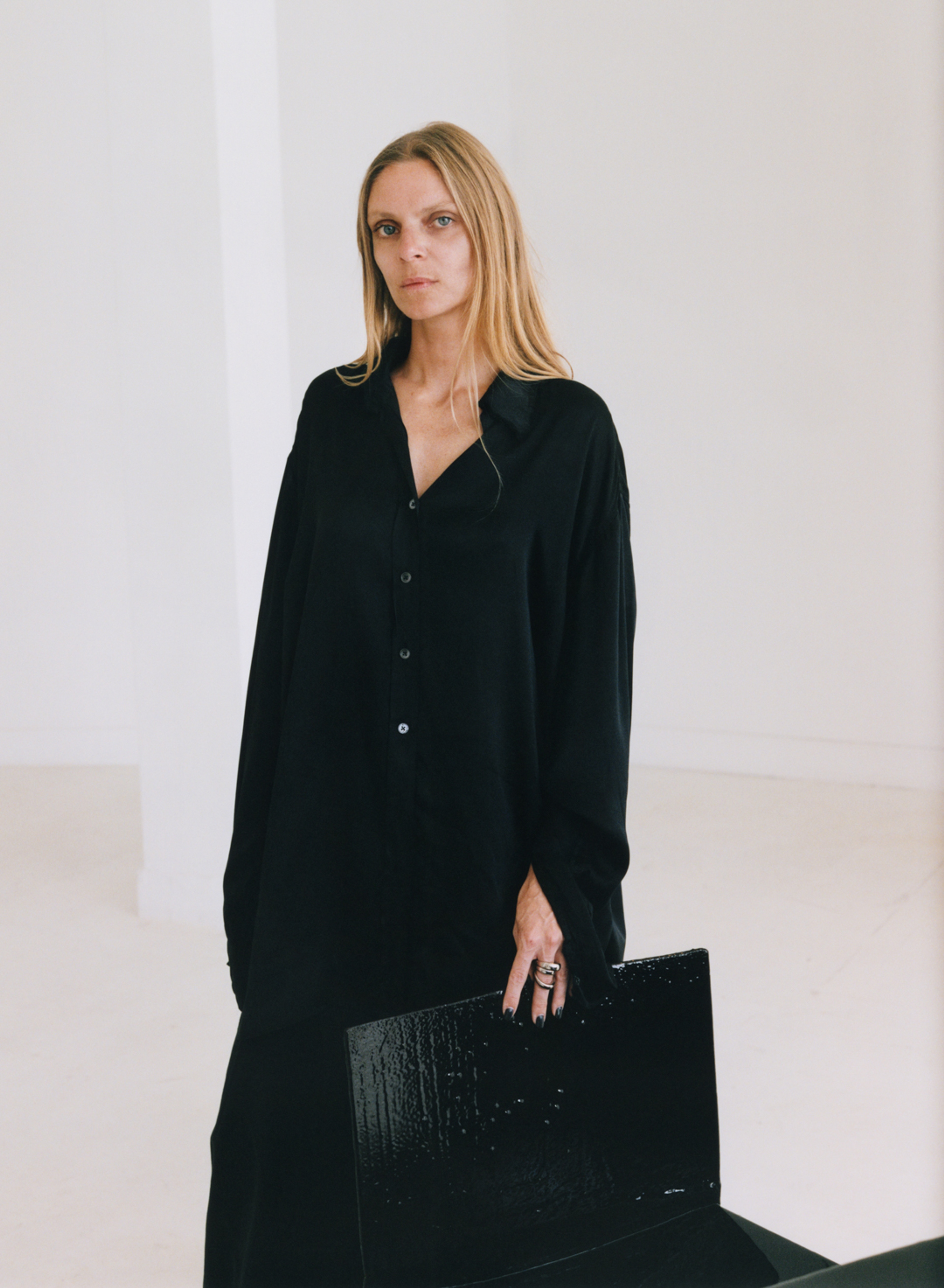
Sofie Middernacht by Sarah Tahon
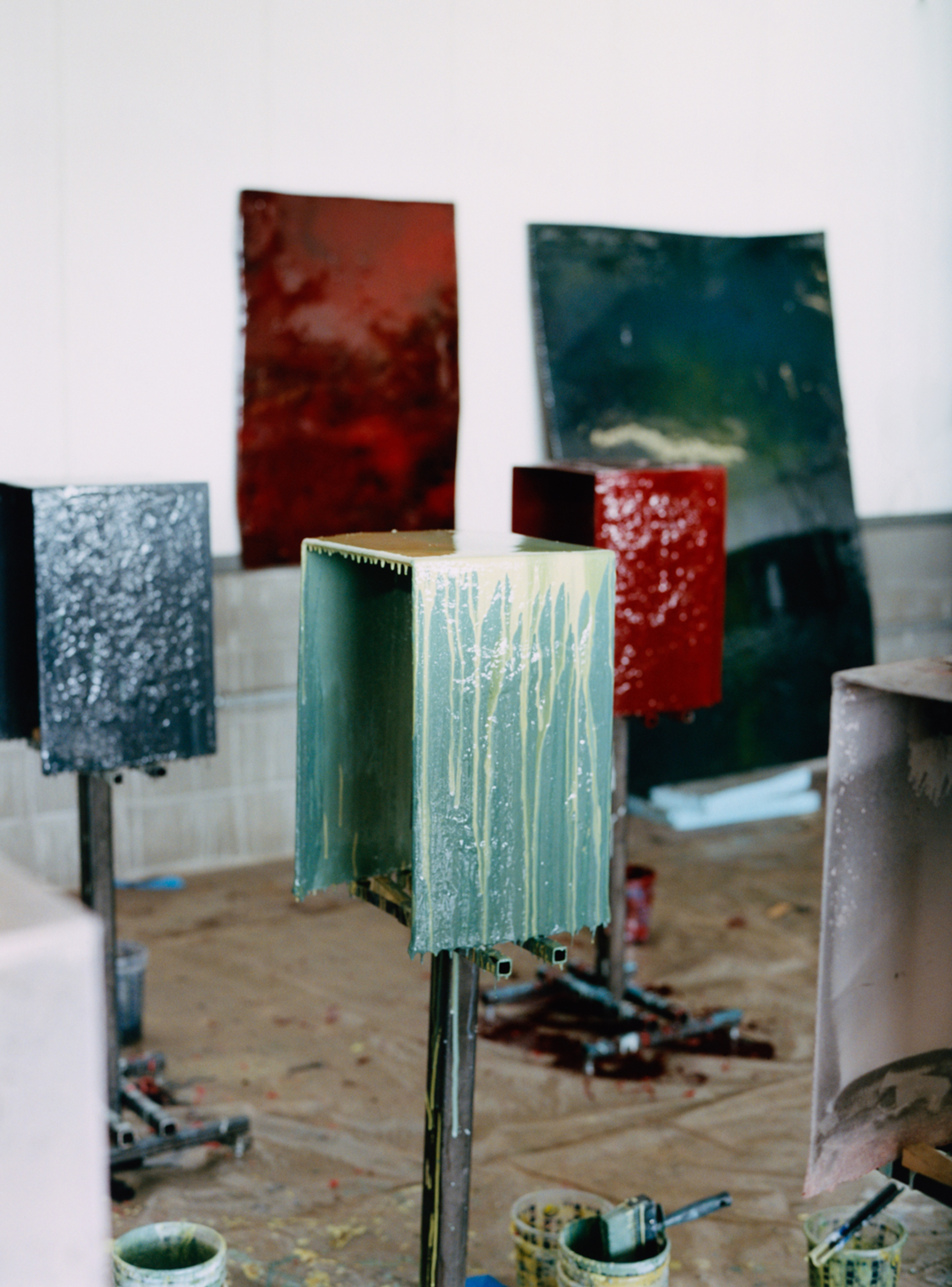
INTERVIEWS
ALEX TIEGHI-WALKER
Beyond Noise 2026
INTERVIEWS
ALEX TIEGHI-WALKER
Beyond Noise 2026