Noise
ISSUE NO. 06: LINDER STERLING
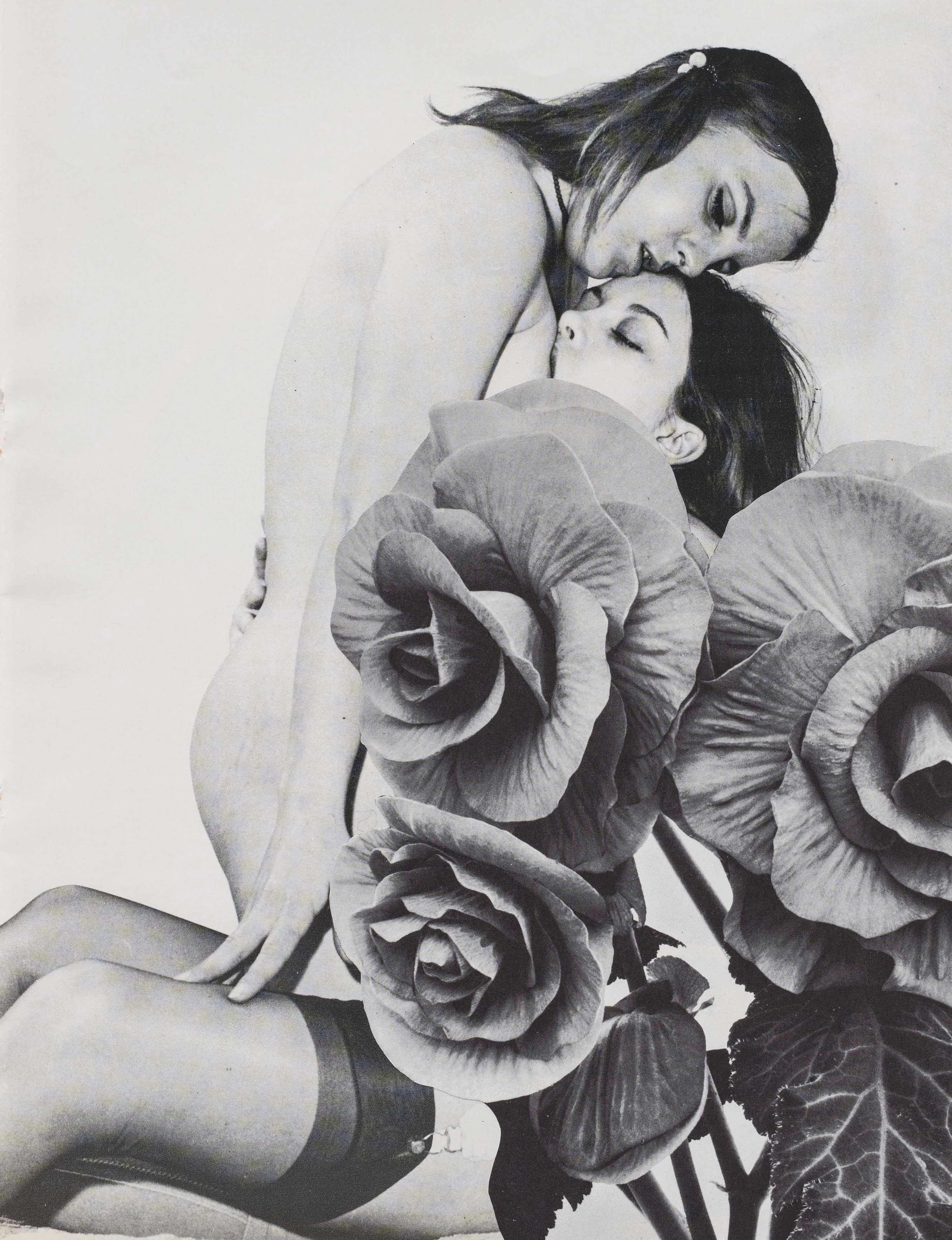
'Love Call,' 2024.
A MAGICAL MEDIUM
Words: 3017
Estimated reading time: 17M
Fifty years after Linder first took a scalpel to the printed image, her vision of reality feels more vital than ever. Here, she sits down with Amy Tobin, professor of the history of art at the University ofCambridge, to discuss life, death, and Blackpool.
By Ryan White
It was in 1976 that Linder first put scalpel to paper and began juxtaposing high and low, expensive and cheap, benign and bizarre. Sifting through pornography, medical journals, high-fashion magazines, Argos catalogues and any other printed matter she could find, Linder assumed a role as forensic as it was artistic. Fifty years later, the works feel as central to Britain’s distinct visual language as Burberry check, Royal Warrant crests or the moquette patterns of London Underground seats.
Anniversary or no anniversary, now is a curious moment to consider Linder’s work. Many of the subjects that her photomontages gave new life to – sex workers, punks, starlets – are gone, ghosts of a different world. Yet Linder’s version of reality has never felt more apt. This is the age of distortion, after all: a daily reality of doctored images, filters, rampant cosmetic surgery and this image may include AI disclaimers. Surreal times call for surreal art, and Linder’s rich archive, which we’ve been lucky enough to root through for this issue of Beyond Noise, has a comforting, clarifying quality.
Over the years, her practice expanded to incorporate photography, performance and music. Photomontage was set aside for two decades to make room for these explorations, before Linder returned to the form in 2006 – another neat anniversary for us to celebrate this year. Here, she sits down with her good friend Amy Tobin, professor of the history of art at the University of Cambridge, to reflect on her career, Ouija boards and the perennial influence of Blackpool.
AMY TOBIN: You currently have an exhibition at the Grundy Art Gallery in Blackpool, with the enigmatic title: Linder: The Return of Linderland. This is an echo of the title of your 2000 exhibition at the Corner House in Manchester, which was your last solo show in the Northwest of England, where you were born and where you now sometimes live. Why repeat? Why return?
LINDER STERLING: I think, as one gets far older in years, you do begin to see patterns in your life. Especially in my case, where I often backtrack through time, wanting to revisit an experience or a scenario in quite a forensic way, especially if that past event was something really thrilling and which left its mark on my psyche. The Return of Linderland really emerged after a near-death car crash. One morning I was driving along a motorway, and suddenly this lorry crashed into me. I thought I was going to die. Thankfully, I didn’t, but
it gave me a lot of thinking time, thinking about the times we were in
and the times I had spent.
And at that point, lad-ism was still around. ‘Toxic masculinity’ as we’d now say. So I was looking at figures like Clint Eastwood in the spaghetti westerns, these very iconic roles of the singular male figure, which really fascinated me at that time. At the same time, I was researching Mother Ann Lee, a singular female heroic character, and looking at Shakerism, which emerged from her belief system. So there’s a lot going on, and then sometimes the only way I can articulate that is by starting a commonplace book. I’m piecing together forensic photographs from the crash, looking at Shaker drawings, looking at spaghetti westerns.
For me, the commonplace book is such an important receptacle that I pour everything in and then I can work out what I want to do. In this case, there was performance, there was photography, there was a film. So much of The Return of Linderland was to do with going to Blackpool. I was befriending the weekend cowboys there. I didn’t have Clint Eastwood. In fact, I made myself into Clint Eastwood, but then I wanted my fellow cowboys, so I found them in Blackpool.
AT: So Linderland is a conceptual place where things come together in this case different versions of charismatic leadership or group think. Whenever I hear ‘return’, I always think of the return of the repressed, the psychoanalytic idea of that which is too intense getting buried only for to reemerge at crucial moments. Your works often channel the things that might be repressed in culture, including a town like Blackpool which is often considered peripheral, if it’s thought of at all.
LS: Definitely. Blackpool is quite difficult to explain. It’s a phenomenon. Growing up in Liverpool as a working-class family, we always went to Blackpool, and it was the scale of it I remember as a child. It was so fabulously overwhelming, it was a real assault on the senses, and just wonderful because everybody was there to enjoy themselves. They’ve left their working selves behind, and they arrive in Blackpool anticipating great pleasure.
AT: Blackpool is a really unusual place, and we both have our personal relationships to it. You visited there, I grew up there. I wonder how it feels for you to situate your work there now? Is it the freedom of leisure and pleasure that Blackpool represents as a working-class holiday resort, which interests you or is there something else?
LS: It’s everything. Most of my family now have died. As I walk through Blackpool, I have memories of us all abiding with me. So I think it’s so much to do with the past, with love, with care, with being within a family, with being safe. I find it very moving. Every time I go, I can see all the ghosts, on every street corner, of my family. I find it very tender to return. I’m taking my three-year-old grandson there soon to initiate him to the pleasures of Blackpool. It has to go right through every generation.
AT: I like the idea of initiation! Beyond The Return to Linderland, you often draw on historic figures of the work of other artists in your practice. In 2018, you had an exhibition at Nottingham Contemporary, which you made into a group show in collaboration with the museum. You called it a ‘convening’, as if these other artists and works were specters summoned into the space. But generally your work has an intimation of spiritual susceptibility. Do you see yourself as a medium, as a channel for otherwise imperceptible forces?
LS: At times, very viscerally so. I can even trace it back to when I was 14. Waddingtons acquired the licence for the Ouija board. It had only been available in the states, and all of a sudden I saw a Ouija board in every toy shop, and I said to my mum, “Can I have one?” My girlfriends and I, we would do seances because it was far more interesting than watching Coronation Street. There’s a saying: the medium is the message. Sometimes I think, ‘Yes, as in fortune tellers, psychics, the medium is.’ Looking at Mother Ann Lee, as one figure I have worked with, I will always, almost like a medium, be trying to find these women who’ve been totally overlooked, who were invisible. Then I want to rescue them, flesh them out, and see how they would act in the 21st century.
AT: The artworks as well provide a means of connection, like your use of Ithell Colquhoun’s mantic stain technique, or the ways you sometimes make photomontages with another artist in mind. I’m thinking of the series of photomontages that were catalysed by a residency in St Ives, and your research into Barbara Hepworth. You used print materials dated to the five years before she died, but the compositions also play around with the void that is so important to her sculpture.
LS They do, and even as we’re talking, Amy, I’m thinking about a planchette. When you have a Ouija board or you’re doing a seance, you have a planchette that you all put the tips of your fingers on, and the planchette then becomes lively. But also, when I’m making photomontage, so often I realize that as I’m moving cutouts of different images across the plane, it’s rather like a planchette. It really is almost the same thing, and I can never intellectualize why suddenly my planchette, my cutouts, configure in such a way that deeply thrills me. I can’t quite deconstruct the thrill of that magical moment when suddenly, as Don Addis would say, a photograph is telling in a new way. You’ve cut it up, you’ve reconfigured it, you, almost like a kind of confetti, release it. Every part of the image is released, and somehow you have to wait for it to reconfigure. Some of that is magical. Some of that is just purely to do with chance, and it’s very visceral. I always know when something’s finished, when the medium has now departed.
AT: As we are currently working on realizing one of your Bower of Bliss performances, I wanted to ask about this aspect of your practice. Your performance works often have many iterations in different places and at different moments. I wondered if you could share the reasons for this iterative working, revisiting and augmenting of large-scale works, rather than making something new.
LS: Well, firstly, I think performance is really important because so much of what I do is very solitary. I’m alone in a studio with print media from the last 100 years, and it’s just me, glue, scissors, and scalpels. I’d have it no other way. Nobody can help me make the work that I make, so it’s a very solitary profession. The images I’ve been looking at, they must somehow stay in my psyche. Let’s say I’ve been doing a photomontage of a Playboy model from 1968. I get really interested in: how would she get off that couch? What clothes would she put on? What’s her life like? So it really emerges from creating photomontages, from being in almost solitary confinement, and looking at all those faces that are looking back at me.
With my works, I’m often interested in how it touches even the person who’s most reluctant to participate or engage, and I’ll count myself as a person who’s generally reluctant. It feels like a real embodied release to watch or be the audience for the work. Everything I do is very improvisational. I always tell every participant, ‘You can’t do anything wrong. It is impossible. You cannot do anything wrong because we’re improvising.’ Suddenly you see the participants getting very, very intrigued by that. In a culture where we have to be seen to be so perfect, I think to invite people into a space where everything is permitted is incredibly liberating. Often I can then stand back. It’s almost enough just to create the space.
AT: It is decadent, because it also feels like something that’s constantly being withdrawn. In spaces of leisure and pleasure that are public, it often feels that the funding gets sucked out. Anything superfluous can no longer be justified. So often I feel like galleries feel very utilitarian, aside from the art that they show, whereas your performances are the opposite of that. It’s high decadence for all.
LS: Everything I do is always about welcoming everybody in.
AT: 2026 happens to be 50 years since you began making photo montages, since you first took up the famous Swann-Morton scalpel. Why has it been an important medium for you, and why do you think it’s been the one you’re so associated with?
LS: Recently I remembered being three years old and cutting up my most beautiful dress. If you’re working class, you have your own best dress, and I remember cutting up the only best dress I had, with this kind of thrill. Of course, my mother was furious, and I could never tell her why I did that. So I think at a very young age, the idea of cutting something up was forbidden. It was the worst thing you could do.
Also, it was the ‘50s. There were two channels on television and it was on for two hours. I would just draw. I was drawing all the time. As soon as I could hold a crayon I was drawing. Then there was a glorious day when I put everything that made a mark away. Suddenly, it did feel like I just want to work with the blade for a while. I don’t want to use pigments. I don’t want to leave a mark. That was a glorious moment in ‘76 when suddenly, ‘Here’s this very clean, very precise medium.’ I was using surgical scalpels and I just fell in love with it, because there were more and more magazines available then too. My whole family loved magazines, so there was always a lot of print media in our house, and for me, it’s magic. It’s a magical medium. Maybe the scalpel is my magic wand, to extend the metaphor.
AT: Was your turn to photomontage an organic thing? There is a lot of discussion about you finding Dawn Ades’s book on photomontage and that being the influence, was it actually a historical framework to understand what you were already doing? And of course, many people associate the photomontages with punk, seeing it as punk visual art. But this image of the whirlwind of print media at home, which you could reach into and transform with a clean incision, suggests there were also other forces driving the work.
LS: I think it was far, far more organic. I was always drawing and using paints and then the scalpel that was once used to make early mounts for my drawings suddenly became the pen. It was happening absolutely in parallel with the very early months of punk. So I’m really there. I got invited to, for example, make flyers, to eventually work on the Buzzcocks “Orgasm Addict” sleeve. But I can divide my work away – punk is like a soundtrack in parallel with my practice. It’s a certain mode of being, but for me there is a gap. And yes, of course, when Dawn Ades writes this extraordinary book about photomontage, she almost gives me a road map. It’s almost like I’ve been traveling on this path, and not quite knowing where I’m going and suddenly, through that book, it’s like, ‘Ah, okay, this is not collage, this is photomontage.’ There’s this tradition, and this is something I really want to ally myself with. I could really feel that in a very visceral way, rather than an academic way.
AT: It is also important to say that you weren’t making photomontages for fifty years, and to distinguish between the first wave of photomontages tied to the mid-to-late ‘70s, and the second phase, that you began in 2006.
LS: This conversation is about looping back, looping back to Blackpool or looping back to this imaginary Linderland. I think there must be a part of me that almost wants to go back on my own tracks and think, ‘Have I missed something out? Is there something really important that I’ve left behind me on this journey?’ I think with the second wave of photomontage I was looking at those earlier works. Maybe we all need time away. If we’ve written a novel, if we’ve choreographed a ballet, if we’ve done a photomontage or a painting, maybe we need a gap of five years just to see the value in what we did at those times. So I think it’s partly that, partly reflective. And as soon as I started again, it was like getting into a warm bath after a long dusty journey. Why had I abandoned this? This is where I can really fully express myself through the images of others. It’s like a constant ventriloquism through the images and the photographs of others.
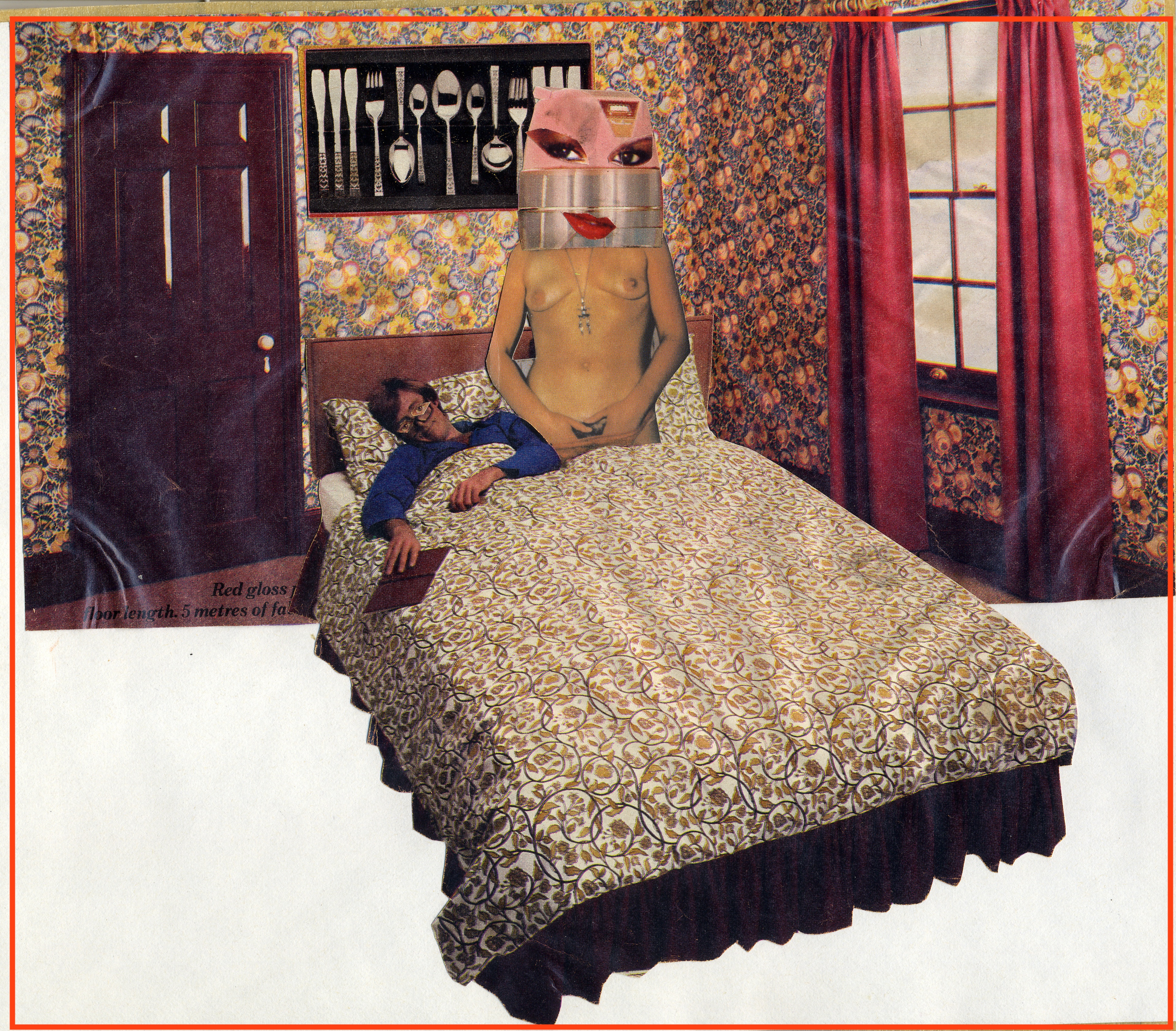
'Untitled,' 1977.
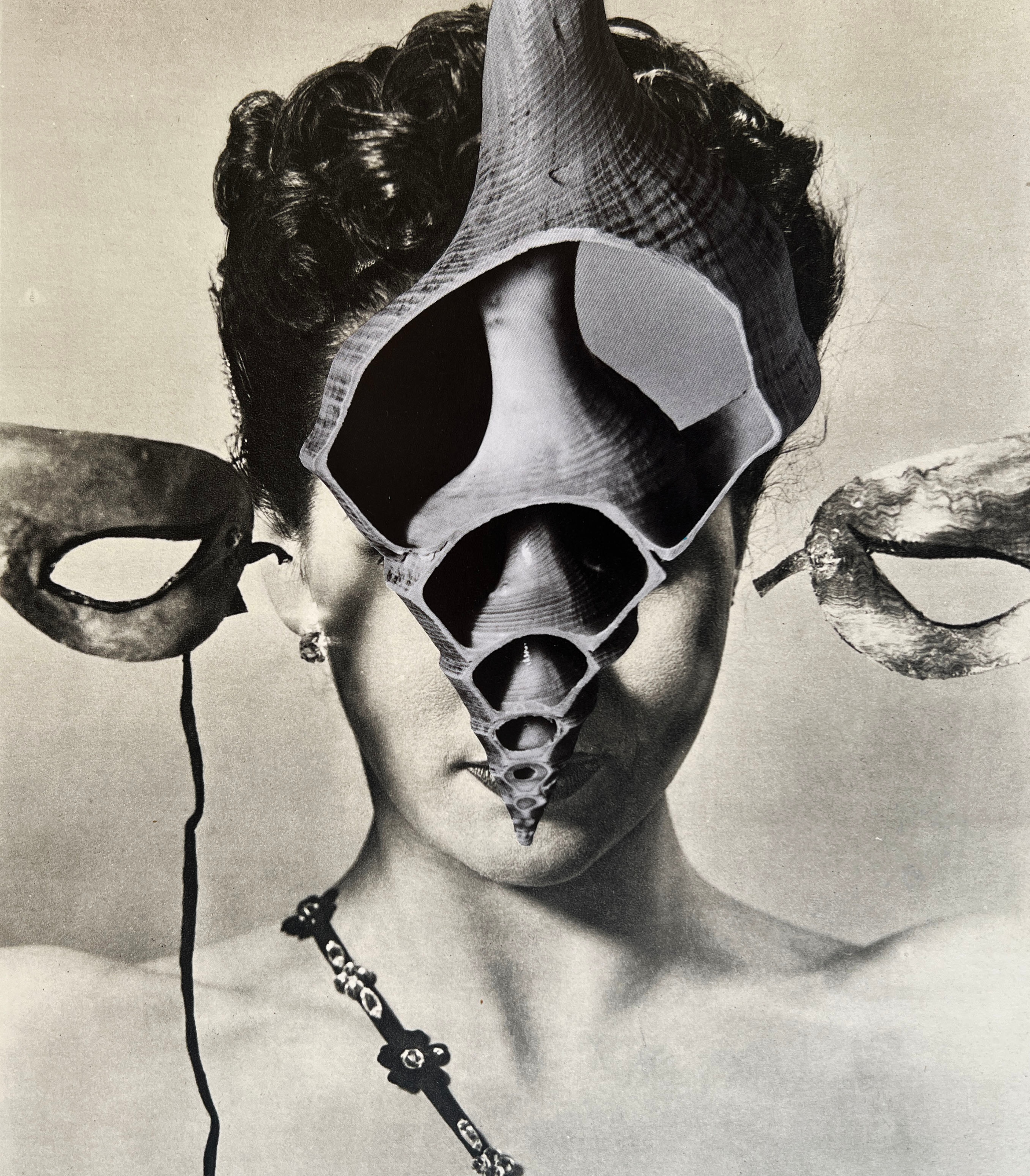
'There are three masks: the one we really are,' 2026.
"WITH MY WORKS, I'M INTERESTED IN HOW IT TOUCHES EVEN THE PERSON WHO'S MOST RELUCTANT TO PARTICIPATE."
'We Are All Chimeras,' 2025.
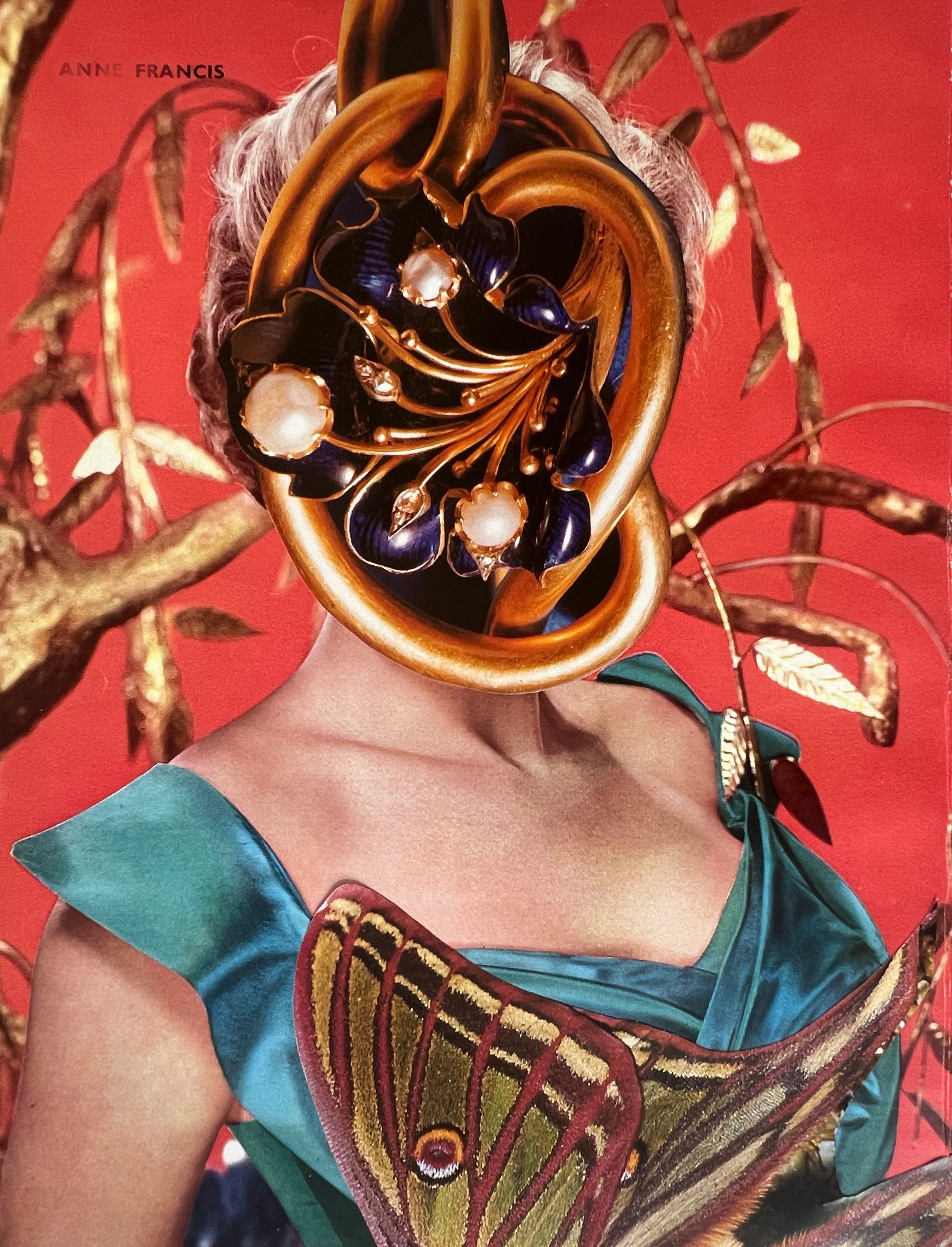
'There are three masks: the one we have in common,' 2026.
CREATIVE DIRECTOR + EIC
SARAH RICHARDSON
ART EDITOR-AT-LARGE
MAGNUS EDENSVARD
IMAGES
Courtesy the artist and Modern Art / Linder
PHOTOGRAPHY
Modern Art
Beyond Noise 2026
CREATIVE DIRECTOR + EIC
SARAH RICHARDSON
ART EDITOR-AT-LARGE
MAGNUS EDENSVARD
IMAGES
Courtesy the artist and Modern Art / Linder
PHOTOGRAPHY
Modern Art
Beyond Noise 2026