Noise
IN THE STUDIO WITH INSTITUTION
IN THE STUDIO WITH INSTITUTION
Words: 1266
Estimated reading time: 7M
GALIB GASSANOFFL, FOUNDER OF INSTITUTION, OFFERS INSIGHT INTO HIS LATEST COLLECTION FOLLOWING THE MILAN FASHION WEEK SHOW.
By Morgan Becker
INSTITUTION is more than a label—it’s a social-artistic endeavor spanning design, education, and community-building for all sorts of creatives. Galib Gassanoff founded the project in Milan in 2024, drawing from his upbringing in Tbilisi, a city where countless traditions and crafts coexist. You see his open embrace of contrast clearly in his latest collection DAŠ.
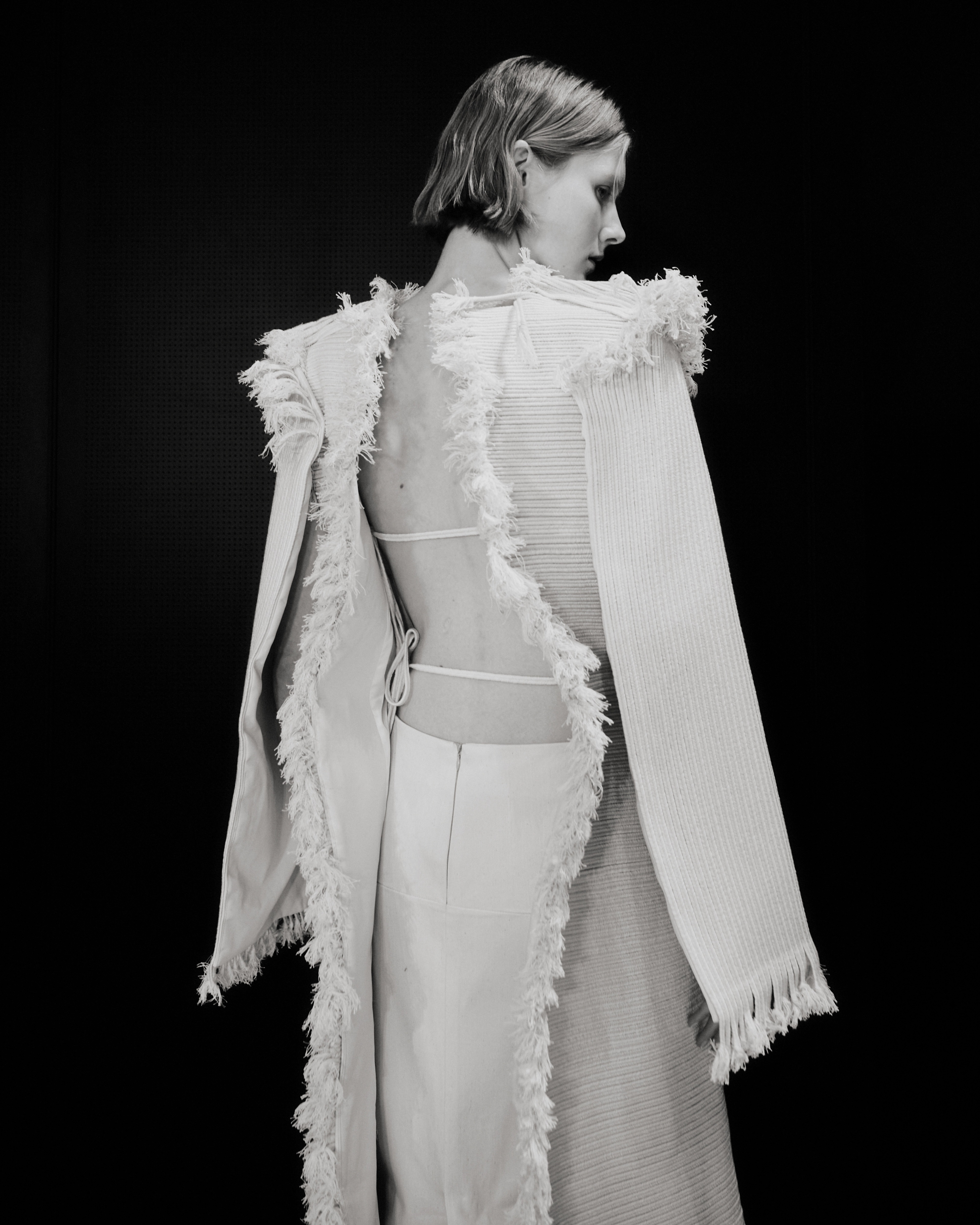
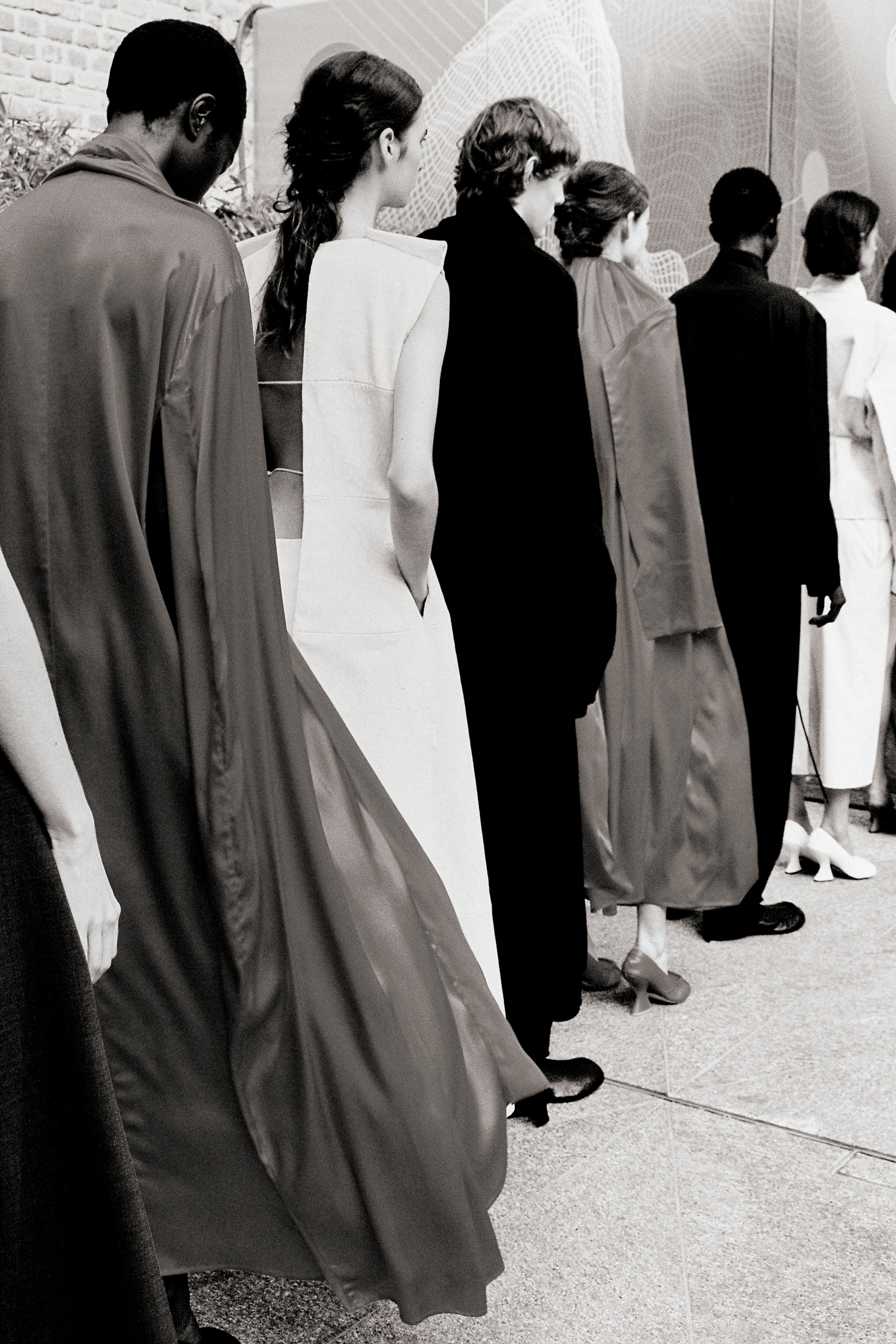
Styled by Sarah Richardson, the runway show featured INSTITUTION trademarks (square silhouettes, innovative paneling, a restrained palette, a sense of grandeur) as well as a few departures—there was a fluidity and romance to the garments not before seen. The kelaghayi, a scarf often donned by Azerbaijani women, was DAŠ’s original point of inspiration, draped and folded over to form the foundations of structured dresses and blouses.
In the show’s aftermath, Beyond Noise caught up with Galib—learning more about his design ethos, how he finds balance, and what he sees in INSTITUTION’s future.
MORGAN BECKER: Tell us about the collection’s title, DAŞ, and what it means to you.
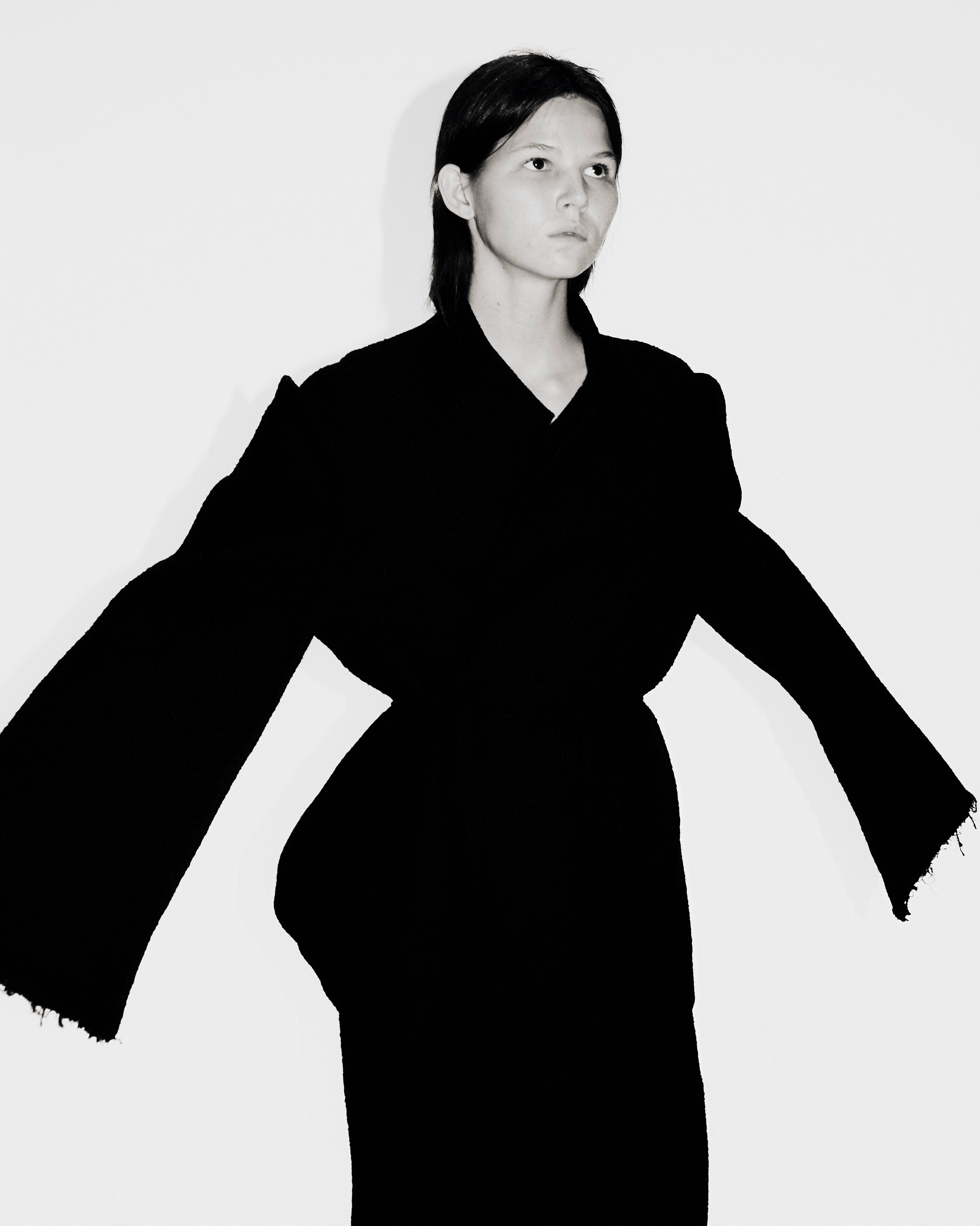
GALIB GASSANOFFL: It means “stone” in Azerbaijani. I was thinking about stone as something that feels permanent and solid, but that can still crack, erode, and change its state. This became a way of thinking about the collection: I wanted to work with structure and monumentality, but make them feel more fluid and human. There is a certain strictness that I associate with the women I grew up around, and I kept that strength while softening its expression.
MB: How did you land upon the kelaghayi as your jumping-off point? What did you learn about the garment over the course of the season?
GG: The kelaghayi is very close to my own background, so it felt like a natural starting point. What attracted me was its simplicity—a square of silk that can become something completely different depending on how it’s folded or worn. While working with it, I became interested in the knowledge behind the object: the traditional printing, the natural dyes, and the way the craft is passed between generations.
MB: Notably, you kept each scarf whole. Was there a conceptual reason for that choice? What types of challenges did it pose?
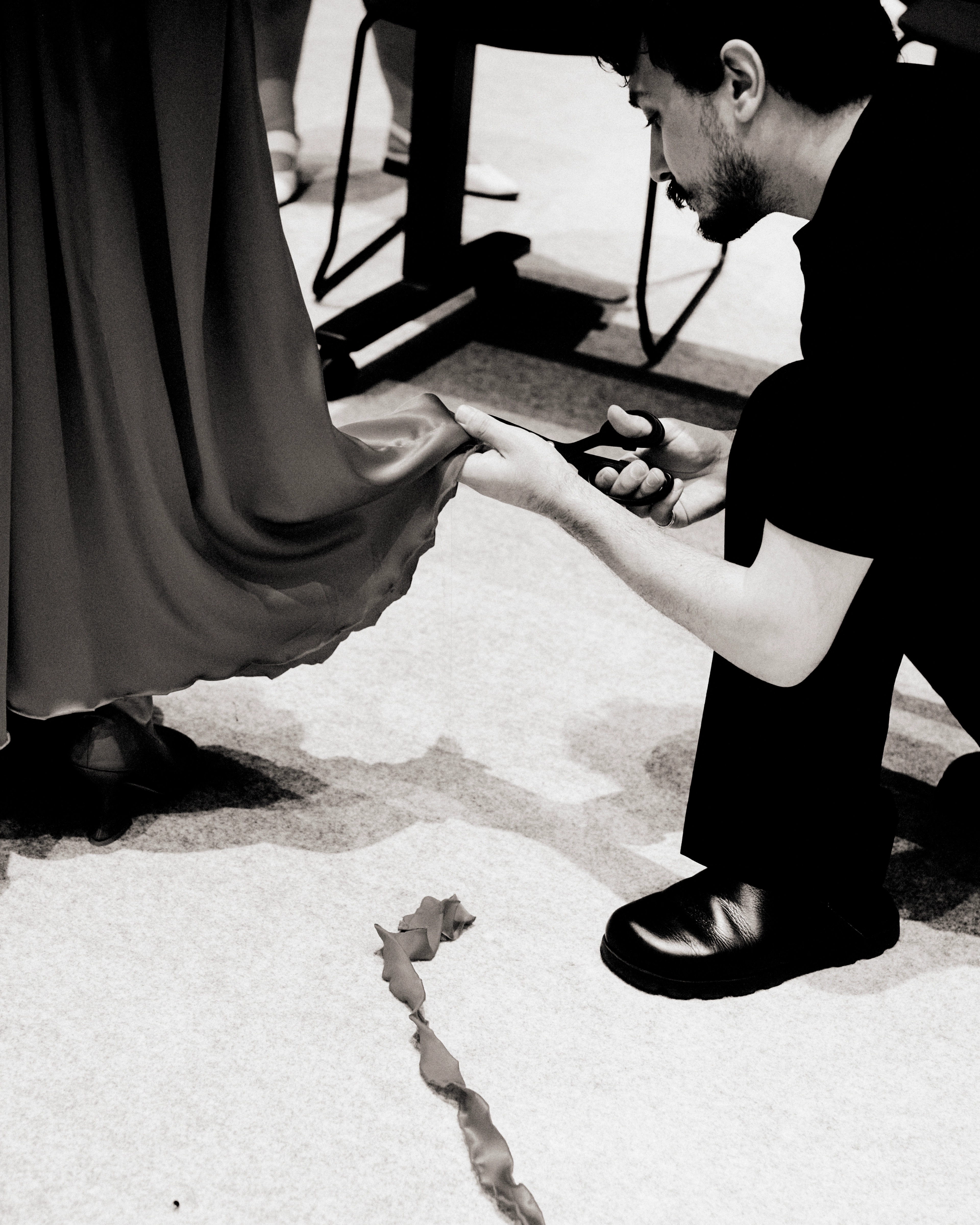
GG: Yes—it was important to me that the kelaghayi remained whole. The square had to stay a square. I didn’t want to cut it into pieces and treat it simply as another fabric. Instead, we worked through folding, draping, and stitching, allowing the object to change its state without losing its original identity. It creates limitations, of course, but I actually like working with limitations. They force you to find another solution. Even the raw edges came from this idea: We tear the silk rather than cutting it, so the material keeps something imperfect and real.
MB: One of your label’s missions is to express a “personal and aesthetic belonging.” Where does that desire stem from, and how does it materialize in your work?
GG: I grew up in the countryside outside Tbilisi, in an Azerbaijani community in Georgia, surrounded by different languages, traditions, and crafts. At the time, it was simply my everyday life. Only later did I understand how much those different influences shaped the way I see things. INSTITUTION comes from wanting to explore that connection. I don’t want to reproduce my background literally, but I want to understand what I inherited from it and bring those elements into a contemporary context. For me, belonging is not about choosing one identity. It is about allowing all these different parts to exist together.
MB: What did you experiment with for the first time this season—techniques, palettes, materials?
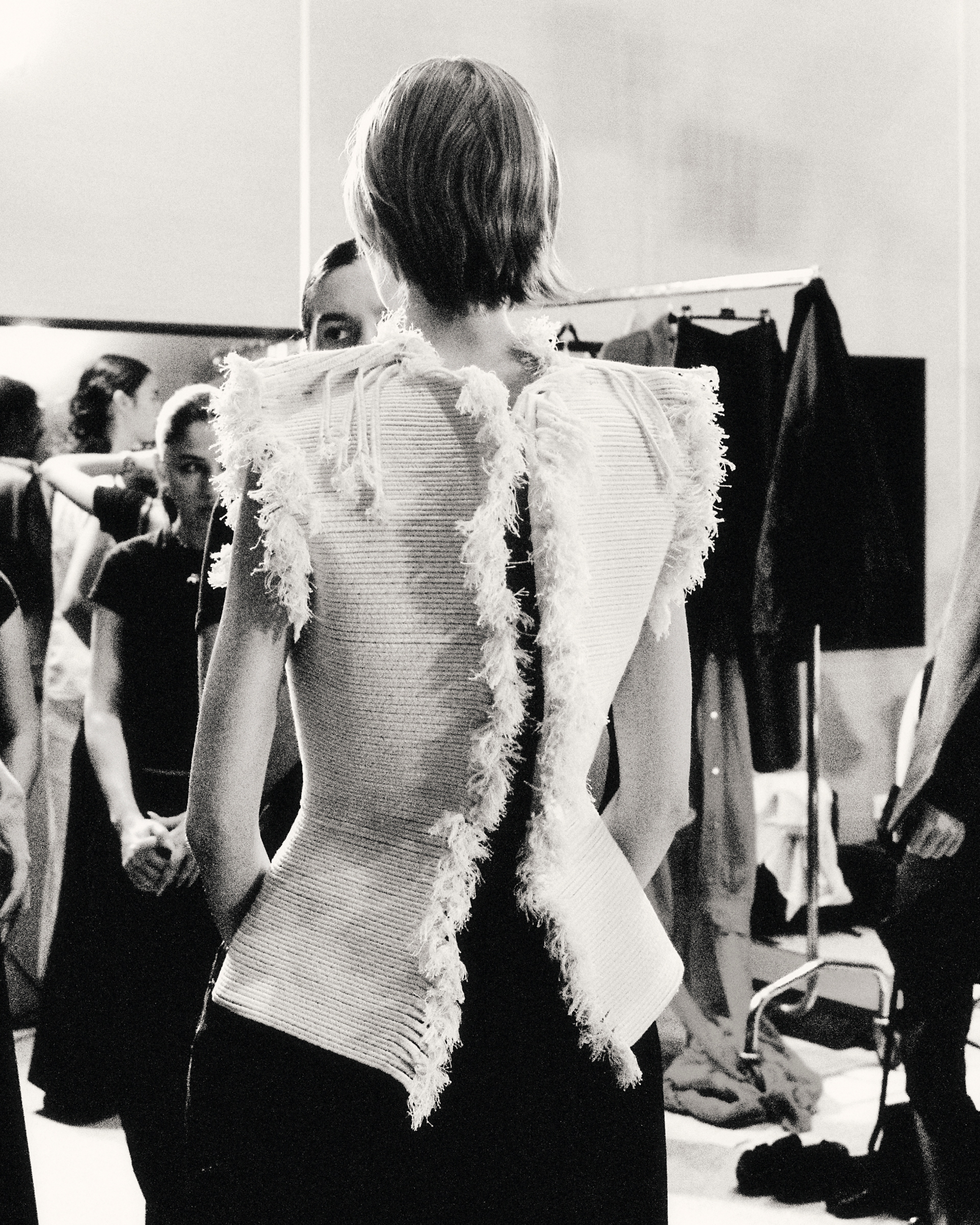
GG: The biggest experiment was treating the kelaghayi as a complete object rather than simply as a material. Its fixed dimensions completely changed the way we approached construction. I was also interested in making the construction more visible. The topstitching almost becomes a drawing on the garment. I wanted to create a contrast between the delicacy of the silk and heavier, more protective forms. The collection moves between weight and lightness, softness and structure.
MB: Was there a moment, as you prepared for this show, that you felt your creative concept click into place?
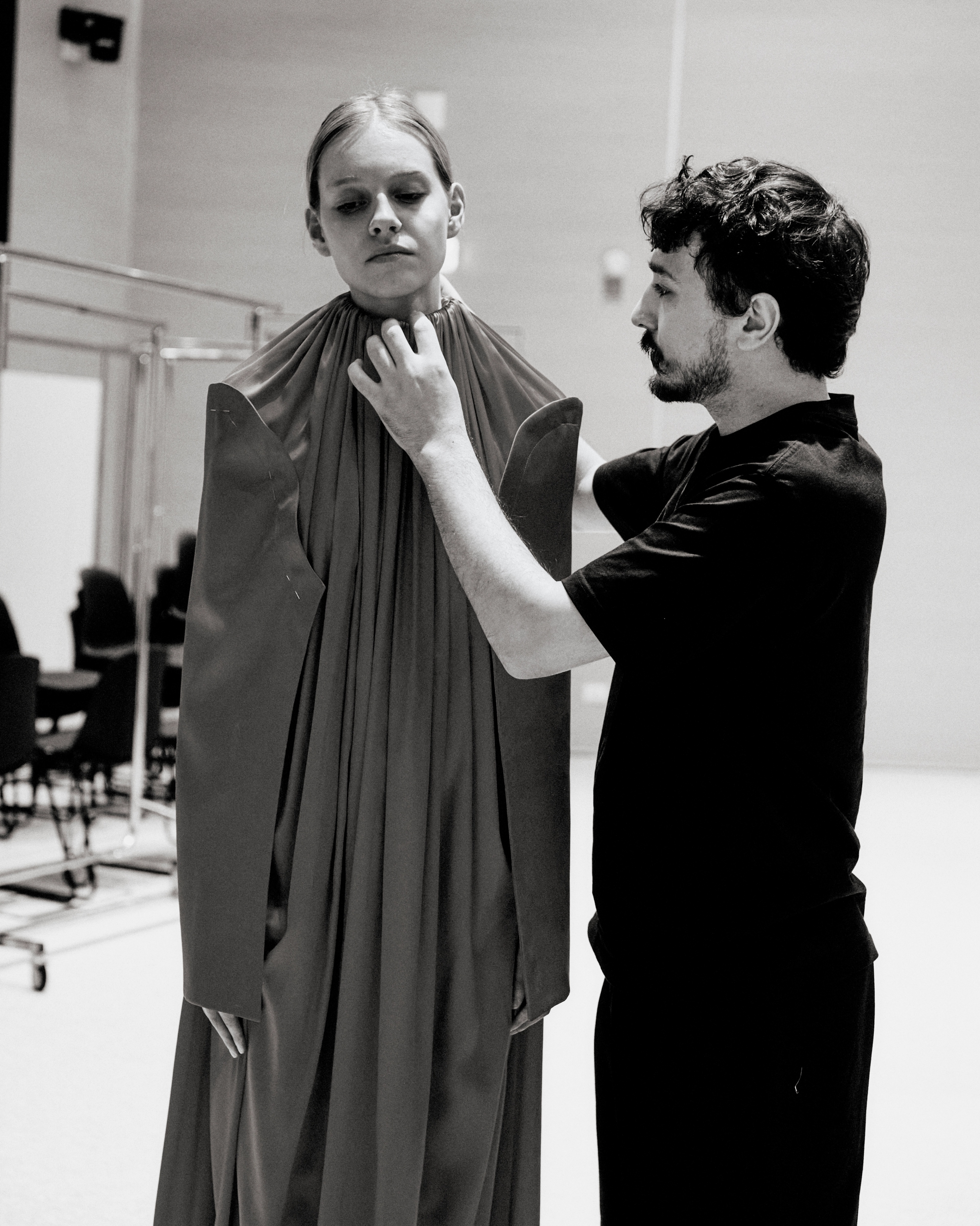
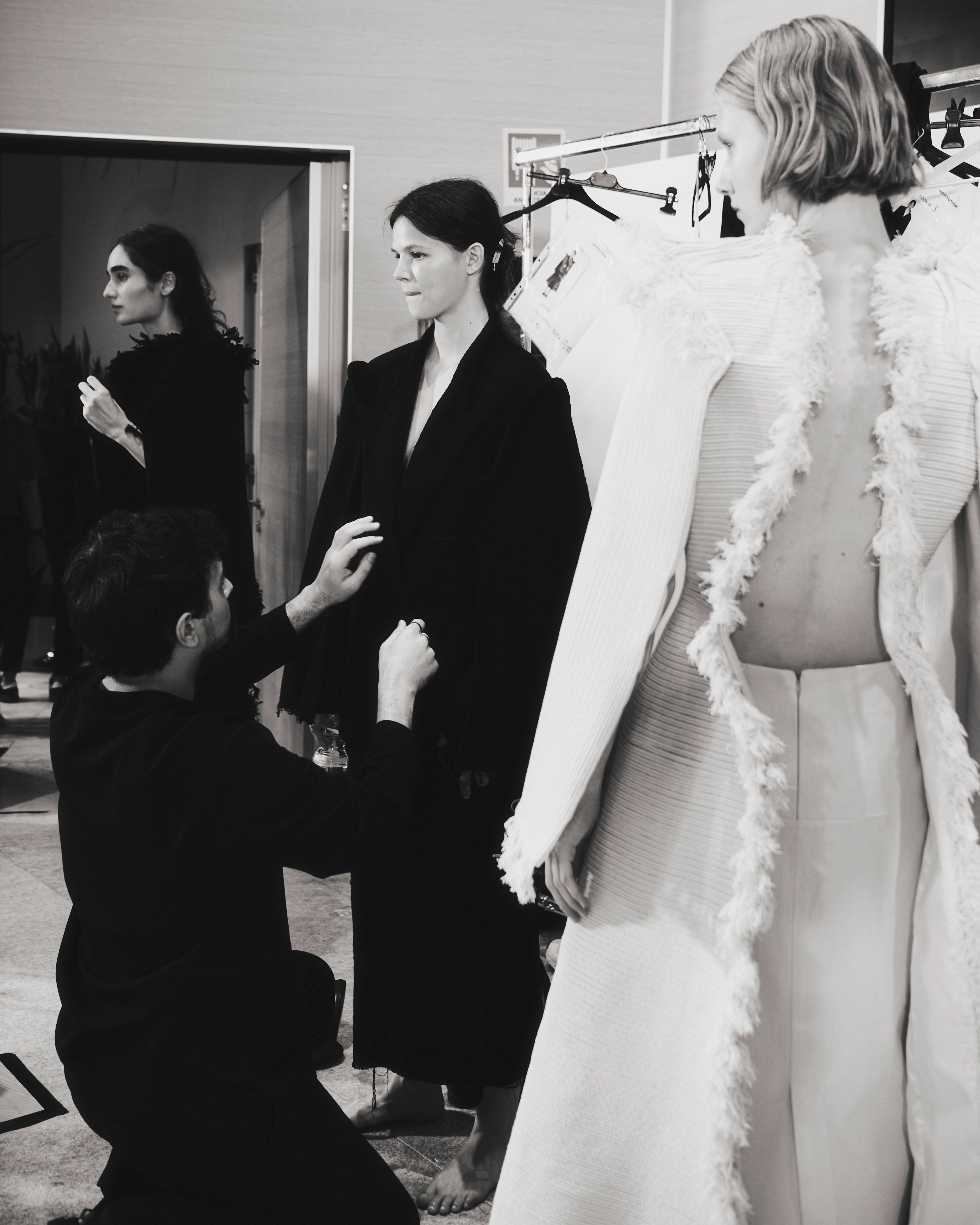
GG: It’s always during the fittings that I see how everything comes together into a character. How it moves, and how all the elements connect with each other. It’s one of the most fulfilling, and at the same time overwhelming, days of the process.
MB: How do you find balance between playing with tradition, and staying close to generations of craftsmanship? Are these things at odds with one another?
GG: I don’t see them as being at odds. Tradition is alive because it evolves. Every traditional technique was once an innovation.
For me, the responsibility is to understand what you are working with—to know its history, the people who make it, and the knowledge behind it. Then you can introduce your own perspective without simply turning the tradition into decoration. I think giving a craft a new context can actually help keep it alive.
MB: Do you have any muses?
GG: I don’t really have one muse. A lot of my inspiration comes from the women I grew up around, particularly their strength and their very practical approach to life. They are present in my work, even if it isn’t always obvious.
MB: What about mentors?
GG: I have many mentors who guide me through this complex industry. I share my successes and acknowledgements with them; without their support, the journey would have often felt like walking in the dark. They are my light most of the time. The process has also gifted me some great friendships, which I value just as much.
MB: What do you see in INSTITUTION’s future?
GG: I don’t want INSTITUTION to become simply another fashion brand. I see it more as an ongoing project where fashion is one of the ways we can explore culture, identity, and craftsmanship. I want to continue working with artisans and communities, and to create more exchanges between fashion, art, and traditional knowledge. I’m not interested in growing very quickly. I would rather build something slowly, keeping the connection to where it started.
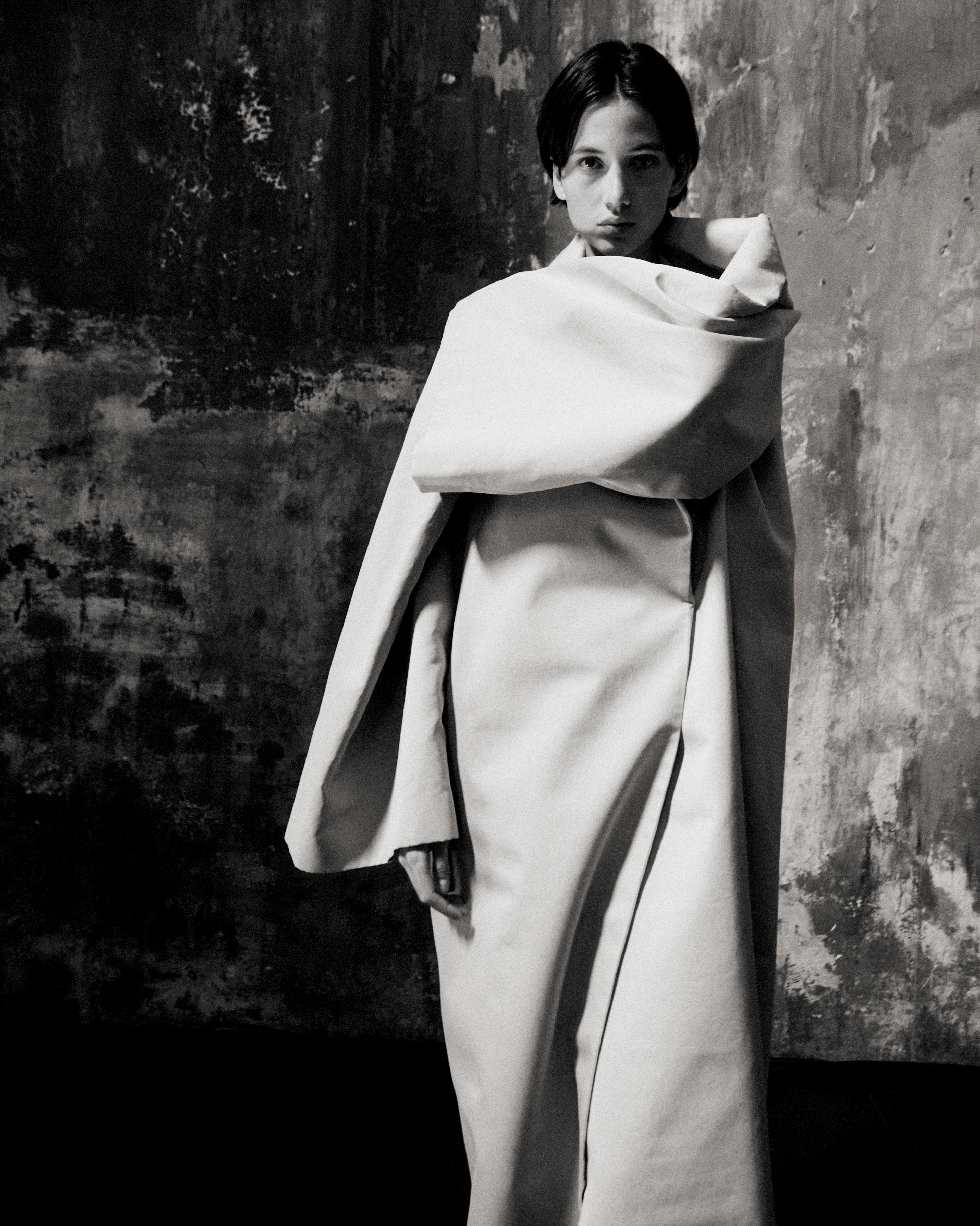
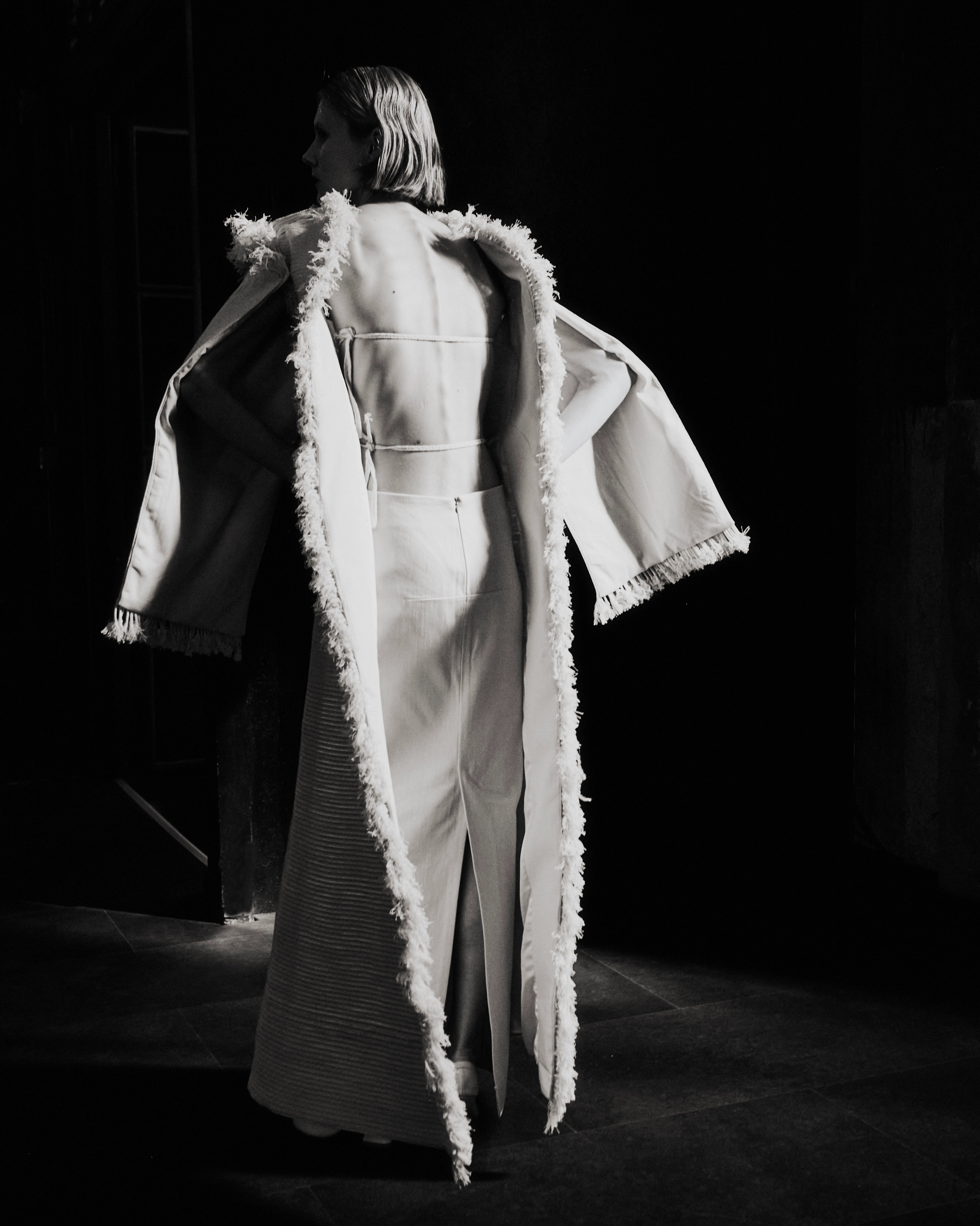
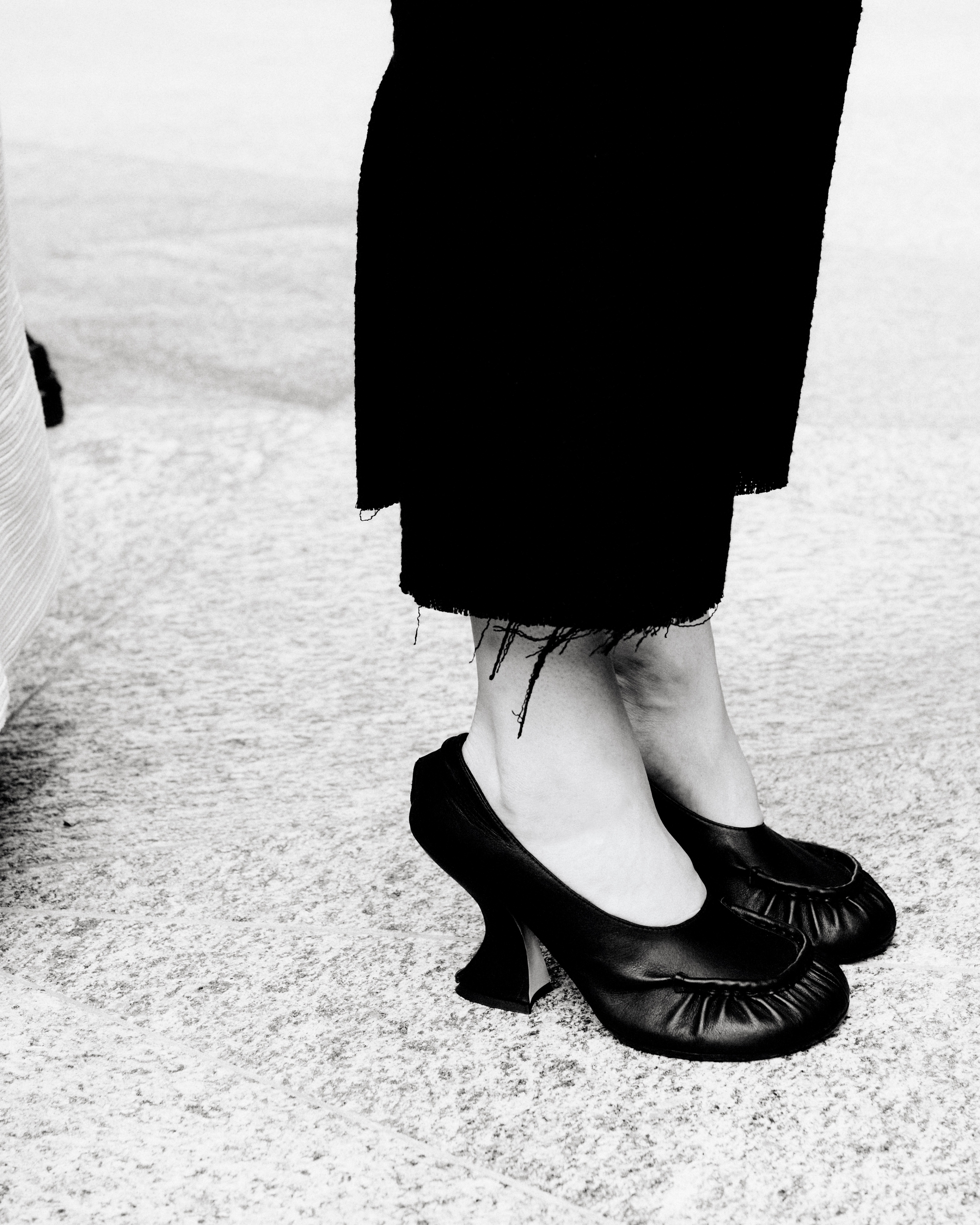
"THE COLLECTION MOVES BETWEEN WEIGHT AND LIGHTNESS, SOFTNESS AND STRUCTURE."
PHOTOGRAPHER
ADRIAN KIM
Beyond Noise 2026
PHOTOGRAPHER
ADRIAN KIM
Beyond Noise 2026