Noise
AN ATLAS OF THE INVISIBLE
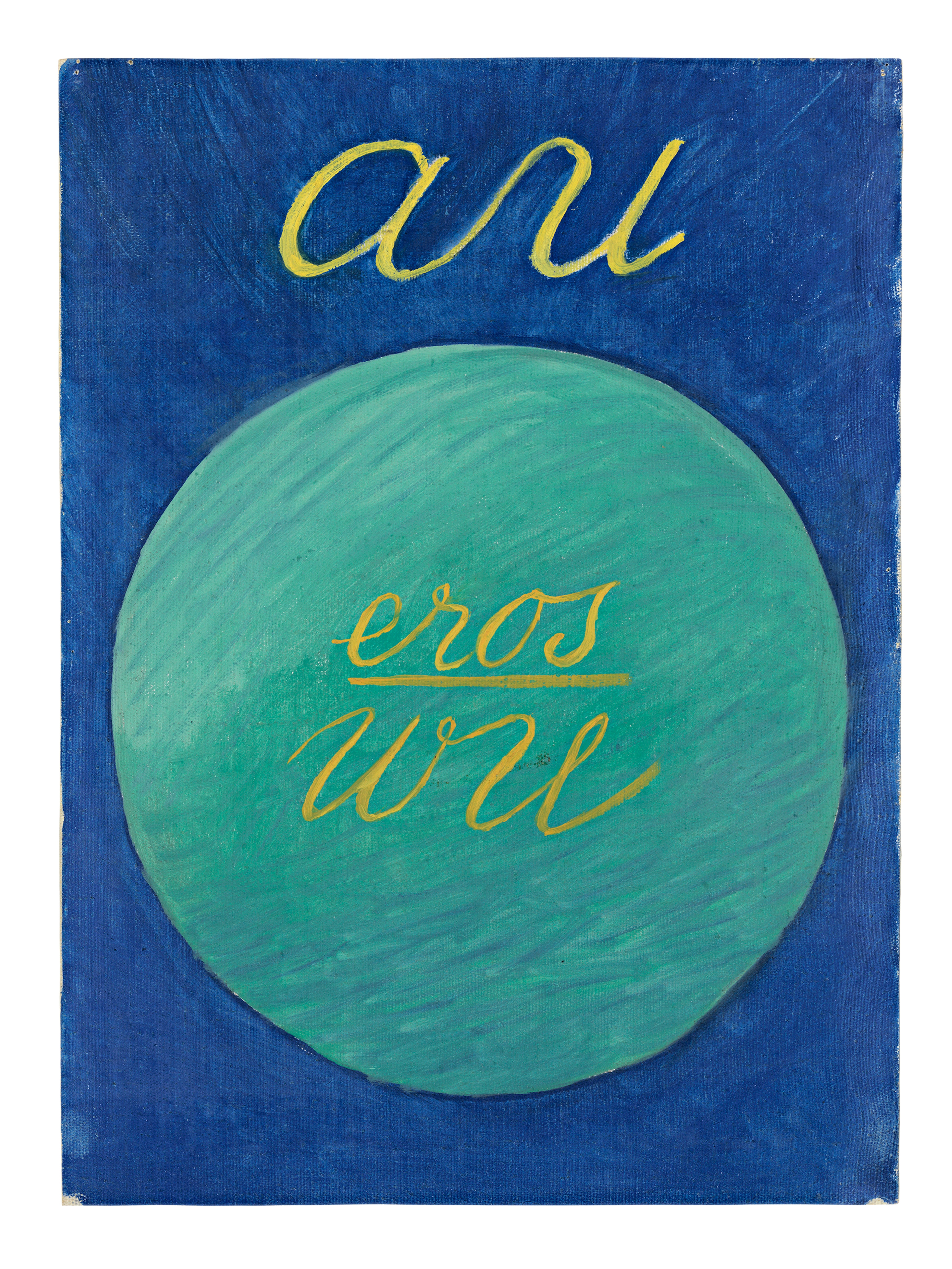
Hilma af Klint.
AN ATLAS OF THE INVISIBLE
Words: 1757
Estimated reading time: 10M
MARTA PAPINI, CURATOR OF FATA MORGANA AT THE PALAZZO MORANDO, CONSIDERS THE TIES BETWEEN SCIENCE, SPIRITUALITY, AND ART.
By Morgan Becker
Fata Morgana, otherwise known as Morgan le Fay, is one of the most famous names in Arthurian legend. She’s a sorceress, a keeper of illusions, a symbol of free femininity and refusal to conform—capturing the imaginations of people today, all the way back to, say, the time of Countess Lydia Caprara Morando Attendolo Bolognini, in the late 19th and early 20th century. That countess’s home, the historical Palazzo Morando in the heart of Milan, once housed a collection of texts, objects, and artworks on alchemy, theosophy, and spiritualism. And more recently, Fata Morgana—a contemporary exhibition of 286 works by 78 artists, parsing art and esotericism from the era of Countess Lydia to the present.
Fata Morgana was developed by the Fondazione Nicola Trussardi, specifically for the Palazzo, whose permanent collections encompass the Museum of Milan and the city’s fashion archive, the Costume Moda Immagine. Curated by Massimiliano Gioni, Daniel Birnbaum, and Marta Papini, the show concerns itself not just with the mystery of legendary figures like Morgan le Fay, but also how they arise in conjunction with sociocultural anxieties, citing as foundational André Breton’s 1940 Fata Morgana, a book-length poem he wrote in Marseille, fleeing WWII-era fascism. It’s an “atlas of the invisible, a journey through apparitions and revelations” that explores how so-called “eccentric practices” lead to highly passionate art, and contend with relationships between faith and science, memory and imagination, in times of great upheaval.
Here, Beyond Noise sits down with curator and writer Marta Papini, breaking down what makes Fata Morgana so eternally compelling, and how we might apply her legacy to our own transitional era.
MORGAN BECKER: Fata Morgana was curated with the architecture and permanent collection of the Palazzo in mind. Tell me about that decision, and how it materializes in the show.
MARTA PAPINI: It started with the Fondazione Nicola Trussardi, a traveling initiative with a focus on the city of Milan. Usually, the artistic director and the founder—Massimiliano Gioni and Beatrice Trussardi—pick a place that has been overlooked over the years. Massimiliano found out about the Palazzo Morando, in the fashion district, in the city center of Milan; the Quadrilatero della Moda is a very posh area with fashion houses and shops. It’s two different museums in one: the Museum of Costume and Fashion, and, more traditionally, the Museum of the City of Milan. Before this, it was the residence of Countess Lydia Caprara Morando Attendolo Bolognini.
It’s a beautiful palace and still has some period rooms from her private residence. This countess was particularly passionate about occult, spiritual, and alchemical themes, and she had this vast library—now housed in a public library. The different levels of this museum caught the attention of Massimiliano Gioni because of [those themes], but also because of its very particular setting. It’s a museum with no white walls, more wallpapers, with a very antique look. It has the look of a cabinet of curiosities. There are different layers of framed paintings occupying the height of the walls. It’s not something you’re used to seeing as a viewer of public or contemporary art.
MB: How did this project compare to curatorial work you’ve done in the past?
MP: I usually focus on one artist—one living artist—with whom I closely produce something new. This is my main occupation. It’s usually in public art commissions. At the same time, working on a group show, collective and on a huge scale, is not totally unknown to me. I worked with Cecilia Alemani in 2022 for The Milk of Dreams at the Venice Biennale. That [took] a lot of research into more obscure, marginal, and forgotten artists, and creative people who have not been included in contemporary art.
MB: There are more than 200—almost 300—works in the show, encompassing all sorts of mediums. How did you land on such a scale, and what was the research process like?
MP: The research is always like that. Themes and artists keep coming to you, floating to the surface at some point. This research did not start with this show. Massimiliano started it many years before, and [art historian] Daniel Birnbaum, as well. I had a set of spiritual artists who could be considered mediums—especially women artists. So my focus was to re-link them, because many had been forgotten or lost. Their work is not so easy to find. We looked for ways to contact people to ask for loans. With some of them, like [British artist] Georgiana Houghton, there might be 20 existing artworks in total. It’s really like a treasure hunt: who the owner is, how they are related to the art, and so on.
In terms of quantity—the Palazzo is huge. It has two floors. One is a much more anonymous exhibition space, and then the first floor, the Piano Nobile, is the period room area. This kind of art and production is interesting when you see the obsession. Having one piece doesnt give you the idea of how repetitive an image can be, or how generative it can be. There are maybe three or four works per artist, because of this notion of this idea that keeps coming to you—that, in some way, answers you. Shapes, images, and repetition are really important in this context.
MB: Fata Morgana is a mythical figure, but the way you contextualize her legacy feels very modern. You’re using her as a way to investigate the anxieties of today—the “balance between knowledge and mystery,” and so on. How did that interpretation come about?
MP: There are two layers. One is Fata Morgana as this mythical figure from the realm of King Arthur mythology. It is also the name of a mirage itself—something that is visible but not really there, that doesn’t exist in reality. And then, it is a reference to the poem by André Breton, which he wrote in 1940 while escaping from fascism in Europe. It’s interesting how these Fata Morganas can tell more about the moment we are living in now, when fascism is again something we feel around us. The exhibition also reflects the relationship between technology, spirituality, and power—fascism and occultism being used as ways to feel more powerful. It tells us a lot about obscurantism [deliberately obscuring facts or details], how we are confronting everything happening today in the news. I think it tells us more about us. We look inside of ourselves when the outside feels awful, when we feel like we are under siege. The people that are exhibited in the show lived in obscure times, as well.
MB: What do you see as the feminist thread in the figure of Fata Morgana? Do you think her powerful legacy depends on the fact that she’s a woman, unbound by societal rules?
MP: The majority of the artists we included are women. Contemporary artists, and also these medium artists—women who were not witch-hunted. This is particularly interesting because there was a turn in history, around the late-19th century, when the idea of channeling spirits and so on was no longer labeled witchcraft. It felt like something urgent for everyone. In that moment, women found a way to regain power. This was a time when it was not common for women to be at the center of anything; they were marginal.
Bourgeois men fell into fascination with figures like Eusapia Palladino and Linda Gazzera. These figures became a sort of symbol of that change. This is a fil rouge that you can follow all the way to today, because a lot of women artists are following this capacity, this ability, to envision something that is not visible in their work. Kerstin Brätsch, Judy Chicago… There are many artists who have worked with envisioning something invisible, something connected to the subconscious, which has always been part of our research.
MB: Is there an artwork you consider to be a centerpiece of the show?
MP: Well, of course, the 16 paintings by Hilma af Klint are very important. They form an important nucleus of artworks. It’s quite rare; it’s titled Primordial Chaos, the very first abstract paintings she produced in 1906 and 1907. She envisioned she was channeling higher spirits. In a way, she completely changed the art paradigm. At the same time, she was envisioning the genesis of everything. Primordial Chaos is the two energies, masculine and feminine, which work together to create the world. Hilma af Klint also spoke about being able to channel both the masculine and feminine [energies in herself]. She was probably homosexual. It’s interesting how this spiritual channeling also made it possible for her to come out in a way, and to accept her identity. This corpus tells a lot of stories.
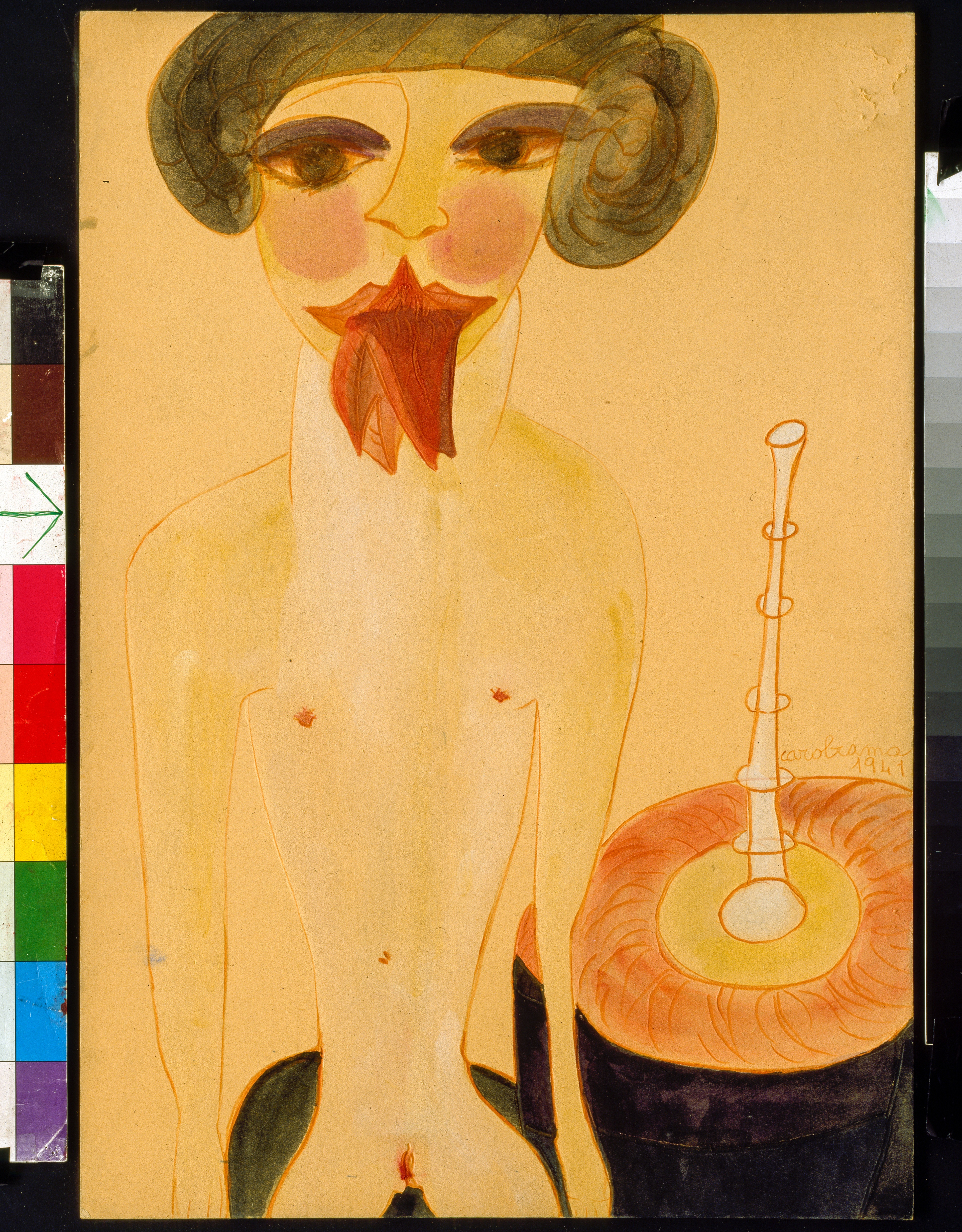
Carol Rama.
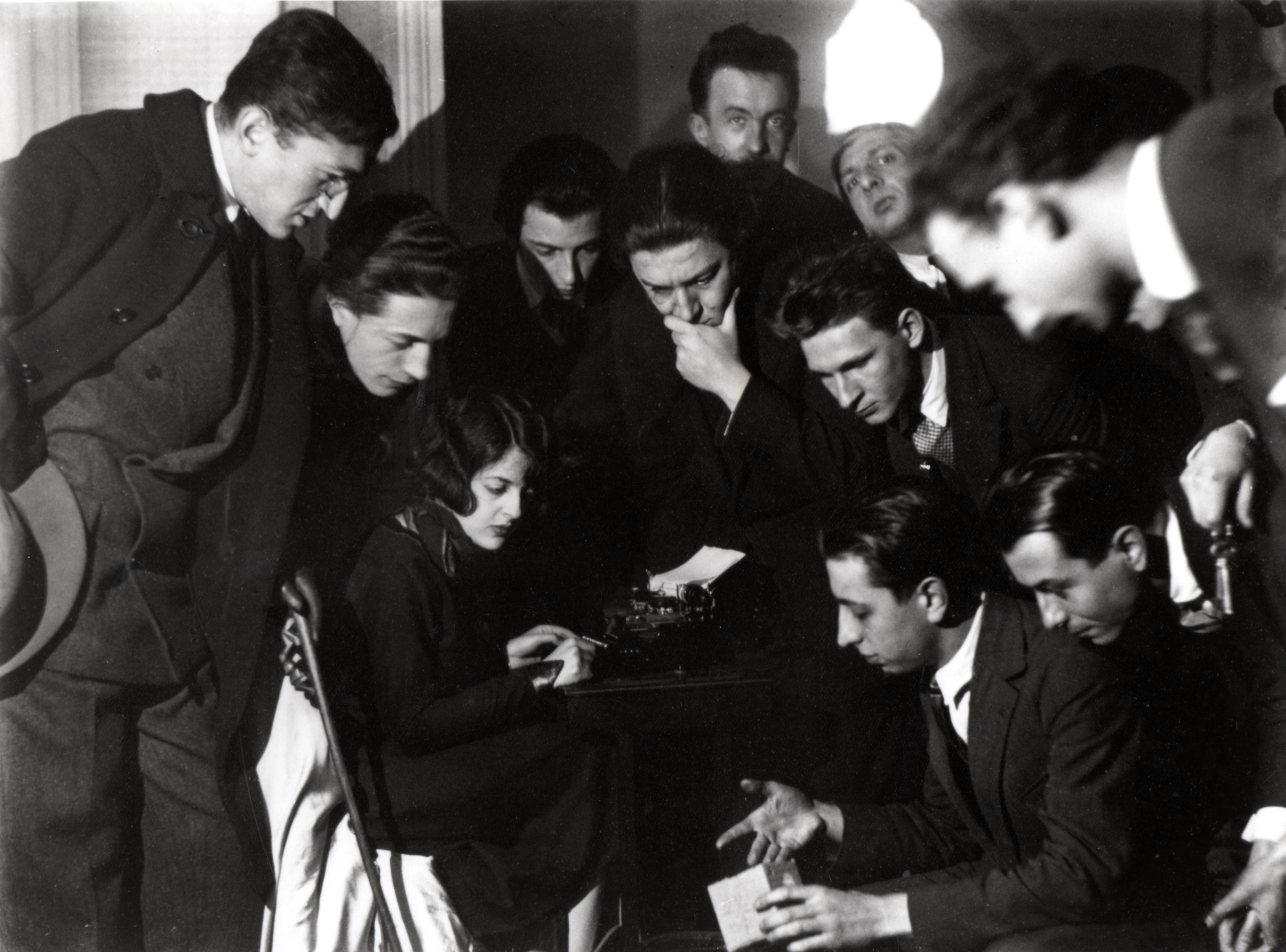
Man Ray.
"These Fata Morganas tell more about the moment we are living in now."
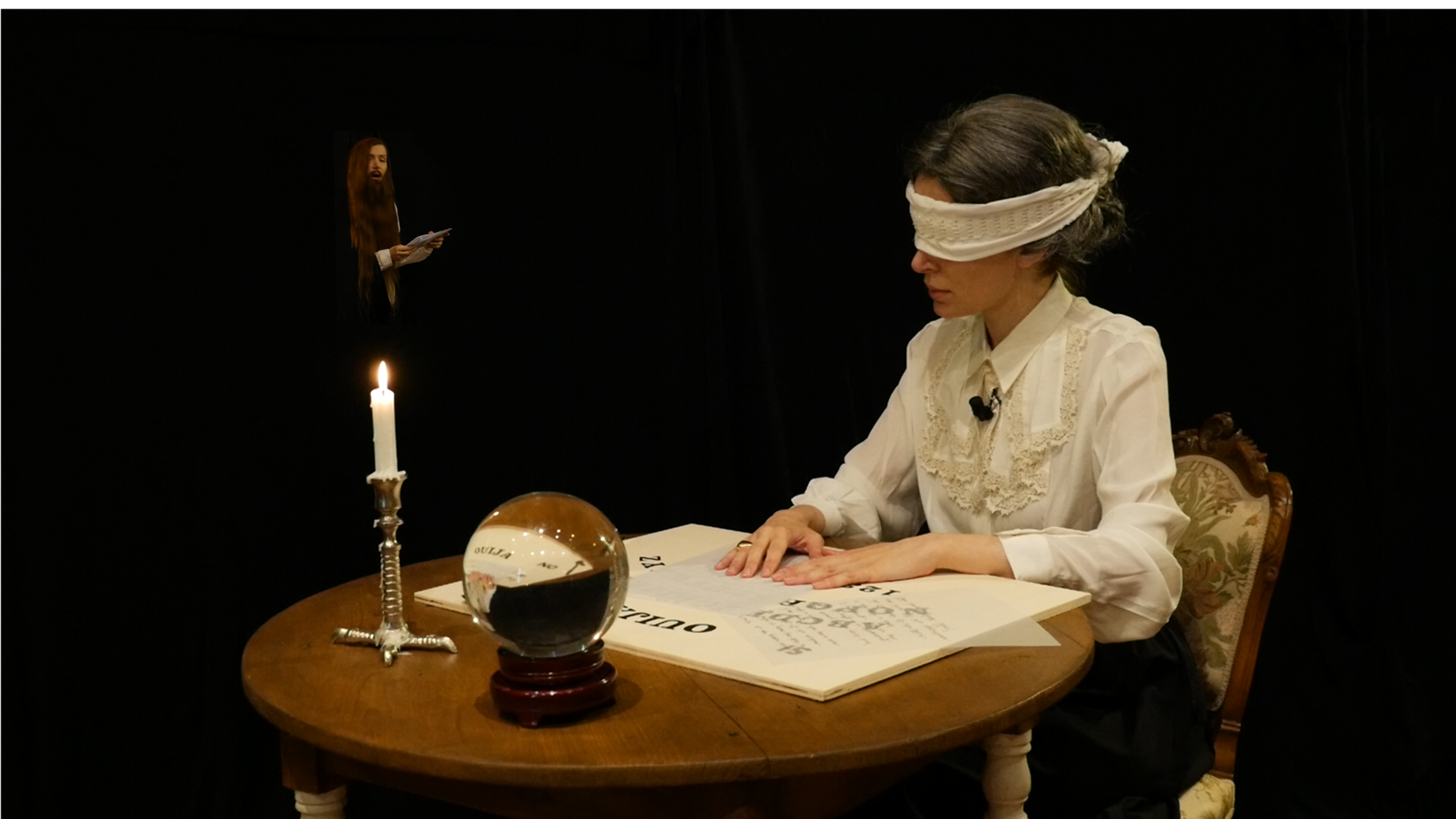
Chiara Fumai.
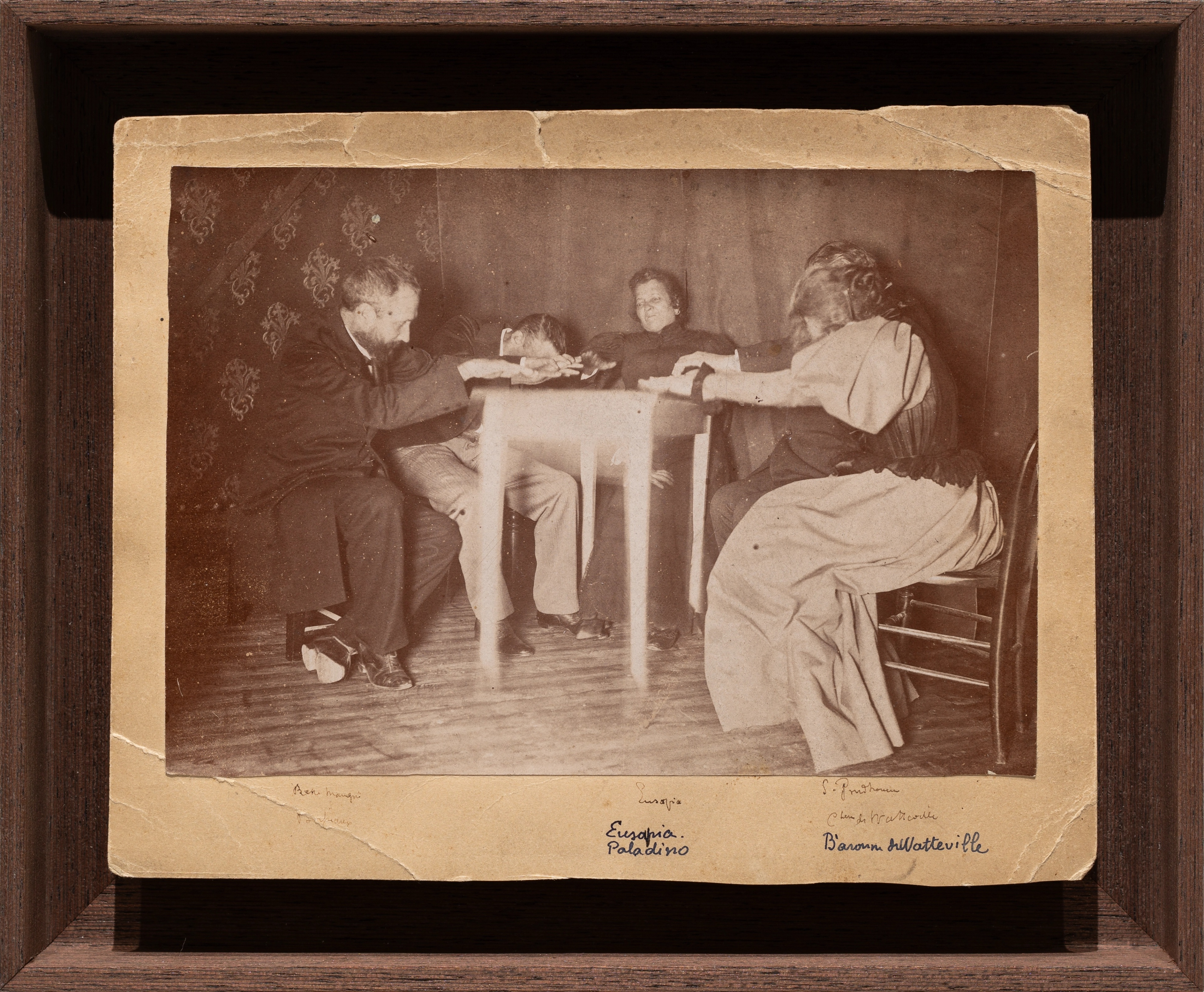
Eusapia Palladino.
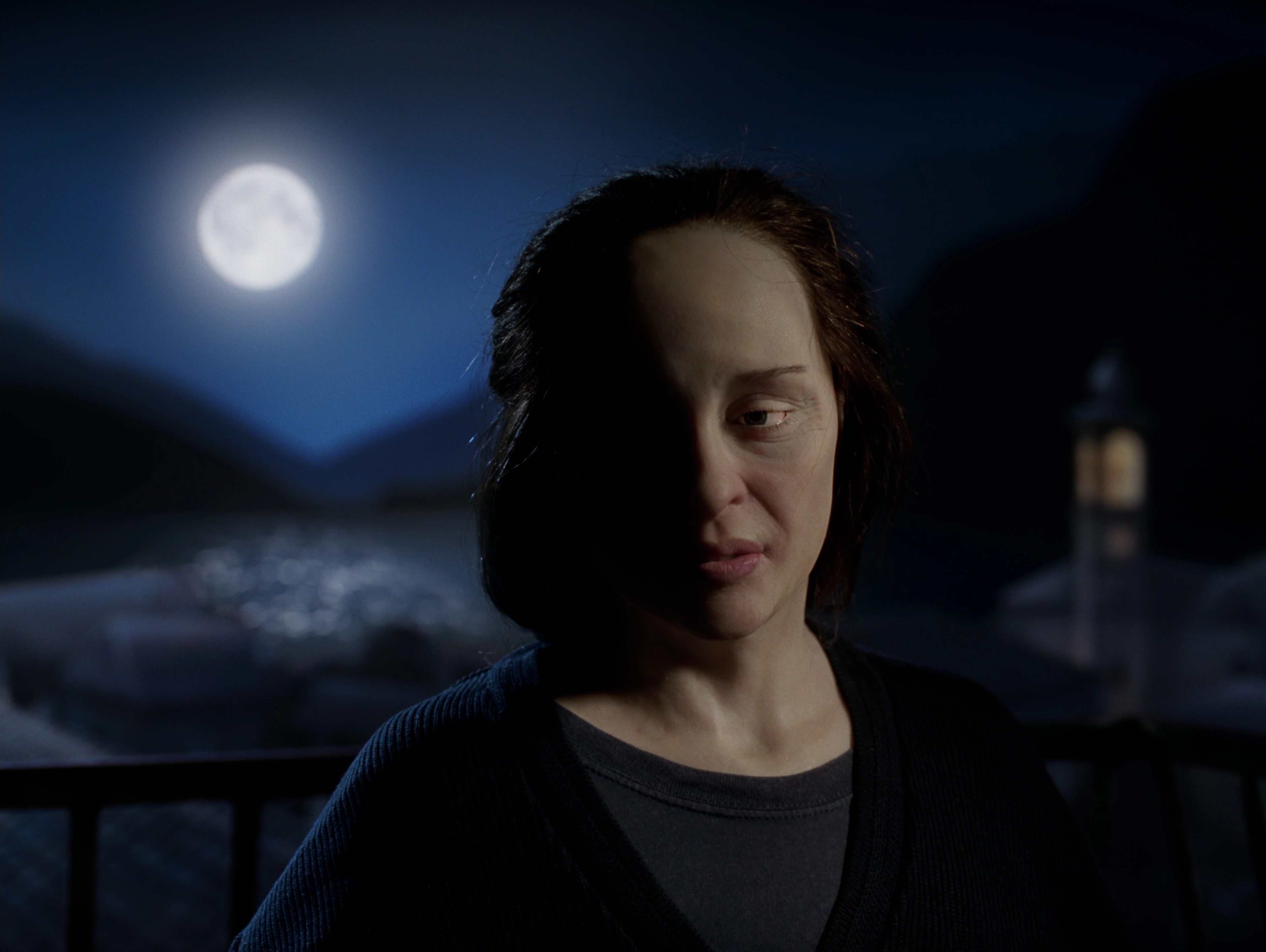
Diego Marcon.
ARTWORK
COURTESY THE PALAZZO MORANDO & THE Fondazione Nicola Trussardi
Beyond Noise 2026
ARTWORK
COURTESY THE PALAZZO MORANDO & THE Fondazione Nicola Trussardi
Beyond Noise 2026